. . . your guide to visiting the holy places  
If you have found See the Holy Land helpful and would like to support our work, please make a secure donation.
The Sites

Israel and Palestine – In Jerusalem

Israel and Palestine – Outside Jerusalem

Jordan

Egypt

Extras

Pools of Bethesda

Jerusalem

Pools of Bethesda

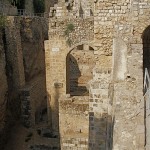
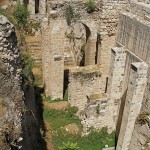
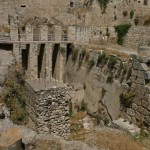
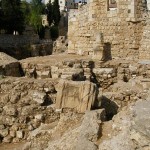
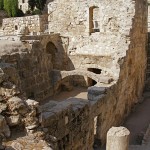
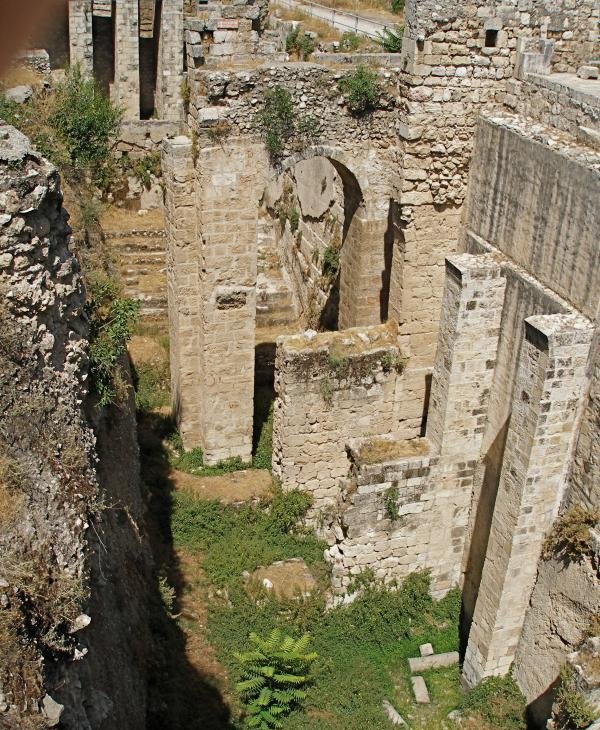
Bethesda pool, showing support structure that suspended the Byzantine basilica over the pools (Seetheholyland.net)

Archaeology has enabled a pool at Bethesda in Jerusalem to be identified as the scene of one of Jesus’ miracles. This was the healing of the paralysed man who had waited for 38 years for someone to help him into the pool “when the water is stirred” — an event believed to have curative powers.

The Gospel account says Jesus told the man, “Stand up, take your mat and walk”, and immediately he was made well (John 5:2-18).

The location of the Pools of Bethesda — actually a series of reservoirs and medicinal pools — is in the Muslim Quarter of Jerusalem’s Old City, north of the Temple Mount and about 50 metres inside St Stephen’s or Lions’ Gate. At that time, the gate was called the Sheep Gate, because this was where sheep were brought to the Temple for sacrifice.

According to an ancient tradition, Bethesda is also where Jesus’ maternal grandparents, Anne and Joachim, lived — and where his mother Mary was born. The Church of St Anne, built around 1140, stands nearby.

The compound containing the pools and the church is owned by the French government and administered by the White Fathers. It also contains a museum and a Greek-Catholic (Melkite) seminary.


Evidence of pagan healing sanctuary
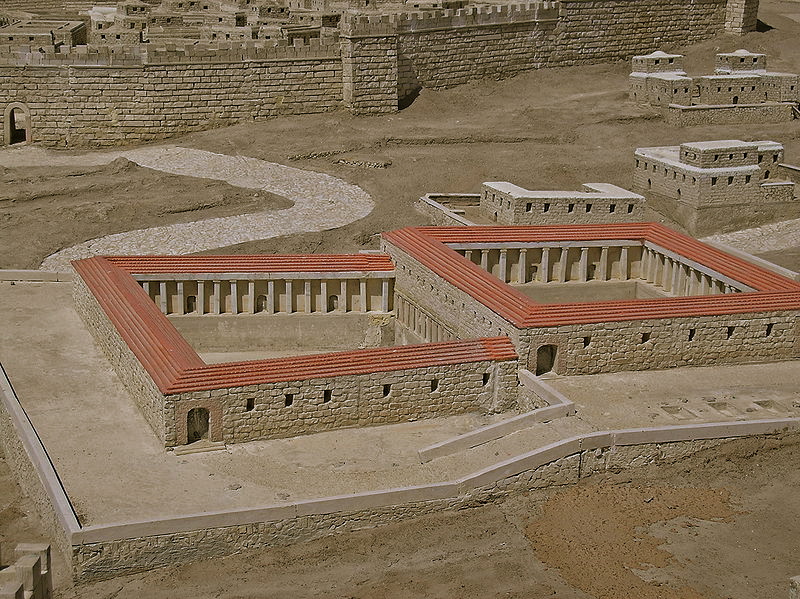
Pools of Bethesda

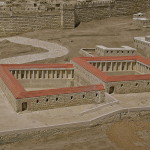
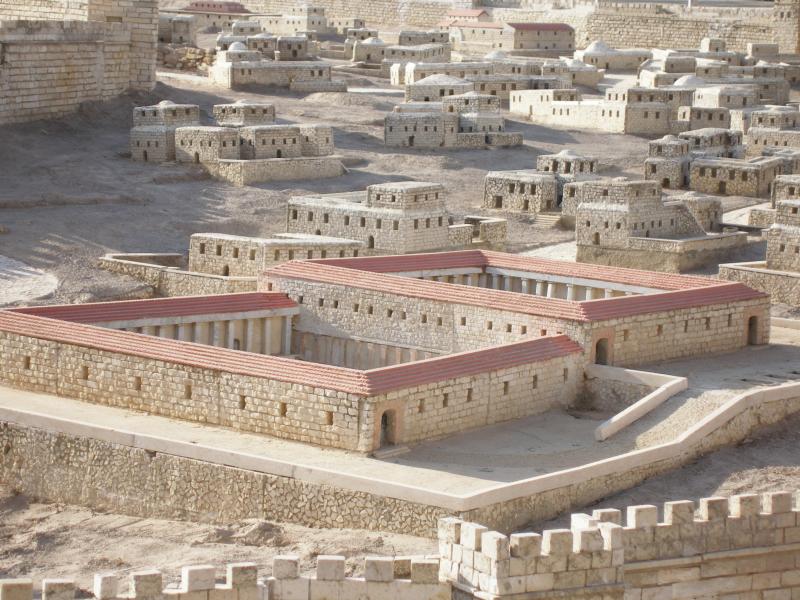
Close-up of Pools of Bethesda in the Model of Ancient Jerusalem at the Israeli Museum (© Deror Avi)

In his Gospel account, John describes the pool as having five porticoes, in which lay many invalids — blind, lame and paralysed.

Because no such pool had been discovered, the historicity of the site was long called into question. Some claimed that John had invented the detail of the five porticoes to represent the five books of Moses, which Jesus had come to fulfil.

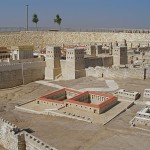
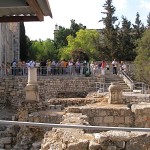
In the 1900s, however, archaeologists at Bethesda unearthed two large water reservoirs separated by a broad rock dike. They were rectangular in shape, with four colonnaded porticos around the sides and one across the central dike.

The purpose of the reservoirs was to collect rainwater, principally for Temple use.

Associated pools and baths at Bethesda (which means house of mercy) were apparently believed to have healing powers. Evidence of a pagan healing sanctuary has been found east of the pools, including marble representations of healed organs, such as feet and ears.


Early church was built over pool
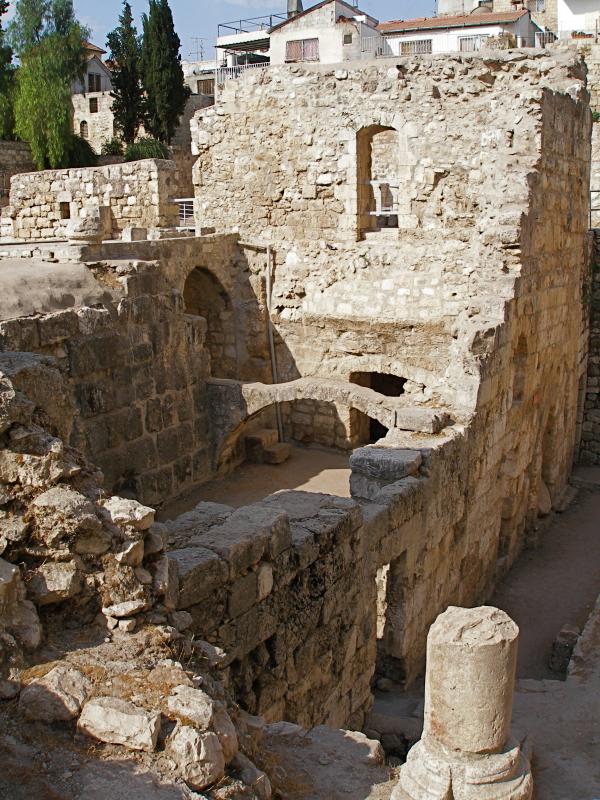
Pools of Bethesda

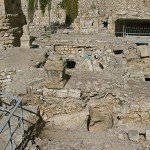
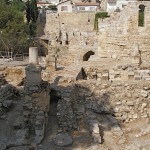
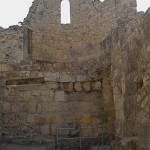
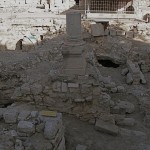
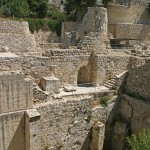
Remains of a pagan temple, Byzantine basilica and Crusader chapel Bethesda (Seetheholyland.net)

The Byzantine empress Eudocia had an enormous basilica constructed over the Pools of Bethesda in the 5th century. The church was called “Mary where she was born”.

Its central aisle covered the central rock wall, the side aisles extended above the two basins and the front part covered the site of the ancient healing sanctuary.

The basilica was destroyed by the Persians in 614 and its masonry ended up in the pool.

The Crusaders built a small chapel, the Church of the Paralytic, over part of the ruined basilica. The façade, main entrance and apse of the Crusader chapel can be seen standing high over the pools, giving a clear example of the practice of building one church over another.

Related site:

Church of St Anne

In Scripture:

Jesus heals a sick man: John 5:2-18


Administered by: White Fathers

Tel.: 972-2-6283285

Open: 8am-noon, 2-6pm (5pm Oct-Mar)


References

Bouwen, Frans: “St Anne’s Church and the Pool of Bethesda”, Cornerstone, spring 2000.
Freeman-Grenville, G. S. P.: The Holy Land: A Pilgrim’s Guide to Israel, Jordan and the Sinai (Continuum Publishing, 1996)
Gonen, Rivka: Biblical Holy Places: An illustrated guide (Collier Macmillan, 1987)
Kilgallen, John J.: A New Testament Guide to the Holy Land (Loyola Press, 1998)
Mackowski, Richard M.: Jerusalem: City of Jesus (William B. Eerdmans, 1980)
Pixner, Bargil: With Jesus in Jerusalem – his First and Last Days in Judea (Corazin Publishing, 1996)
Wareham, Norman, and Gill, Jill: Every Pilgrim’s Guide to the Holy Land (Canterbury Press, 1996)
Starkey, Denis: “The White Fathers in Jerusalem”, White Fathers — White Sisters, April-May 1999.


External links
Pool of Bethesda (First Century Jerusalem)
Bethesda (BibleWalks)
Bethesda Pool panorama (Jesus in Jerusalem)
« Newer PostsOlder Posts »

Mount Zion

Jerusalem

Mount Zion

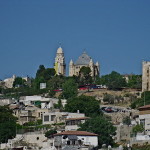
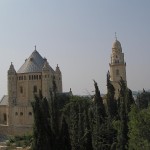
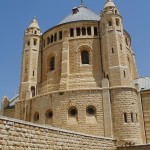
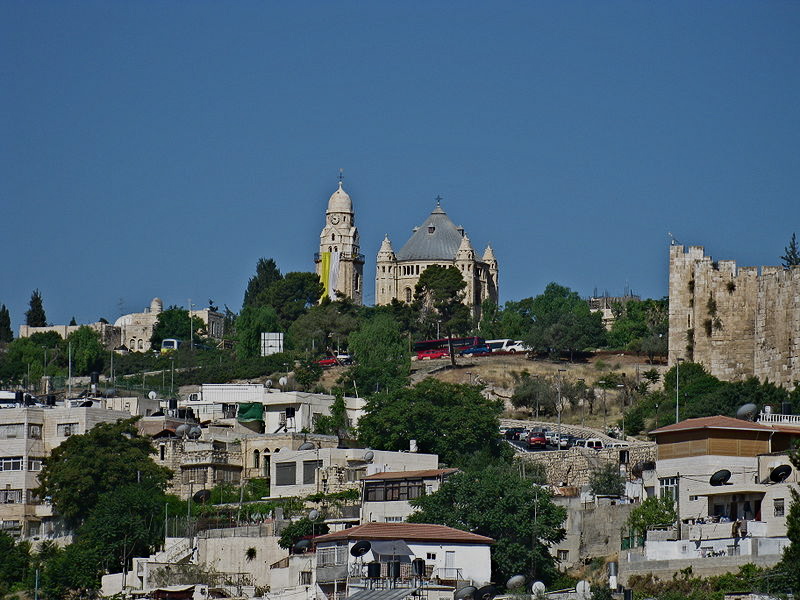
Mount Zion, crowned by the Dormition Abbey (© Deror Avi)

Mount Zion, the highest point in ancient Jerusalem, is the broad hill south of the Old City’s Armenian Quarter.

Also called Sion, its name in Old Testament times became projected into a metaphoric symbol for the whole city and the Promised Land.

Several important events in the early Christian Church are likely to have taken place on Mount Zion:

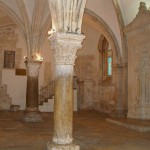
• The Last Supper of Jesus and his disciples, and the coming of the Holy Spirit on the disciples, both believed to have been on the site of the Cenacle;

• The appearance of Jesus before the high priest Caiaphas, believed to have been at the site of the Church of St Peter in Gallicantu;

• The “falling asleep” of the Virgin Mary, believed to have occurred at the site of the Church of the Dormition.

• The Council of Jerusalem, around AD 50, in which the early Church debated the status of converted gentiles (Acts 15:1-29), perhaps also on the site of the Cenacle.

The mountain that moved

In the Old Testament period, Zion was the eastern fortress that King David captured from the Jebusites and named the City of David (2 Samuel 5:6-9).

A psalmist described Mount Zion as God’s “holy mountain, beautiful in elevation . . . the joy of all the earth” (Psalm 48).

And again, “Those who trust in the Lord are like Mount Zion, which cannot be moved, but abides forever” (Psalm 125).

Ironically, by the time this psalm was composed, the name of Mount Zion had already moved from its original location at the Jebusite fortress — and would move again.

First, perhaps at the time Solomon built his Temple, the Temple Mount came to be called Mount Zion. Then in the first century AD, following the Roman destruction of Jerusalem, the name was transferred to its present location across the Tyropoeon Valley.


Early Christians built synagogue-church

Mount Zion

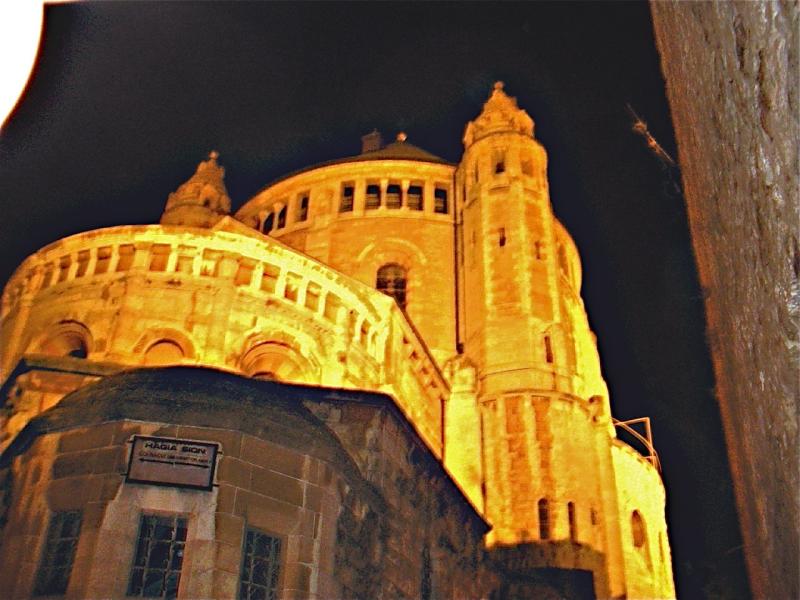
Hagia Sion sign at Dormition Abbey (Glenn Johnson / Wikimedia)

In the time of Christ, Mount Zion was a wealthy neighbourhood, densely populated and enclosed within the city walls.

There was also a community of Essenes, a group who lived a strict interpretation of Mosaic Law. They are better known for their community at Qumran, where the Dead Sea Scrolls were discovered.

The first-century Christians met on Mount Zion, where they built a Judaeo-Christian synagogue-church that became known as the Church of the Apostles.

Over the centuries a succession of churches were built on the site and later destroyed. These included the great Byzantine basilica Church of Hagia Sion (Holy Zion), known as the “Mother of all Churches” — which covered the entire area now occupied by the Church of the Dormition, the Cenacle and the Tomb of David.


David’s tomb is empty

The Old Testament (1 Kings: 2:10) records that King David was buried in the city of David, which was on the original Mount Zion.

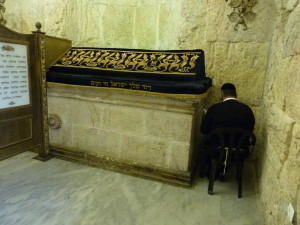
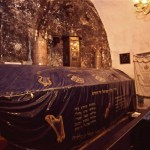
King David's Tomb after extensive renovations were completed in 2013 (Seetheholyland.net)

King David’s Tomb after extensive renovations were completed in 2013 (Seetheholyland.net)

Because the name of Mount Zion had moved to its present location, as described above, Christian pilgrims in the 10th century developed a belief that David’s burial place was there too.

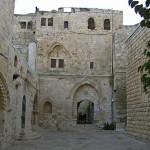
It was actually the Christian Crusaders who built the present memorial on Mount Zion called the Tomb of King David. However, three of the walls of the room where its empty cenotaph stands are apparently from the synagogue-church used by the first-century Judaeo-Christians.

Gradually this memorial came to be accepted as David’s tomb, first by the Jews and later also by Muslims.


Architects beheaded for excluding Mount Zion

The respect with which Muslims held King David is illustrated by a legend relating to the reconstruction of Jerusalem’s walls by the Turkish conqueror Sulieman the Magnificent in the mid-16th century.

As the story goes, the sultan was furious when he discovered that the new walls did not encompass Mount Zion, leaving the Tomb of David unprotected.

He summoned the two architects responsible for the project and ordered that they be beheaded. Two graves in the inner courtyard of Jaffa Gate are said to be those of the architects.

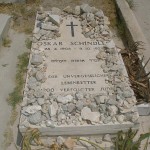
Another place of interest on Mount Zion is the grave of Oskar Schindler, a German industrialist who saved nearly 1200 Jews in the Holocaust and has been declared a Righteous Gentile. The grave is in the Catholic cemetery near Zion Gate.

Related sites

Cenacle

Church of the Dormition

Church of St Peter in Gallicantu

Tomb of King David

Schindler’s grave


In Scripture:

The Last Supper: Matthew 26:17-30; Mark 14:12-25; Luke 22:7-23; John 13:1—17:26

The coming of the Holy Spirit: Acts 2:1-4

Jesus appears before Caiaphas: Matthew 26:57-68; Mark 14:53-65; Luke 22:66-71; John 18:12-14, 19:24

The first Church Council of Jerusalem: Acts 15:1-29


References

Anonymous: “Christian Mount Sion”, Holy Land, spring 2003
Gonen, Rivka: Biblical Holy Places: An illustrated guide (Collier Macmillan, 1987)
Inman, Nick, and McDonald, Ferdie (eds): Jerusalem & the Holy Land (Eyewitness Travel Guide, Dorling Kindersley, 2007)
Mackowski, Richard M.: Jerusalem: City of Jesus (William B. Eerdmans, 1980)
Metzger, Bruce M., and Coogan, Michael D.: The Oxford Companion to the Bible (Oxford University Press, 1993)
Murphy-O’Connor, Jerome: The Holy Land: An Oxford Archaeological Guide from Earliest Times to 1700 (Oxford University Press, 2005)
Pixner, Bargil: “Church of Apostles found on Mt Zion” (Biblical Archaeological Review, May/June 1990)
Wareham, Norman, and Gill, Jill: Every Pilgrim’s Guide to the Holy Land (Canterbury Press, 1996)


External links
Church of the Apostles found on Mt Zion (Century One Foundation)
« Newer PostsOlder Posts »

Mount of Olives

Jerusalem

Mount of Olives

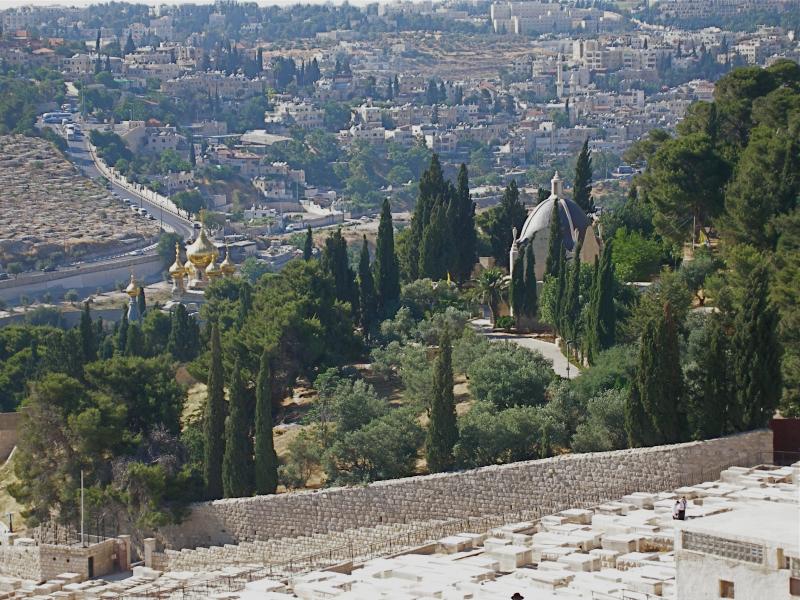
Church of St Mary Magdalene (left) and Church of Dominus Flevit on Mount of Olives (Seetheholyland.net)

The Mount of Olives, one of three hills on a long ridge to the east of Jerusalem, is the location of many biblical events. Rising to more than 800 metres, it offers an unrivalled vista of the Old City and its environs.

The hill, also called Mount Olivet, takes its name from the fact that it was once covered with olive trees.

In the Old Testament, King David fled over the Mount of Olives to escape when his son Absalom rebelled (2 Samuel 15:30).

After King Solomon turned away from God, he built pagan temples there for the gods of his foreign wives (1 Kings 11:7-8).

Ezekiel had a vision of “the glory of the Lord” ascending from the city and stopping on the Mount of Olives (Ezekiel 11:23).

Zechariah prophesied that in the final victory of the forces of good over the forces of evil, the Lord of hosts would “stand on the Mount of Olives” and the mount would be “split in two from east to west” (Zechariah 14:3-4).


Jesus knew it well

In the New Testament, Jesus often travelled over the Mount of Olives on the 40-minute walk from the Temple to Bethany. He also went there to pray or to rest.

He went down the mount on his triumphal entry to Jerusalem on Palm Sunday, on the way weeping over the city’s future destruction (Luke 19:29-44).

In a major address to his disciples on the mount, he foretold his Second Coming (Matthew 24:27-31).

He prayed there with his disciples the night before he was arrested (Matthew 26:30-56). And he ascended into heaven from there (Acts 1:1-12).


A place for pilgrims to sleep

Mount of Olives

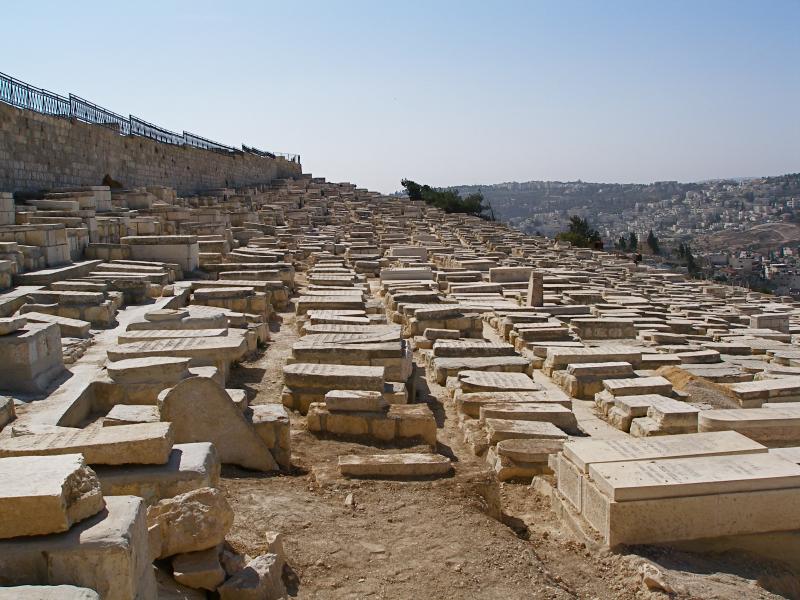
Jewish cemetery on Mount of Olives (Seetheholyland.net)

Until the destruction of the Temple, the Mount of Olives was a place where many Jews would sleep out, under the olive trees, during times of pilgrimage.

During the Siege of Jerusalem which led to the destruction of the city in AD 70, Roman soldiers from the 10th Legion camped on the mount.

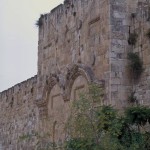
In Jewish tradition, the Messiah will descend the Mount of Olives on Judgement Day and enter Jerusalem through the Golden Gate (the blocked-up double gate in the centre of the eastern wall of the Temple Mount, also known as the Gate of Mercy, or the Beautiful Gate).

For this reason, Jews have always sought to be buried on the slopes of the mount. The area serves as one of Jerusalem’s main cemeteries, with an estimated 150,000 graves.

Among them is a complex of catacombs called the Tombs of the Prophets. It is said to contain the graves of the prophets Haggai, Zechariah and Malachi, who lived in the 6th and 5th centuries BC, but the style of tombs belongs to a later time.

From Byzantine times the mount became a place of church-building. By the 6th century it had 24 churches, surrounded by monasteries containing large numbers of monks and nuns.


Several major pilgrimage sites

Mount of Olives

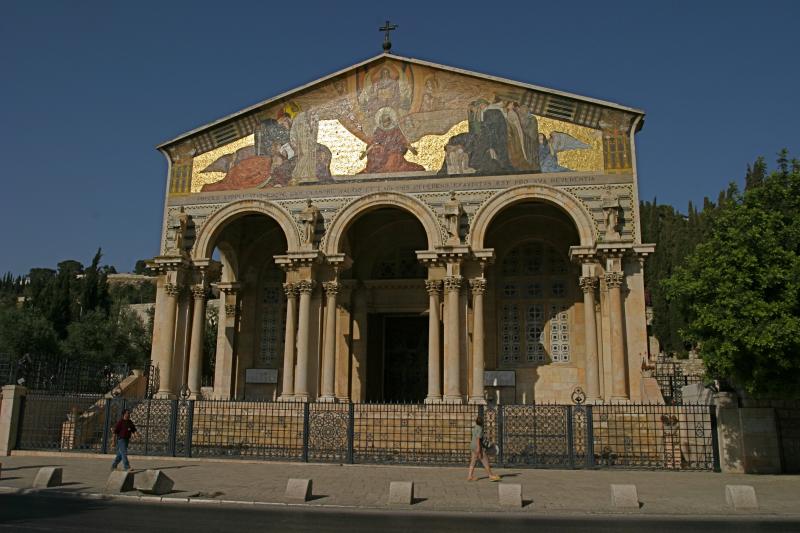
Church of All Nations on Mount of Olives (© Tom Callinan / Seetheholyland.net)

The Mount of Olives is the location of several major sites for pilgrims. They include:

• Church of All Nations (Basilica of the Agony): A sombre church at Gethsemane, built over the rock on which Jesus is believed to have prayed in agony the night before he was crucified.

• Church of St Mary Magdalene: A Russian Orthodox church whose seven gilded onion domes, each topped by a tall cross, make it one of Jerusalem’s most picturesque sights.

• Church of Dominus Flevit: A church in the shape of a teardrop, commemorating the Gospel incident in which Jesus wept over the future fate of Jerusalem.

• Church of Pater Noster: Recalling Christ’s teaching of the Lord’s Prayer, this church features translations of the prayer in 140 languages, inscribed on colourful ceramic plaques.

• Dome of the Ascension: A small shrine, now a mosque marking the place where Jesus is believed to have ascended to heaven.

The garden and grotto of Gethsemane: The ancient olive grove identified as the place where Jesus went to pray the night before he was crucified, and the cave where his disciples are believed to have slept.

• Tomb of Mary: A dimly-lit, below-ground church where a Christian tradition says the Mother of Jesus was buried.

Related sites:

Church of All Nations

Church of St Mary Magdalene

Church of Dominus Flevit

Church of Pater Noster

Church of the Ascension

Dome of the Ascension

Gethsemane

Tomb of Mary


In Scripture:

King David flees over the Mount of Olives: 2 Samuel 15:30

King Solomon builds pagan temples: 1 Kings 11:7-8

“Glory of the Lord” stops on Mount of Olives: Ezekiel 11:23

Splitting of mount prophesied: Zechariah 14:3-4

Jesus enters Jerusalem: Luke 19:29-44

Jesus foretells his Second Coming: Matthew 24:27-31

Jesus prays before his arrest: Matthew 26:30-56

Jesus ascends into heaven: Acts 1:1-12


References

Bar-Am, Aviva: Beyond the Walls: Churches of Jerusalem (Ahva Press, 1998)
Freeman-Grenville, G. S. P.: The Holy Land: A Pilgrim’s Guide to Israel, Jordan and the Sinai (Continuum Publishing, 1996)
Gonen, Rivka: Biblical Holy Places: An illustrated guide (Collier Macmillan, 1987)
Mackowski, Richard M.: Jerusalem: City of Jesus (William B. Eerdmans, 1980)
Murphy-O’Connor, Jerome: The Holy Land: An Oxford Archaeological Guide from Earliest Times to 1700 (Oxford University Press, 2005)
Walker, Peter: In the Steps of Jesus (Zondervan, 2006)
Wareham, Norman, and Gill, Jill: Every Pilgrim’s Guide to the Holy Land (Canterbury Press, 1996)

External links
Mount of Olives (BiblePlaces)
Mount of Olives walking tour (Israel By Foot)
« Newer PostsOlder Posts »

Model of Ancient Jerusalem

Jerusalem

Model of Ancient Jerusalem

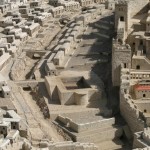
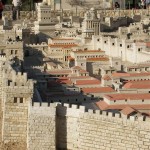
Looking from the lower city to the Herodian towers of the upper city (Seetheholyland.net)

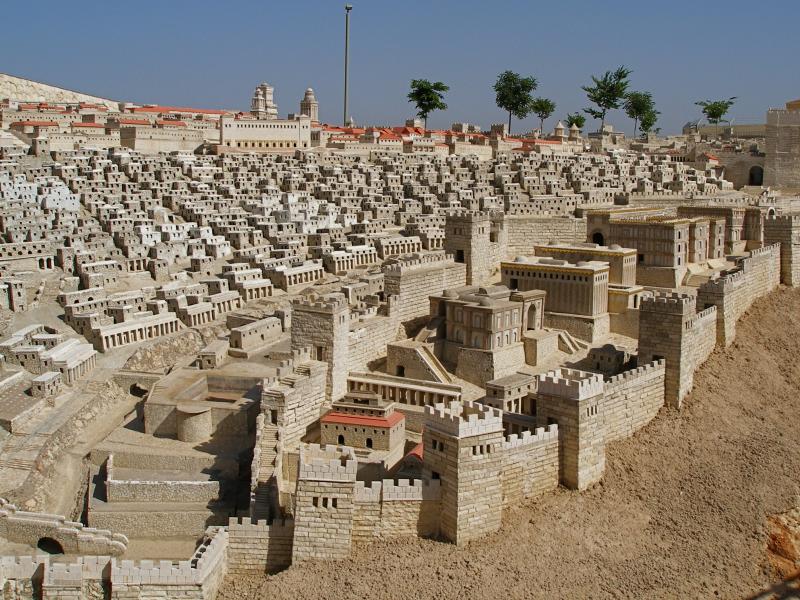
To visualise old Jerusalem at the peak of its power, look down on the outdoor scale model of the ancient city at the Israel Museum.

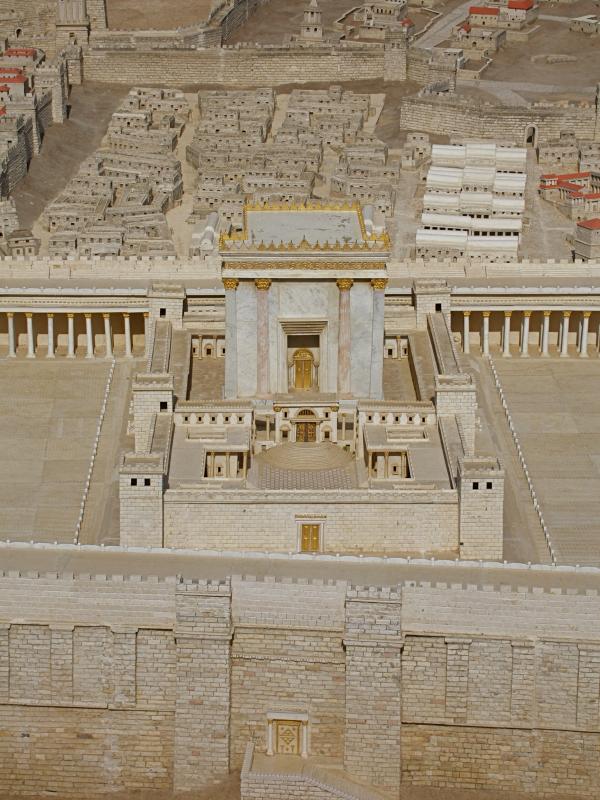
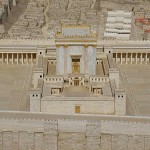
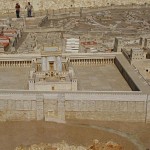
The gold-trimmed Second Temple and its vast courtyard dominate the Model of Ancient Jerusalem. Herod’s Palace, the twin-spired Palace of the Hasmoneans, the streets and markets are all identifiable.

The time is AD 66, the fateful year the Great Revolt against the Romans erupted, resulting in the destruction of the city and the Temple built by Herod the Great. All that’s missing from the buildings of Jerusalem limestone are the people.

This is also the time when Christianity was in its formative stages and the Dead Sea Scrolls — now housed in the museum’s Shrine of the Book — were being created.

The crucifixion of Jesus Christ was only 36 years before, and the mound of Calvary can be seen just outside the Second Wall (but well inside the new north wall begun by Herod Agrippa I).

The ancient city was then at its largest, spreading over 180 hectares — more than twice the size of the present Old City.


Archaeologists and historians contributed

Model of Ancient Jerusalem

Pools of Bethesda (Seetheholyland.net)

Construction of the Model of Ancient Jerusalem was undertaken in the 1960s by Hans Kroch, owner of the Holyland Hotel, in memory of his son Jacob, who was killed in the 1948 Arab-Israeli War.

Originally in the grounds of the hotel, it was transported in 1000 pieces to its present site, 5km away, in 2006.

The model covers nearly 4000 square metres, using a scale of 1:50. A human figure on this scale would be about 35 millimetres high.

Archaeologists (principally Professor Michael Avi-Yonah of the Hebrew University of Jerusalem), historians and architects contributed their expertise to the re-creation of ancient Jerusalem.

The main sources used were writings from the Roman period, construction techniques used in ancient cities similar to Jerusalem, and archaeological discoveries from Jerusalem itself.

Subsequent excavations in Jerusalem have enabled the model to be refined and updated archaeologically.

Model of Ancient Jerusalem

Second Temple of Jerusalem, destroyed in AD 70 (Seetheholyland.net)


Imagination augmented archaeology

Archaeologist Jerome Murphy-O’Connor says many arbitrary decisions had to be made in the construction of the model, “and imagination often supplied what the texts or archaeologist’s trowel could not provide. The model, therefore, is a hypothesis, a vision of the city as it might have been, and not all elements carry the same guarantee.”

According to Murphy-O’Connor, “The portrayals of the Temple and of the Palace of Herod are excellent, but the presentation of the northern part of the city is almost certainly wrong. The line assumed by the northernmost wall of the model rests on inadequate archaeological evidence, and all the buildings it encloses are the product of pure imagination.”

Another feature which appears to lack archaeological basis is the red-tile roofing. No roof tiles have been found in excavations of Jerusalem, however there are too many tiles in the model to make a change.

Visitors may walk around the model, though there is no protection from sun or rain. They are not allowed to walk inside the walls.

Administered by: The Israel Museum

Tel.: 972-2-6708811

Open: Sun, Mon, Wed, Thurs 10am–5 pm;
Tues 4–9 pm (Aug 10am-9pm);
Fri and holiday eves 10am–2pm;
Sat and holidays 10am–5pm


References

Lefkovits, Etgar: “Second temple model to link history, archaeology”, Jerusalem Post, May 25, 2006
Miriam Simon: “Jerusalem’s Glory Days”, Eretz, September-October 2006
Blaiklock, E. M.: Eight Days in Israel (Ark Publishing, 1980)
Murphy-O’Connor, Jerome: The Holy Land: An Oxford Archaeological Guide from Earliest Times to 1700 (Oxford University Press, 2005)


External link

Second Temple Model (The Israel Museum)
« Newer PostsOlder Posts »

Jordan River

Israel/Jordan

Jordan River

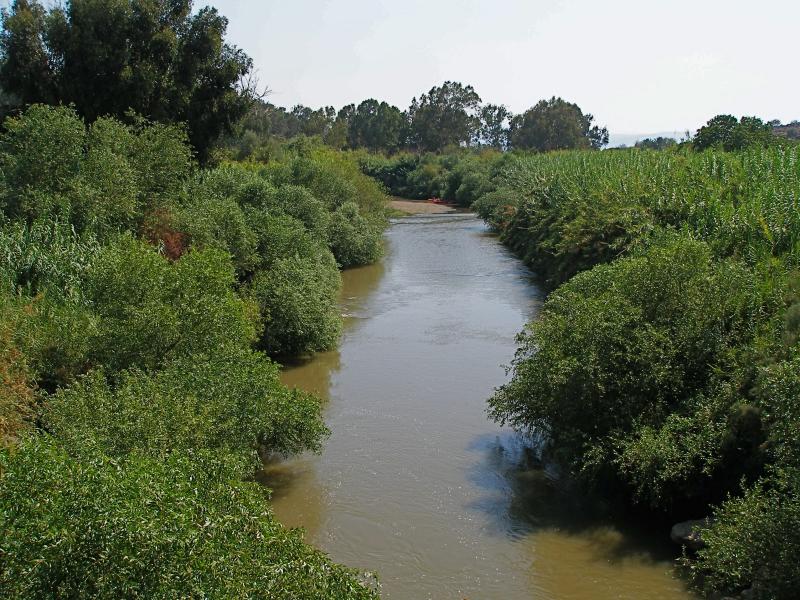
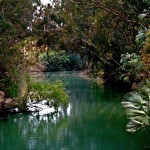
Jordan River near Chorazin (Seetheholyland.net)

The Jordan River runs through the land and history of the Bible, giving its waters a spiritual significance that sets it aside from other rivers.

The Jordan is significant for Jews because the tribes of Israel under Joshua crossed the river on dry ground to enter the Promised Land after years of wandering in the desert.

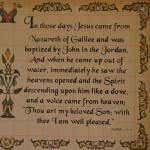
It is significant for Christians because John the Baptist baptised Jesus in the waters of the Jordan.

The prophets Elijah and Elisha also crossed the river dry-shod; and the Syrian general Naaman was healed of leprosy after washing in the Jordan at Elisha’s direction.


River flows below sea level

Jordan River

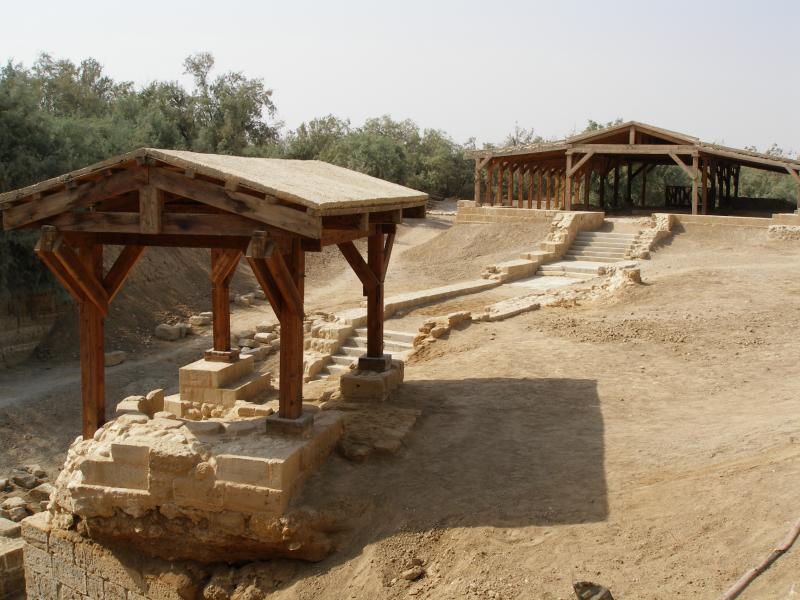
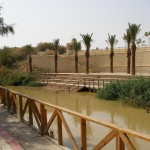
Excavated baptismal site at Bethany Beyond the Jordan (Seetheholyland.net)

Flowing southward from its sources in the mountainous area where Israel, Syria and Lebanon meet, the Jordan River passes through the Sea of Galilee and ends in the Dead Sea. A large part of its 320-kilometre length forms the border between Israel and Jordan in the north and the West Bank and Jordan in the south.

The river falls 950 metres from its source to the Dead Sea. For most of its course down the Jordan Rift Valley, it flows well below sea level. Its name means “Dan [one of its tributaries] flows down”.

Though an old song says the River Jordan is “deep and wide”, the modern river is neither. In places it is more like a creek than a river — less than 10 metres across and 2 metres deep.

From Jesus’ time until the mid 20th century, seasonal flooding in winter and spring expanded its width to 1.5km. Dams in Syria, Jordan, Lebanon and Israel now preclude flooding.


Site identified in former military zone

Jordan River

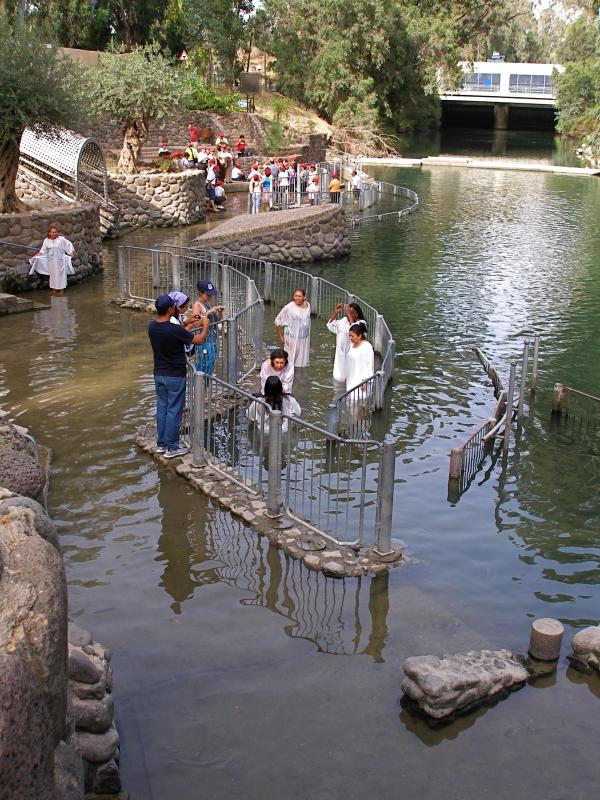
Yardenit baptism site (Seetheholyland.net)

The place where Jesus was baptised by John the Baptist is believed to be in Jordan, on the east bank of a large loop in the river opposite Jericho.

A site less than 2km east of the river’s present course, at Wadi Al-Kharrar, has been identified as Bethany Beyond the Jordan. This is where John lived and baptised, and where Jesus fled for safety after being threatened with stoning in Jerusalem.

Until the 1994 peace treaty between Jordan and Israel, the area was a Jordanian military zone. After clearing nearby minefields, the Jordanian government has made the place accessible to archaeologists, pilgrims and tourists.

Jordan’s new Baptism Archaeological Park contains the remains of a Byzantine-era monastery featuring at least four churches, one of which is built around a cave believed to be the one that ancient pilgrims called “the cave of John the Baptist”.

While the Jordanian location was inaccessible, a modern site commemorating Christ’s baptism was established at Yardenit in Israel, at the southern end of the Sea of Galilee.

Maintained by a kibbutz, it is a popular place for Christian pilgrims to renew their baptismal promises — or for new Christians to be baptised, often in white robes and undergoing total immersion in the mild waters of the Jordan.


Various

The course of the Jordan River (Wikimedia)

Jordan is diverted and polluted

Because its waters are a vital resource for the dry lands of the region, the Jordan has been a source of contention among Israel, Jordan, Syria, Lebanon and the Palestinians.

In modern times more than 90 per cent of its natural flow has been diverted for domestic and agricultural use. The lower Jordan is heavily polluted by sewage and industrial run-off.

In 2007 the World Monuments Fund listed the lower Jordan in the top 100 most “endangered cultural heritage sites”. In support, a regional environmental organisation, Friends of the Earth Middle East, said: “The region’s current policies treat the river as a backyard dumping ground.”

Related site:

Bethany Beyond the Jordan


In Scripture:

The Israelites cross the Jordan on dry ground: Joshua 3:14-17

Elijah crosses the Jordan on dry ground: 2 Kings 2:8

John baptises Jesus: Matthew 3:13-17; Mark 1:9-11; Luke 3:21-22; John 1:29-34

Naaman’s leprosy is cured in the Jordan: 2 Kings 5:1-14


References

McCormick, James R.: Jerusalem and the Holy Land (Rhodes & Eaton, 1997)
Wareham, Norman, and Gill, Jill: Every Pilgrim’s Guide to the Holy Land (Canterbury Press, 1996)
Khouri, Rami: “Where John Baptized: Bethany Beyond the Jordan”, Exploring Jordan: The Other Biblical Land (Biblical Archaeology Society, 2008)
Waldocks, Ehud Zion: “Jordan River to run dry by next year”, Jerusalem Post, May 3, 2010


External links
The Baptism Site of Jesus Christ (official site)
Bethany-Beyond-The-Jordan (Sacred Destinations)
Yardenit Baptismal (BibleWalks)
Yardenit Baptismal Site
« Newer PostsOlder Posts »

Jesus Boat

Israel

Jesus Boat

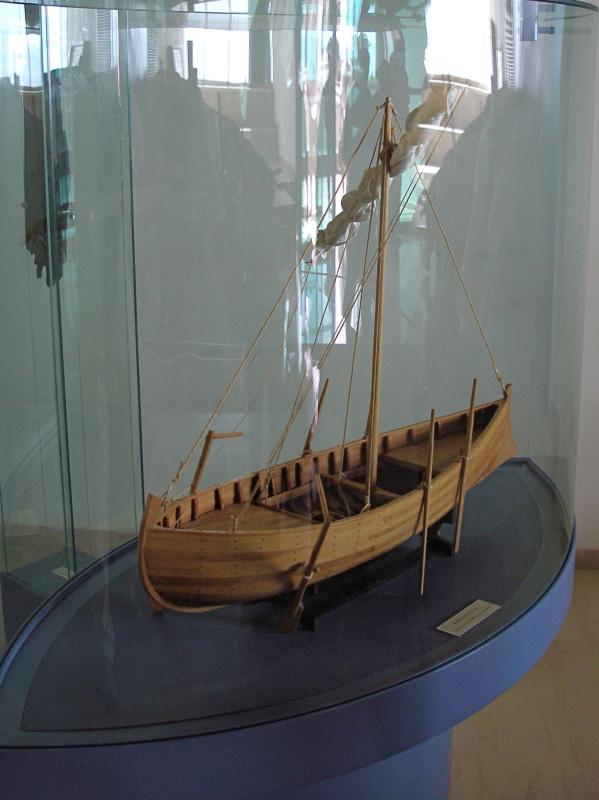
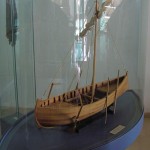
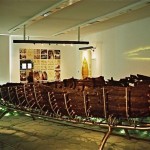
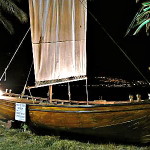
Model of Jesus Boat (Seetheholyland.net)

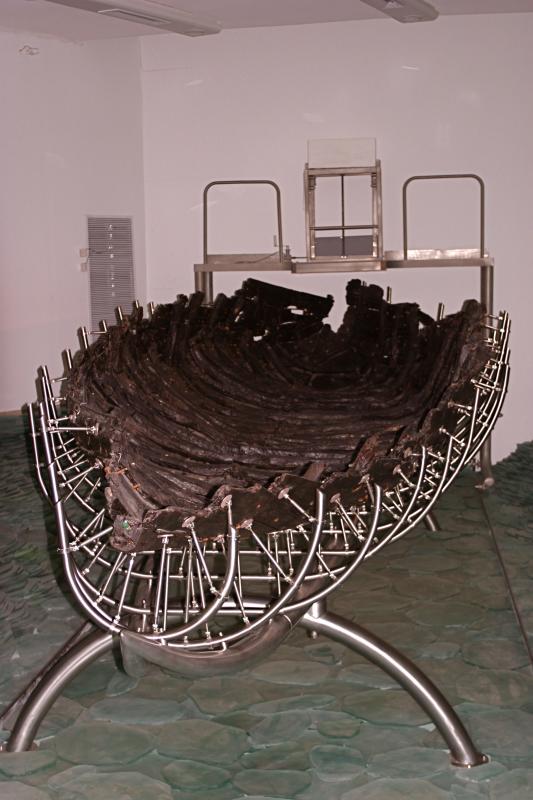
The Sea of Galilee yielded an unexpected catch in 1986 — the hull of a fishing boat old enough to have been on the water in the time of Jesus and his disciples.

The remains of the so-called Jesus Boat were found in the muddy lakebed (the Sea of Galilee is actually a freshwater inland lake) during a time of severe drought.

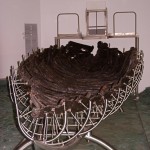
The remains were 8.3 metres (27 feet) long, 2.3 metres (7.5 feet) wide and 1.3 metres (4.3 feet) high. This size would have enabled it to carry up to 15 people.

Extracting it safely presented a huge challenge to excavators. Conservation of its waterlogged timbers then took 11 years.

In 2000 the vessel — officially known as “The Ancient Galilee Boat” — went on permanent display in the Yigal Allon Museum at Kibbutz Ginosar, near where it was discovered.


The type of boat Jesus used

Jesus Boat

Front-end view of Jesus Boat (Seetheholyland.net)

Boats such as this are mentioned more than 50 times in the Gospel accounts of Jesus’ ministry in Galilee, but there is no evidence to link this particular boat to Jesus or his disciples.

However, radio carbon dating has established that the Jesus Boat began life as a fishing vessel between 120 BC and AD 40, a period that could encompass the time that Jesus spent on the Sea of Galilee.

Shelley Wachsmann, who as the Israel Department of Antiquities inspector of underwater antiquities was intimately involved in the excavation, says: “It does seem that the boat fits this time range and is of the type that would have been used by Jesus and his disciples.”


Found near Mary Magdalene’s home town

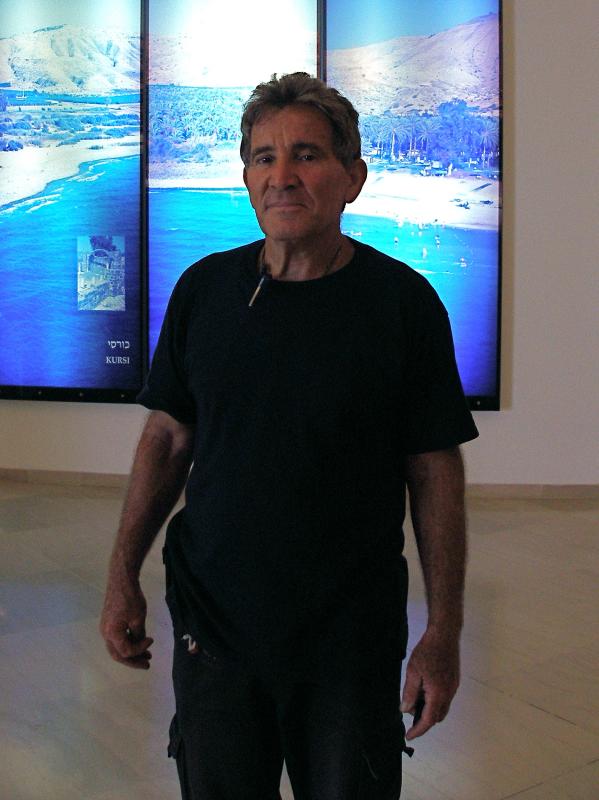
Two fishermen brothers, Moshe and Yuval Lufan, both keen amateur archaeologists, stumbled across the oval outline of the buried boat. It was on the north-west shore of the Sea of Galilee, about 1.5km north of Migdal, the home of Mary Magdalene.

Jesus Boat

Yuval Lufan, one of the brothers who found the Jesus Boat (Seetheholyland.net)

The method of construction identified it as typical of ancient boats in the Mediterranean region. The planks of the hull were edge-joined with mortise-and-tenon joints held in place with wooden pegs.

The Jesus Boat had a rounded stern and a fine bow. Both the fore and aft sections were probably decked in, although the preserved remains did not reach this height.

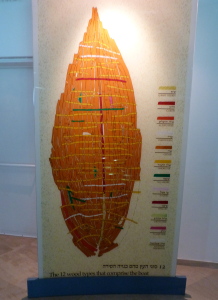
Besides cedar planking and oak frames, five other woods were used: Aleppo pine, sidar, hawthorn, willow and redbud.

Evidence of repeated repairs showed the boat had been used for several decades, perhaps nearly a century.

When its fishermen owners thought it was beyond repair, they removed all useful wooden parts, including the mast, stempost and sternpost — just as components of an old car might be removed today for spare parts. Then they pushed it out into the lake, where it sank in the silt.


Excavation took 11 days

Twelve wood types found in the Jesus Boat (Seetheholyland.net)

Twelve wood types found in the Jesus Boat (Seetheholyland.net)

Media hype following the discovery forced archaeologists to attempt an immediate excavation. While the Ministry of Tourism was promoting the “Jesus connection” in the hope of attracting pilgrims, ultra-Orthodox Jews in nearby Tiberias were demonstrating against the prospect of a boost to Christian missionary endeavours.

Because rains had begun, a massive dike had to be built around the site to protect it from the rising lake level.

The waterlogged timbers had the consistency of wet cardboard. Because evaporation would cause them to collapse, the boat had to be sprayed with water day and night and shaded from direct sunlight.

Then, working around the clock for 11 days, excavators and volunteers released the Jesus Boat from its muddy surroundings and encased it in a polyurethane foam “straitjacket” to hold it together.

In Shelley Wachsmann’s words, the boat looked “somewhat like an overgrown, melted marshmellow” when it was floated to the shore and lifted by crane into a conservation pool.

The 11-year conservation process included replacing the water in the wood cells with a synthetic wax that penetrated the cellular cavities of the deteriorated timber.

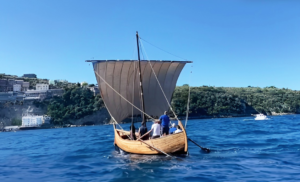
Full-size replica installed in the Vatican Museums (Vatican Museums)

Full-size replica installed in the Vatican Museums (Vatican Museums)

In September 2023 a full-size replica of the boat was installed in the Vatican Museums “Way of the Sea” permanent exhibition.


In Scripture:

Jesus stills the storm: Mark 4:35-41

Jesus tells parables from a boat: Matthew 13:1-9

The miraculous catch of fish: Luke 5:1-11


Administered by: Yigal Allon Museum, Kibbutz Ginosar

Tel.: 972-4-9119585

Open: Sat-Thur 8am-5pm, Fri 8am-4pm


References

Wachsmann, Shelley: “The Galilee Boat—2,000-Year-Old Hull Recovered Intact”, in The Galilee Jesus Knew (Biblical Archaeology Society, 2008)


External links
The Galilee Boat
Sea of Galilee Boat (Wikipedia)
“Peter’s Boat” docks in the Pope’s Museums (Vatican Museums)
« Newer PostsOlder Posts »

Jerusalem

Israel

Jerusalem

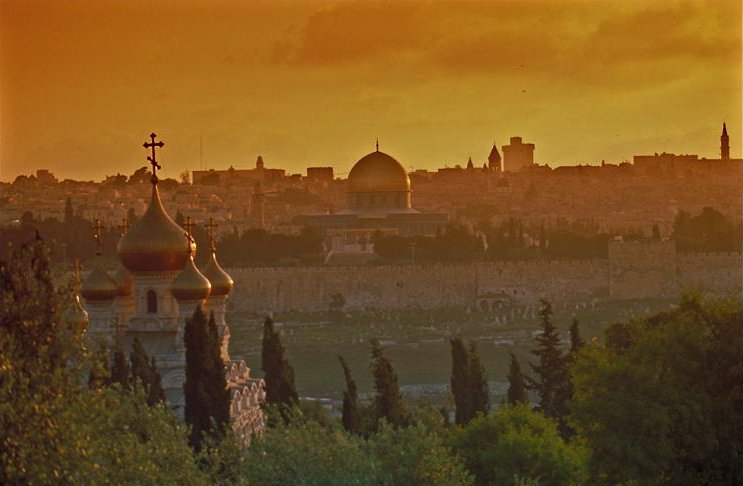
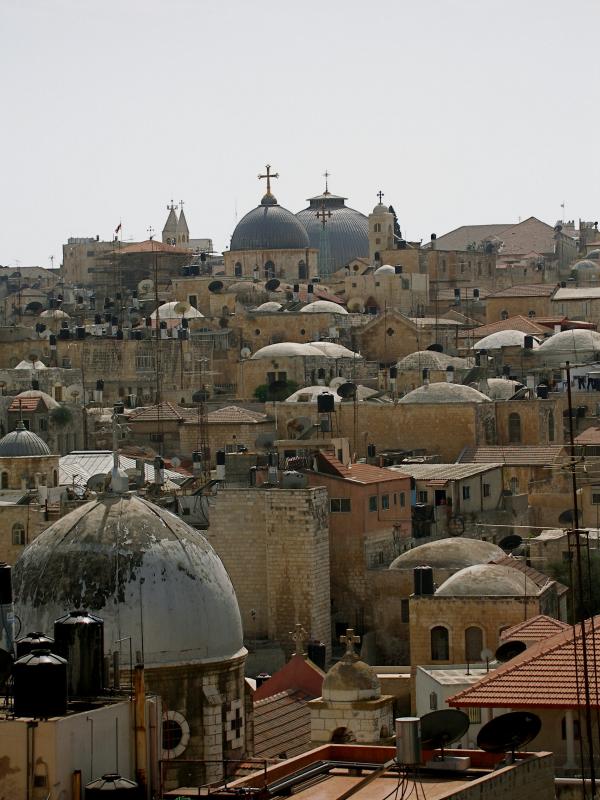
Jerusalem at sunset from Mount of Olives (© Israel Ministry of Tourism)

Jerusalem is revered as a holy city by half the human race.

For Jews it is the city King David made the capital of his kingdom, and where the Temple stood, containing the Ark of the Covenant. For Christians, it is where Christ died, was buried and rose again, and the birthplace of the Church. The Jewish and Christian Bibles mention Jerusalem several hundred times.

For Muslims it is al-Quds (“the Holy”) because they believe Muhammad ascended to heaven from the Temple Mount during his Night Journey.

Set on the Judaean mountains of central Israel, the Old City of Jerusalem is surrounded on three sides by steep valleys: The Hinnom on the south and west, the Kidron on the east. Its history lies in layers metres deep.

Its iconic symbol, the golden-roofed Dome of the Rock, stands on the Temple Mount, also identified as Mount Moriah, where Abraham prepared to sacrifice his son Isaac.

For modern pilgrims, this city of three faiths exerts a powerful pull, resonating with the Jewish Passover aspiration: “Next year in Jerusalem.”


Heritage of three faiths

Jerusalem

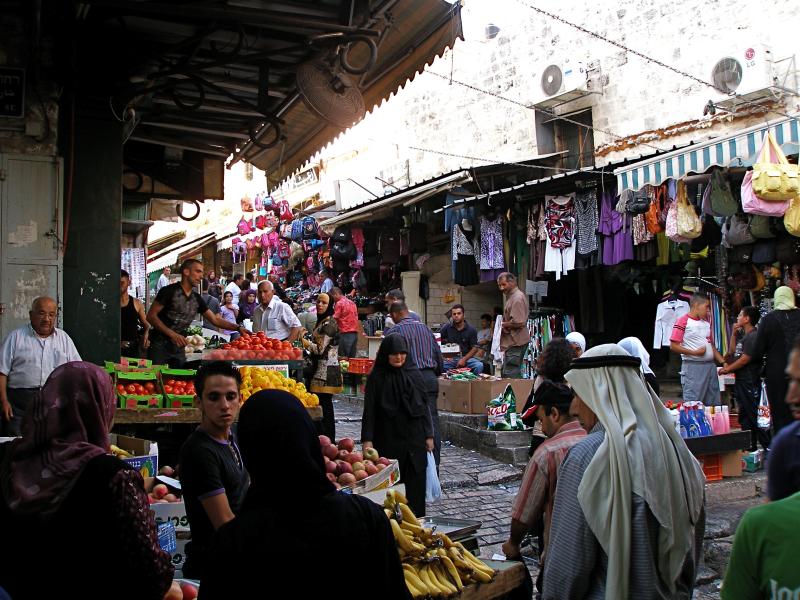
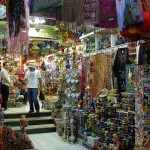
Market in the Old City (Seetheholyland.net)

The bustling modern city of Jerusalem, also faced with cream-toned limestone, has spread to the west and north of the Old City.

Modern Jerusalem is not a large city by international standards (its population in 2007 was 747,000, of whom 35,400 lived in the Old City). In the time of Christ its population was between 20,000 and 50,000.

It is a city with an intriguing blend of sights, sounds and smells, especially in the Arab markets of the Old City. The past and present continually rub shoulders. Church bells peal, muezzins call Muslims to prayer, and friars, rabbis and imams hasten by.

Reminders of the heritage of three faiths are never far away — Jerusalem has 1200 synagogues, more than 150 churches (representing 17 denominations) and more than 70 mosques.

The Israel Museum presents collections of arts and archaeology, including the Shrine of the Book containing Dead Sea Scrolls and an outdoor scale model of Jerusalem in AD 66. Exhibits in the Tower of David Museum depict 4000 years of history. The Yad Vashem complex documents the story of the victims of the Holocaust.

Old City has four quarters

At Jerusalem’s heart is the Old City, girded by a wall and divided into four “quarters” — named after the dominant ethnic or religious identity of its residents.

Its area is less than a square kilometre, about two-thirds the city’s size in the time of Christ. “Perched on its eternal hills, white and domed and solid, massed together and hooped with high gray walls, the venerable city gleamed in the sun. So small!” wrote Mark Twain in 1869, when settlements outside the walls had just begun to displace shepherds from the Judaean hills.

The Muslim Quarter, largest and most populous of the four, includes the Temple Mount with the Dome of the Rock and Al-Aqsa Mosque. Other sites in the quarter include the Pools of Bethesda and part of the Via Dolorosa.

Jerusalem

Church of the Holy Sepulchre above roofs of the Old City (Seetheholyland.net)

The Christian Quarter contains the rest of the Via Dolorosa and the Church of the Holy Sepulchre, which enshrines the sites of Christ’s death, burial and Resurrection. Headquarters of several Christian denominations are among the 40 religious buildings in the quarter.

The Jewish Quarter adjoins the Western Wall, the sole remnant of the Second Temple plaza, which is Judaism’s holiest place. This quarter is more modern, with sophisticated shopping plazas. Archaeological remains are on display in museums and parks.

The Armenian Quarter provides a reminder that Armenia was the first country to make Christianity the state religion (in 301). It contains the Armenian Orthodox Cathedral of St James and a museum in memory of the 1915-23 Armenian Holocaust.


Mount of Olives and Mount Zion

Outside the Old City, to the east is the Mount of Olives, where venerable olive trees still grow in the garden of Gethsemane, the scene of Jesus’ agony the night before he died.

Jerusalem

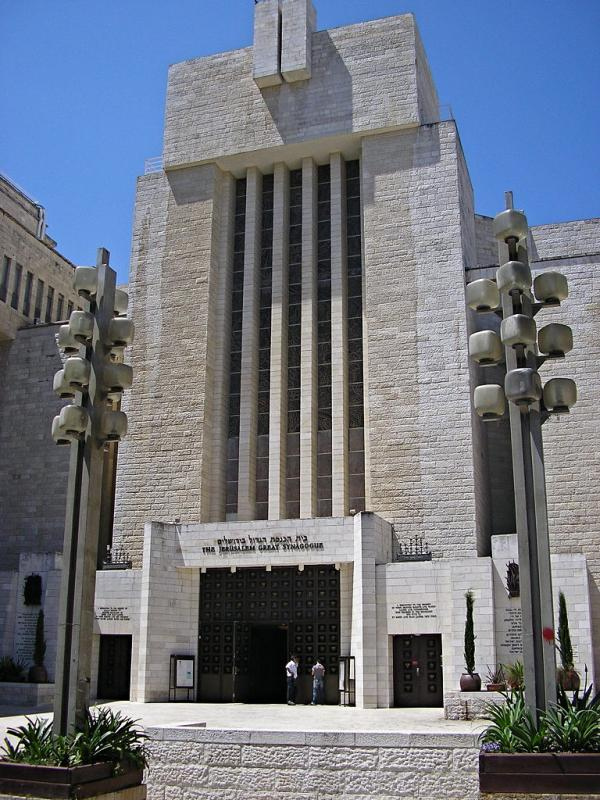
Jerusalem’s Great Synagogue (Arielhorowitz / he.wikipedia)

The teardrop Church of Dominus Flevit commemorates the Gospel incident in which Jesus wept over Jerusalem’s future fate.

The Church of Pater Noster recalls his teaching of the Lord’s Prayer. The Dome of the Ascension, now a mosque, marks the place where he is believed to have ascended to heaven.

Southwest of the Old City is Mount Zion, the highest point in ancient Jerusalem.

Here is found the Cenacle, believed to be on the site of the Upper Room of the Last Supper. This is also regarded as the site of the Descent of the Holy Spirit at Pentecost and the Council of Jerusalem, where early Church leaders met around AD 50.

The Church of St Peter in Gallicantu marks Jesus’ appearance before the high priest Caiaphas, and the Church of the Dormition commemorates the “falling asleep” of the Virgin Mary.


Conquered many times

Jerusalem

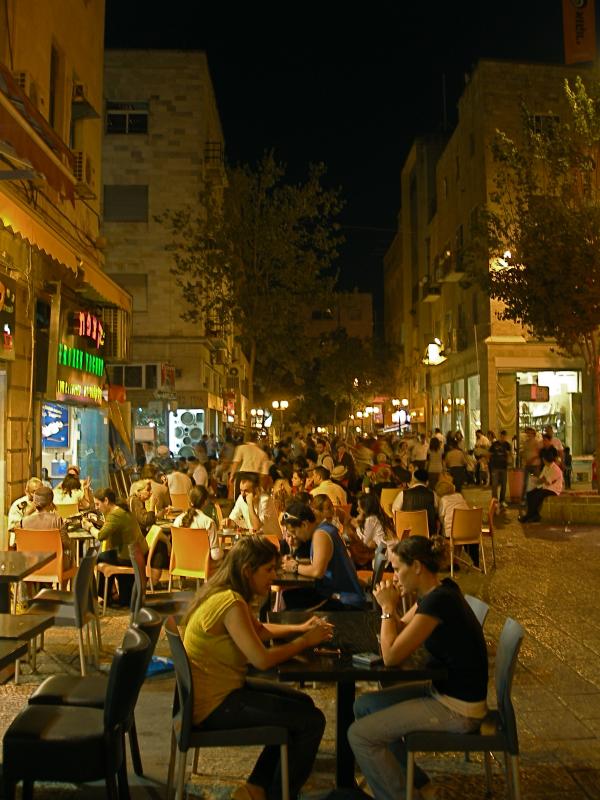
Dining out in modern Jerusalem (Seetheholyland.net)

The earliest reference to Jerusalem suggests that its name means “the foundation of [the Syrian god] Shalem”. A more common interpretation is “city of peace”, but peace has remained an elusive goal for most of the city’s history.

Down through the centuries, Jerusalem has been besieged, conquered and destroyed many times. Early settlers called Jebusites lived there around the Gihon Spring when David conquered it around 1000 BC and made it the capital of his kingdom.

During Old Testament times the conquerors included Babylonians (who destroyed the First Temple and exiled Jews to Babylon), Persians, Greeks, Syrians and Romans (who in AD 70 destroyed the Second Temple).

Since the Christian era began, Jerusalem has been ruled by the Roman Empire (first from Rome, then from Byzantium, now Istanbul), Persians, Arab Muslims, Crusaders, Muslims again, Egyptian Mamelukes, Ottoman Turks and, from 1917 to 1948, the British.

After the Arab-Israeli War of 1948, Jerusalem was partitioned between Jordan and the new state of Israel. The Israelis gained control of the predominantly Arab East Jerusalem and Old City during the 1967 Six Day War, but the status of Jerusalem remains a key issue in the ongoing Israeli-Palestinian conflict.


In Scripture:

Abraham prepares to sacrifice Isaac: Genesis 22:1-18

David makes Jerusalem his capital: 2 Samuel 5:4-10

Song of praise and prayer for Jerusalem: Psalm 122

Solomon builds the Temple: 1 Kings 5-6

Jesus enters Jerusalem: Matthew 21:1-11

Jesus is crucified, buried and rises again: Matthew 27:66—28:10; Mark 15:47—16:8; Luke 23:26—24:12; John 19:16—20:10

The coming of the Holy Spirit: Acts 2:1-4

The first Church Council at Jerusalem: Acts 15:1-29

The new Jerusalem: Revelation 21:1-4

References

Bowker, John: The Complete Bible Handbook (Dorling Kindersley, 1998)
Brisco, Thomas: Holman Bible Atlas (Broadman and Holman, 1998)
Gonen, Rivka: Biblical Holy Places: An illustrated guide (Collier Macmillan, 1987)
Inman, Nick, and McDonald, Ferdie (eds): Jerusalem & the Holy Land (Eyewitness Travel Guide, Dorling Kindersley, 2007)
McCormick, James R.: Jerusalem and the Holy Land (Rhodes & Eaton, 1997)
Mackowski, Richard M.: Jerusalem: City of Jesus (William B. Eerdmans, 1980)
Martin, James: A Pilgrim’s Guide to the Holy Land (Westminster Press, 1978)
Murphy-O’Connor, Jerome: The Holy Land: An Oxford Archaeological Guide from Earliest Times to 1700 (Oxford University Press, 2005)
Metzger, Bruce M., and Coogan, Michael D.: The Oxford Companion to the Bible (Oxford University Press, 1993)
Walker, Peter: In the Steps of Jesus (Zondervan, 2006)
Wareham, Norman, and Gill, Jill: Every Pilgrim’s Guide to the Holy Land (Canterbury Press, 1996)


External links
Old City Walking Tour (Hike-Israel.com)
The Jerusalem Insider’s Guide
« Newer PostsOlder Posts »

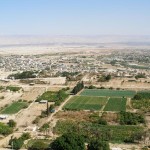
Jericho

West Bank

Jericho

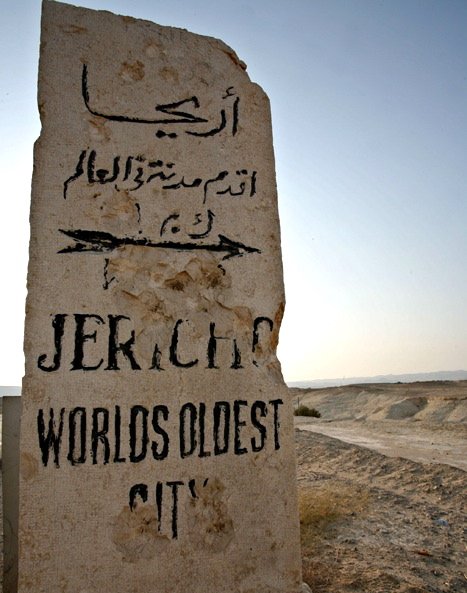
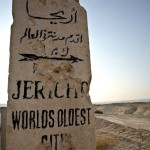
Sign for world’s oldest city (© Visitpalestine.ps)

It’s reputed to be the oldest town on earth, with stories to match. The Israelites supposedly brought down its walls with a great shout and trumpet blasts. Here Jesus healed Bartimaeus, the blind beggar, and dined with Zacchaeus, the rich tax collector. And both Cleopatra and Herod the Great coveted this lush oasis.

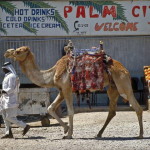
Jericho (the name means “City of palms”) is mentioned 70 times in the Old Testament.

In perhaps the most famous battle in the Bible, it was the first town captured by the Israelites when they entered the Promised Land. But did “the walls come tumbling down”, as the song says? Archaeologists are divided on whether Joshua’s Israelites did in fact demolish a walled city.

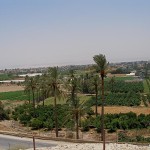
Water from Jericho’s powerful perennial spring provides irrigation for abundant fruit, flowers and spices. “When the orange and lemon trees are in bloom, in the spring, the air is so heavy with their perfume that the visitor is sure he could bottle some of it and take it home with him,” writes archaeologist Godfrey Kloetzli.

The spring is associated with the prophet Elisha, who purified its waters by throwing salt into it.


Mound rose as towns were destroyed

Jericho

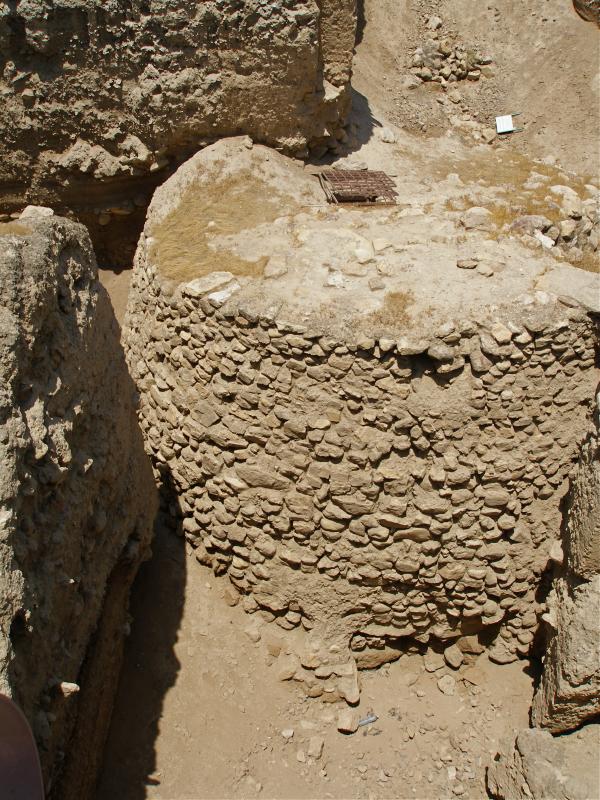
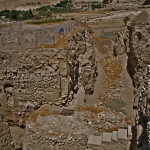
Ancient tower at Tell es-Sultan (Seetheholyland.net)

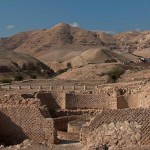
The first hunter-gatherers settled here around 9000 BC. Archaeologists have unearthed the remains of more than 20 successive settlements at Tell es-Sultan (or Sultan’s Hill), a sun-baked earthen mound two kilometres north of the present city.

The 15-metre mound was formed over the centuries as towns were destroyed and new ones built on their rubble. The most striking discovery unearthed is a thick-walled stone tower, 7 metres high and 7.6 metres across, dating back to 7000 BC.

Besides being the oldest town on earth, Jericho is also the lowest (more than 250 metres below sea level).


City of priests and Levites

Since Jericho was on the normal route from Galilee to Jerusalem, Jesus passed through it several times.

Jericho

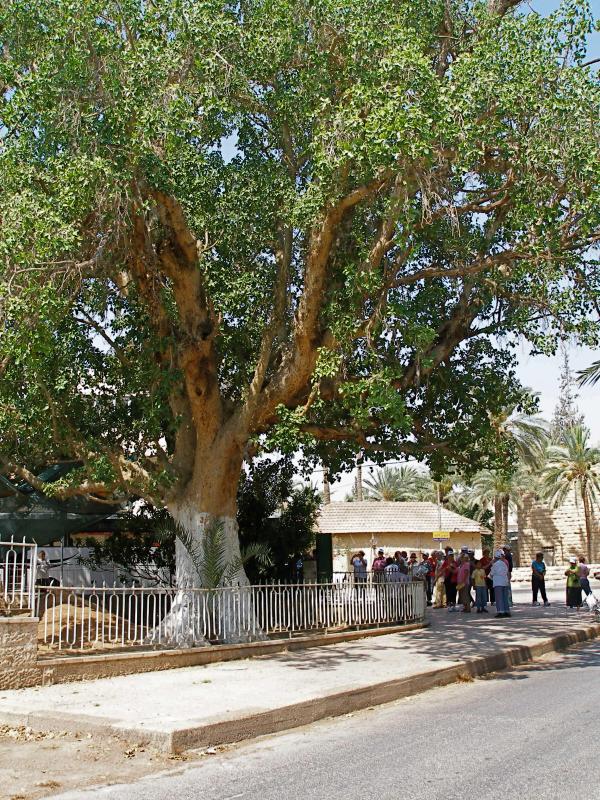
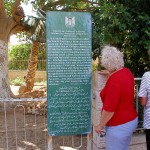
Sycamore described as Zaccheus’ tree (Seetheholyland.net)

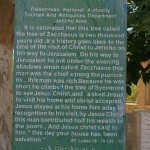
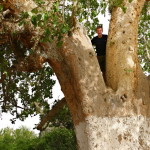
Near the centre of the city, a centuries-old sycamore tree recalls the incident in which the tax collector Zacchaeus, too short to see over the crowd, climbed a sycamore’s branches in order to see Jesus. (The African sycamore fig should not be confused with the sycamore of Europe and North America, which is a different species.)

At a nearby Greek Orthodox monastery, the trunk of a dead sycamore behind a glass frame is also described as the tax collector’s tree.

Jesus chose the steep, rocky road from Jerusalem down to Jericho as the setting for the parable of the Good Samaritan.

In this parable, Jesus describes the compassion of an alien (the Samaritan) towards a man who had been beaten and robbed, contrasting it with the pitiless attitude of a priest and a Levite who had “passed by on the other side” of the road.

At that time, Jericho was one of the cities designated for the residence of priests and Levites rostered for duty in the Temple, about 28 kilometres away. About 12,000 priests and Levites are believed to have lived there, and they were a familiar sight on the road.


Cleopatra wanted a perfume

In 35 BC the Roman politician Mark Antony made a gift of Jericho to his lover Cleopatra of Egypt. Cleopatra had coveted the oasis because she wanted to control the plantations of persimmon (now extinct), which produced a perfume that reputedly “drove men wild”.

Later Cleopatra leased Jericho to Herod the Great at an exorbitant fee that cost him almost half Judea’s income. After Mark Antony and Cleopatra died, Herod gained ownership of the city. He built a grand residence and died there in 4 BC.

Another impressive palace at Jericho was built by Hisham ibn Abd al-Malik, a caliph who ruled the vast Umayyad empire in the 8th century. 

Forgotten for over 1000 years, Hisham’s winter resort was rediscovered in the 19th century. After years of renovations, its large floor mosaic, containing more than five million pieces of stone, was unveiled in 2021.


In Scripture:

Joshua captures Jericho: Joshua 6:1-21

Elisha purifies the spring: 2 Kings:19-22

Zacchaeus meets Jesus: Luke 19:1-10

Jesus heals Bartimaeus: Mark 10:46-52

The Good Samaritan: Luke 10:25-37


Administered by: Palestinian National Authority.


References

Charlesworth, James H.: The Millennium Guide for Pilgrims to the Holy Land (BIBAL Press, 2000)
Freeman-Grenville, G. S. P.: The Holy Land: A Pilgrim’s Guide to Israel, Jordan and the Sinai (Continuum Publishing, 1996)
Gonen, Rivka: Biblical Holy Places: An illustrated guide (Collier Macmillan, 1987)
Inman, Nick, and McDonald, Ferdie (eds): Jerusalem & the Holy Land (Eyewitness Travel Guide, Dorling Kindersley, 2007)
Kloetzli, Godfrey: “Jericho”, Holy Land, summer 2004.
Murphy-O’Connor, Jerome: The Holy Land: An Oxford Archaeological Guide from Earliest Times to 1700 (Oxford University Press, 2005)
Wareham, Norman, and Gill, Jill: Every Pilgrim’s Guide to the Holy Land (Canterbury Press, 1996)


External links
Jericho (BiblePlaces)
Jericho (Custodia Terrae Sanctae)
History of City (Jericho Municipality)
Jericho — The Winter Palace of King Herod (Israel Ministry of Foreign Affairs)
Palestinians unveil huge restored mosaic in Jericho (Al Jazeera)
« Newer PostsOlder Posts »

Grotto of the Nativity

West Bank

Grotto of the Nativity

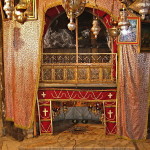
Grotto of the Nativity (Darko Tepert)

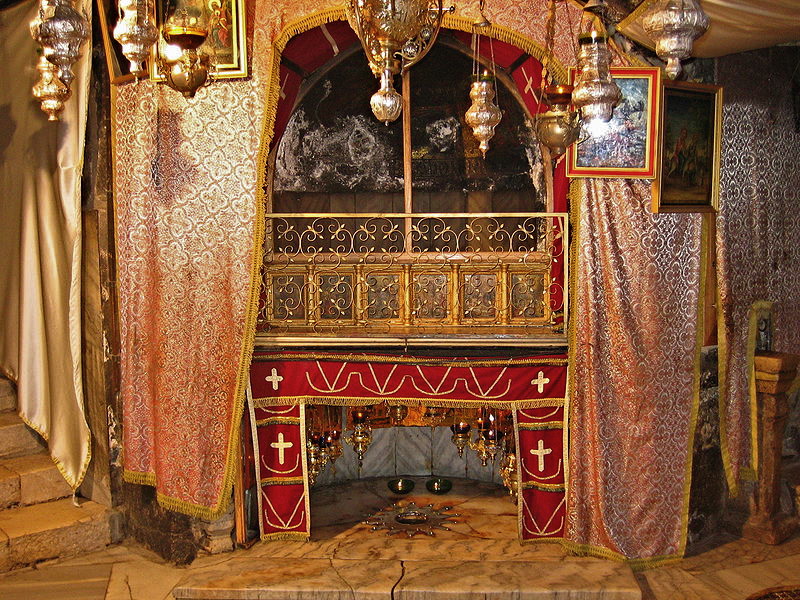
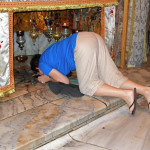
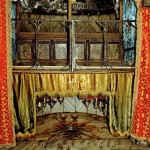
Far from the Christmas-card image, the place of Christ’s birth is a dimly-lit rock cave. Instead of a star above, a 14-point silver star on the marble floor of the Grotto of the Nativity bears the words “Hic de Virgine Maria Jesus Christus natus est” (Here Jesus Christ was born to the Virgin Mary).

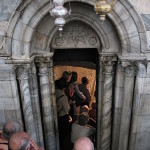
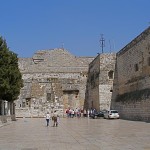
Entry is from Bethlehem’s Church of the Nativity. Steps to the right of the iconostasis (the carved screen standing in front of the main altar) lead down to the subterranean cave.

Rectangular in shape, the cave measures about 12 metres by 3 metres. Like the church above, it is in the possession of the Greek Orthodox Church.

The rough rock of the first Christmas has given way to marble facings and, in the words of biblical scholar E. M. Blaiklock, the cave is “hung and cluttered with all the tinsel of men’s devotions”.

On feast days the cave is lit by 48 hanging lamps. Following a serious fire in 1869, three of the walls are protected by heavy leather drapes backed with asbestos.


Manger covered with marble

Grotto of the Nativity

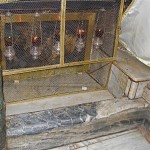
Grotto of the Manger (Seetheholyland.net)

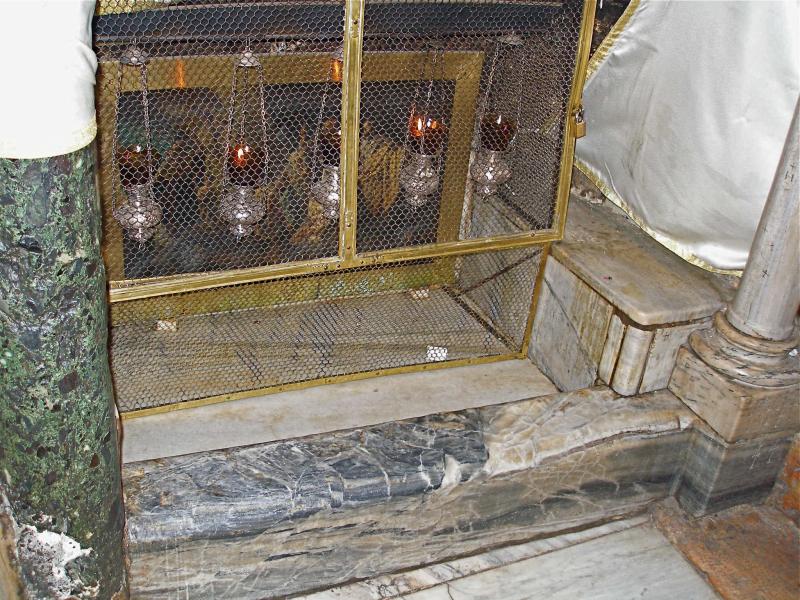
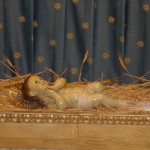
At a slightly lower level is the Grotto of the Manger. The rock shelf has been covered with marble, but the original rock may be seen around the manger. The dimensions match those of feeding troughs cut into the rock by Bedouins.

When the original church was built in the 4th century, the Grotto of the Nativity was enlarged to make room for pilgrims and at that time a silver manger was installed.

St Jerome, whose own cave was nearby, did not approve: “If I could only see that manger in which the Lord lay! Now, as if to honour the Christ, we have removed the poor one and placed there a silver one; however, for me the one which was removed is more precious . . . .”

Grotto of the Nativity

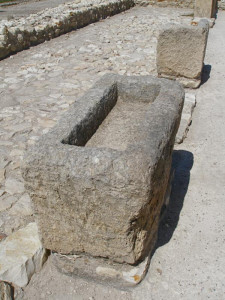
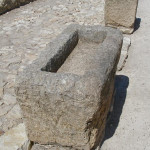
Stone trough from the 9th century before Jesus was born, found at Megiddo (Seetheholyland.net)

A small altar in the Grotto of the Manger is dedicated to the Adoration of the Magi, the Three Wise Men described in Matthew’s Gospel as coming from the East (probably Persia) to worship the newborn Jesus. This is where the Catholics celebrate Mass.


Other sites in the Bethlehem area:

Bethlehem

Church of the Nativity

St Jerome’s Cave

Church of St Catherine of Alexandria

Milk Grotto

Shepherds’ Field

Tomb of Rachel

Field of Boaz

Herodium


In Scripture:

The birth of Jesus: Luke 2:1-20; Matthew 1:18-25

The visit of the Wise Men: Matthew 2:1-12

Administered by: Greek Orthodox Church

Tel.: 972-2-2742440

Open: April-September, Mon-Sat 6.30am-7.30pm. October-March, Mon-Sat: 5.30am-5pm (5.30pm in January, 6pm February-March). Grotto opens at 11.30am on Sundays.


References

Blaiklock, E. M.: Eight Days in Israel (Ark Publishing, 1980)
Brownrigg, Ronald: Come, See the Place: A Pilgrim Guide to the Holy Land (Hodder and Stoughton, 1985)
Freeman-Grenville, G. S. P.: The Holy Land: A Pilgrim’s Guide to Israel, Jordan and the Sinai (Continuum Publishing, 1996)
Gonen, Rivka: Biblical Holy Places: An illustrated guide (Collier Macmillan, 1987)
Inman, Nick, and McDonald, Ferdie (eds): Jerusalem & the Holy Land (Eyewitness Travel Guide, Dorling Kindersley, 2007)
Joseph, Frederick: “Bethlehem”, Holy Land, winter 2002
Murphy-O’Connor, Jerome: The Holy Land: An Oxford Archaeological Guide from Earliest Times to 1700 (Oxford University Press, 2005)
Petrozzi, Maria Teresa: “The Nativity Grotto”, Holy Land, winter 1997
Wareham, Norman, and Gill, Jill: Every Pilgrim’s Guide to the Holy Land (Canterbury Press, 1996)


External links
Bethlehem (Custodia Terrae Sanctae)
Church of the Nativity (Wikipedia)
« Newer PostsOlder Posts »

Garden Tomb

Jerusalem

Garden Tomb

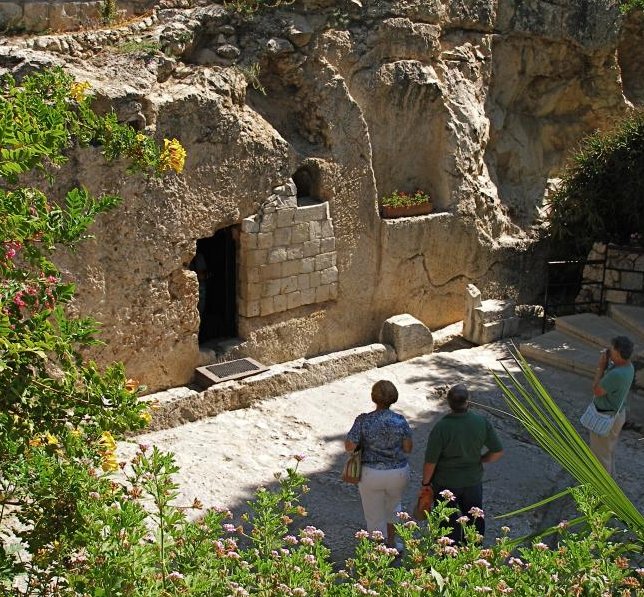
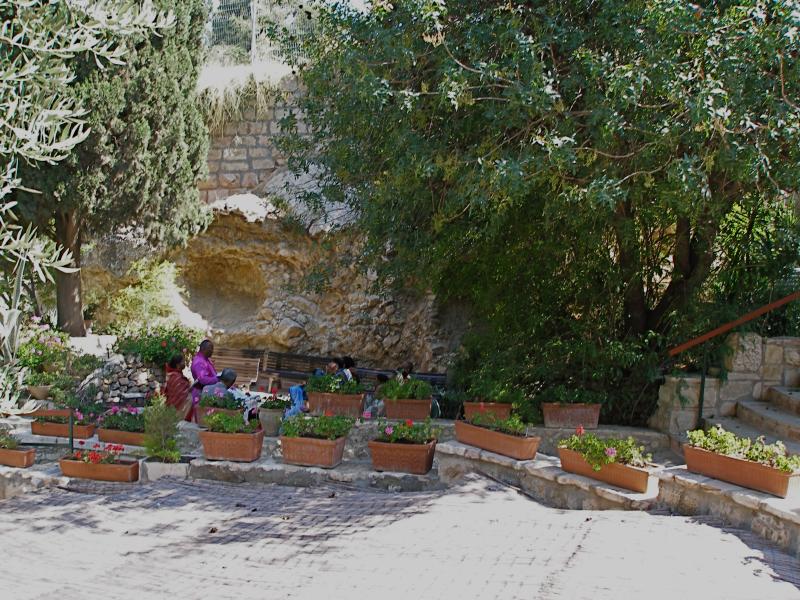
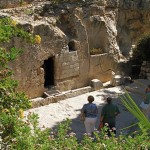
Visitors approach Garden Tomb (Seetheholyland.net)

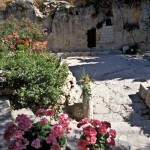
In a setting of neatly maintained gardens and trees, the Garden Tomb provides a tranquil environment for prayer and reflection. But any claim that this is where Christ was buried and rose from the dead lacks authenticity.

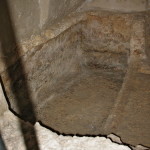
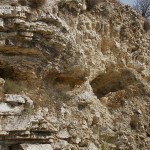
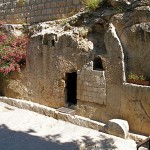
The open tomb carved into a rock face, with skull-like erosion in a limestone cliff nearby, can be found down an alley off Nablus Road, north of the Damascus Gate in Jerusalem.

The site is particularly favoured by Protestant pilgrims, in preference to the cluttered Church of the Holy Sepulchre in the Old City. For a period it enjoyed the formal support of the Anglican Church.

“It is much easier to pray here than in the Holy Sepulchre,” writes Jerome Murphy-O’Connor in his Oxford Archaeological Guide The Holy Land. “Unfortunately there is no possibility that it is in fact the place where Christ was buried.”


Army officer was main advocate

Garden Tomb

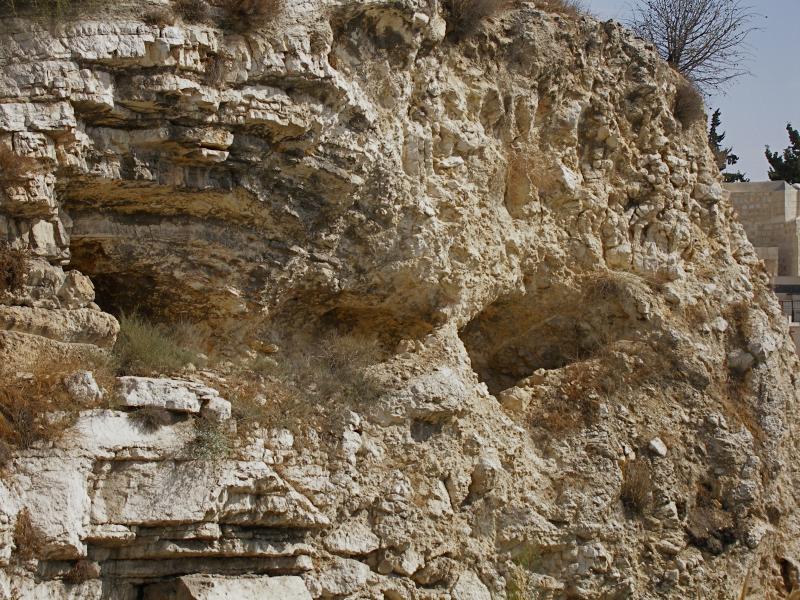
Close-up of Skull Hill (Seetheholyland.net)

The Nablus Road site of the Garden Tomb was first proposed in 1842 by a German scholar, Otto Thenius. He suggested that the skull-faced cliff was the hill of Golgotha, where Jesus was crucified. John’s Gospel (19:17) describes the place of crucifixion as “The Place of the Skull, which in Hebrew is called Golgotha”. The rock-hewn tomb nearby was found in 1867.

The main advocate of this site was a British army officer and administrator, Major-General Charles Gordon, who visited Jerusalem in 1882-83. Though he had no academic education in history or archaeology, a dream assisted him to identify the cliff as the place where Jesus was crucified. For years the site was known as “Gordon’s Calvary”, Calvary being Latin for Golgotha.

The idea that the “Place of the Skull” was named because of a skull-like hill is a modern notion. Most early Christian commentators held that Golgotha was so named because it was a place of execution, where criminals’ skulls and bones lay scattered.


Precise location not in Gospels

The Gospels do not reveal the precise location of Golgotha or Christ’s sepulchre. They do say that:

• Christ was crucified near (but outside) the city and by a well-travelled road (since passersby mocked him).

• He was buried in a new tomb, hewn out of rock, in a nearby garden.

The Garden Tomb is certainly outside the walls of the Old City. The Church of the Holy Sepulchre, however, is inside the walls — but it was outside until about a decade after the crucifixion of Christ, when the so-called third north wall was built by Herod Agrippa I.

The present 16th-century battlements, constructed by the Turkish sultan Suleiman the Magnificent, follow the course of this 1st-century wall. This fact was not known in General Gordon’s time.

All the tombs in the Garden Tomb area date from 7 to 9 centuries BC — the time of Jeremiah or Isaiah, rather than Jesus. But the tombs within the Church of the Holy Sepulchre were new in the time of Jesus.

Environment encourages meditation

Garden Tomb

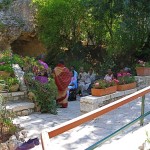
Meditative setting of Garden Tomb (Seetheholyland.net)

The Church of the Holy Sepulchre also has longstanding tradition in its favour, indicating that it stands over the sites that the early Christian community venerated as the places where Christ died, was buried and rose again. The Garden Tomb site, on the other hand, was used by Christian Crusaders as a stable.

Despite its lack of authenticity, the Garden Tomb has an aura of calmness that encourages meditation.

“Walk around the gravel paths between the simple flower beds and the shrubs, and under the dark pines,” writes biblical historian E. M. Blaiklock. “Go one by one or two by two into the tomb, and pray for what lies nearest to the heart. A service is not necessary. It is a place in which you should meet with God alone, quietly, without distracting words, in tranquillity.”

Related sites:

Church of the Holy Sepulchre

Church of the Holy Sepulchre Chapels


In Scripture:

The burial of Jesus: Matthew 27:57-66; Mark 15:42-47; Luke 23:50-56; John 19:38-42

The Resurrection: Matthew 28:1-10; Mark 16:1-8; Luke 24:1-12; John 20:1-10


Administered by: Garden Tomb Association

Tel.: 972-2-539-8100

Open: 8.30am-noon; 2-5.30pm (closed Sundays except for service in English at 9am)


References

Blaiklock, E. M.: Eight Days in Israel (Ark Publishing, 1980)
Gonen, Rivka: Biblical Holy Places: An illustrated guide (Collier Macmillan, 1987)
Freeman-Grenville, G. S. P.: The Holy Land: A Pilgrim’s Guide to Israel, Jordan and the Sinai (Continuum Publishing, 1996)
Inman, Nick, and McDonald, Ferdie (eds): Jerusalem & the Holy Land (Eyewitness Travel Guide, Dorling Kindersley, 2007)
McCormick, James R.: Jerusalem and the Holy Land (Rhodes & Eaton, 1997)
Murphy-O’Connor, Jerome: The Holy Land: An Oxford Archaeological Guide from Earliest Times to 1700 (Oxford University Press, 2005)
Wareham, Norman, and Gill, Jill: Every Pilgrim’s Guide to the Holy Land (Canterbury Press, 1996)


External links
The Garden Tomb (Garden Tomb Association)
Garden Tomb (Holy Land Photos)
Garden Tomb (BiblePlaces)
« Newer PostsOlder Posts »
All content © 2022, See the Holy Land | Site by Ravlich Consulting & Mustard Seed
You are welcome to promote site content and images through your own
website or blog, but please refer to our Terms of Service | Login