. . . your guide to visiting the holy places  
If you have found See the Holy Land helpful and would like to support our work, please make a secure donation.
The Sites

Israel and Palestine – In Jerusalem

Israel and Palestine – Outside Jerusalem

Jordan

Egypt

Extras

Nain

Israel

Nain

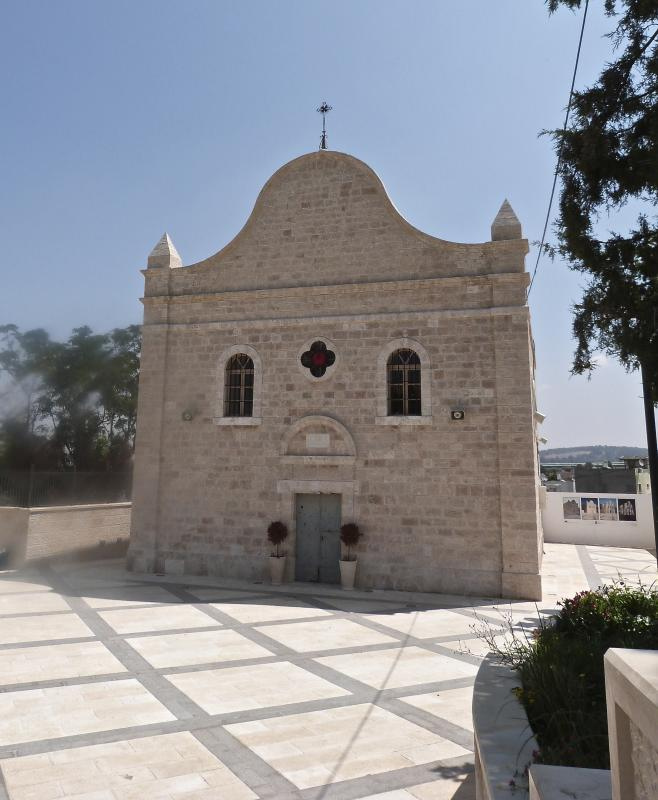
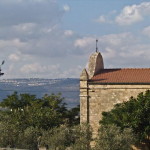
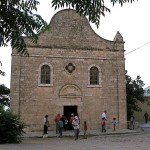
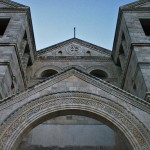
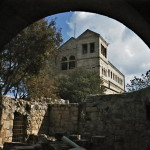
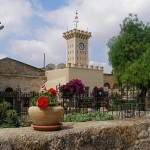
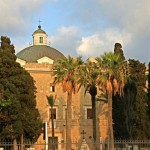
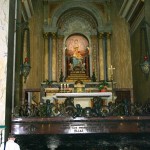
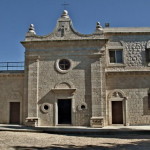
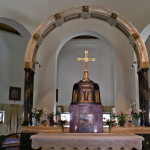
Franciscan church at Nain (Seetheholyland.net)

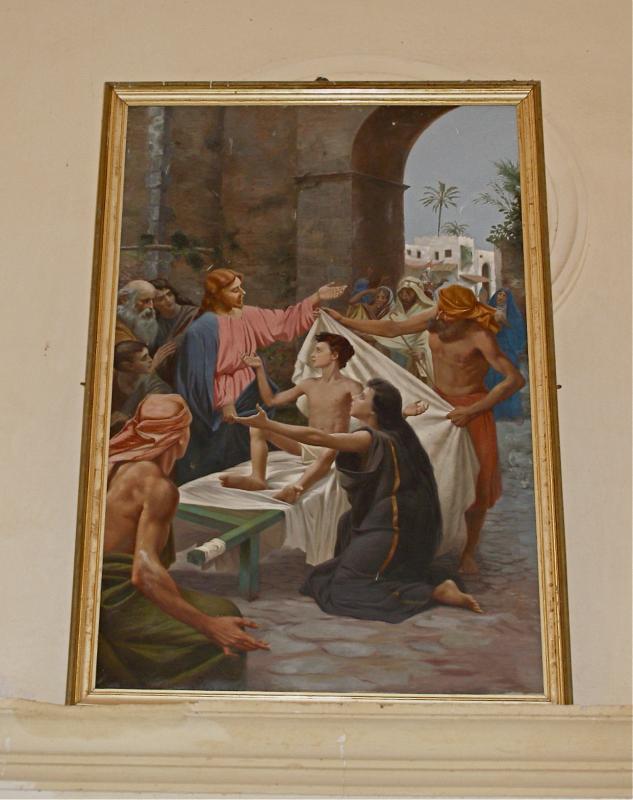
The tiny Galilean village of Nain is remembered only because here Jesus brought back to life a widow’s son as he was being taken out through the town gate to be buried.

Jesus met the funeral procession carrying the young man’s body — “his mother’s only son, and she was a widow” — and had compassion for her  (Luke 7:11-17).

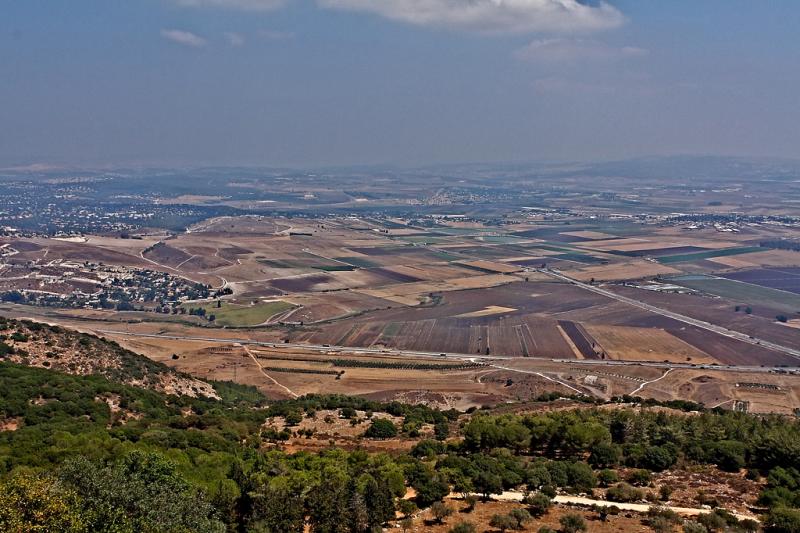
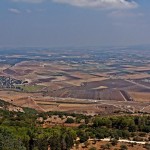
The place where the miracle occurred is 7km south-west of Mount Tabor, up a steep road. The village (also known as Naim) looks out on to the Plain of Jezreel.

Eusebius, the bishop of Caesarea, identified the location in the 4th century, noting that it was not far from Endor, where King Saul of Judah consulted a medium before his final encounter with the Philistines, described in the book of 1 Samuel.


No gate has been found

Although Luke’s account says Jesus raised the young man near the town gate, no evidence of a gate or wall has been found. Either the gate belonged to a simple enclosure or the word was used figuratively, referring to the place where the road entered the houses.

The first recorded account of a pilgrim’s visit is anonymous (probably by Egeria, who visited the Holy Land as a pilgrim around AD 380). It says: “In the village of Nain is the house of the widow whose son was brought back to life, which is now a church, and the burial place where they were going to lay him is still there to this day.”

After the fall of the Latin kingdom in the 12th century, Nain became a Muslim village (as it remains).

A French monk who visited the place in 1664 related: “In the village are one hundred Arab families, wild as leopards, and therefore only few Christians come. And there is no sign of the house of the widow.”


Muslim helped Franciscans

Nain

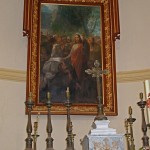
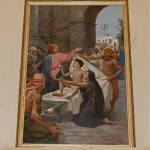
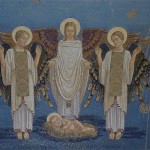
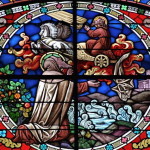
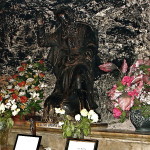
Christ raising the widow’s son, in Nain church (Seetheholyland.net)

When the Franciscans in 1880 acquired the ruins of an ancient church, which had at one time been converted into a mosque, they were helped by the head of the village.

A report in the Vatican newspaper L’Osservatore Romano described him as “an honest Muslim with a good heart who gave permission to take water from the only nearby source and stones from his own land — both water and stones as much needed for the building as they are scarce on the site”.

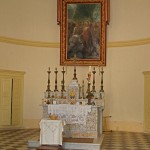
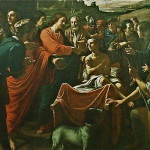
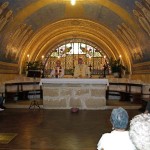
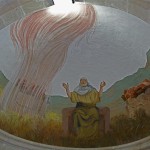
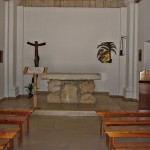
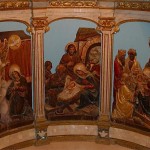
The Franciscans built a simple, rectangular church. Inside, two paintings depict the miracle in different styles.

West of the village, about half a kilometre away from the houses, are tombs cut into the rock on the flank of the mountain. The cemetery was in this area and the funeral procession Jesus met would have been making its way in this direction.


In Scripture:

Jesus raises the widow’s son: Luke 7:11-17

Administered by: Franciscan Custody of the Holy Land

Open: After the church had remained closed for several years, the Franciscans in December 2019 announced plans to eventually have it open every day. In the meantime the key is held at the Franciscan sanctuary on Mount Tabor.


References

Bagatti, Bellarmino: “Nain of the Gospel”, Holy Land, summer 2001
Gonen, Rivka: Biblical Holy Places: An illustrated guide (Collier Macmillan, 1987)
Kilgallen, John J.: A New Testament Guide to the Holy Land (Loyola Press, 1998)
Meistermann, Barnabas: “Naim”, The Catholic Encyclopedia (Robert Appleton Company, 1911)


External link

Naim (Custodia Terrae Sanctae)
Naim (BibleWalks)
« Newer PostsOlder Posts »

Mount Tabor

Israel

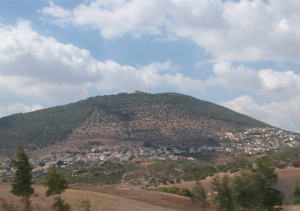
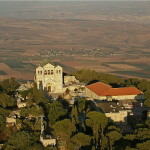
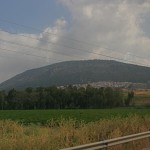
Mount Tabor, rising dome-like from the Plain of Jezreel, is the mountain where Christian tradition places the Transfiguration of Jesus.

Mount Tabor with Franciscan monastery on top (Seetheholyland.net)

Mount Tabor with Franciscan monastery on top (Seetheholyland.net)

Scholars disagree on whether Mount Tabor was the scene of that event (described in Matthew 17:1-9; Mark 9: 2-8 and Luke 9:28-36). However, it has throughout history been a place of mystique and atmosphere, where humanity has sought contact with the divine.

Its unique contours — variously described as “breast-shaped”, “hump-backed” and “resembling an upside down tea cup” — captured the imagination of ancient peoples who attached to it supernatural qualities.

Mount Tabor stands some 420 metres above the plain in lower Galilee, 7km east of Nazareth. It held a strategic position at the junction of trade routes. Many battles have been fought at its foot.

In the Old Testament, Mount Tabor is described as a sacred mountain and a place for worship. It is not mentioned by name in the New Testament.


Location of Transfiguration is questioned

Mount Tabor

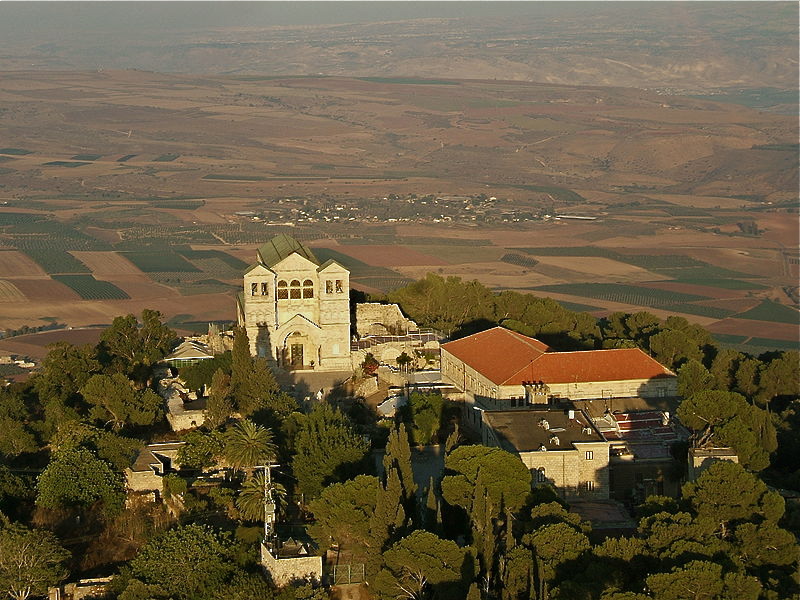
Church buildings on Mount Tabor (Wikimedia)

The Gospel accounts of the Transfiguration — a momentous event in which Peter, James and John were introduced to the divine incarnation of Christ, the God-Man — do not specify the place. They simply say it was a “high mountain” in Galilee.

Christian tradition in the early centuries named the mountain as Tabor. This location is cited in early apocryphal writings and was accepted by the Syriac and Byzantine churches.

Many biblical scholars now question this tradition. Mount Tabor’s location does not fit well into events before and after the Transfiguration. At the time, a Hasmonean fortress stood on the summit.

And would Tabor be considered a “high mountain”, especially compared to other mountains in the vicinity? (It’s actually more than 200 metres lower than Jerusalem.)

These scholars see the much higher Mount Hermon as a more likely location.

Nevertheless, a succession of churches and a monastery were built on Mount Tabor from the fourth century.


Hairpin bends take taxis to the top

Mount Tabor

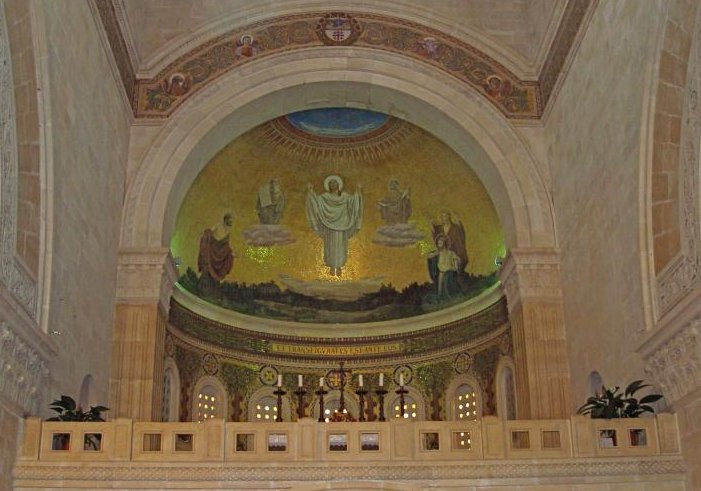
Mosaic of Transfiguration in apse of Church of the Transfiguration (Seetheholyland.net)

After the Crusaders were defeated in the 12th century and the area was taken over by the Turks, the Mamluk sultan Baybars destroyed all the religious buildings on Mount Tabor in 1263. Tabor remained deserted for nearly 400 years until the Franciscans negotiated permission to settle there.

Early pilgrims used to climb 4300 steps cut into the rocky slope to reach the summit. These days taxis negotiate a succession of hairpin bends before they suddenly reach the summit.

The present Catholic and Greek Orthodox buildings (separated by a wall) were constructed in the late 19th and early 20th centuries.

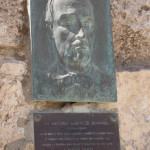
The prominent Catholic Church of the Transfiguration, designed by the Italian architect Antonio Barluzzi, stands among ruins of a Benedictine monastery. A bas-relief of the architect, who designed many of the Holy Land’s churches, is set into a wall on the right of the entrance.

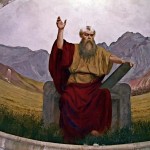
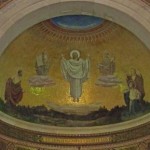
Its entrance is flanked by chapels dedicated to Moses and Elijah, who were seen with Jesus during his Transfiguration. The event itself is depicted above the main altar in the central apse.

In the crypt under the church are the altar and fragments of walls of a Byzantine church. There is a tradition that the rock floor of the crypt is where Jesus stood during the Transfiguration.

The Greek Orthodox church, often not open to visitors, honours Elijah. It too is built on the ruins of Byzantine and Crusader churches.


‘Breadbasket’ scene of battles

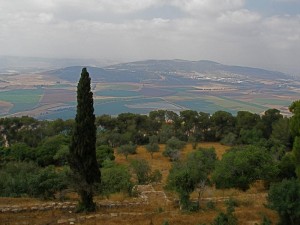
Mount Tabor’s height affords uninterrupted panoramas. From the balcony of the Franciscan hospice, the view is of the plain of Jezreel, bounded by the Carmel range and the mountains of Samaria.

The fertile plain is called “the breadbasket of Israel”, a reminder that one of the meanings of Jezreel is “God sows”.

Mount Tabor

Jezreel Valley from Mount Tabor (Seetheholyland.net)

But this plain has often resounded to the clash of battle.

On the slopes of Mount Tabor, in the time of the Judges, the prophetess Deborah and her general Barak marshalled their warriors before sweeping down to rout the 900 chariots of Sisera and his Canaanites (Judges 4:4-16).

Armies of all the great generals who campaigned in the Middle East have tramped across the plain, from the pharaoh Thutmose III to General Edmund Allenby, and including Alexander the Great and Napoleon.

And in the Book of Revelation, it is named as the scene of the battle of Armageddon (also called Harmagedon or Har-Megiddo), in which good will triumph over evil.


In Scripture:

Deborah and Barak’s triumph: Judges 4:4-14

The Transfiguration: Matthew 17:1-9; Mark 9: 2-8 and Luke 9:28-36


Administered by: Franciscan Custody of the Holy Land

Tel.: 972-4-6620720

Open: 8am-noon, 2-5pm


References

Brownrigg, Ronald: Come, See the Place: A Pilgrim Guide to the Holy Land (Hodder and Stoughton, 1985)
Charlesworth, James H.: The Millennium Guide for Pilgrims to the Holy Land (BIBAL Press, 2000)
Freeman-Grenville, G. S. P.: The Holy Land: A Pilgrim’s Guide to Israel, Jordan and the Sinai (Continuum Publishing, 1996)
Gonen, Rivka: Biblical Holy Places: An illustrated guide (Collier Macmillan, 1987)
Murphy-O’Connor, Jerome: The Holy Land: An Oxford Archaeological Guide from Earliest Times to 1700 (Oxford University Press, 2005)
Pixner, Bargil: With Jesus Through Galilee According to the Fifth Gospel (Corazin Publishing, 1992)
Wareham, Norman, and Gill, Jill: Every Pilgrim’s Guide to the Holy Land (Canterbury Press, 1996)


External links

Mount Tabor (Custodia Terrae Sanctae)
Mount Tabor (BiblePlaces)
Mount Tabor Hike (Israel by Foot)
« Newer PostsOlder Posts »

Mount Carmel

Israel

Mount Carmel

View from top of Mt Carmel (Patrick Brennan)

The prophet Elijah’s fire-lighting challenge — one of the Old Testament’s most spectacular contests between Yahweh, the God of the Israelites, and a pagan deity — took place on the south-eastern summit of Mount Carmel.

Stretching south-east from the Mediterranean Sea, with the city of Haifa sloped against it, Mount Carmel is actually a coastal range rather than a mountain.

From ancient times it was considered a sacred place. It is often cited in the Old Testament for its beauty and fertility.

The 6th-century Greek mathematician Pythagoras is recorded to have visited the mountain because of its reputation for sacredness, stating that it was “the most holy of all mountains, and access was forbidden to many”.

Elijah called fire from heaven

Elijah’s challenge came during a period after successive kings “did evil in the sight of the Lord” (1 Kings 16:30).

King Ahab had married the Phoenician princess Jezebel. She turned his allegiance from Yahweh to her god Baal and had Yahweh’s prophets slaughtered.

So Elijah called on Ahab to assemble the 450 priests of Baal on Mount Carmel. There he challenged the priests to call on fire from Baal to light a sacrifice.

As the book of 1 Kings relates, Baal failed to respond to the priests’ cries. Then Elijah rebuilt the ruined altar of the Lord and offered a sacrifice. Immediately fire from heaven consumed the offering, even though it had been soaked in water.

Biblical scholar E. M. Blaiklock captures the vividness of the scene: “Picture it — the rabble of priests, their monotonous chant hypnotising the devotees to the point when they slashed body and limb in wild passion, the shaggy prophet sitting near and mocking their vain supplications, Ahab’s tent and rich entourage, the great curve of the watching, waiting host. Then the stab of fire and the burning sacrifice . . . .”


Statue marks site

Mount Carmel

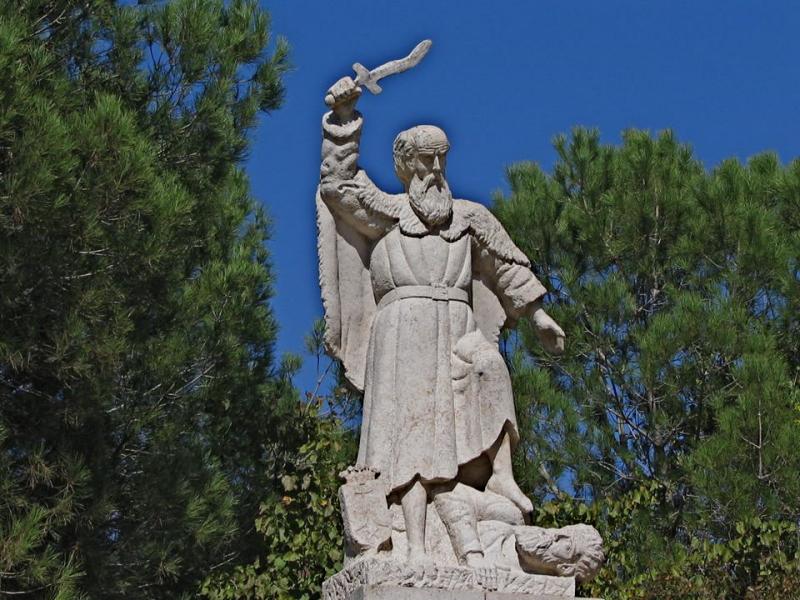
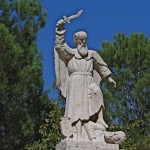
Statue of Elijah slaying a Baal priest at Muhraka (© Biblicalisraeltours)

On the south-eastern peak of Mount Carmel, the site is now known as Muhraka (“the Scorching”).

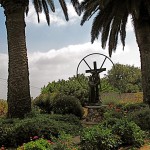
It is marked by a dramatic stone statue of Elijah, sword raised to heaven as he slaughters a Baal priest, and a small Carmelite monastery, surrounded by a nature reserve.

A superb view takes in the plain of Esdraelon and southern Galilee.

On the plain below is the Kishon brook, where Elijah took the priests of Baal and had them put to death.


Caves associated with Elijah

Mount Carmel

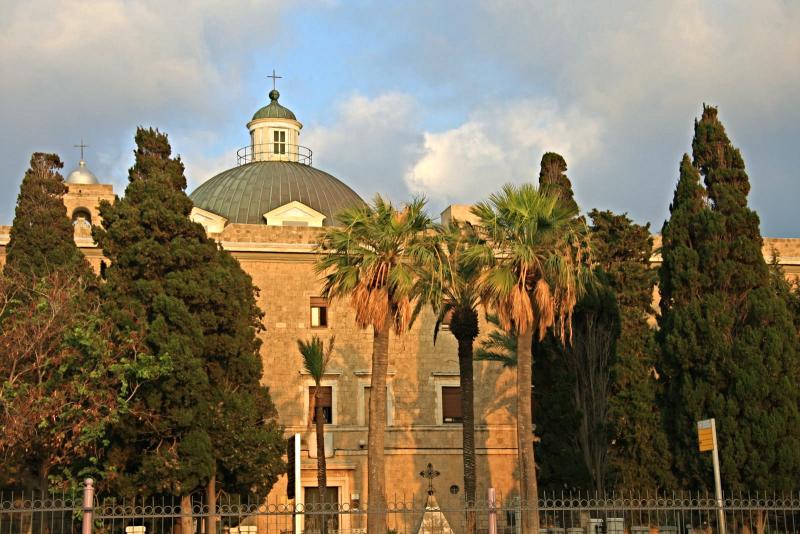
Stella Maris Monastery on Mount Carmel (Ilan)

At the western edge of Mount Carmel is Stella Maris Monastery, the world headquarters of the Carmelites, a Catholic religious order.

A small cave under the monastery is held by a Christian tradition to be a place where Elijah occasionally lived — as people on Mount Carmel have lived in caves since prehistoric times.

Opposite the monastery, a footpath down towards the Mediterranean leads to another grotto called Elijah’s Cave. Here the prophet is said to have meditated before his encounter with the priests of Baal. The cave is also thought to be where Elijah established a “school of prophets”.

Mount Carmel’s most spectacular religious memorial, however, is the Baha’i Shrine of the Báb, which runs in manicured terraces up the northern slope. The site is a sacred place for Baha’is around the world.

Sites in the area:

Stella Maris Monastery

Elijah’s Cave

Baha’i Shrine


In Scripture:

Elijah triumphs over the priests of Baal: 1 Kings 18:1-40


References

Blaiklock, E. M.: Eight Days in Israel (Ark Publishing, 1980)
Brownrigg, Ronald: Come, See the Place: A Pilgrim Guide to the Holy Land (Hodder and Stoughton, 1985)
Charlesworth, James H.: The Millennium Guide for Pilgrims to the Holy Land (BIBAL Press, 2000)
Freeman-Grenville, G. S. P.: The Holy Land: A Pilgrim’s Guide to Israel, Jordan and the Sinai (Continuum Publishing, 1996)
Gonen, Rivka: Biblical Holy Places: An illustrated guide (Collier Macmillan, 1987)
Inman, Nick, and McDonald, Ferdie (eds): Jerusalem & the Holy Land (Eyewitness Travel Guide, Dorling Kindersley, 2007)


External links

Mount Carmel (Wikipedia)
Mount Carmel (BiblePlaces)
Mount Carmel (Catholic Encyclopedia)
Muhraka Hike (Israel by Foot)
« Newer PostsOlder Posts »

Mount of Beatitudes

Israel

Mount of Beatitudes

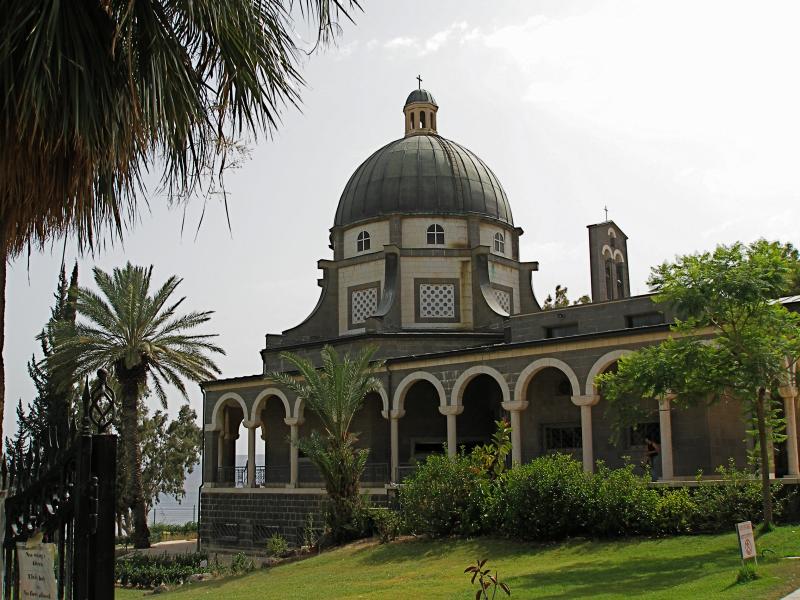
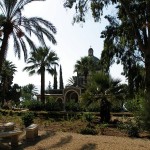
Cloister of Beatitudes church overlooking Sea of Galilee (Seetheholyland.net)

The Mount of Beatitudes, believed to be the setting for Jesus’ most famous discourse, the Sermon on the Mount, is one of the most beautifully serene places in the Holy Land.

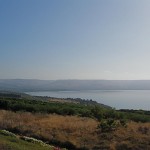
Overlooking the northwestern shore of the Sea of Galilee, it offers an enchanting vista of the northern part of the lake and across to the cliffs of the Golan Heights on the other side.

Within sight are the scenes of many of the events of Jesus’ ministry in Galilee, including the town of Capernaum 3km away, where he made his home. Just below is Sower’s Cove, where it is believed Jesus taught the Parable of the Sower (Mark 4:1-9) from a boat moored in the bay.

The exact site of the Sermon on the Mount (Matthew 5:1-7:28) is unknown. Pilgrims commemorate the event at the eight-sided Church of the Beatitudes, built on the slope of the mount and accessible by a side road branching off the Tiberias-Rosh Pina highway.

The Mount of Beatitudes is also understood to be the place where Jesus met his apostles after his Resurrection and commissioned them to “make disciples of all nations” (Matthew 28:16-20).


Plenty of space for a crowd

Mount of Beatitudes

Sea of Galilee from the cave of Eremos (© Don Schwager)

The spacious slope of the Mount of Beatitudes (also known as Mount Eremos, a Greek word meaning solitary or uninhabited) would have provided ample space for a large crowd to gather to hear Jesus.

The 4th-century pilgrim Egeria records a tradition that may go back to the Jewish-Christians of Capernaum. She tells of a cave in the hillside at the Seven Springs, near Tabgha, “upon which the Lord ascended when he taught the Beatitudes”.

Archaeologist Bargil Pixner says: “The terrace above this still existing cave, called Mughara Ayub, must be considered the traditional place of the Sermon on the Mount. The hillcrest of Eremos indeed offers a magnificent view over the entire lake and the surrounding villages. The cragginess of this hill meant it was left uncultivated and enabled Jesus to gather large crowds around him without causing damage to the farmers.”

A Byzantine church was erected nearby in the 4th century, and it was used until the 7th century. Its ruins have been discovered downhill from the present church.


Eight sides for eight beatitudes

Mount of Beatitudes

Church of the Beatitudes (Seetheholyland.net)

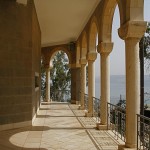
The Church of the Beatitudes, an elegant octagonal building with colonnaded cloisters, blends into the slope rather than dominating it. It was built in 1938 for a Franciscan order of nuns, to a design by Italian architect Antonio Barluzzi — and partly financed by the Italian fascist dictator Benito Mussolini.

The eight sides of the light and airy church represent the eight beatitudes, and these are also shown in Latin in the upper windows.

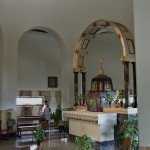
The centrally placed altar is surmounted by a slender arch of alabaster and onyx. Around it, the seven virtues (justice, charity, prudence, faith, fortitude, hope and temperance) are depicted by symbols in the mosaic floor.

In the landscaped garden, three altars are provided for group worship.


Sermon was radical and countercultural

The Sermon on the Mount, a powerful summary of the fundamental teachings of Jesus, opens with his proclamation of the eight beatitudes, beginning with “Blessed are the poor in spirit, for theirs is the kingdom of heaven . . . .” (Matthew 5:3)

Jesus taught orally, rather than by writing. Matthew notes that he sat down before speaking, a typical Jewish position for teaching.

Scholars suggest that Matthew’s account is not a report of one, uninterrupted sermon given on one occasion. Rather, it is believed, Matthew took a core sermon and added various teachings given at different times.

The sermon indicated how Jesus’ followers, described as “the salt of the earth”, should live so that they would be in right relationship with God and with others. “For I tell you,” he said, “unless your righteousness exceeds that of the scribes and Pharisees, you will never enter the kingdom of heaven.” (Matthew 5:20)

Biblical scholar Peter Walker comments: “The serenity of this beautiful place, however, may be slightly unhelpful here, suggesting that Jesus’ words were calm and soothing when in fact they were radical, demanding, authoritative, revolutionary and countercultural. Jesus was calling Israel to a new way of life . . . .”


Christian centre on the peak

On the peak of the Mount of Beatitudes is a Christian centre for meetings, studies and retreats called Domus Galilaeae (House of Galilee), opened in 2000. It is situated just over 1km from the ruins of ancient Chorazin.

The centre and adjacent monastery belongs to the Neo-Catechumenal Way, a Catholic movement for Christian formation. Its striking architecture was designed by the movement’s founder, Kiko Argüello, and a team of architects.

The library specialises in books about the Sermon on the Mount. The chapel has a large painting by Argüello, combining Eastern and Western Christian symbols and paying homage to the Church’s Jewish roots.

Related site:

Sea of Galilee


In Scripture:

The Sermon on the Mount: Matthew 5:1-7:28

The parable of the sower: Mark 4:1-9

Jesus commissions the disciples: Matthew 28:16-20


Administered by: Franciscan Missionary Sisters of the Immaculate Heart of Mary

Tel.: 972-4-6790978

Open: 8-11.45am, 2.30-5pm (4pm Oct-Mar)


References

Blaiklock, E. M.: Eight Days in Israel (Ark Publishing, 1980)
Gonen, Rivka: Biblical Holy Places: An illustrated guide (Collier Macmillan, 1987)
Kilgallen, John J.: A New Testament Guide to the Holy Land (Loyola Press, 1998)
Pixner, Bargil: With Jesus Through Galilee According to the Fifth Gospel (Corazin Publishing, 1992)
Walker, Peter: In the Steps of Jesus (Zondervan, 2006)
Wareham, Norman, and Gill, Jill: Every Pilgrim’s Guide to the Holy Land (Canterbury Press, 1996)


External links

Mount of Beatitudes (BibleWalks)
« Newer PostsOlder Posts »

Milk Grotto

West Bank

Milk Grotto

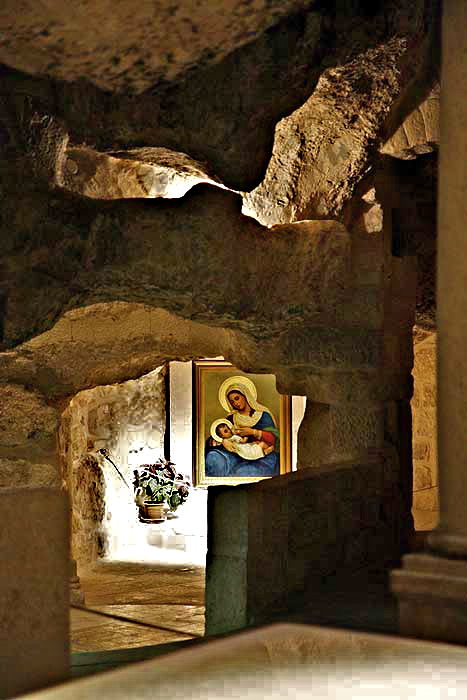
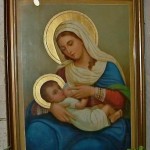
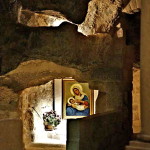
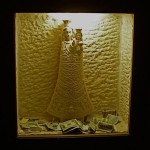
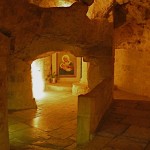
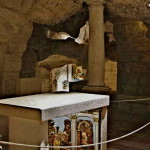
Inside the Milk Grotto church (© Custodia Terrae Sanctae)

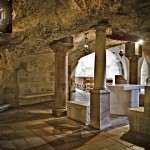
A short distance south of the Church of the Nativity in Bethlehem is a shrine called the Milk Grotto, on a street of the same name.

An irregular grotto hollowed out of soft white rock, the site is sacred to Christian and Muslim pilgrims alike. It is especially frequented by new mothers and women who are trying to conceive.

By mixing the soft white chalk with their food, and praying to Our Lady of the Milk, they believe it will increase the quantity of their milk or enable them to become pregnant.

Rows of framed letters and baby pictures sent from around the world to the Milk Grotto testify to the effectiveness of the “milk powder” and prayer. (The powder is available only at the shrine; it may not be ordered from overseas.)

Spilt milk turned stone white, tradition says

According to tradition, while Mary and Joseph were fleeing Herod’s soldiers on their way to Egypt, they stopped in this cave while Mary nursed the baby Jesus. A drop of Mary’s milk fell upon the stone and it turned white.

Milk Grotto

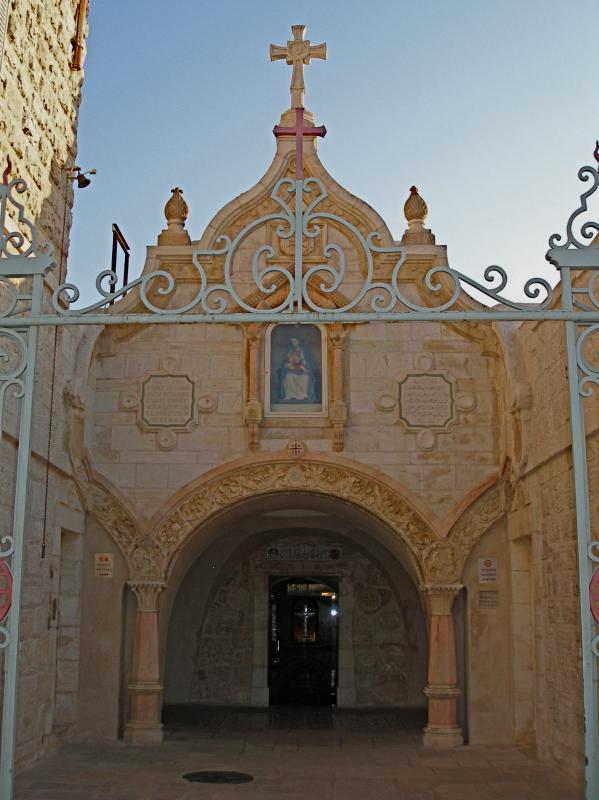
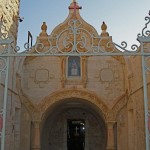
Milk Grotto church (Seetheholyland.net)

The grotto has been a site of veneration since the 4th century, the first structure being built over it around AD 385.

From as early as the 7th century, fragments from the cave were sent to churches in Europe. The site was recognised by a proclamation of Pope Gregory XI in 1375.

The Franciscans erected a church around the Milk Grotto in 1872. The people of Bethlehem and local artisans expressed their love for the site by decorating the shrine with mother-of-pearl carvings.

In 2007 a modern chapel dedicated to the Mother of God was opened. It is connected to the Milk Grotto church by a tunnel, which enabled the addition of a further chapel in the basement.

Other sites in the Bethlehem area:

Bethlehem

Church of the Nativity

Grotto of the Nativity

St Jerome’s Cave

Church of St Catherine of Alexandria

Shepherds’ Field

Tomb of Rachel

Field of Boaz

Herodium

In Scripture:

The escape to Egypt: Matthew 2:13-15


Administered by: Franciscan Custody of the Holy Land

Tel.: 972-2-2743867

Open: 8am-5pm (Sun closed noon-2pm)


References

Gonen, Rivka: Biblical Holy Places: An illustrated guide (Collier Macmillan, 1987)
Inman, Nick, and McDonald, Ferdie (eds): Jerusalem & the Holy Land (Eyewitness Travel Guide, Dorling Kindersley, 2007)


External links

Bethlehem (Custodia Terrae Sanctae)
Chapel of the Milk Grotto (Wikipedia)
« Newer PostsOlder Posts »

Masada

Israel

Masada

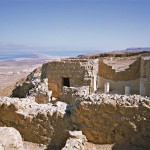
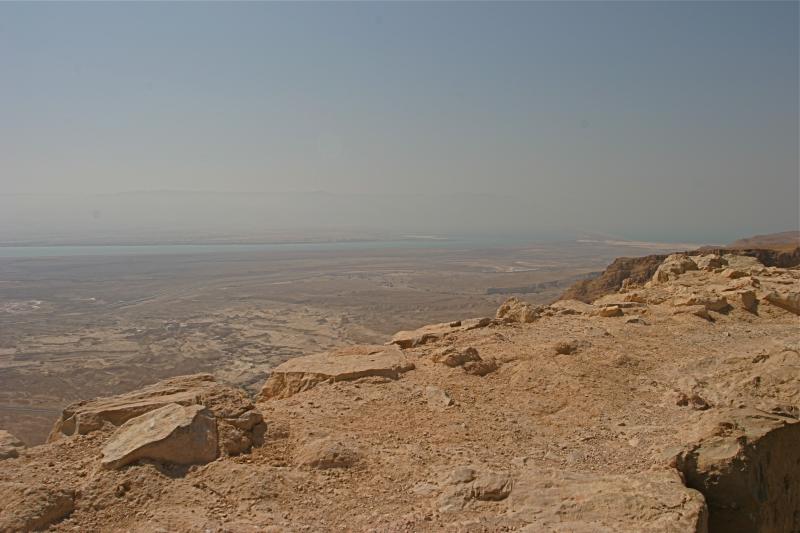
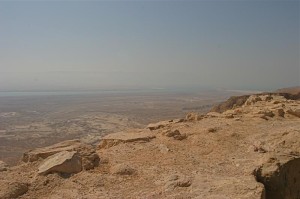
View from Masada to the Dead Sea (Tom Callinan / Seetheholyland.net)

The rocktop fortress of Masada overlooking the Dead Sea has been invested with a quasi-religious significance as a symbol of resistance for the people of Israel.

Once a palatial refuge for Herod the Great, this massive plateau on the eastern edge of the Judean Desert is better known as the location of a Roman siege against Jewish rebels in AD 74.

The story of 960 defenders choosing self-inflicted death rather than surrender has achieved legendary status for the Jewish people, though scholars have questioned its credibility.

Masada’s symbolic status was boosted by a poem by Yitzchak Lamdan, published in 1927, and by extensive excavations by soldier-archaeologist Yigael Yadin.

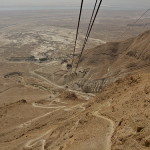
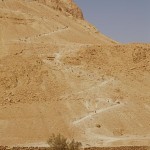
Masada’s summit may be reached by a tortuous “snake path” (which takes a fit person 45 minutes), by a path up the Roman siege ramp (15 minutes) or by a modern cable car.

The view across the Dead Sea 450 metres below is spectacular. After Jerusalem, Masada is Israel’s most popular tourist attraction.


Herod lived in luxury
Masada

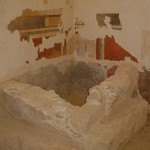
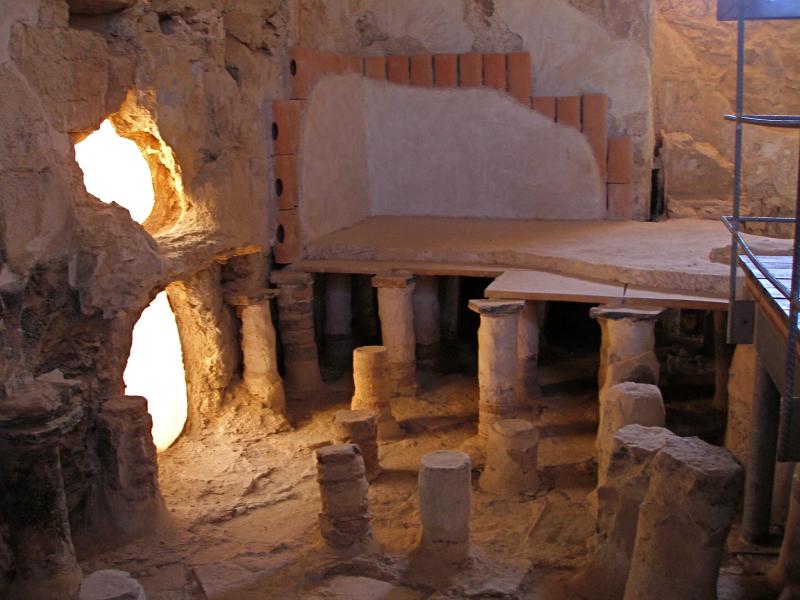
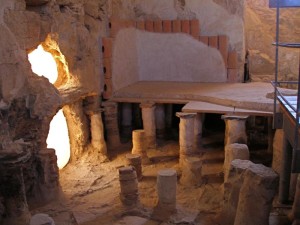
Bathhouse with under-floor heating (Seetheholyland.net)

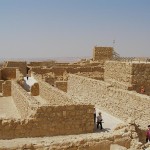
Masada’s flat-topped shape has been aptly described by Jerome Murphy-O’Connor as “curiously like an aircraft-carrier moored to the western cliffs of the Dead Sea”.

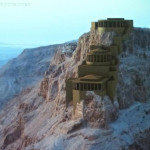
The north-facing prow of this warship consists of the ruins of Herod’s luxurious residential palace. Elaborately designed and decorated, it cascaded in three tiers down the cliff face, each tier connected by a rock-cut staircase.

On the western side of the warship’s 550m by 275m deck are the remains of Herod’s ceremonial palace and administrative centre. The largest building on Masada, it covered nearly half a hectare.

Herod planned Masada as a palace stronghold and desert foxhole, and fortified it with walls, gates and towers. He wanted a place of refuge in case the Jews should rebel against him, or the Egyptian pharaoh Cleopatra (who coveted Judea) should try to have him killed.

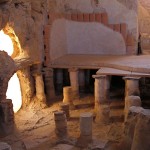
Herod’s creature comforts include bathhouses and a swimming pool. The most elaborate bathhouse had a hot room with the floor suspended on low pillars. Hot air from a furnace was circulated under the floor and through clay pipes in the walls.

To supply water in this arid setting, a sophisticated system channelled winter rainfall from nearby wadis into huge cisterns quarried low into the northwest of the mountain. Water was then carried by men and beasts of burden up winding paths to reservoirs on the summit. The lower cisterns alone are estimated to have a capacity of 38,000 cubic metres.


Romans besieged the fortress
Masada

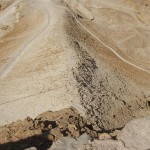
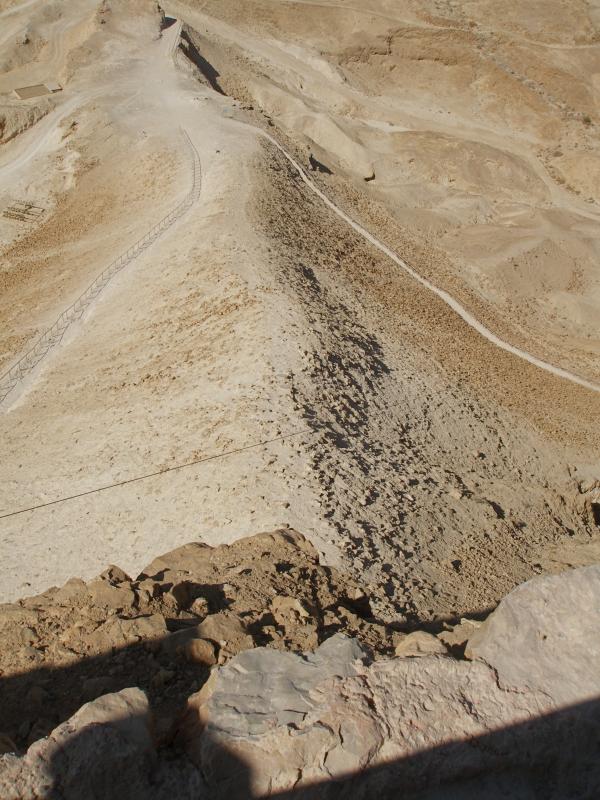
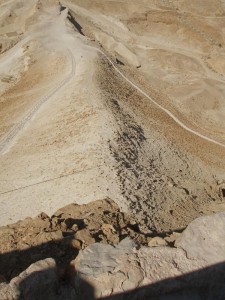
Seige ramp at Masada (Seetheholyland.net)

In AD 66, at the beginning of the Great Jewish Revolt against Rome, a group of Jewish extremists called Sicarii overran the Roman garrison stationed on Masada. By then, Herod had been dead for 70 years.

According to the historian Josephus, the Sicarii were unlikely heroes who attacked local villages. In a night raid for food on the Jewish settlement of En-Gedi, 17km away, he says the Sicarii killed more than 700 Jewish settlers, including women and children, during Passover.

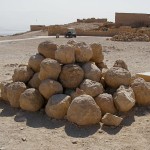
The Roman governor Lucius Flavius Silva waited until Jerusalem had fallen before taking the Tenth Legion to Masada in 72-73. Laying siege to the fortress, he established eight fortified camps linked by a ditch and wall around Masada, then built a ramp on top of a natural bedrock spur to reach the summit.

Up the ramp the Romans rolled an iron-sheathed siege tower, with rapid-firing catapults and a huge battering ram to breach the fortress wall.

According to Josephus, when defeat was inevitable the leader of the Sicarii, Eleazar ben Ya’ir, gave two impassioned speeches persuading his companions to cast lots to kill each other rather than be taken prisoner.

He argued “it is still an eligible thing to die after a glorious manner, together with our dearest friends . . . let us bestow that glorious benefit upon one another mutually, and preserve ourselves in freedom, as an excellent funeral monument for us”.

When the Romans stormed the summit, they found the bodies of 960 occupants. The only survivors were two women and five children who had hidden in a cistern.


Josephus’ account is questioned

The only account of the fall of Masada and the mass suicide of its occupants comes from Josephus. Surprisingly, the Jewish rabbis who wrote the Talmud did not record the event.

A former Jewish rebel who joined the Romans after he was captured, Josephus lived through the Great Jewish Revolt and knew Silva personally. Like other historians of antiquity, however, he was known for his literary embellishments, and scholars have questioned the credibility of his dramatic account.

Would there have been time for Eleazar’s speeches, the drawing of lots and the organized killings as Masada fell? Would the survivors have been able to repeat the speeches verbatim to the Romans?

More pertinently, modern historians point to parallels between Eleazar’s second oration and a speech Josephus himself gave in similar circumstances when the fortified village of Jotapata, in northern Galilee, fell to the Romans after a siege and bloody battle in AD 67.

Josephus, who commanded the Jewish rebels in Galilee in that battle, tells of hiding in a cave with other survivors who drew lots to kill each other rather than surrender. One of the last two men standing — “should one say by fortune or by the providence of God?” — was the wily Josephus, who persuaded his companion to join him in surrendering.

Rather than accept the rhetoric of Josephus, modern historians favour a more chaotic climax at Masada, with some Sicarii fighting to the death, some taking their own lives and others trying to hide.

Furthermore, a research report in 2016 concluded that the ramp was never completed and therefore could not have been used to capture the fortress.


Restored buildings can be seen

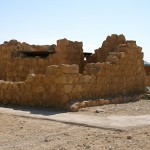
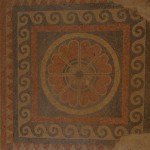
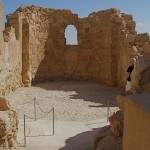
Many of the buildings on Masada’s summit have been restored, including Herod’s bathhouses (a black line on the walls indicates where restoration began). Some have mosaic floors.

Remains of a synagogue used by the Sicarii and a church built by Byzantine monks in the 5th century have also been excavated. The monks lived in cells dispersed round the summit.

Silva’s siege works and ramp, including remains of the Roman wall and camps, can still be seen.

The skeletons of 28 people excavated in the 1960s — whether Sicarii or Roman soldiers is not proven — were given a state funeral at Masada with full military honours in 1969.

In the early decades of the Jewish state, recruits to Israel’s armed forces — in which service is compulsory for most citizens, male or female — climbed the snake path for a torchlight swearing-in ceremony ending with the declaration: “Masada shall not fall again!”

The ceremony was abandoned in 1986, according to Rabbi Lawrence Hoffman, because “Its underlying message of heroes who commit suicide no longer captured the imagination of a Jewish state which emphasised life, not death, and victory rather than defeat”.


Administered by: Israel National Parks Authority

Tel.: 08-658-4207/8

Open:

April–September 8 A.M.–5 P.M. October–March 8 A.M– 4 P.M. Fridays and holiday eves, site closes one hour earlier than above.

Cable-car hours: Sat.–Thurs.: 8 A.M.–4 P.M.; Friday and holiday eves 8 A.M.–2 P.M.; Yom Kippur eve 8 A.M.–noon.


References

Brownrigg, Ronald: Come, See the Place: A Pilgrim Guide to the Holy Land (Hodder and Stoughton, 1985)
Charlesworth, James H.: The Millennium Guide for Pilgrims to the Holy Land (BIBAL Press, 2000)
Freeman-Grenville, G. S. P.: The Holy Land: A Pilgrim’s Guide to Israel, Jordan and the Sinai (Continuum Publishing, 1996)
Goldfus, H., et al.: “The significance of geomorphological and soil formation research for understanding the unfinished Roman ramp at Masada”, Catena, 2016
Hoffman, Lawrence A.: Israel: A Spiritual Travel Guide (Jewish Lights Publishing, 1998)
McCormick, James R.: Jerusalem and the Holy Land (Rhodes & Eaton, 1997)
Maier, Paul L. (trans.): Josephus: The Essential Writings (Kregel Publications, 1988)
Murphy-O’Connor, Jerome: The Holy Land: An Oxford Archaeological Guide from Earliest Times to 1700 (Oxford University Press, 2005)
Rainey, Anson F., and Notley, R. Steven: The Sacred Bridge: Carta’s Atlas of the Biblical World (Carta, 2006)
Walker, Peter: In the Steps of Jesus (Zondervan, 2006)
Wareham, Norman, and Gill, Jill: Every Pilgrim’s Guide to the Holy Land (Canterbury Press, 1996)


External links

The Wars of the Jews, by Josephus (Christian Classics Ethereal Library; chapters 8 and 9 describe the siege of Masada)
Masada: Desert Fortress (Jewish Virtual Library)
Masada (Bible Pictures)
The Climb to Masada (Israel by Foot)
« Newer PostsOlder Posts »

Yad Vashem

Jerusalem

Yad Vashem

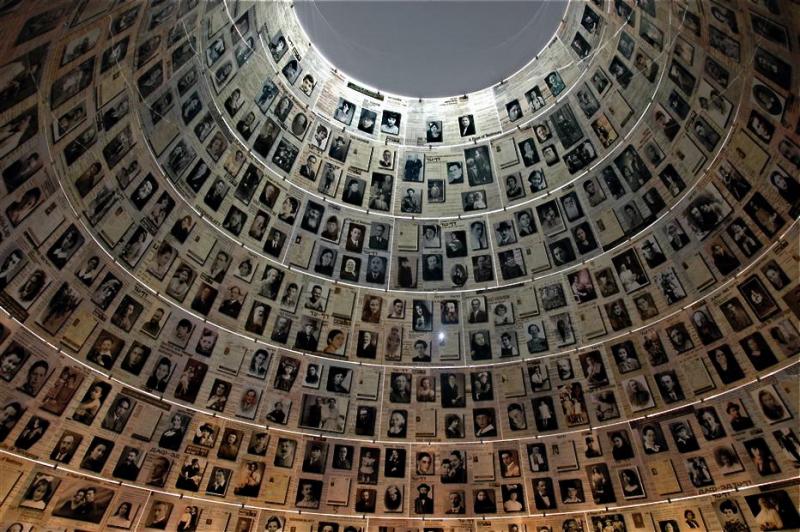
Hall of Names at Yad Vashem (© Israel Ministry of Tourism)

Yad Vashem, Israel’s official memorial to the Jewish victims of the Nazi Holocaust, is dedicated to documenting the story of the six million victims and imparting their legacy for future generations.

Its location is a hillside site on Har Hazikaron, Jerusalem’s Mount of Remembrance. Tree-studded walkways lead visitors through a sprawling complex of museums, outdoor monuments, exhibition halls, an archive, a library and other resource centres extending over 18 hectares.

One avenue is lined with plaques bearing the names of many thousands of non-Jews who risked their own lives to rescue Jews from the Nazis. They are honoured as the “Righteous Among the Nations”.

Yad Vashem’s history museum, a long corridor with stark walls of reinforced concrete, is carved into the mountain. Ten exhibition halls each focus on a different chapter of the Nazi Holocaust that began in 1933.

A visitor to the museum begins underground and walks upwards. The exit involves stepping from a dark corridor into daylight, on a balcony overlooking the Jerusalem valley. The symbolism represents the passage of the Jewish people through the dark days of the Holocaust to the light of Israel.


5000 communities were destroyed

Yad Vashem

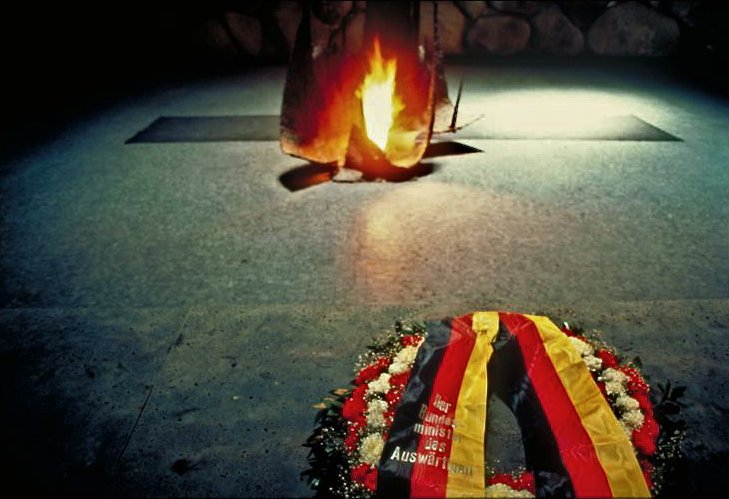
Eternal flame at Yad Vashem (© Israel Ministry of Tourism)

The archive at Yad Vashem contains 68 million pages of documents, nearly 300,000 photographs and thousands of films and videotaped testimonies of survivors.

It houses comprehensive Holocaust-related departments — historical and art museums, schools and research institutions, extensive archives and library facilities. It also contains a memorial to the 5000 Jewish communities destroyed during the Nazi era and a Hall of Names listing millions of survivors.

Among the memorial sites, the hall of remembrance is a solemn, tent-like structure that allows visitors to pay their respect to the memories of those who died. Here ashes of the dead are buried and an eternal flame burns in their memory.

A memorial to the deportees has a railway cattle-car on rails jutting out over the cliff on the road winding down from the mountain. This cattle-car was used to transport Jews who had been banished from their homes to the concentration camps.

Yad Vashem’s name comes from a biblical verse: “I will give, in my house and within my walls, a monument and a name better than sons and daughters; I will give them an everlasting name [Yad Vashem] that shall not be cut off.” (Isaiah 56:5)


Administered by: The Holocaust Martyrs’ and Heroes’ Remembrance Authority

Tel.: 972-2-6443574

Open: Sunday to Thursday, 9am to 5pm (entry till 4pm); Friday and eves of holidays, 9am to 2pm (entry till 1pm). Closed on Saturdays and all Jewish holidays. Entry is free. Children under 10 are not permitted to enter the history museum. Men should cover their heads (kippahs are available). Entrance to the complex is via the Holland Junction, situated on the Herzl Route opposite the entrance to Mount Herzl and the descent to Ein Kerem.


External links

Yad Vashem (The World Holocaust Remembrance Center)
Yad Vashem (Wikipedia)
« Newer PostsOlder Posts »

Tomb of Mary

Jerusalem

Tomb of Mary

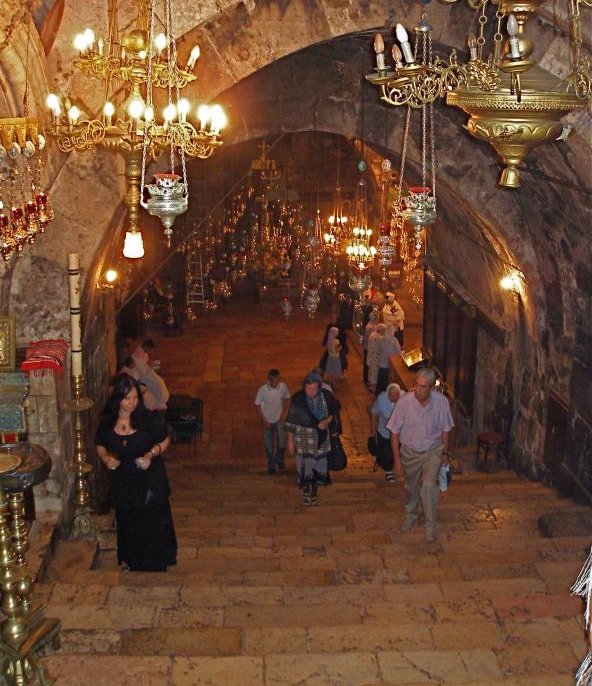
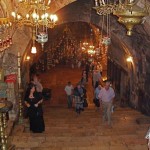
Steps down to the Tomb of Mary (Seetheholyland.net)

The New Testament says nothing about the death and burial of Mary, the Mother of Jesus, but a strong Christian tradition places her tomb in a dimly-lit church at the foot of the Mount of Olives.

The large crypt containing the empty tomb in the Church of the Assumption is all that remains of an early 5th-century church, making it possibly the oldest near-complete religious building in Jerusalem.

The location of the Tomb of Mary is across the Kidron Valley from St Stephen’s Gate in the Old City walls of Jerusalem, just before Gethsemane.

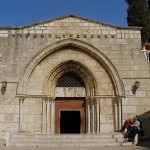
The Church of the Assumption stands partly below the level of the main Jerusalem-Jericho road. It is reached by a stairway leading down to an open courtyard.

Entry is through the façade of a 12th-century Crusader basilica that has been preserved intact. To the right, a passageway leads to the Grotto of Gethsemane.


Tomb resembles Holy Sepulchre

Tomb of Mary

Petitions and prayers in the Tomb of Mary (Seetheholyland.net)

A wide Crusader stairway of nearly 50 steps leads to the crypt. Partway down, on the right, is a niche dedicated to the Virgin Mary’s parents, Anne and Joachim. This small chapel was originally the burial place of Queen Melisande, daughter and wife of Crusader kings of Jerusalem, who died in 1161.

Almost opposite is a niche dedicated to Mary’s husband, St Joseph. Here three women connected to Crusader kings were buried.

The crypt, much of it cut into solid rock, is dark and gloomy. The smell of incense fills the air, the ceiling is blackened by centuries of candle smoke, and gold and silver lamps hang in profusion.

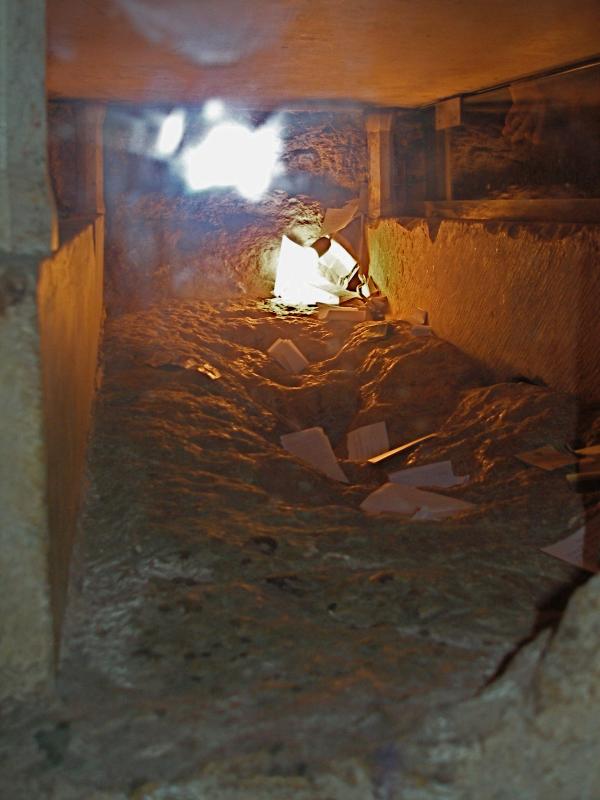
To the right, a small edicule houses a stone bench on which Mary’s body is believed to have lain. The edicule is richly decorated with Eastern Orthodox icons, candlesticks and flowers, but the interior is bare.

Narrow openings on two sides allow access, and three holes in the wall of the tomb enable pilgrims to touch the bench.

Because the emperor Constantine’s engineers cut away the surrounding rock to isolate the Tomb of Mary in the middle of the crypt, its appearance strongly resembles her Son’s tomb in the Church of the Holy Sepulchre.

Floods in 1972 enabled excavations by the archaeologist Bellarmino Bagatti, who concluded that the place where Mary had been buried was clearly located in a cemetery used during the first century.


Several denominations share site

The church belonged to the Catholic Franciscans from 1363 until 1757. When they were expelled it passed into the hands of the Eastern Orthodox churches.

The Greek Orthodox Church now shares possession with the Armenian Orthodox. The Syriac Orthodox, the Coptic Orthodox and the Ethiopian Orthodox have minor rights.

Muslims also worship here. In the wall to the right of the Tomb of Mary is a mihrab niche giving the direction of Mecca. It was installed after Saladin’s conquest in the 12th century.

The place is holy to Muslims because they believe Muhammad saw a light over the tomb of his “sister Mary” during his Night Journey to Jerusalem.


Early writers describe death and burial

Tomb of Mary

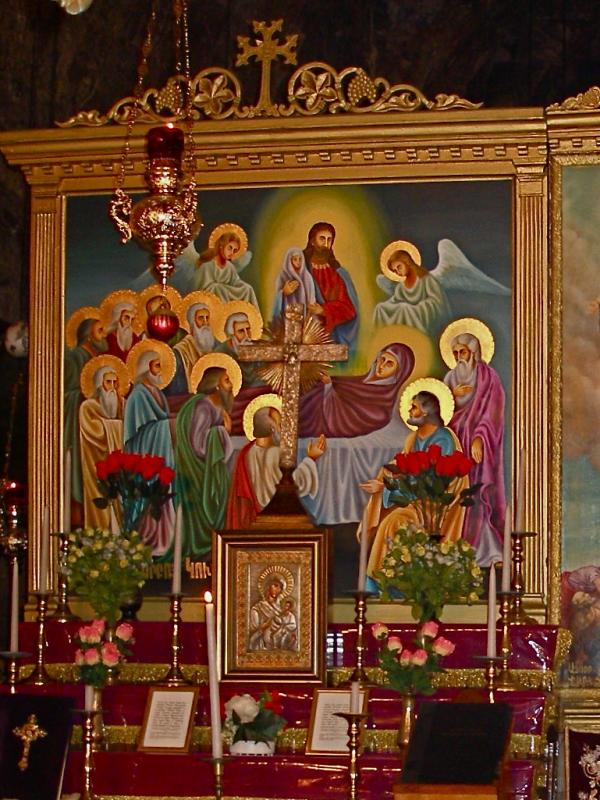
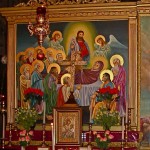
Icon of Mary’s death at the Tomb of Mary (Seetheholyland.net)

The New Testament may be silent on the end of Mary’s life, but several early apocryphal sources, such as Transitus Mariae, describe her death and burial in Jerusalem.

These works are of uncertain authenticity and not accepted as part of the Christian canon of Scripture.

But, according to biblical scholar Lino Cignelli, “All of them are traceable back to a single primitive document, a Judaeo-Christian prototype, clearly written within the mother church of Jerusalem some time during the second century, and, in all probability, composed for liturgical use right at the Tomb of Our Lady.

“From the earliest times, tradition has assigned the authorship of the prototype to one Lucius Carinus, said to have been a disciple and fellow labourer with St John the Evangelist.”

By the reckoning of Transitus Mariae, Mary would have been aged no more than 50 at the time of her death.


Ephesus claim not supported

A competing claim is made that the Virgin Mary died and was buried in the city of Ephesus, in present-day Turkey. This claim rests in part on the Gospel account that Christ on his cross entrusted the care of Mary to St John (who later went to Ephesus).

But the earliest traditions all locate the end of Mary’s life in Jerusalem, as the Catholic Encyclopedia recounts:

“The apocryphal works of the second to the fourth century are all favourable to the Jerusalem tradition. According to the Acts of St John by Prochurus, written (160-70) by Lencius, the Evangelist went to Ephesus accompanied by Prochurus alone and at a very advanced age, i.e. after Mary’s death.

“The two letters B. Inatii missa S. Joanni, written about 370, show that the Blessed Virgin passed the remainder of her days at Jerusalem. That of Dionysius the Areopagite to the Bishop Titus (363), the Joannis liber de Dormitione Mariae (third to fourth century), and the treatise De transitu B.M. Virginis (fourth century) place her tomb at Gethsemane . . . .

“There was never any tradition connecting Mary’s death and burial with the city of Ephesus.”


Assumption mentioned in early sources

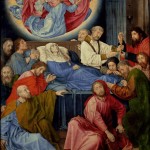
The name of the Church of the Assumption reflects the Christian belief that Mary was bodily assumed into heaven. This belief is mentioned in early apocryphal sources, as well as in authenticated sermons by Eastern saints such as St Andrew of Crete and St John of Damascus.

The Assumption of Mary has been a subject of Christian art for centuries (and its feast day was made a public holiday in England by King Alfred the Great in the 9th century). It was defined as a doctrine of the Catholic Church by Pope Pius XII in 1950.

The Eastern Orthodox churches celebrate the feast of the Dormition of the Mother of God on August 15, the same day that the Catholic Church celebrates the feast of the Assumption of Mary.


Related site:

Church of the Dormition

Administered by: Brotherhood of the Holy Sepulchre

Tel.: 972-2-6284613

Open: 5am(6am Oct-Mar)-12 noon, 2.30–5pm


References

Bar-Am, Aviva: Beyond the Walls: Churches of Jerusalem (Ahva Press, 1998)
Cignelli, Lino: “Our Lady’s Tomb in the Apocrypha”, Holy Land, spring 2005.
Freeman-Grenville, G. S. P.: The Holy Land: A Pilgrim’s Guide to Israel, Jordan and the Sinai (Continuum Publishing, 1996)
Gonen, Rivka: Biblical Holy Places: An illustrated guide (Collier Macmillan, 1987)
Inman, Nick, and McDonald, Ferdie (eds): Jerusalem & the Holy Land (Eyewitness Travel Guide, Dorling Kindersley, 2007)
Murphy-O’Connor, Jerome: The Holy Land: An Oxford Archaeological Guide from Earliest Times to 1700 (Oxford University Press, 2005)
Wareham, Norman, and Gill, Jill: Every Pilgrim’s Guide to the Holy Land (Canterbury Press, 1996)


External links

Mary’s Tomb (BibleWalks)
Tomb of the Blessed Virgin Mary (Catholic Encyclopedia)
« Newer PostsOlder Posts »

Shrine of the Book

Jerusalem

Shrine of the Book

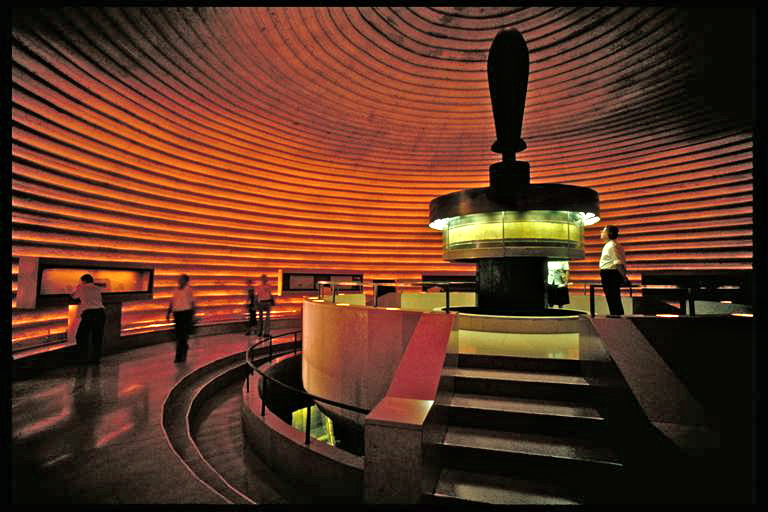
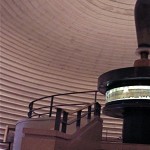
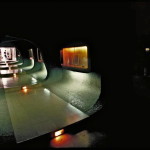
Inside the main exhibition hall of Shrine of the Book (© Israel Ministry of Tourism)

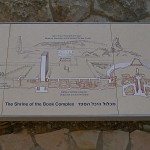
The Shrine of the Book in Jerusalem uses quirky contemporary architecture to house and display ancient manuscripts — including the first Dead Sea Scrolls to be discovered.

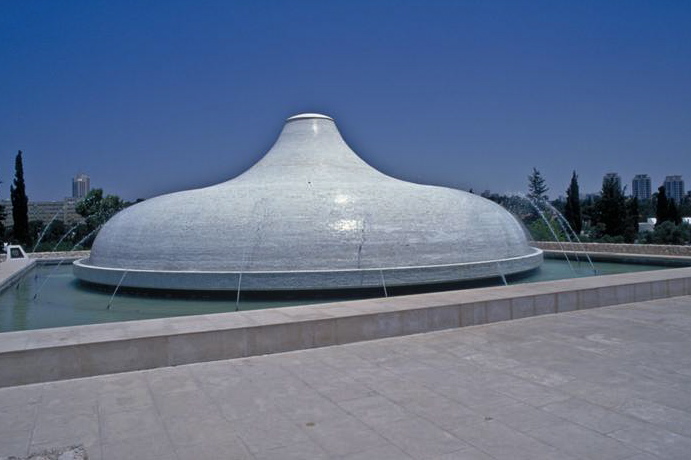
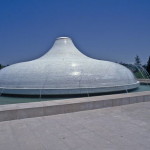
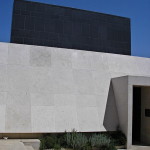
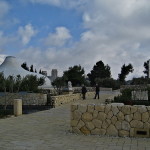
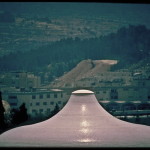
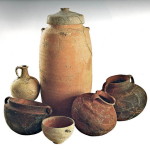
The building’s white-tiled dome is shaped like the lid of the first jar in which the scrolls were found at Qumran. In contrast nearby stands a black basalt wall. The black-white imagery symbolises the theme of one of the scrolls — The War of the Sons of Light Against the Sons of Darkness.

The rest of the structure, two-thirds of it below ground level, recalls the caves in which the scrolls were found.

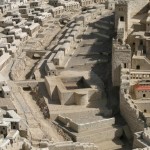
The Shrine of the Book is a wing of the Israel Museum in western Jerusalem.  Also on the museum’s campus is an extensive outdoor Second Temple Model of Jerusalem in AD 66, before its destruction by the Romans.


Longest scroll is 8 metres long

Shrine of the Book

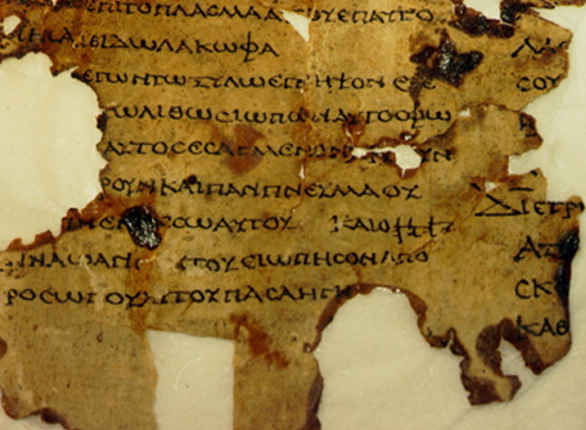
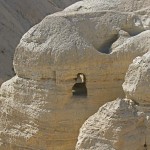
Fragment of scroll found in a Qumran cave

The Shrine of the Book holds all seven of the scrolls found in what is called Cave 1 at Qumran, near the Dead Sea. They are Isaiah A, Isaiah B, the Habakkuk Commentary, the Thanksgiving Scroll, the Community Rule (or the Manual of Discipline), the War of the Sons of Light against the Sons of Darkness (or the War Rule) and the Genesis Apocryphon. All are in ancient Hebrew except the last, which is in Aramaic.

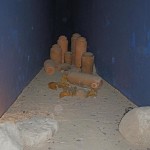
A facsimile of the scroll of Isaiah, arranged around a huge elevated spindle, provides a dramatic centrepiece in the exhibition hall under the dome.

Also at the Shrine of the Book is the Temple Scroll, the best-preserved of the Qumran scrolls. At more than 8 metres long, it is the longest of the Qumran manuscripts.

The Community Rule is the rule book for the group that wrote or copied the library of scrolls — believed to be a group of Essenes, a strict Jewish sect, who lived an austere lifestyle in their remote desert surroundings.


Cloak-and-dagger negotiations

The uncovering of the Essenes’ literary treasure trove has thrown new light on Israel during the Hellenistic and Roman periods, as well as on the origins of rabbinical Judaism and the Jewish society in which Christianity began.

The discovery, by a Bedouin goat- or sheep-herder searching for a missing animal, occurred in 1947. Israel was on the eve of its War of Independence, a factor that lent a cloak-and-dagger character to negotiations for the purchase of the scrolls.

Professor E. L. Sukenik of the Hebrew University clandestinely acquired three of the scrolls from a Christian Arab antiquities dealer in Bethlehem.

The remaining four scrolls from Cave 1 reached the hands of Mar Athanasius Yeshua Samuel, Metropolitan of the Syrian Jacobite Monastery of St Mark in Jerusalem. In 1949 he took them to the United States and on June 1, 1954, he placed an advertisement in the Wall Street Journal offering “The Four Dead Sea Scrolls” for sale.

The advertisement came to the attention of Yigael Yadin, Professor Sukenik’s son, who had just retired as chief of staff of the Israel Defence Forces and had reverted to his original vocation, archaeology. With the aid of intermediaries, the four scrolls were purchased from Mar Samuel for $US250,000.

Part of the purchase price was contributed by Samuel Gottesman, a New York philanthropist. His heirs sponsored the construction of the Shrine of the Book to house the scrolls.


Scrolls need to ‘rest’

Shrine of the Book

Dome of Shrine of the Book, kept cool by water sprays (© Israel Ministry of Tourism)

As the scrolls are too fragile to be on display permanently, a rotation system is used. After a scroll has been exhibited for 3–6 months, it is removed from display and placed temporarily in a special storeroom, where it “rests” from exposure.

The Shrine of the Book also displays the Aleppo Codex, the earliest known Hebrew manuscript comprising the text of the Jewish Old Testament. It dates from the early 10th century.

Strictly speaking, as the museum acknowledges, only two or four pages are actually displayed at any one time. Behind them is cardboard modelled to look like the rest of the codex (which is in fact stored in a safe place).

Related site:

Qumran

Model of Ancient Jerusalem


Administered by: The Israel Museum

Tel.: 972-2-6708811

Open: Sun, Mon, Wed, Thur 10am-5pm; Tues 4-9pm; Fri and holiday eves 10am-2pm; Sat and holidays 10am-5pm


References

Sussman, Ayala, and Peled, Ruth: The Dead Sea Scrolls (Israel Antiquities Authority and Israel Museum Products, 1994)


External links

Shrine of the Book (The Israel Museum)
Leon Levy Dead Sea Scrolls Digital Library (Israel Antiquities Authority)
« Newer PostsOlder Posts »

Pool of Siloam

Jerusalem

Pool of Siloam

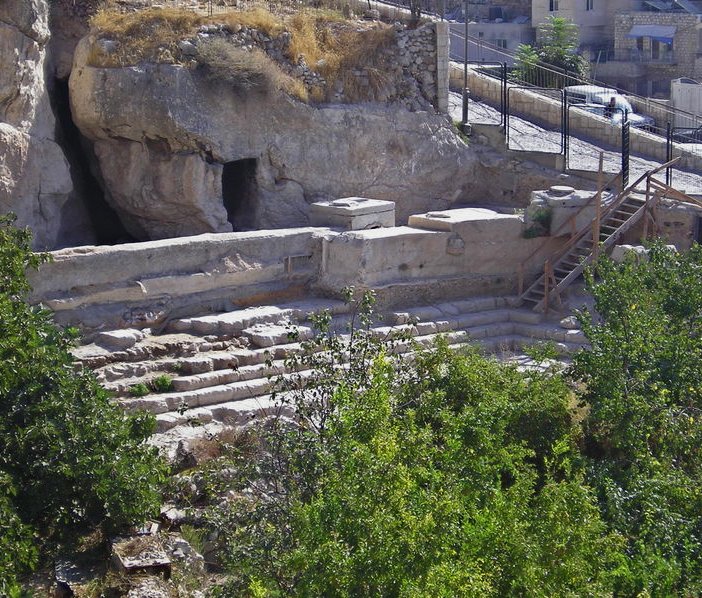
Steps leading down to the Pool of Siloam (Abraham / Wikimedia)

The Pool of Siloam, where Jesus ordered a blind man to go to wash mud out of his eyes, lay undiscovered until 2004.

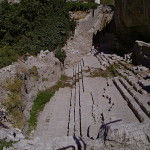
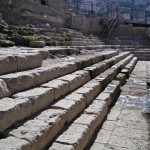
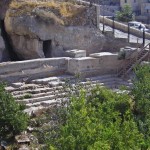
Then a drainage repair crew, working on pipe maintenance south of the Old City of Jerusalem, uncovered large stone steps that had led to an ancient pool dating from the first century BC.

Until then, a much smaller pool 50 metres north-west, at the end of Hezekiah’s Tunnel, had been regarded as the Pool of Siloam.

The account of the healing of the man who had been blind since birth (John 9:1-41) is one of the longest Gospel narratives of any of the miracles of Jesus.

The disciples asked whose sin had caused the man’s blindness, his own or his parents? Neither, said Jesus; he was born blind “so that God’s works might be revealed in him”.

Then Jesus spat on the ground, made mud with his saliva and spread the mud on the man’s eyes. “Go, wash in the Pool of Siloam,” he said. The man did as he was told, and he was able to see.


Smaller pool had ‘hanging basilica’

Pool of Siloam

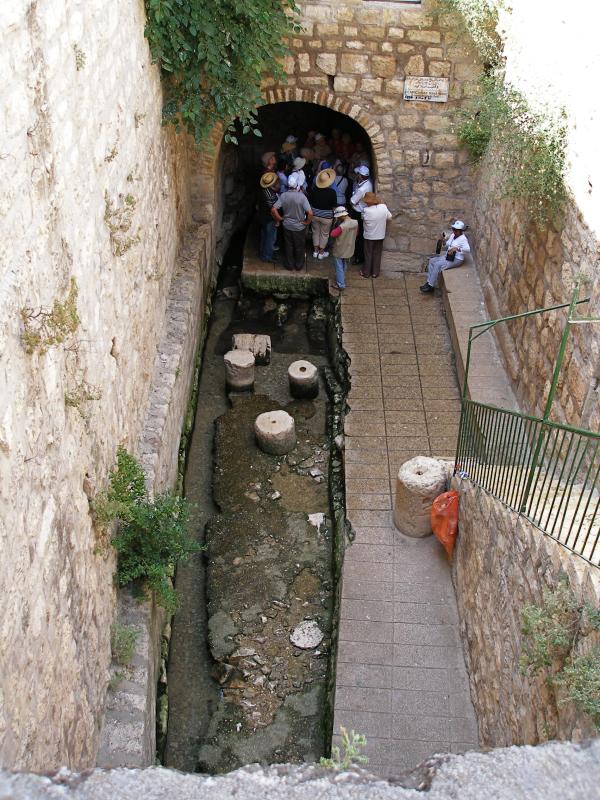
Upper pool from above with outlet of Hezekiah’s Tunnel at far end (Seetheholyland.net)

The pool rediscovered in 2004 had been destroyed by the Roman conquerors around AD 70 and gradually covered by debris.

In the 5th century the smaller pool, further up the southern slope of the City of David, was remodelled, apparently by the Byzantine Empress Eudocia. A church named “Our Saviour, the Illuminator” was built over the pool.

A 6th-century pilgrim described a “hanging basilica” over the pool, in which men and women washed separately in two marble basins “to gain a blessing”.

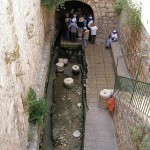
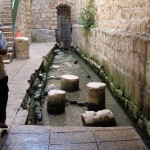
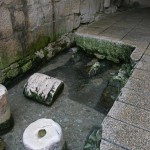
The church was destroyed in 614 and never rebuilt. The pool was also abandoned. Bounded by high stone walls, it contains some scattered fragments of column drums from the church.

This narrow, rectangular pool has long been visited as the site of Jesus’ miracle. It is also the place where walkers through Hezekiah’s Tunnel emerge.


Monumental steps led to pool Jesus knew

The rediscovered pool, which archaeologists began to excavate in 2004, was also fed by water from Hezekiah’s Tunnel, through a channel leading from the smaller pool.

Pool of Siloam

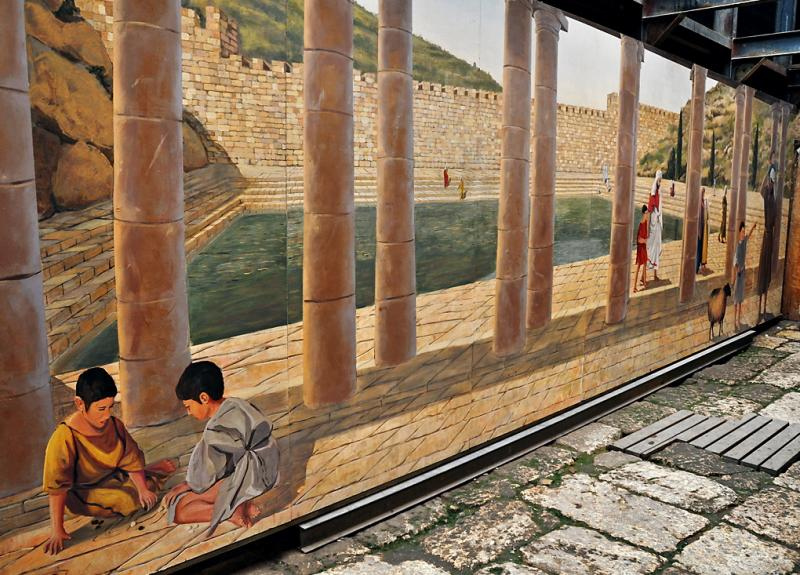
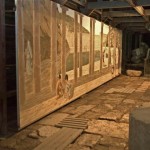
Mural showing what Pool of Siloam might have looked like (© Ferrell Jenkins)

Coins found in the cement show it was in use in Jesus’ time, when four sets of monumental steps led from street level into the pool.

One side of the pool had been buried under a lush garden with figs, pomegranates, cabbages and other fruits.

This property, once part of an orchard known as the King’s Garden, belonged to the Greek Orthodox Church. The building of a wall around the pool and the garden is recorded in Nehemiah 3:15.

In 2022 Israel authorities announced plans to fully excavate the site and include the pool in a controversial “Pilgrims Route” from the City of David to the Western Wall.

In 2025 archaeologists discovered an extensive dam, 12 metres high, constructed around 800 BC in response to changing climate conditions that brought harsh droughts and flash floods to Jerusalem. The dam, a channel from the Gihon Spring, and the Siloam Pool were key elements of the city’s ancient water system.

Hezekiah’s workmen were ingenious

Hezekiah’s Tunnel was cut through solid rock at the beginning of the 8th century BC. One of the most ingenious engineering accomplishments of ancient times, it bears testimony to the crucial importance of a water supply to Jerusalem.

In times of war and siege, the City of David was vulnerable, since it depended on water from the Spring of Gihon. This spring, which gushes forth intermittently from a natural cave in the Kidron Valley, was outside the city walls.

King Hezekiah decided to bring water from the spring into the city. Following part of a natural fissure, two sets of teams began at opposite ends to cut a winding 533-metre tunnel on a double-S course — and they met in the middle.

Axe and chisel marks can be seen along the entire length of the tunnel, which averages 60 centimetres wide and 2 metres high.


Inscription describes breakthrough

Pool of Siloam

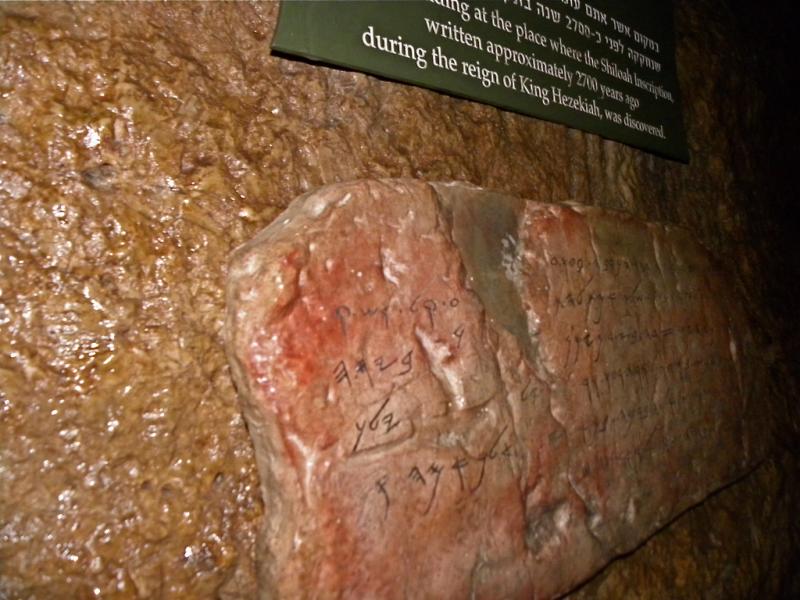
Reconstruction of 8th-century inscription by workers digging Hezekiah’s Tunnel (Ian W. Scott)

In 1880 a boy discovered an inscription in the rock near the mouth of the tunnel, which records its construction.

Of the final breakthrough, it says: “While the labourers were still working with their picks, each toward the other, and while there were still three cubits to be broken through, the voice of each was heard calling to the other, because there was a [crack?] in the rock to the south and to the north. At the moment of breakthrough, the labourers struck each toward the other, pick against pick. Then the water flowed….”

Hezekiah’s Tunnel may be traversed on foot, best starting from the Spring of Gihon, outside the Dung Gate. A reliable torch is necessary and footwear is advisable. Water is generally knee-high but can rise to waist height.


In Scripture:

King Hezekiah digs a tunnel: Sirach 48:17

Building the Pool of Siloam: Nehemiah 3:15

Jesus heals a blind man: John 9:1-41


References

Gonen, Rivka: Biblical Holy Places: An illustrated guide (Collier Macmillan, 1987)
Mackowski, Richard M.: Jerusalem: City of Jesus (William B. Eerdmans, 1980)
Maugh, Thomas H. II: “Biblical Pool Uncovered in Jerusalem”, Los Angeles Times, August 9, 2005
Murphy-O’Connor, Jerome: The Holy Land: An Oxford Archaeological Guide from Earliest Times to 1700 (Oxford University Press, 2005)
Obel, Ash: “Israel, right-wing group to fully excavate biblical Siloam Pool in East Jerusalem”, The Times of Israel, December 27, 2022
Wareham, Norman, and Gill, Jill: Every Pilgrim’s Guide to the Holy Land (Canterbury Press, 1996)


External links

The Pool of Siloam Revealed (BiblePlaces)
Jerusalem Archaeological Sites: Biblical Water Systems  (Jewish Virtual Library)
Ancient Siloam Dam shows early engineering response to climate change around 800 BCE (Archaeology News)
« Newer PostsOlder Posts »
All content © 2022, See the Holy Land | Site by Ravlich Consulting & Mustard Seed
You are welcome to promote site content and images through your own
website or blog, but please refer to our Terms of Service | Login