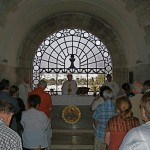
. . . your guide to visiting the holy places  
If you have found See the Holy Land helpful and would like to support our work, please make a secure donation.
The Sites

Israel and Palestine – In Jerusalem

Israel and Palestine – Outside Jerusalem

Jordan

Egypt

Extras

Church of St Anne

Jerusalem

Church of St Anne

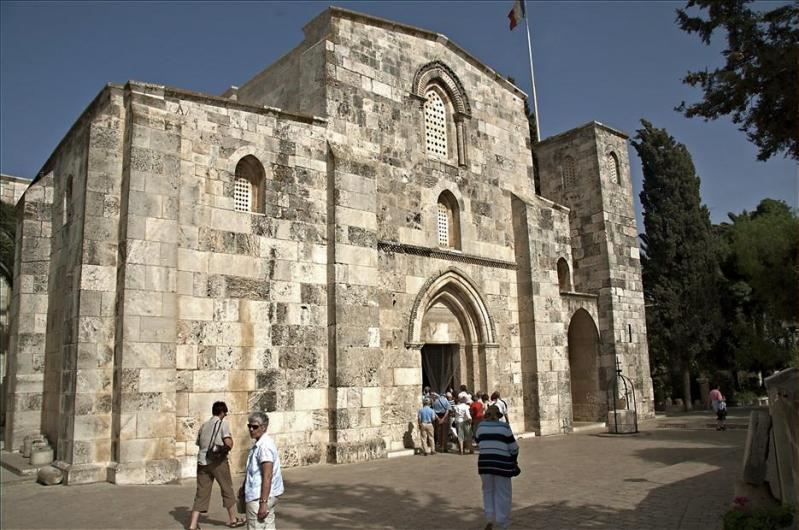
Church of St Anne (© Israel Ministry of Tourism)

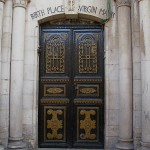
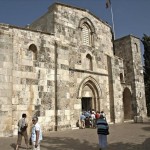
The Church of St Anne is the best-preserved Crusader church in Jerusalem. It marks the traditional site of the home of Jesus’ maternal grandparents, Anne and Joachim, and the birthplace of the Virgin Mary.

Located just north of the Temple Mount, about 50 metres inside St Stephen’s or Lions’ Gate, the church stands in a courtyard with trees, shrubs and flowers. Its tranquility contrasts with the bustling streets and alleys of the Muslim Quarter.

Next to the church is the large excavation area of the Pools of Bethesda, where Christ healed a sick man (John 5:2-9).

The New Testament says nothing about the birthplace of Mary. However, an ancient tradition, recorded in the apocryphal Gospel of James which dates from around AD 150, places the house of her parents, Anne and Joachim, close to the Temple area.

A church built around 450 on the site of St Anne’s was dedicated to “Mary where she was born”.

Strong lines and thick walls give St Anne’s a fortress-like appearance. Its simple dignity offers a space for prayer and contemplation without distraction. It is also unusually asymmetrical in the detail of its design: Opposite columns do not match, windows are all different sizes, and buttresses differ in thickness and height.

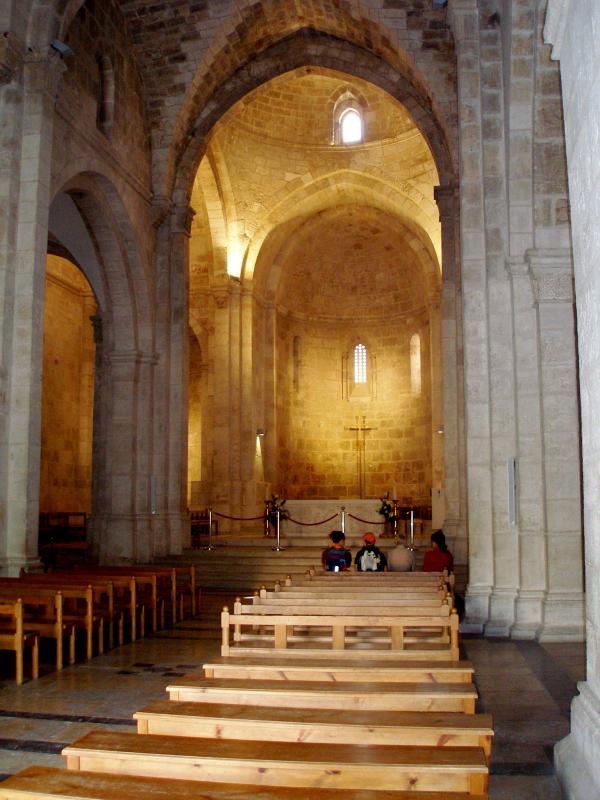
The Church of St Anne is renowned for its remarkable acoustics and reverberating echoes. The voices of even a small choral group can sound like a large congregation in a vast cathedral.

 

Church survived Muslim conquest
Church of St Anne

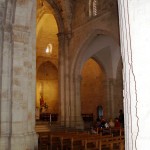
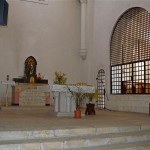
Interior of Church of St Anne (Seetheholyland.net)

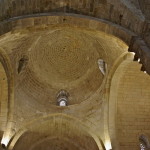
The present basilica was built by the Crusaders just before 1140 AD. Its crypt was the cave where the Crusaders believed Mary had been born.

Shortly after its construction, the Church of St Anne was enlarged by moving the facade forward by several metres.

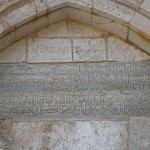
Unlike other churches in Jerusalem, St Anne’s was not destroyed after the Muslim conquest in 1189. Instead, it was turned it into an Islamic law school by the sultan Saladin, whose name appears in the Arabic inscription still above the main entrance.

After two or three centuries, the building was abandoned.

At the end of the Crimean War between the Ottoman Turkish Empire and Russia, the Sultan of Istanbul in 1856 offered the site to the French government in gratitude for its help during the war.

By then the building was in ruins and “roof-deep in refuse”, according to Jerome Murphy-O’Connor, who described it as “certainly the loveliest church in the city”.

France undertook extensive restoration, returning St Anne’s as closely as possible to the original basilica. A second restoration was necessary after the church was damaged during the Six Day War in 1967.


Crypt believed to be Mary’s birthplace
Church of St Anne

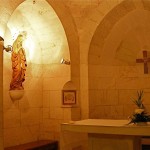
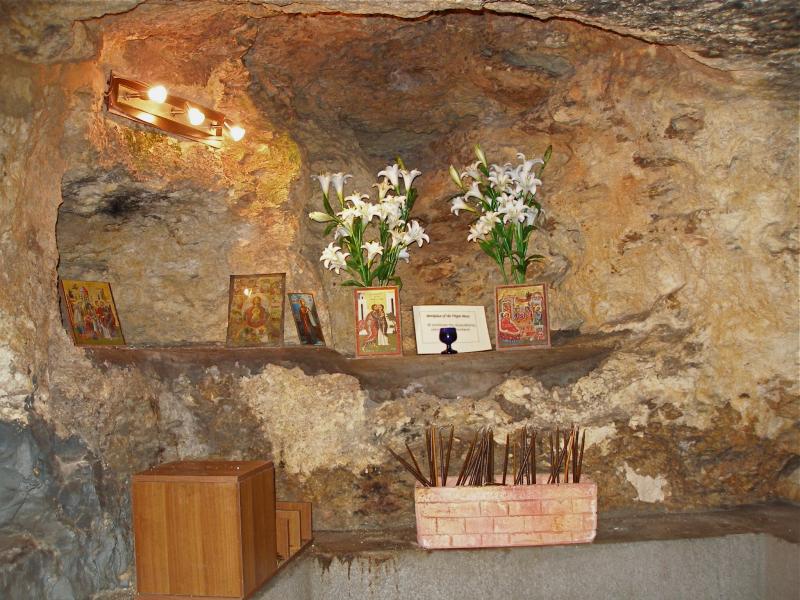
Believed birthplace of Mary, under the Church of St Anne (Seetheholyland.net)

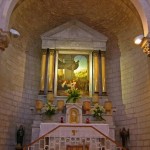
Three episodes from the life of the Virgin Mary are depicted at the front of the high altar in the Church of St Anne: The Annunciation on the right; the Descent of Jesus from the Cross in the centre; and the Nativity of Jesus on the left.

On the left-hand side of the altar is an illustration of the education of Mary by St Anne. On the right-hand side is a portrayal of the Presentation of the Virgin in the Temple.

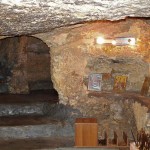
A flight of stone steps descends from the south aisle to the crypt. This cave is the supposed remains of the house of Anne and Joachim, and the Virgin Mary’s birthplace.

Here, in a tiny chapel with a domed ceiling, an altar is dedicated to the birth of Mary.

The compound containing the Pools of Bethesda and St Anne’s Church is administered by the White Fathers. It also contains a museum and a Greek-Catholic (Melkite) seminary.

Related site:

Pools of Bethesda


In Scripture:

Jesus heals a sick man: John 5:1-18


Administered by: White Fathers

Tel.: 972-2-6283285

Open: Apr-Sep 8am-noon, 2-6pm; Oct-Mar 8am-noon, 2-5pm


References

Baldwin, David: The Holy Land: A Pilgrim’s Companion (Catholic Truth Society, 2007)
Bar-Am, Aviva: Beyond the Walls: Churches of Jerusalem (Ahva Press, 1998)
Bouwen, Frans: “St Anne’s Church and the Pool of Bethesda”, Cornerstone, spring 2000.
Gonen, Rivka: Biblical Holy Places: An illustrated guide (Collier Macmillan, 1987)
Inman, Nick, and McDonald, Ferdie (eds): Jerusalem & the Holy Land (Eyewitness Travel Guide, Dorling Kindersley, 2007)
Mackowski, Richard M.: Jerusalem: City of Jesus (William B. Eerdmans, 1980)
Murphy-O’Connor, Jerome: The Holy Land: An Oxford Archaeological Guide from Earliest Times to 1700 (Oxford University Press, 2005)
Starkey, Denis: “The White Fathers in Jerusalem”, White Fathers — White Sisters, April-May 1999.
Wareham, Norman, and Gill, Jill: Every Pilgrim’s Guide to the Holy Land (Canterbury Press, 1996)


External links
Church of St. Anne, Jerusalem (Sacred Destinations)
Church of Saint Anne, Jerusalem (Wikipedia)
Bethesda Pool panorama (Jesus in Jerusalem)
« Newer PostsOlder Posts »

Church of Pater Noster

Jerusalem

Church of the Pater Noster

Church of Pater Noster (Seetheholyland.net)

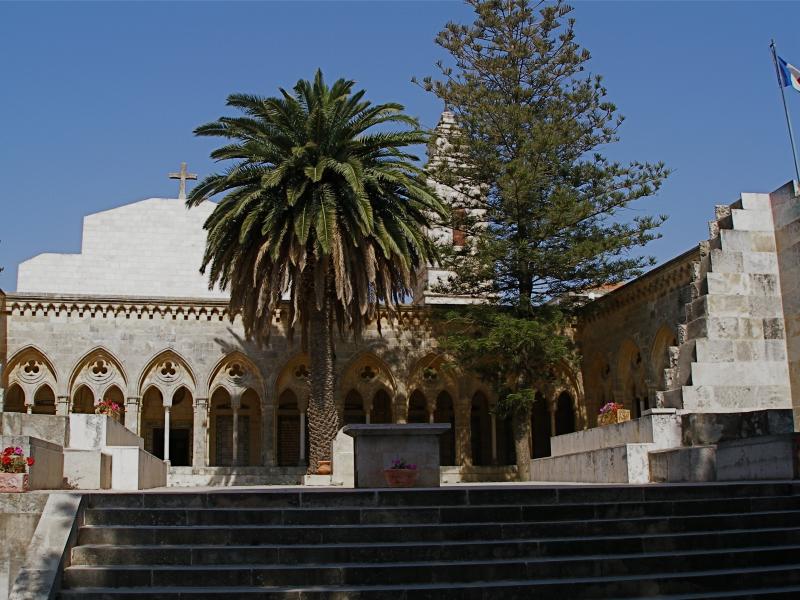
At the Church of Pater Noster on the Mount of Olives, Christians recall Christ’s teaching of the Lord’s Prayer to his disciples.

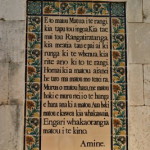
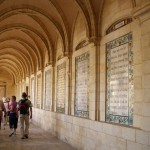
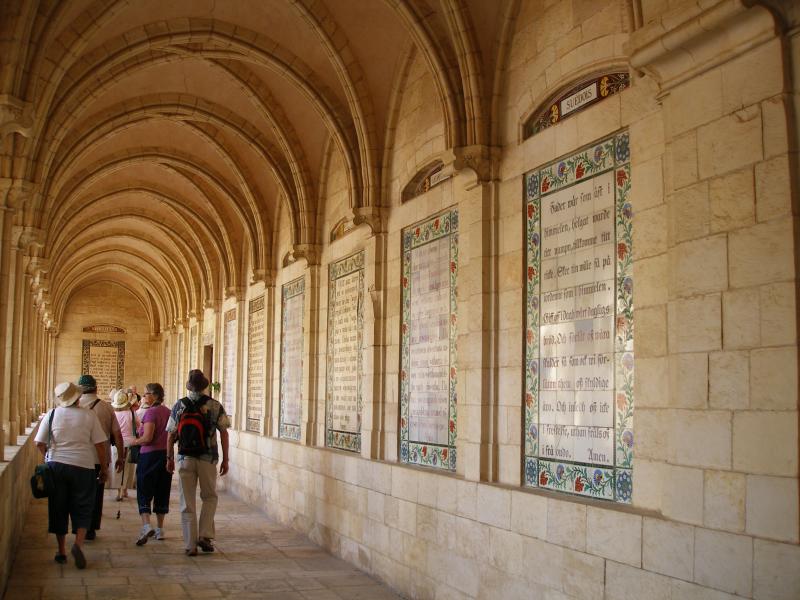
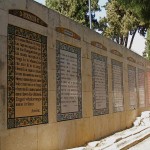
On walls around the church and its vaulted cloister, translations of the Lord’s Prayer in 140 languages are inscribed on colourful ceramic plaques.

A giftshop sells postcards of each plaque and the associated Convent of Pater Noster website offers translations in more than 1440 languages and dialects.

A long tradition holds that Jesus taught the Lord’s Prayer or Our Father in the cave that forms the grotto under the church. When the Crusaders built a church here in the 12th century, they called it Pater Noster (Latin for Our Father).

Pilgrims of the time reported seeing the words of the prayer inscribed in Hebrew and Greek on marble plaques. Excavations have uncovered a Latin version.


Cave is associated with several teachings

Church of Pater Noster

Cloister with plaques of the Lord’s Prayer at Church of Pater Noster (Seetheholyland.net)

The Gospels suggest that Jesus taught the Lord’s Prayer at least twice. Matthew 6:5-15 has this teaching as part of the Sermon on the Mount in Galilee; Luke 11:1-4 has it while Jesus is on his way from Galilee to Jerusalem.

The cave under the Pater Noster Church certainly existed in Jesus’ time. Near the summit of the mount, it would have been a secluded and sheltered place for a small group to gather.

The earliest reference to Jesus teaching in the cave is in the apocryphal Acts of John, dating from the 2nd century, but it does not specifically mention the Lord’s Prayer.

Later the Christian bishop and historian Eusebius (260-339) wrote that “in that cave the Saviour of the Universe initiated the members of his guild in ineffable mysteries”.

When the Emperor Constantine built a three-level church on the site in 330, it commemorated the Ascension of Christ. This historic church was known simply as the Eleona (from the Greek word meaning “of olives”).

The cave is also believed to be associated with Jesus’ teaching about the destruction of Jerusalem and his Second Coming (Matthew 24,25).


A princess built the church

The present church and its cloister were completed in 1874 by an Italian woman who was the widow of a French prince.

Church of Pater Noster

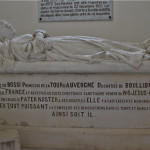
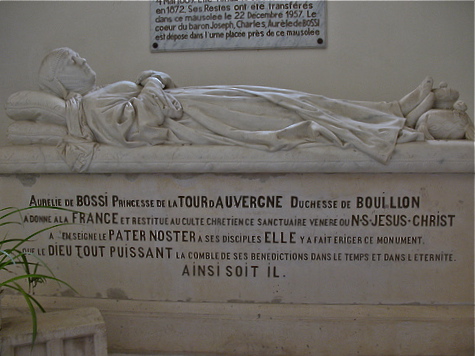
Tomb of the Princess de la Tour d’Auvergne in Church of Pater Noster (James Emery)

Aurélie de Bossi, the Princess de la Tour d’Auvergne, had a particular devotion to the Lord’s Prayer. She erected translations of the prayer in 39 different languages.

Later she added a convent for Carmelite Sisters. While the buildings were being constructed, she lived nearby in a wooden cabin brought from France.

The princess was also keenly interested in the cave — which she never discovered, although she suggested where it might be.

Excavations by archaeologists in 1911 found the cave exactly where she had predicted it to be. It was partly collapsed when it was discovered.

The princess died in Florence in 1889, but her last wish was for her remains to rest in the Pater Noster Church, in a tomb which she had prepared. Her wish was fulfilled in 1957. On top of her sarcophagus is a life-size effigy.


New church was abandoned

Pater Noster Church is a part-reconstruction of Constantine’s Eleona church. Built to the same dimensions, it gives a good idea of what that original Byzantine basilica looked like. The garden outside the three doors outlines the atrium area.

In 1920 construction began on a new Church of the Sacred Heart over the grotto. Work was abandoned in 1927 when funds ran out, leaving the base and walls open to the sky.

Steps below the altar platform lead down to the crypt of the 4th-century basilica, partially built in the cave. But only a little of the stonework remains of that original church.

A 1st-century tomb, which Constantine’s engineers had blocked up with masonry, can now be seen.


In Scripture:

Jesus teaches the Lord’s Prayer: Matthew 6:7-14; Luke 11:1-4

Jesus foretells his Second Coming: Matthew 24,25


Administered by: Carmelite Sisters

Tel.: 972-2-6283143

Open: 8am-noon, 2-5pm (Sunday closed).


References

Bar-Am, Aviva: Beyond the Walls: Churches of Jerusalem (Ahva Press, 1998)
Inman, Nick, and McDonald, Ferdie (eds): Jerusalem & the Holy Land (Eyewitness Travel Guide, Dorling Kindersley, 2007)
Kilgallen, John J.: A New Testament Guide to the Holy Land (Loyola Press, 1998)
Murphy-O’Connor, Jerome: The Holy Land: An Oxford Archaeological Guide from Earliest Times to 1700 (Oxford University Press, 2005)
Pixner, Bargil: With Jesus in Jerusalem — his First and Last Days in Judea (Corazin Publishing, 1996)
Walker, Peter: In the Steps of Jesus (Zondervan, 2006)
Wareham, Norman, and Gill, Jill: Every Pilgrim’s Guide to the Holy Land (Canterbury Press, 1996)


External links
Pater Noster (BibleWalks)
The Lord’s Prayer (Catholic Encyclopedia)
Church of Pater Noster panoramas (Jesus in Jerusalem)
« Newer PostsOlder Posts »

Church of Dominus Flevit

Jerusalem

Church of Dominus Flevit

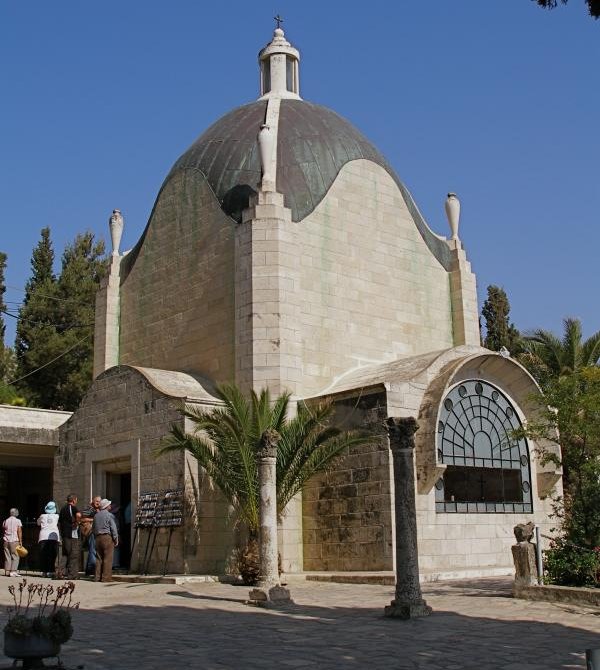
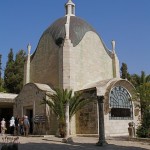
Teardrop-shaped Church of Dominus Flevit (Seetheholyland.net)

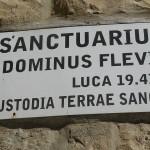
The little teardrop Church of Dominus Flevit, halfway down the western slope of the Mount of Olives, recalls the Gospel incident in which Jesus wept over the future fate of Jerusalem.

This poignant incident occurred during Jesus’ triumphal entry into Jerusalem on the first Palm Sunday, when crowds threw their cloaks on the road in front of him and shouted, “Blessed is the king who comes in the name of the Lord!”

Looking down on the city, Jesus wept over it as he prophesied its future destruction. Enemies would “set up ramparts around you and surround you, and hem you in on every side . . . crush you to the ground . . . and they will not leave within you one stone upon another; because you did not recognise the time of your visitation from God.” (Luke 19:37-44)

Within 40 years, in AD 70, Jesus’ prophesy was fulfilled. Roman legions besieged Jerusalem and, after six months of fighting, burnt the Temple and levelled the city.


Teardrop shape recalls Christ’s grief

Church of Dominus Flevit

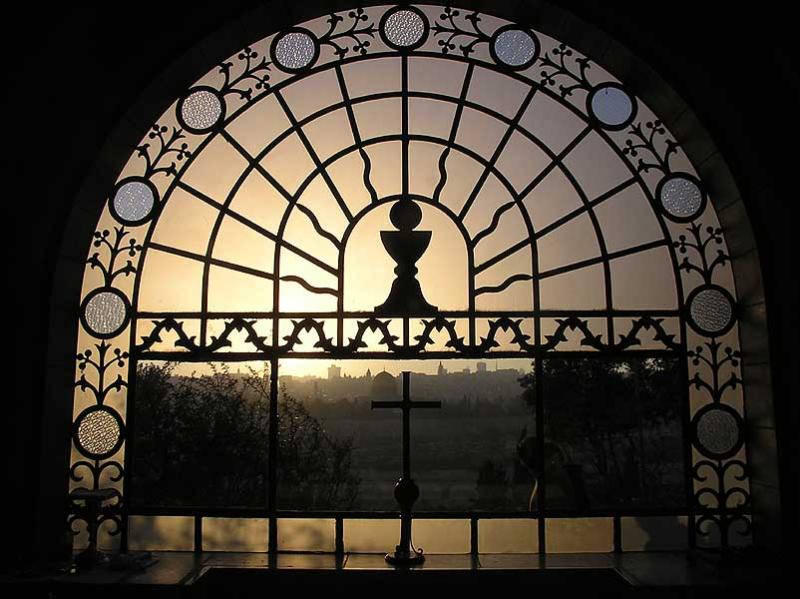
Window behind the altar in the Church of Dominus Flevit (© Custodia Terrae Sanctae)

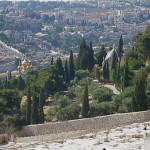
The panoramic view from the Church of Dominus Flevit (Latin for “the Lord wept”) makes it easy to imagine the scene as Christ looked down on the city.

• Rising proud behind the city wall, in the place of today’s Dome of the Rock, stood the Temple — a gleaming vision of white marble and gold facings, huge bronze doors and colonnaded porticos.

• Beyond rose the grand Hasmonean palace, then serving as the Praetorium, and Herod’s Upper Palace with its three enormous towers.

• And in the houses and the streets were the men, women and children of Jerusalem, unaware of the fate that was to befall the Holy City.

Italian architect Antonio Barluzzi symbolised Christ’s grief over the city by designing the Dominus Flevit Church in the shape of a teardrop, with tear phials on the four corners of its dome.

Church of Dominus Flevit

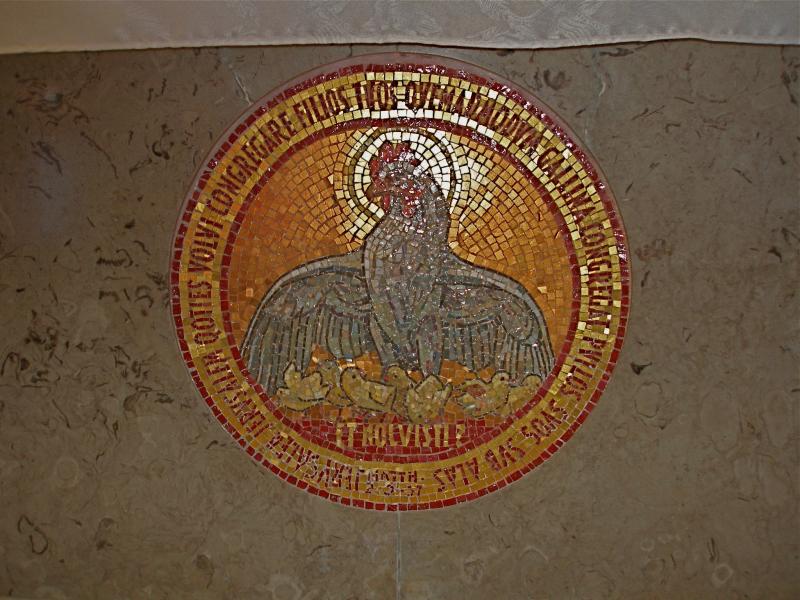
Hen and chickens on altar in Church of Dominus Flevit (Seetheholyland.net)

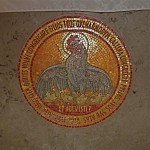
At the foot of the altar, a mosaic of a hen gathering her chickens under her wings recalls Christ’s words “Jerusalem, Jerusalem, the city that kills the prophets and stones those who are sent to it! How often have I desired to gather your children together as a hen gathers her brood under her wings, and you were not willing!” (Luke 13:34)

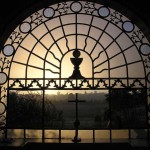
Behind the altar is a much-photographed picture window overlooking the city. The cross and chalice in its arch-shaped design focus not on the Dome of the Rock but on the Church of the Holy Sepulchre.


Ancient mosaic floor is preserved

The Church of Dominus Flevit was built in 1955, but occupies an ancient site. It stands on the ruins of a Byzantine church from the 5th century, dedicated to the prophetess St Anna, and in an area of tombs dating back as far as 1600 BC.

Examples of the two types of tombs discovered by excavators have been left visible.

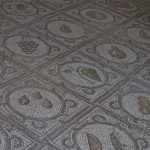
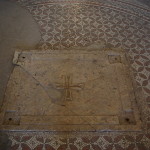
Also unearthed were the remains of an elaborate mosaic floor from the Byzantine church. It has been preserved, to the left of the entrance.

The mosaic is richly decorated with intersecting circles and pictures of fruit, leaves and flowers.

An inscription in Greek refers to Simon, a “friend of Christ”, who “decorated this place of prayer and offered it to Christ our Lord for the forgiveness of his sins and for the repose of his brother . . . .”

In Scripture:

Jesus laments over Jerusalem: Luke 13:34

Jesus weeps over Jerusalem: Luke 19:37-44


Administered by: Franciscan Custody of the Holy Land

Tel.: 972-2-6266450

Open: 8-11.45am; 2.30-5pm


References

Bar-Am, Aviva: Beyond the Walls: Churches of Jerusalem (Ahva Press, 1998)
Inman, Nick, and McDonald, Ferdie (eds): Jerusalem & the Holy Land (Eyewitness Travel Guide, Dorling Kindersley, 2007)
Murphy-O’Connor, Jerome: The Holy Land: An Oxford Archaeological Guide from Earliest Times to 1700 (Oxford University Press, 2005)
Pixner, Bargil: With Jesus in Jerusalem – his First and Last Days in Judea (Corazin Publishing, 1996)
Walker, Peter: In the Steps of Jesus (Zondervan, 2006)

External links

Dominus Flevit (Custodia Terrae Sanctae)
Dominus Flevit panorama (Jerusalem360.com)
« Newer PostsOlder Posts »

Church of All Nations

Jerusalem

Church of All Nations

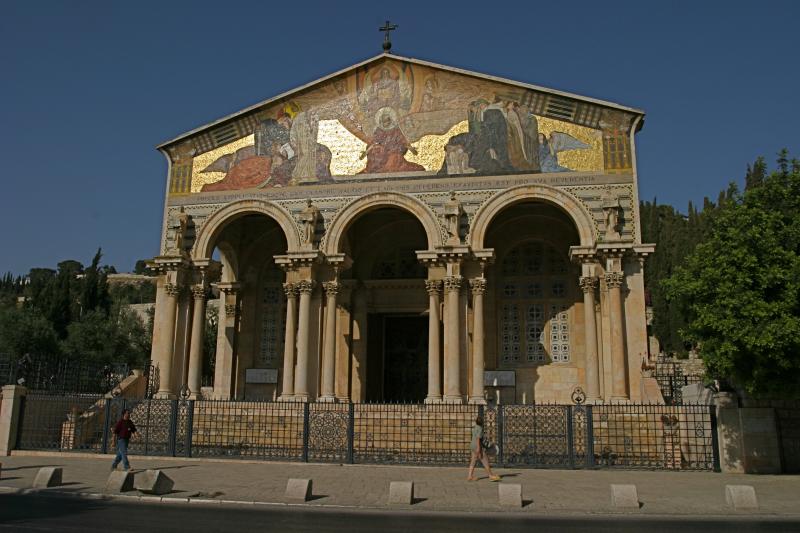
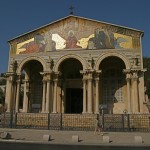
Facade of Church of All Nations (Seetheholyland.net)

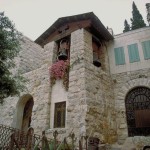
The Church of All Nations, standing near the foot of the Mount of Olives in Jerusalem, is built over the rock on which Jesus is believed to have prayed in agony the night before he was crucified.

The church and the adjacent Garden of Gethsemane, with its eight ancient olive trees, provide an evocative place for meditation, especially when visited at night.

The church is also known as the Basilica of the Agony. Completed in 1924, it is the third church on the site.

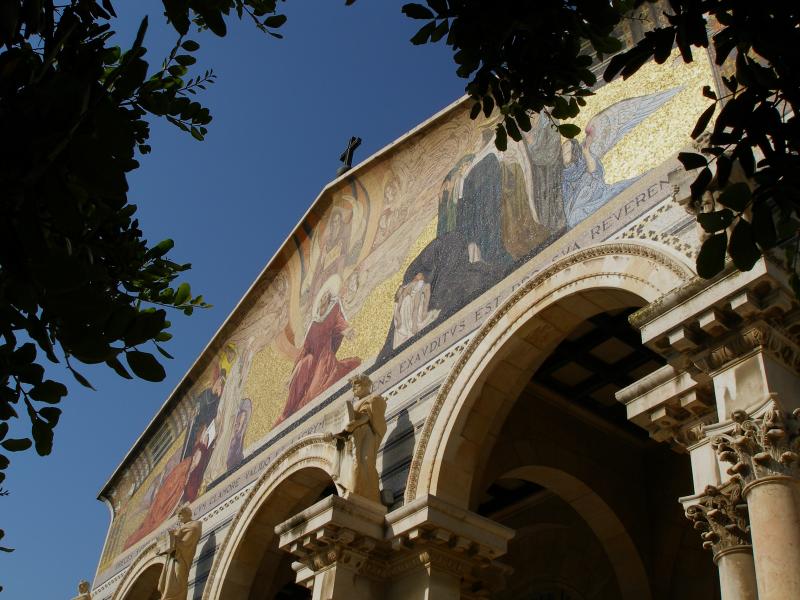
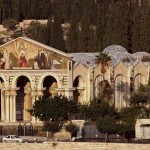
Its design blends the façade of a typically Roman basilica with a roof of 12 small domes that suggest an Eastern character. The richly-coloured triangular mosaic at the top of the façade makes it a Jerusalem landmark.


Jesus prayed in anguish

Church of All Nations

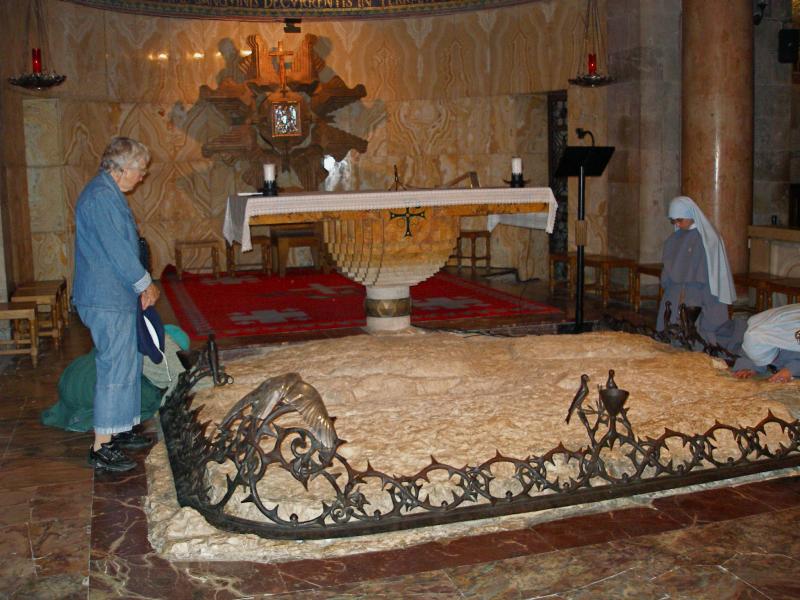
Rock of Agony in the Church of All Nations (Seetheholyland.net)

The Gospels of Matthew, Mark and Luke tell that Jesus and his disciples went to the Mount of Olives after the Last Supper.

He left eight of the disciples together in one place and withdrew further with Peter, James and John. He asked them — the three who had witnessed his Transfiguration — to stay awake with him while he prayed.

Jesus “threw himself on the ground” (Matthew 26:39) and in his anguish “his sweat became like great drops of blood falling down on the ground” (Luke 22:44). But the three disciples, all of them fishermen who were used to working through the night, could not stay awake “because of grief” (Luke 22:45).

Then a group from the chief priests and elders arrived to arrest Jesus. They were led by Judas, who betrayed his Master with a kiss.


Sombre atmosphere in church

Church of All Nations

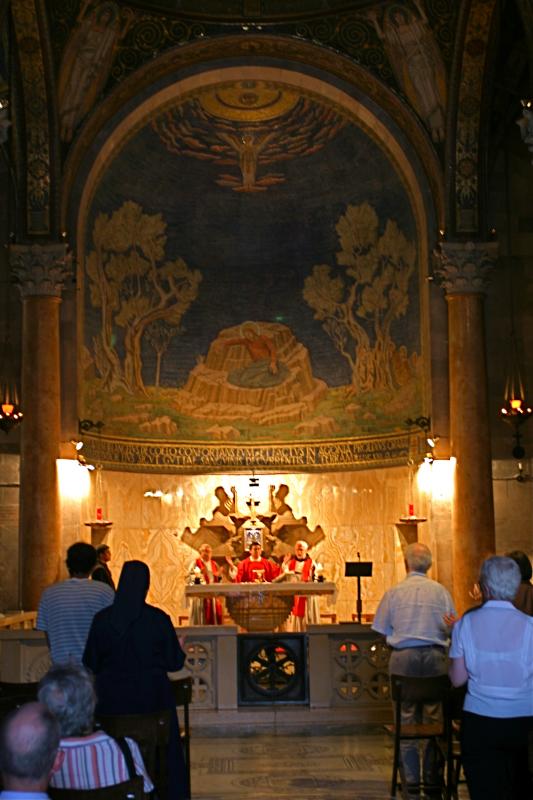
Main altar in Church of All Nations (Seetheholyland.net)

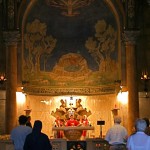
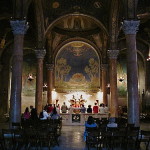
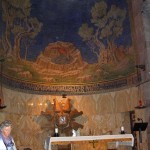
An atmosphere of sorrowful reverence pervades the Church of All Nations. The architect, Antonio Barluzzi, evoked the night-time of the Agony by leaving the interior in semi-darkness, relieved only by subdued natural light filtered through violet-blue alabaster windows.

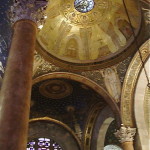
The sombre blue of a star-studded night sky is recreated in the ceiling domes, the stars being surrounded by olive branches reminiscent of the Gethsemane garden.

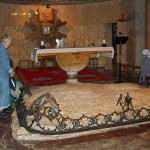
In front of the high altar is a flat outcrop of rock, which a long Christian tradition identifies as the Rock of Agony where Jesus prayed.

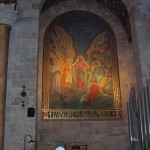
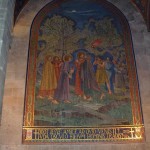
There is a large mosaic in each of the three apses. From left to right, they represent The Kiss of Judas, Christ in Agony being Consoled by an Angel, and The Arrest of Jesus.


Many nations contributed

The basilica is called the Church of All Nations because many countries contributed to the cost of construction.

National symbols of 12 donors — Argentina, Belgium, Brazil, Canada, Chile, England, France, Germany, Italy, Mexico, Spain and the United States of America — are inside the ceiling domes.

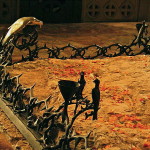
The mosaics in the apses were donated by Hungary, Ireland and Poland. The wrought-iron wreath around the Rock of Agony was given by Australia.

The wreath is in the form of a crown of thorns with olive branches. A pair of thorn birds in front of a Communion chalice symbolise souls who wish to share the cup of Christ’s Passion. Two silver doves are depicted as sacrificial victims caught in agony in the thorns.

Original mosaic floor discovered

During construction, parts of the mosaic floor of the original Byzantine church were discovered. These were preserved under glass and may be seen in the floor of the south aisle.

The architect then decided to copy this 4th-century mosaic design in the floor of the modern church, to suggest a spiritual continuity throughout the ages of faith.

Church of All Nations

Triangular mosaic on facade of Church of All Nations (Seetheholyland.net)

On the façade of the Church of All Nations, the triangular area over the great portal displays a much-photographed mosaic.

Christ is depicted as the mediator between God and mankind, on whose behalf he gives his very heart which an angel is shown receiving into his hands.

On Christ’s left, a throng of lowly people, in tears, look to him with confidence. On his right, a group of the powerful and wise acknowledge the shortcomings of their might and learning.

On the summit of the façade stand two stags on either side of a cross. Below the mosaic, statues of the four Evangelists are separated by three arches.

Related site:

Gethsemane

In Scripture:

Jesus prays in Gethsemane: Matthew 26:36-46; Mark 14:32-42; Luke 22:39-46; Mark 32-42

Jesus is arrested: Matthew 26:47-56; Mark 14:43-50; Luke 22:47-53; John 18:1-12


Administered by: Franciscan Custody of the Holy Land

Tel.: 972-2-6266444

Open: 8am-noon, 2-6pm (5pm Oct-Mar)


References

Bar-Am, Aviva: Beyond the Walls: Churches of Jerusalem (Ahva Press, 1998)
Gonen, Rivka: Biblical Holy Places: An illustrated guide (Collier Macmillan, 1987)
Maier, Paul L. (trans.): Josephus: The Essential Writings (Kregel Publications, 1988)
Murphy-O’Connor, Jerome: The Holy Land: An Oxford Archaeological Guide from Earliest Times to 1700 (Oxford University Press, 2005)
Dillon, Edward: “The Sanctuaries at Gethsemane”, Holy Land, spring 1998
Storme, Albert: Gethsemane (Franciscan Printing Press, 1970)
Wareham, Norman, and Gill, Jill: Every Pilgrim’s Guide to the Holy Land (Canterbury Press, 1996)


External links
Gethsemane (Custodia Terrae Sanctae)
The Church of All Nations panorama (Jesus in Jerusalem)
« Newer PostsOlder Posts »

Chorazin

Israel

Chorazin

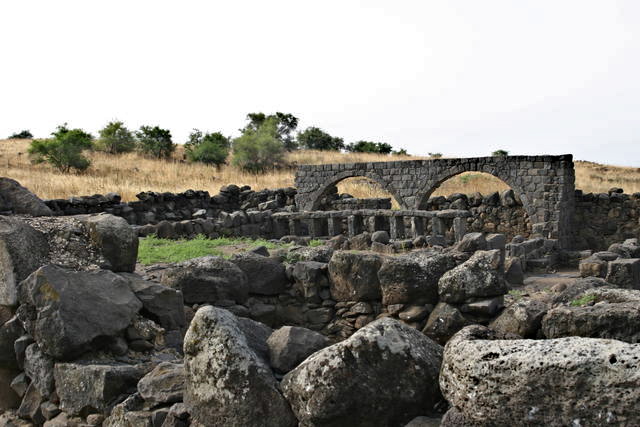
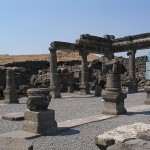
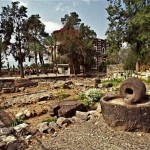
Ruins of Chorazin (David Niblack)

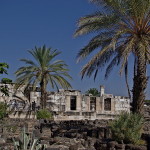
The ruins of Chorazin, one of the three Galilean cities cursed by Jesus, look down on the northern end of the Sea of Galilee.

Residents of Chorazin lived within sight of Bethsaida and Capernaum, two of the other cities in what has become known as the “evangelical triangle”, because most of Jesus teachings and miracles occurred there.

All three — more likely villages than cities — incurred Jesus’ condemnation (“Woe to you, Chorazin!”) because their people did not accept his teachings and repent (Matthew 11:20-24).

Chorazin (also spelt Korazim) is 3.5 kilometres due north of the Mount of Beatitudes. Jewish writings say its wheat was of exceptional quality.

The town expanded considerably after Jews were expelled from Judea in AD 135, but Eusebius around 330 described it as being in ruins, apparently following an earthquake. Life returned over the next 100 years, when the synagogue was rebuilt, until the 8th century.

Settlement was resumed in the 13th century and a small population remained until the beginning of the 20th century, when the site was abandoned.

Synagogue with Seat of Moses

Chorazin

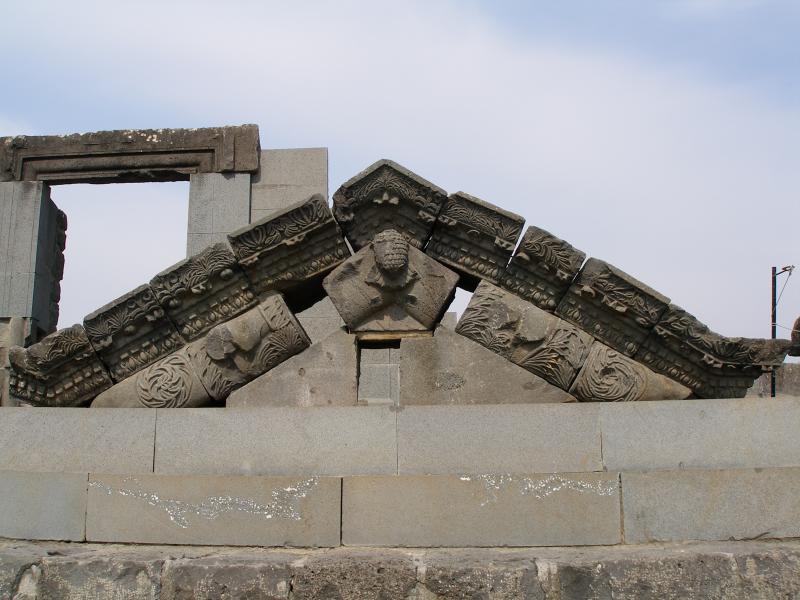
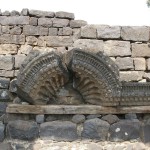
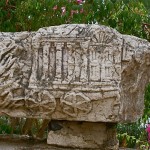
Richly adorned gable of synagogue at Chorazin (Seetheholyland.net)

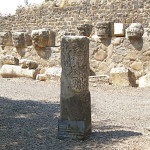
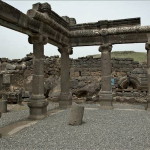
The remains of an elaborate synagogue are a striking feature of the ruins of Chorazin. It was rebuilt in the 3rd or 4th centuries, when the town was thriving.

Constructed of local black basalt stone, the synagogue stood on an elevated area in the centre of the town. A broad staircase led to its façade, which faced south towards Jerusalem.

It had one large hall, with stone benches around the walls for the community to sit during services. The absence of an upper gallery for women suggests the sexes were not segregated at the time it was built.

An unusual find in the ruins of the synagogue was the Seat of Moses, carved out of a single basalt block, from which the Torah would have been read. On its back was an inscription in Aramaic. The original seat is in the Israel Museum in Jerusalem but a copy remains in the ruins at Chorazim.

Decorations carved in the stone include Jewish motifs, geometric designs and patterns incorporating local flowers and animals. The construction methods showed that the builders were skilled in using the basalt stone, which was brittle and easily broken.

Near the synagogue is a ritual bath (mikveh). To the east of the synagogue are two large buildings, dating from the 4th century, which each probably housed an extended family. The rooms were entered from a large cobblestone courtyard.


In Scripture:

Jesus condemns Chorazin: Matthew 11:20-24, Luke 10:13-14


Administered by: Israel National Parks Authority

Tel.: 972-4-693-4982

Open: Apr-Sept 8am-5pm; Oct-Mar 8am-4pm; Fridays and eves of holidays, 8am-3pm. Last entry to site one hour before closing time.


References

Gonen, Rivka: Biblical Holy Places: An illustrated guide (Collier Macmillan, 1987)
Murphy-O’Connor, Jerome: The Holy Land: An Oxford Archaeological Guide from Earliest Times to 1700 (Oxford University Press, 2005)
Rainey, Anson F., and Notley, R. Steven: The Sacred Bridge: Carta’s Atlas of the Biblical World (Carta, 2006)
Schaiek. Z.: The Sea of Galilee (Palphot, 1997?)


External links

Korazim (BibleWalks)
« Newer PostsOlder Posts »

Cenacle

Jerusalem

Cenacle

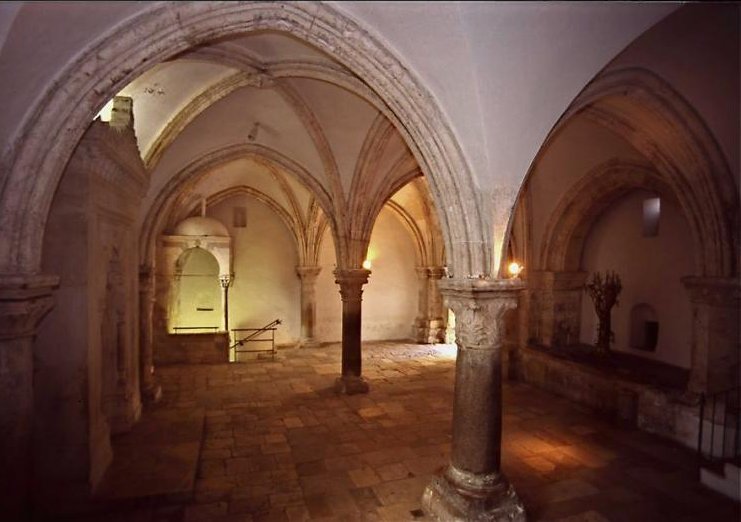
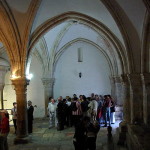
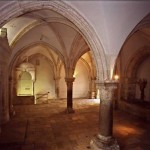
Cenacle or Upper Room (© Israel Ministry of Tourism)

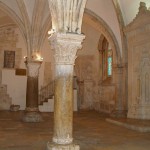
The Cenacle room on Mt Zion in Jerusalem is where two major events in the early Christian Church are commemorated: The Last Supper and the coming of the Holy Spirit on the apostles.

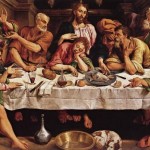
• The Last Supper was the meal Jesus shared with his apostles the night before he died. During this meal he instituted the Eucharist.

• The coming of the Holy Spirit, at Pentecost, is recognised as marking the birth of the Christian Church.

The Cenacle is on the upper floor of a two-storey building near the Church of the Dormition, south of the Zion Gate in the walls of Jerusalem’s Old City.

Above it is the minaret of a Muslim mosque; immediately beneath it is the Jewish shrine venerated as the Tomb of King David (though he is not buried there).


Different from da Vinci

Cenacle

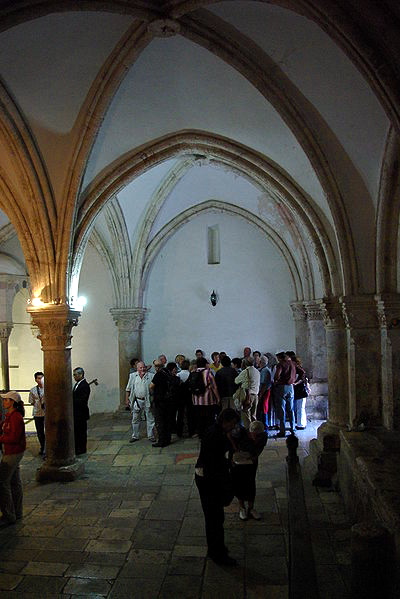
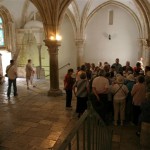
Pilgrims in the Cenacle (Berthold Werner)

The Cenacle is not universally accepted as the site of the “upper room” mentioned in Mark 14:15 and Luke 22:12.

But archaeological research shows it is constructed on top of a church-synagogue built by the first-century Jewish-Christian community of Jerusalem. Fragments of plaster have been found with Greek graffiti, one of which has been interpreted as containing the name of Jesus.  This would have been the first Christian church.

The only competing site is the Syrian Orthodox Church of St Mark (also on Mt Zion), which also claims to possess the “upper room”.

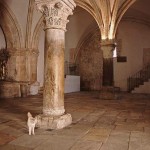
Wherever the site, the original place of the Last Supper would have been a simple dining hall — quite different from those depicted in paintings by Leonardo da Vinci and other artists.


Symbol of a pelican’s blood

Cenacle

Pelicans feed on their mother’s blood on a column in the Cenacle (© Custodia Terrae Sanctae)

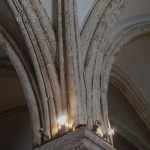
The present Gothic-arched Cenacle is a restoration of a Crusader chapel built in the 12th century as part of the Church of Our Lady of Mount Zion.

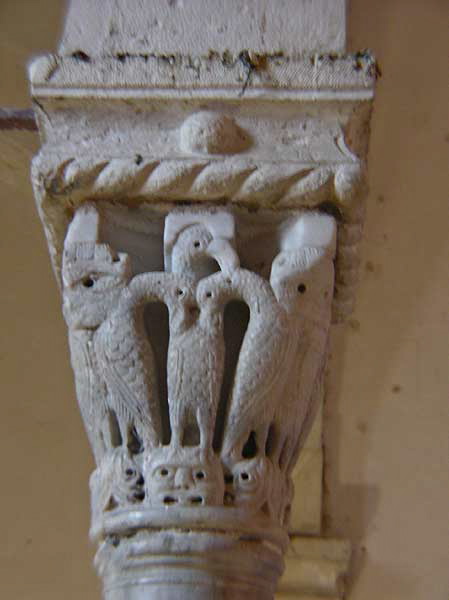
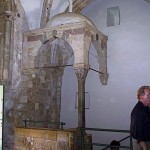
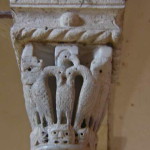
Among the architectural details of the Crusader period is a slender marble column supporting a stone canopy in the south-west corner. Carved into the capital at the top of the column are two young pelicans feeding on the blood their mother has drawn from her breast — symbolising Christ giving his blood for the salvation of humankind.

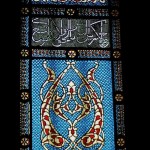
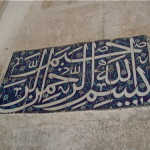
In the 16th century, after the Turks captured Jerusalem, the room was transformed into a mosque in memory of the prophet David. Its mihrab (a niche indicating the direction of Mecca) and stained-glass windows with Arabic inscriptions remain.


Where Peter was left knocking

According to one early Christian tradition, the “upper room” was in the home of Mary the mother of John Mark. He was the author of the Gospel of Mark (and presumably also the young man who fled naked, leaving behind his linen garment, to escape the authorities when Jesus was arrested in the garden at Gethsemane, an event he recorded in Mark 14:51).

This house was a meeting place for the followers of Jesus. It was inside the city walls of Jerusalem, in a quarter that was home to its most affluent residents.

It was also the house to which Peter went after an angel of the Lord released him from prison. Acts 12:12-16 says a maid named Rhoda was so overjoyed at recognising his voice that she left him knocking at the outer gate while she went to tell the gathered disciples.


Obtained at huge cost

The site of the Cenacle was also the first holy place the Franciscans obtained, bought in 1335 through the efforts of King Robert and Queen Sancia of Naples, “after difficult negotiations and huge expenses”.

The structures around the “upper room” are in fact remnants of the Franciscan medieval friary.

Over the centuries the buildings the Franciscans constructed were frequently destroyed and friars were ill-treated and even killed.


In Scripture:

The Last Supper: Matthew 26:17-30; Mark 14:12-25; Luke 22:7-23; John 13:1—17:26

Institution of the Eucharist: 1 Corinthians 11:23-26

The coming of the Holy Spirit: Acts 2:1-4

Administered by: Israel Ministry of the Interior

Tel.: 972-2-6713597 (Franciscan chapel)

Open: 8am-5pm daily


References

Freeman-Grenville, G. S. P.: The Holy Land: A Pilgrim’s Guide to Israel, Jordan and the Sinai (Continuum Publishing, 1996)
Gonen, Rivka: Biblical Holy Places: An illustrated guide (Collier Macmillan, 1987)
Mackowski, Richard M.: Jerusalem: City of Jesus (William B. Eerdmans, 1980)
Murphy-O’Connor, Jerome: Keys to Jerusalem (Oxford University Press, 2012)
Notley, R. Steven: Jerusalem: City of the Great King (Carta Jerusalem, 2015)
Pixner, Bargil: With Jesus in Jerusalem – his First and Last Days in Judea (Corazin Publishing, 1996)
Poni, Shachar: “Renovating Royal Tomb” (The Jewish Voice, February 5, 2010)
Walker, Peter: In the Steps of Jesus (Zondervan, 2006)
Wareham, Norman, and Gill, Jill: Every Pilgrim’s Guide to the Holy Land (Canterbury Press, 1996)


External links
Church of the Apostles found on Mt Zion (Biblical Archaeological Review)
The Cenacle (Biblical Archaeology)
« Newer PostsOlder Posts »

Capernaum

Israel

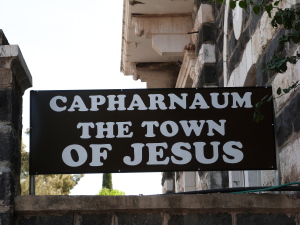
A fish-market and frontier post beside the Sea of Galilee, Capernaum became Jesus’ home town and the scene of many of his miracles.

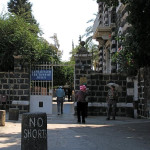
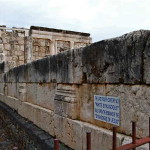
Sign at entrance to Capernaum site (Seetheholyland.net)

Sign at entrance to Capernaum site (Seetheholyland.net)

It was also the home of the first disciples Jesus called — the fishermen Peter, Andrew, James and John, and the tax collector Matthew (who as Levi collected taxes in the customs office).

In this town:

• Jesus worshipped and taught in the synagogue — where his teaching made a deep impression on the local people because, unlike the scribes, he taught with authority. (Mark 1:21-22)

• In the same synagogue, Jesus promised the Eucharist in his “I am the bread of life” discourse: “Very truly, I tell you, unless you eat the flesh of the Son of Man and drink his blood, you have no life in you.” (John 6:22-59)

• Jesus and healed many people of illness or possession by the devil, including Peter’s mother-in-law and the daughter of Jairus, the leader of the synagogue.

• Jesus pronounced a curse on the town, along with Bethsaida and Chorazin, because so many of its inhabitants refused to believe in him.


Church hovers over Peter’s house

Capernaum

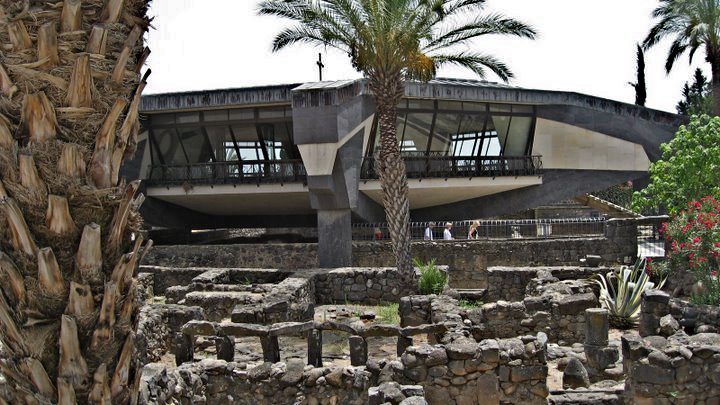
Modern church over St Peter’s house at Capernaum (© Tom Callinan / Seetheholyland.net)

Capernaum later fell into ruin. A 3rd-century report called the town “despicable;  it numbers only seven houses of poor fishermen”. It was later resettled but again fell into disrepair. The ruins lay undiscovered until 1838, when a visiting scholar gave this description: “The whole place is desolate and mournful . . . .”

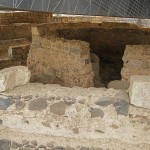
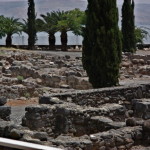
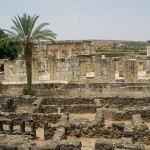
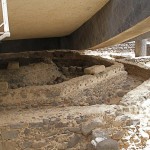
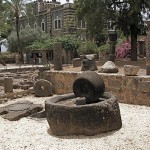
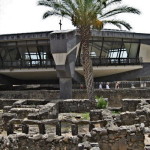
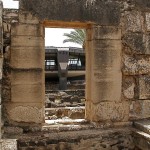
Today an ultra-modern Catholic church, perched on eight sturdy pillars, hovers protectively over an excavation site. It is believed to have been the site of Peter’s house, where Jesus would have lodged.

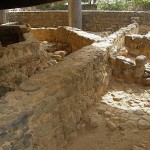
Archaeologists believe the house was in a small complex grouped around irregular courtyards. Drystone basalt walls would have supported a roof of tree branches covered with straw and earth — a fairly flimsy construction easily breached to lower a paralysed man on a mat, as described in Mark 2:1-12.

Excavations show that one room in this interlinked complex had been singled out since the middle of the 1st century. Graffiti scratched on its plaster walls referred to Jesus as Lord and Christ (in Greek). It is suggested that this room was venerated for religious gatherings as a house church. If so, it would have been the first such example in the Christian world.

In 5th century an octagonal church was built around this venerated room. The present church, dedicated in 1990, repeats the octagonal shape.


Ornate synagogue in white limestone

Capernaum

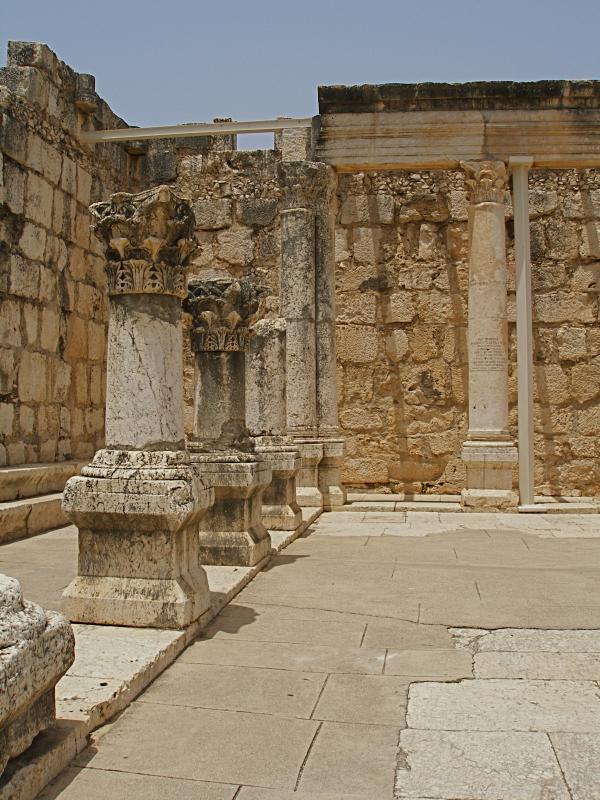
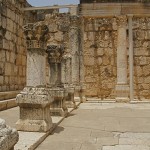
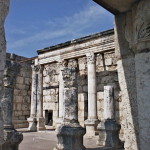
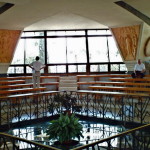
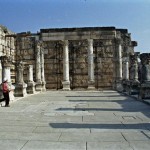
Inside the ancient synagogue at Capernaum (Seetheholyland.net)

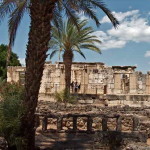
Near the church, a partly reconstructed synagogue is believed to have been built on the foundations of the synagogue in which Jesus taught.

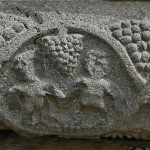
Erected in the 4th or 5th centuries, this impressive structure with ornately carved decorations is the largest synagogue discovered in Israel.

Its white limestone, carted from a distant quarry, contrasts with the local black basalt of the synagogue Christ knew. That original synagogue was built by a Roman centurion, the same centurion who had his servant healed after a declaration of faith that amazed Jesus (Luke 7:1-10).

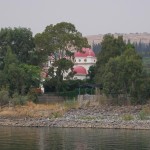
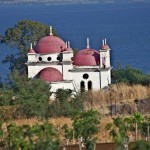
A short distance away, by the Sea of Galilee, can be seen the red domes and white walls of a Greek Orthodox church, built in 1931 and dedicated to the Twelve Apostles.

Related site: Church of the Twelve Apostles


In Scripture:

Jesus makes his home in Capernaum: Matthew 4:12-17

Jesus teaches in the synagogue: Mark 1:21-28

Jesus cures Peter’s mother-in-law: Mark 1:29-31

Paying the temple tax: Matthew 17:24-27

Jesus calls Matthew: Matthew 9:9-12

Jesus condemns Capernaum: Matthew 11:20-24

Jesus heals a centurion’s servant: Luke 7:1-10

Jesus cures a paralysed man: Mark 2:1-12

“I am the bread of life”: John 6:22-59


Administered by: Franciscan Custody of the Holy Land

Tel.: 972-4-6721059

Open: 8am-4.50pm


References

Charlesworth, James H.: The Millennium Guide for Pilgrims to the Holy Land (BIBAL Press, 2000)
Gonen, Rivka: Biblical Holy Places: An illustrated guide (Collier Macmillan, 1987)
Loffreda, Stanislao: “Capharnaum”, Holy Land, summer and autumn, 2002
Murphy-O’Connor, Jerome: The Holy Land: An Oxford Archaeological Guide from Earliest Times to 1700 (Oxford University Press, 2005)
Rainey, Anson F., and Notley, R. Steven: The Sacred Bridge: Carta’s Atlas of the Biblical World (Carta, 2006)
Strange, James F., and Shanks, Hershel: “Synagogue Where Jesus Preached Found at Capernaum” and “Has the House Where Jesus Stayed in Capernaum Been Found?”, in The Galilee Jesus Knew (Biblical Archaeology Society, 2008)
Wareham, Norman, and Gill, Jill: Every Pilgrim’s Guide to the Holy Land (Canterbury Press, 1996)


External links
Capernaum (Custodia Terrae Sanctae)
Capernaum (BiblePlaces)
Capernaum — City of Jesus and its Jewish Synagogue (Israel Ministry of Foreign Affairs)
Capernaum (David Hadfield)
« Newer PostsOlder Posts »

Cana

Israel

Cana

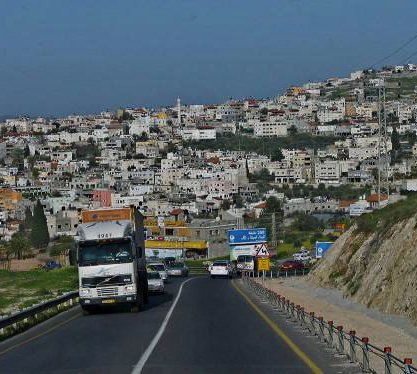
View of modern Cana (© Welcometohosanna.com)

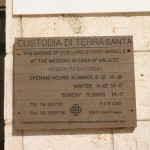
Cana in Galilee is celebrated as the scene of Jesus’ first miracle. It is actually the place of his first two public miracles in Galilee — the changing of water into wine and the remote healing of an official’s son 32km away in Capernaum.

On the first occasion, Jesus and his first disciples turned up at a wedding feast, possibly that of a close relative of his mother Mary. The wine ran out — perhaps because those additional guests had not been catered for — and Mary turned to her Son to overcome the embarrassment (John 2: 1-11).

“Woman, what concern is that to you and to me?” he responded. “My hour has not yet come.” But she persisted and her Son turned six jars holding more than 550 litres of water (equivalent to more than 730 bottles) into fine wine.

This miracle is significant for Christian pastoral theology. Christ’s attendance at the wedding feast, and his divine intervention to rescue the hosts from embarrassment, are taken as setting his seal on the sanctity of marriage and, as the Catholic Encyclopedia puts it, “on the propriety of humble rejoicing on such occasions”. The incident is also seen as an argument against teetotalism.

Jesus’ newest disciple at the time of the wedding was Nathaniel, who actually came from Cana of Galilee.


Location remains uncertain

Cana’s actual location is uncertain, with at least three possible candidates. But the commemoration of the miracle of the wine is traditionally fixed at Kefer-Kenna (also known as Kefr Kana and Kfar-Cana), about 5km north-east of Nazareth on the road to Tiberias.

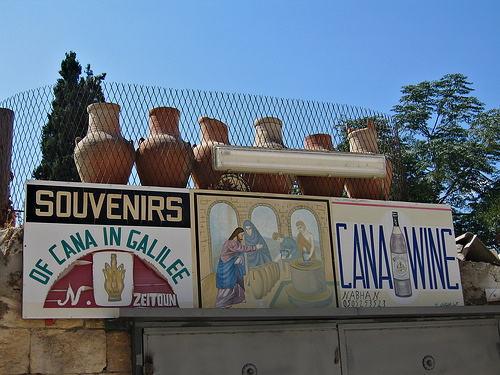
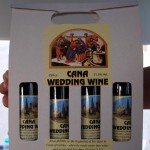
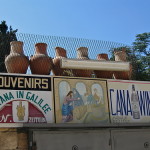
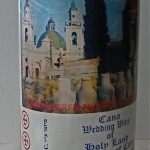
Here the Franciscans, relying on the testimony of early pilgrims including St Jerome, established themselves in 1641. And here streetside vendors sell Cana wine.

Cana

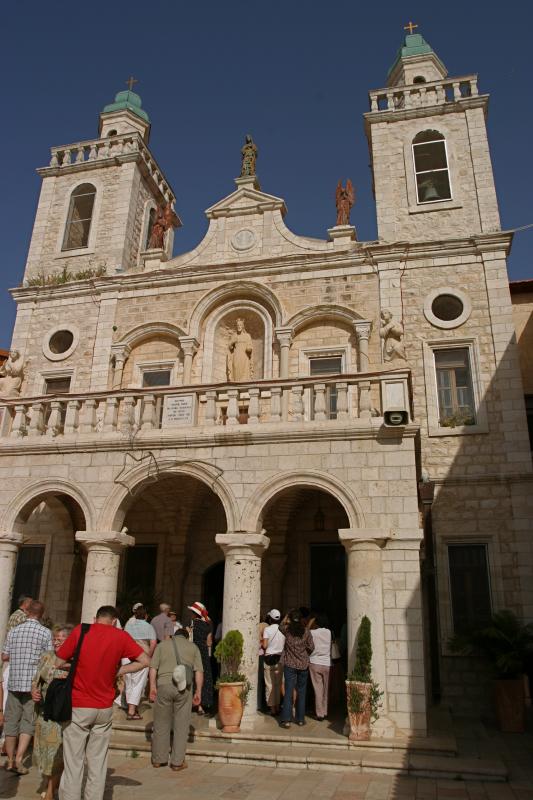
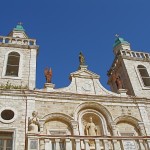
Franciscan Church at Cana (Tom Callinan/Seetheholyland.net)

The Franciscans believe excavations beneath their present church, dating from the early 1900s, confirm the existence of an early place of worship, perhaps a Jewish-Christian synagogue, on the site.

Beneath the sacristy of the present Franciscan church were found remains of dwellings dated back to the 1st century and an ancient basilica with three apses in cross-like form. In a crypt a small stone cistern was found fitted into a flagstone floor.

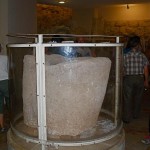
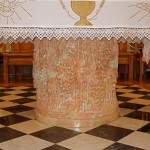
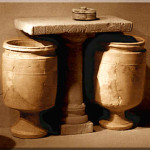
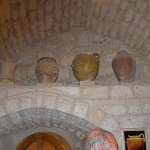
Not far from the Franciscan church is the Greek Orthodox Church of the Marriage Feast, with two large stone jars claimed to be two of the original water pots. But archaeologist Rivka Gonen says “they seem to be old baptismal fonts”.

The town also has a chapel dedicated to St Bartholomew, who some scholars identify with Nathanael of Cana.


Second miracle brought healing

Cana

Cana wine on sale (David Poe)

The second time Jesus visited Cana, he was met by a distressed official of the court of Herod Antipas (John 4:46-49). The official lived at Capernaum — which Jesus was soon to make his home town — and he had come to plead for his son, who was dying.

Jesus, who had earlier proved he could make good wine from water, now showed he could heal from 30km away. “Go; your son will live,” he told the official.

One of the early pilgrims to Cana, the Anonymous Pilgrim of Piacenza, confessed in 570 to an act of religious graffiti. “Our Lord was at the wedding,” he wrote, “and we reclined upon his very couch upon which I, unworthy that I am, wrote the names of my parents.”

Another possible site for Cana, preferred by many modern scholars, is the ruined village of Khirbet Kana (Khirbet Qana), 13km northwest of Nazareth. Here archaeologists have discovered an underground veneration complex believed to have been visited by early Christian pilgrims.


In Scripture

The miracle at the wedding feast: John 2:1-11

Jesus heals the official’s son: John 4:46-54

Administered by: Franciscan Custody of the Holy Land

Tel: 972-4-6517011

Open: Apr-Sep Mon-Sat 8am-noon, 2-5.30pm, Sun 8am-noon; Oct-Mar Mon-Sat 8am-noon, 2-5pm, Sun 8am-noon


References

Alliata, Eugenio, OFM: “Archaeological Excavations at Cana of Galilee”, Holy Land, summer 2004
Gonen, Rivka: Biblical Holy Places: An illustrated guide (Collier Macmillan, 1987)
Mancini, Ignatius: “New Archaeological Discoveries at Cana of Galilee”, Holy Land, autumn 1998
Rainey, Anson F., and Notley, R. Steven: The Sacred Bridge: Carta’s Atlas of the Biblical World (Carta, 2006)
Ward, Bernard:  “Cana”, The Catholic Encyclopedia (Robert Appleton Company, 1908)


External links

Cana (Wikipedia)
Cana (Custodia Terrae Sanctae)
Khirbet Cana (BibleWalks)
Where Did Jesus Turn Water into Wine? (Biblical Archaeology Society)


« Newer PostsOlder Posts »

Caesarea Philippi

Israel

Caesarea Philippi

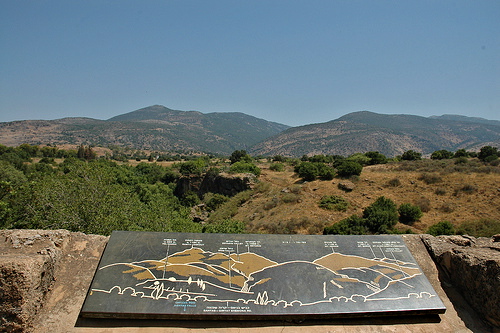
Panorama from Caesarea Philippi (Francesco Gasparetti)

Near Caesarea Philippi, a city of Greek-Roman culture known for its worship of foreign gods, Jesus announced he would establish a church and gave authority over it to the apostle Simon — whom he renamed Peter.

When Christ asked, “Who do people say that the Son of Man is?” it was Simon Peter who was inspired to answer: “You are the Messiah, the Son of the living God.”

In reply, Christ declared: “And I tell you, you are Peter, and on this rock I will build my church, and the gates of Hades will not prevail against it. I will give you the keys of the kingdom of heaven, and whatever you bind on earth will be bound in heaven, and whatever you loose on earth will be loosed in heaven.” (Matthew 16:13-20)

Situated 40km north of the Sea of Galilee, the region of Caesarea Philippi was the furthest north Jesus took his disciples.


Cult of Pan flourished

Caesarea Philippi

Shrines to Pan at Caesarea Philippi (Bill Rice)

The city had been known as Banias, an Arabic pronunciation of Panias (there is no p in Arabic). This name honoured the Greek god Pan — a half-man, half-goat deity often depicted playing a flute — who was worshipped here.

When Jesus passed this way, the area was ruled by Herod the Great’s son Philip, who had renamed the city Caesarea. To distinguish it from the coastal Caesarea Maritima, it became known as Caesarea Philippi.

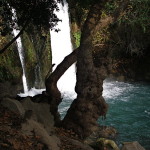
The city had been built near the Banias spring, which gushes from a massive rock face and flows into one of the streams that form the Jordan River.

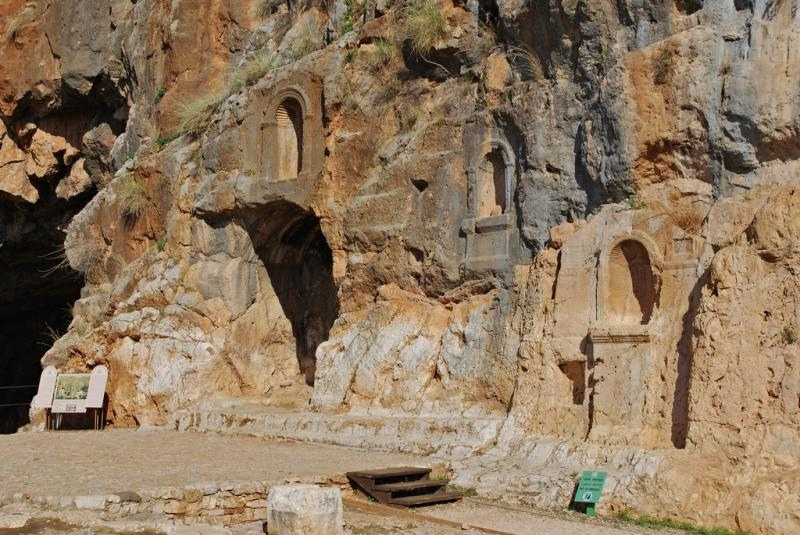
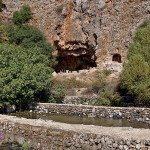
Here the cult of Pan flourished. East of a large cave are the remains of shrines to Pan and inscriptions, from the 2nd century, bearing his name.

In 2020 the remains of a 4th-century church, one of the oldest in Israel, was unearthed at Banias on top of a Roman-era temple to Pan.

Now a nature reserve

Caesarea Philippi

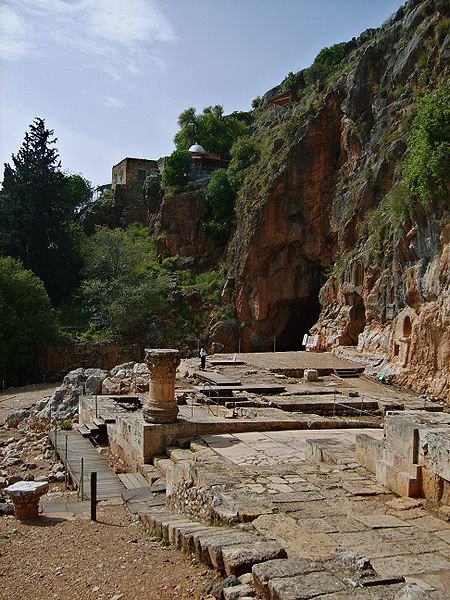
Remnants of the Temple of Pan with Pan’s cave in the background (Gugganij / Wikimedia)

Since Jesus liked to use local imagery for his metaphors and parables, it is easy to visualise him standing by the steep cliff of the Banias spring and telling Peter that he would become “this rock”.

Six days after this event, the Transfiguration took place on “a high mountain” (Matthew 17:1). Christian tradition places the Transfiguration on Mount Tabor, near Nazareth, but some scholars believe Mount Hermon (16km north of Caesarea Philippi) to be a more likely site.

Banias, including the sanctuary of Pan and the remains of a Roman/Crusader town, is now a nature reserve.

The steep cliff of the cult area with the cave of Pan is located near the eastern entrance to the reserve, and is clearly visible from the parking area.


In Scripture:

Peter calls Jesus the Messiah: Matthew 16:13-20

Jesus foretells his death: Mark 8:31—9:1


Administered by: Israel Nature and Parks Authority

Tel.: 972-4-6902577 (spring), 972-4-6950272 (waterfall)

Open: Apr-Sep 8am-5pm; Oct-Mar 8am-4pm (last entry one hour before closing)


References

Brownrigg, Ronald: Come, See the Place: A Pilgrim Guide to the Holy Land (Hodder and Stoughton, 1985)
Charlesworth, James H.: The Millennium Guide for Pilgrims to the Holy Land (BIBAL Press, 2000)
Gonen, Rivka: Biblical Holy Places: An illustrated guide (Collier Macmillan, 1987)
Murphy-O’Connor, Jerome: The Holy Land: An Oxford Archaeological Guide from Earliest Times to 1700 (Oxford University Press, 2005)


External links

Caesarea Philippi (BiblePlaces)
Ancient church found where Jesus said to tell Peter to establish Christianity (Times of Israel)
« Newer PostsOlder Posts »

Caesarea Maritima

Israel

In the attractive Mediterranean seaport of Caesarea Maritima, the apostle Peter baptised the first recorded gentile convert to Christianity — Cornelius, a centurion in the Roman army.

When this Italian soldier and his household believed in Jesus they received the gift of the Holy Spirit and began speaking in tongues. This event astonished the Jewish Christians but validated the fact that salvation was for all people (Acts 10).

Caesarea

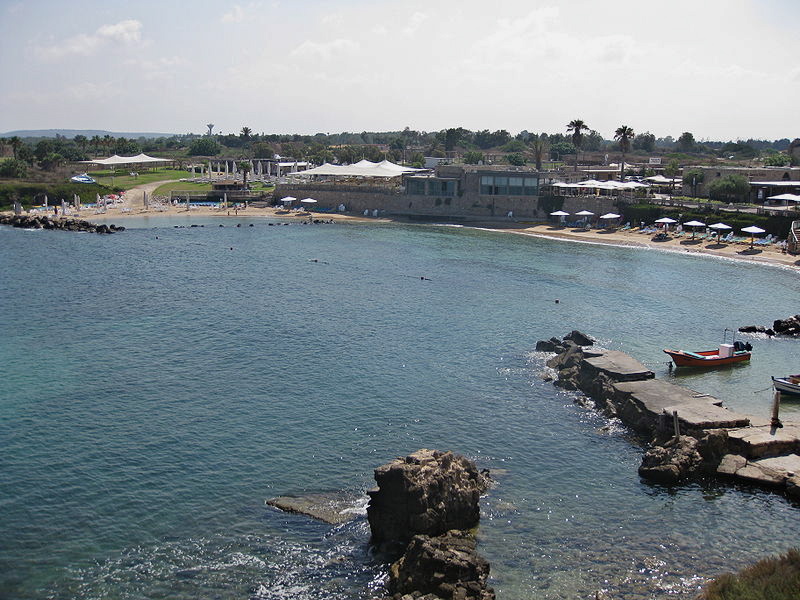
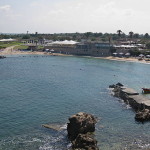
Harbour at Caesarea (© Deror Avi)

Caesarea Maritima (“by the sea”) was the scene of other significant events for Christians:

• It was the headquarters of Pontius Pilate. From here the Roman procurator set out for the Passover festival in Jerusalem, where he sentenced Jesus to death.

• Here the apostle Paul was imprisoned for two years and preached to the last of the Herods, King Agrippa II, who said that if he were to listen any longer to Paul’s persuasion he might become a Christian.

• The city was the home of Philip the evangelist and his four daughters, who were prophetesses. Paul stayed with them when he returned from his missionary journeys.

• At Philip’s home, a prophet named Agabus bound Paul’s hands and feet with his belt, foretelling how the apostle would be handed over to the Romans.

• After Jerusalem was destroyed, Caesarea became the centre of Christianity in Palestine. A Church council held here in AD 195 determined that Easter should be celebrated on a Sunday.


Founded by Herod the Great

Caesarea

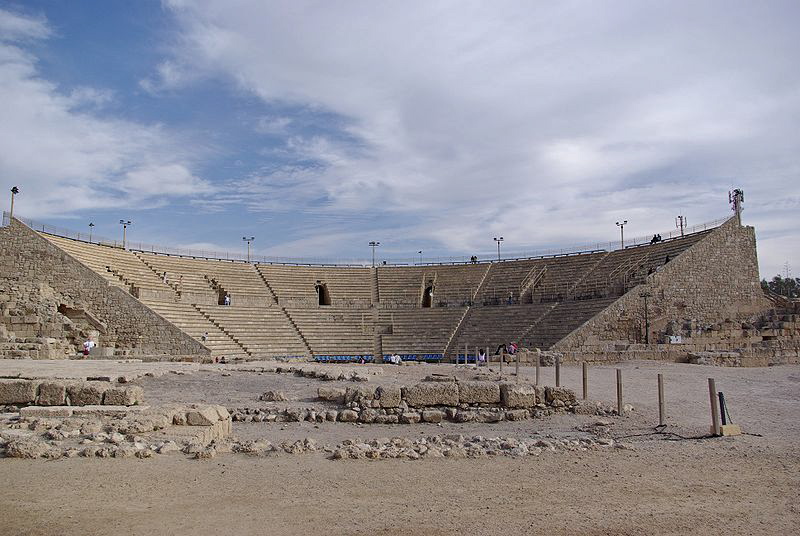
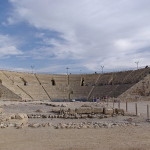
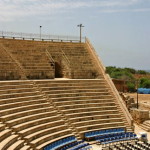
Restored amphitheatre at Caesarea (Berthold Werner)

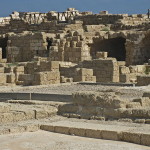
Caesarea — not to be confused with Caesarea Philippi in Galilee – was founded by Herod the Great on the site of an ancient fortified town. In 22 BC, with no expense spared, he began building a new city and harbour.

Massive breakwaters gave safe anchorage to 300 ships, a sewage system was flushed by the tide, and a vast hippodrome seated more than 20,000 people at chariot races. Later an amphitheatre was built to present chariot races, gladiatorial combats, animal performances and theatrical events. Little wonder that Caesarea has been dubbed “Vegas on the Med.”

During the Roman occupation, clashes between Jews and the majority Greco-Syrian population, who supported Rome, were frequent.

The desecration of Caesarea’s synagogue and the massacre of 20,000 Jews — in a single hour, according to the historian Josephus — culminated in the First Jewish Revolt, which ended with the AD 70 destruction of both Jerusalem and the Second Temple.


Bishop’s territory included Jerusalem

Christianity was accepted early in Caesarea. By the end of the 2nd century the city had a bishop, Theophilus of Caesarea, whose territory included Jerusalem.

Well-known Christian Fathers who were active in Caesarea included Origen and Pamphilius. The library they built up was second only to that of Alexandria (in the 7th century it held 30,000 works).

Eusebius, who became bishop in 314, was both the first Church historian and the first biblical geographer. Without his book of place names, the Onomasticon, many biblical sites would never have been identified.


Cathedral was never completed

Caesarea

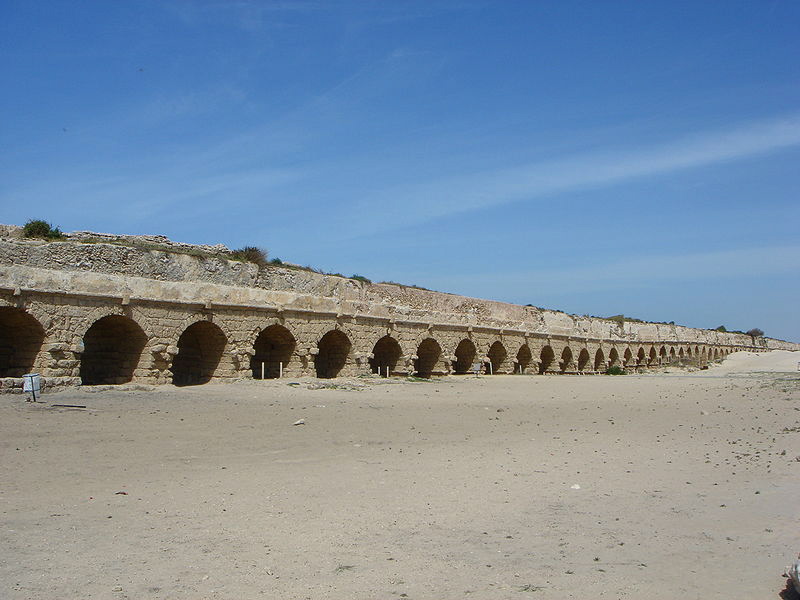
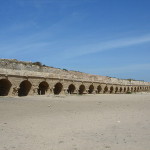
Roman aquaduct that brought water from Mount Carmel to Caesarea (Seetheholyland.net)

Today’s visitors can see a restored Roman theatre built to accommodate 4000 and a Roman aqueduct that brought water from the foothills of Mount Carmel.

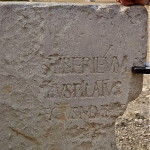
Just inside the theatre is a replica of an inscription carved in stone, bearing the name of Pontius Pilate.

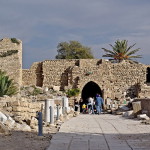
The remains of a Crusader walled city, from the 13th century, include a cathedral which was never completed because the vaults below, from an earlier period, were unable to bear the weight.

A severe storm in December 2010 damaged several archaeological sites, including parts of the Crusader city wall and the Herodian wall. A breakwater built in the 1950s to protect the port was smashed into three pieces.

In Scripture:

Philip arrives in Caesarea: Acts 8:40

Agabus prophesies Paul’s death: Acts 21:8-11

Peter visits Cornelius: Acts 10

God strikes down Herod Agrippa I: Acts 12:21-23

Paul is imprisoned in Caesarea: Acts 23:23—26:32


References

Brownrigg, Ronald: Come, See the Place: A Pilgrim Guide to the Holy Land (Hodder and Stoughton, 1985)
Charlesworth, James H.: The Millennium Guide for Pilgrims to the Holy Land (BIBAL Press, 2000)
Freeman-Grenville, G. S. P.: The Holy Land: A Pilgrim’s Guide to Israel, Jordan and the Sinai (Continuum Publishing, 1996)
Gonen, Rivka: Biblical Holy Places: An illustrated guide (Collier Macmillan, 1987)
Joseph, Frederick: “Caesarea”, Holy Land, winter 2004
Murphy-O’Connor, Jerome: The Holy Land: An Oxford Archaeological Guide from Earliest Times to 1700 (Oxford University Press, 2005)
Porath, Yosef: “Caesarea: Herod and Beyond: Vegas on the Med.”, Biblical Archaeology Review, September/October 2004
Wareham, Norman, and Gill, Jill: Every Pilgrim’s Guide to the Holy Land (Canterbury Press, 1996)


External links
Caesarea Maritima (BibArch)
Caesarea Maritima (BiblePlaces)
Caesarea (Israel Ministry of Foreign Affairs)
« Newer PostsOlder Posts »
All content © 2022, See the Holy Land | Site by Ravlich Consulting & Mustard Seed
You are welcome to promote site content and images through your own
website or blog, but please refer to our Terms of Service | Login