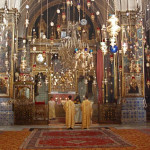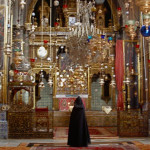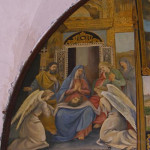
. . . your guide to visiting the holy places  
If you have found See the Holy Land helpful and would like to support our work, please make a secure donation.
The Sites

Israel and Palestine – In Jerusalem

Israel and Palestine – Outside Jerusalem

Jordan

Egypt

Extras

Mar Saba

West Bank

Mar Saba

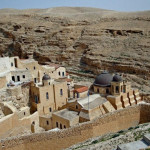
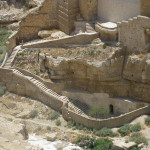
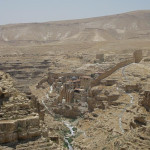
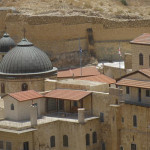
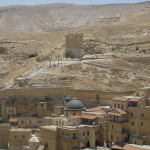
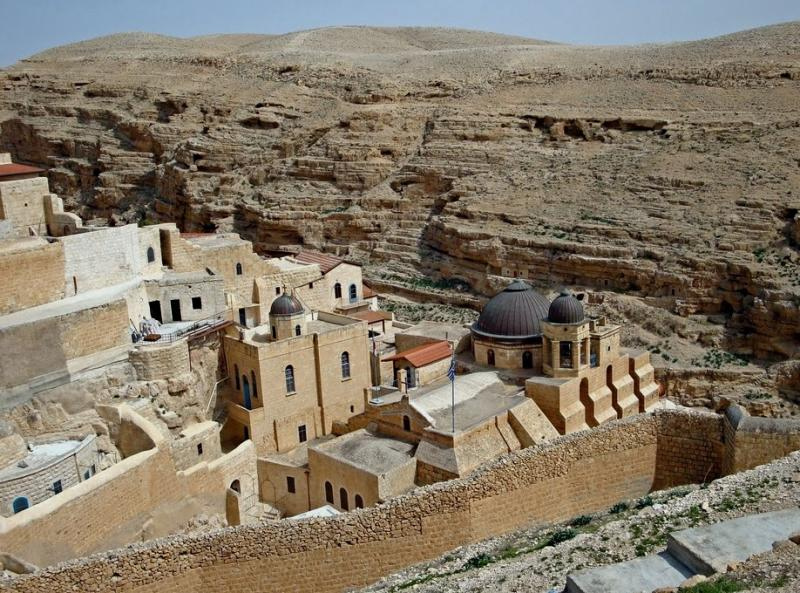
Mar Saba from above (Steve Peterson)


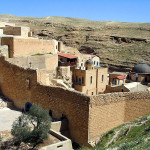
The greatest of the ancient monasteries dotting the wilderness of the Judaean Desert, Mar Saba hangs dramatically down the cliff edge of a deep ravine.

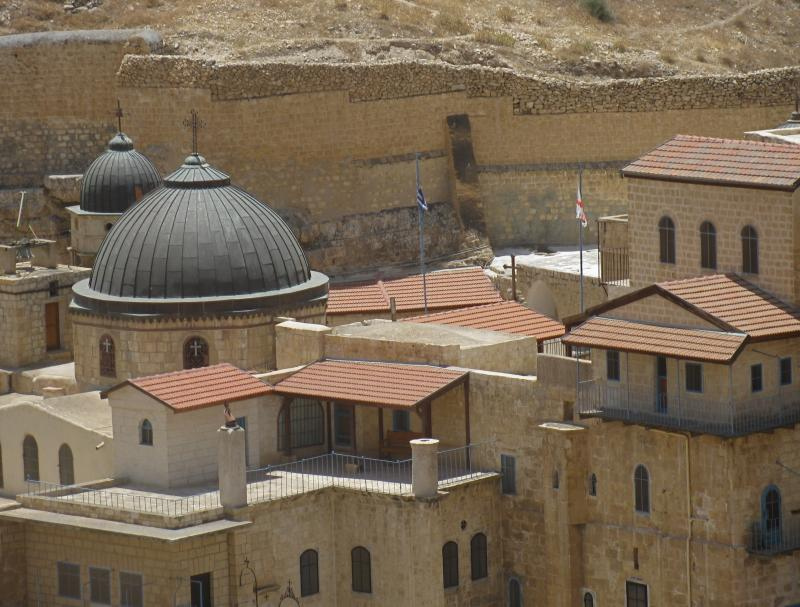
The grey-domed Greek Orthodox complex was established in the 5th century by St Sabas (Mar Saba in Arabic), a monk from central Turkey, and was largely rebuilt following a major earthquake in 1834.

Its remote location is 15 kilometres east of Bethlehem, off route 398 and reached down a steep road.

During its heyday the monastery was home to more than 300 monks. Though it remains a functioning desert monastery, its numbers have dropped to fewer than 20 in the 21st century.
Mar Saba

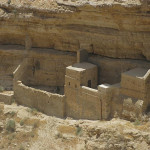
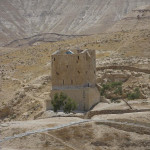
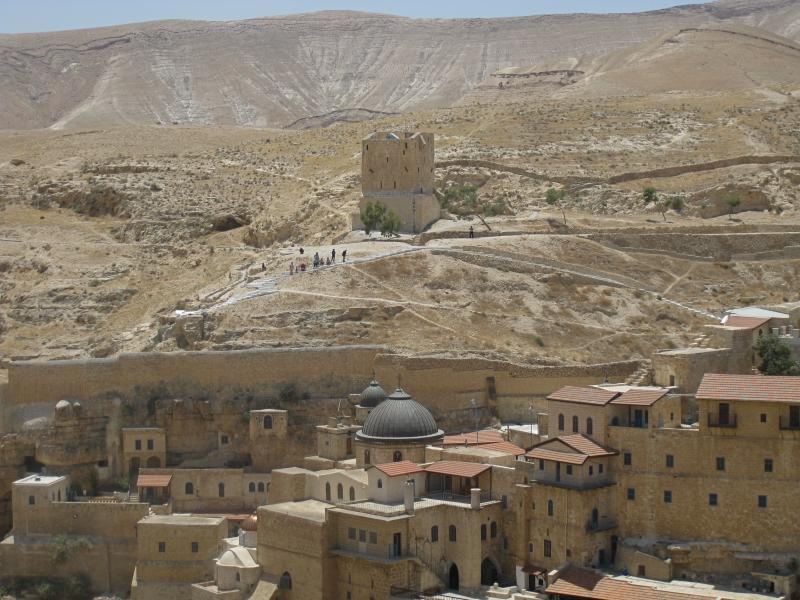
Women’s Tower standing apart from monastery at Mar Saba (© Deror Avi)

Occupied almost continuously since its founding, Mar Saba ranks with St Catherine’s Monastery in Egypt’s Sinai Peninsula as one of the oldest inhabited monasteries in the world.

It also provides an enduring reminder of the age-old tradition of holy people leaving behind worldly distractions and seeking God in the solitude of the desert.

Part of the Mar Saba tradition is the exclusion of women visitors. They may only look over the complex from a vantage point called the Women’s Tower — built, according to tradition, by St Sabas’ mother, who was also forbidden to enter the monastery.


Saint’s body returned from Venice
Mar Saba

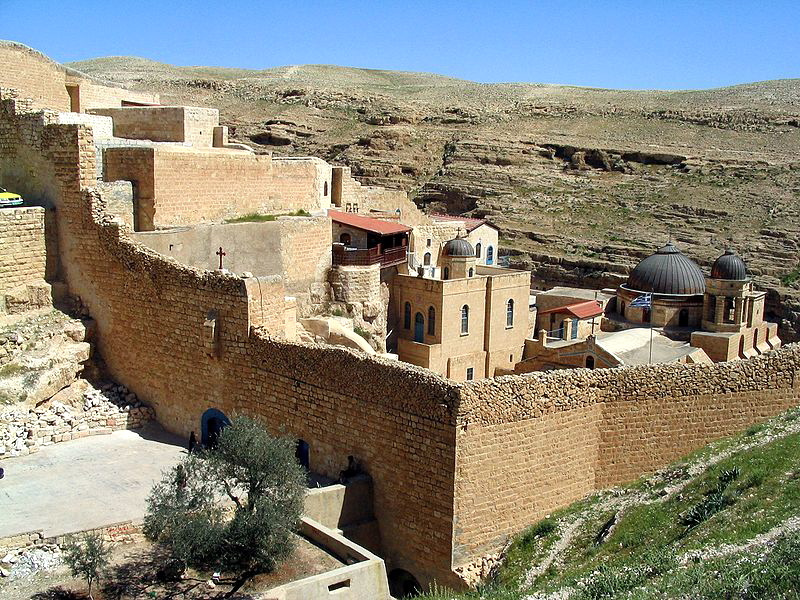
Defensive wall around Mar Saba (Kaasmail)

A thick wall and slit-like windows give Mar Saba the appearance of a fortress. These defensive features recall plunder by the Persians in 615 and attacks from Bedouins in the following centuries.

What began as a series of cell-caves along two kilometres of cliffs has been consolidated into a complex containing two churches, several chapels, a common dining room, kitchen storerooms, 14 cisterns, cells for monks and a hostel for visitors.

From the entrance, a low door in the western wall, a stepped passageway descends to the central courtyard. In the centre is a hexagon-shaped dome which was once the tomb of St Sabas.

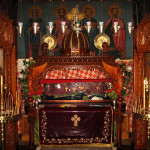
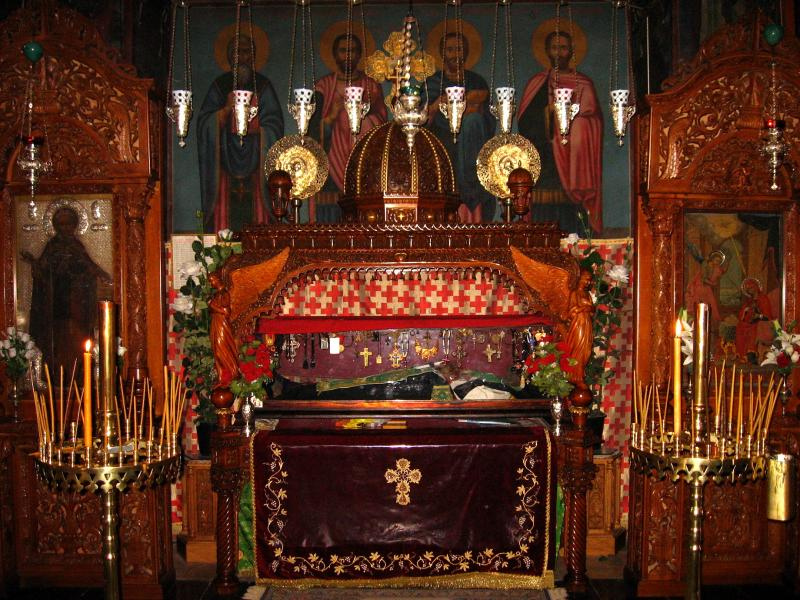
During the Crusades the saint’s body was taken to Venice. Pope Paul VI arranged for its return after his Holy Land visit in 1964, and it now lies in a glass case in the main church.
Mar Saba

Remains of St Sabas in main church of Mar Saba (Adriatikus)

This church, with a large blue dome and small bell tower, is dedicated to the Theotokos (Mother of God).

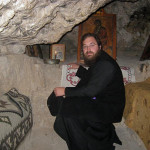
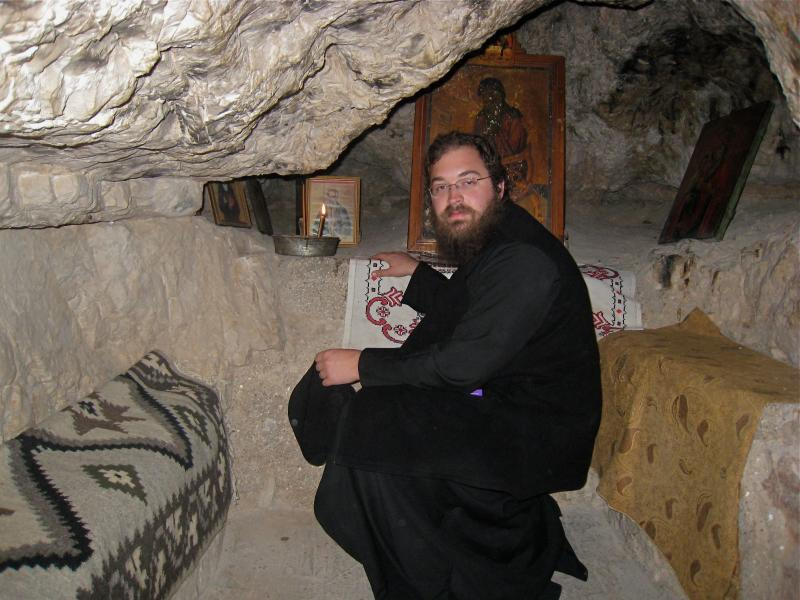
From the entrance area, a stairway leads to a series of small chapels — one in the cramped cave where a brilliant monk, St John Damascene, spent 20 years in the 8th century writing classic defences of Christianity against heresy and Islam.

On the northwest side of the courtyard is the second church, built into a grotto in the rock. It is dedicated to St Nicholas.

The skulls of monks killed by Persians invaders are displayed in the sacristy and their bones are collected behind a grille.
Mar Saba

Visiting priest in cave of St John Damascene (© Gregory Edwards)

In contrast to the austere simplicity of the monks’ lifestyle, church and chapel walls glitter with the gold of innumerable icons, many donated to the monastery by the Russian government in the 19th century.


Holiness attracted other hermits

Mar Saba clings to one side of the Kidron Valley — the valley that begins between the Temple Mount and Mount of Olives in Jerusalem and runs eastward to the Dead Sea.

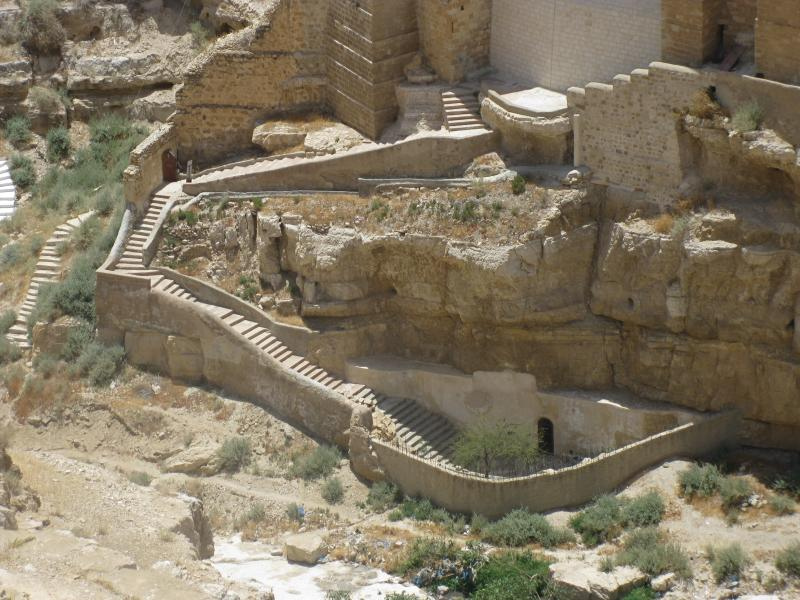
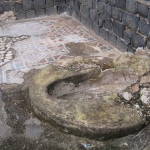
At the foot of the monastery, beneath three great buttresses that support the wall of the dining room, kitchen, storehouse and bakery, is a walled-in space containing the spring that attracted St Sabas to the site. The Kidron stream is dry in summer.
Mar Saba

Steps down to the walled-in spring at Mar Saba (© Deror Avi)

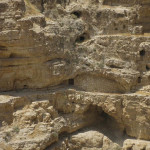
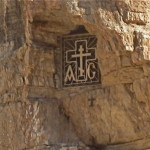
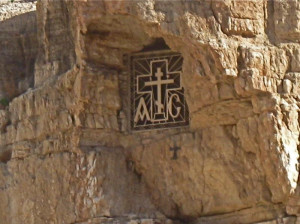
Across the valley is a cave where St Sabas spent five years in solitude. The opening is protected by a metal grille with a cross set between the letters A and C. Inside an entrance lower down, two ladders climb a 6-metre shaft to the simple cave, containing a rock-cut bench and a prayer niche cut into the eastern wall.

St Sabas had been a monk for 18 years before he sought seclusion in the Kidron Valley. Other hermits, attracted by his holiness, settled nearby and their cluster of cells led to the founding of Mar Saba.

A legacy from his mother and the arrival of two monks who had been architects paved the way for the construction of a large church and communal facilities.
Mar Saba

Cave of St Sabas (© Clara Bonnet)

St Sabas founded several other monasteries and became superior of all the hermit monks of Palestine. He is credited with taming a lion that tried to eat him, and vowing never to eat apples because he believed Eve tempted Adam with this fruit.

Monks developed Orthodox worship

Originally the monks of Mar Saba meditated in isolation in their caves from Monday to Saturday, then gathered to spend Saturday night in prayer together before celebrating Mass at dawn on Sunday.
Mar Saba

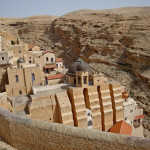
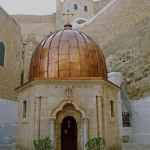
Church domes at Mar Saba (© Deror Avi)

They returned to their caves on Sunday evening, taking food for the following week and palm branches and rushes for their daily work of making rope, baskets and mats to be sold in Jerusalem to finance the monastery.

The monks of Mar Saba made a crucial contribution to the development of the liturgy in the Orthodox Church. They compiled a typicon — a book of directions for worship services and ceremonies — that became the standard for the Orthodox world up till the 19th century.


Administered by: Greek Orthodox Patriarchate of Jerusalem

Tel.: 972-2-2773135

Open: Open daily except Wednesdays and Fridays, 8am-4pm (ring bell). Only men may enter monastery; women are admitted only to Women’s Tower.


References

Bourbon, Fabio, and Lavagno, Enrico: The Holy Land Archaeological Guide to Israel, Sinai and Jordan (White Star, 2009)
Inman, Nick, and McDonald, Ferdie (eds): Jerusalem & the Holy Land (Eyewitness Travel Guide, Dorling Kindersley, 2007)
Freeman-Grenville, G. S. P.: The Holy Land: A Pilgrim’s Guide to Israel, Jordan and the Sinai (Continuum Publishing, 1996)
Murphy-O’Connor, Jerome: The Holy Land: An Oxford Archaeological Guide from Earliest Times to 1700 (Oxford University Press, 2005)
Prag, Kay: Israel & the Palestinian Territories: Blue Guide (A. & C. Black, 2002)
Walker, Peter: In the Steps of Jesus (Zondervan, 2006)
 

External links

Mar-Saba monastery (BibleWalks)
Holy Lavra of St. Savas (Orthodoxwiki)
« Newer PostsOlder Posts »

Kursi

Israel

Kursi

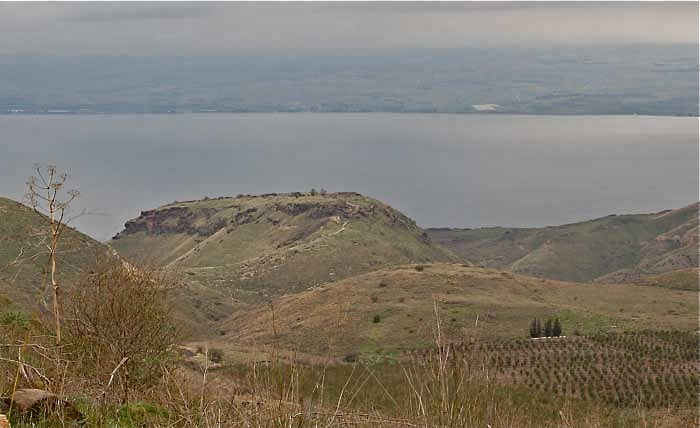
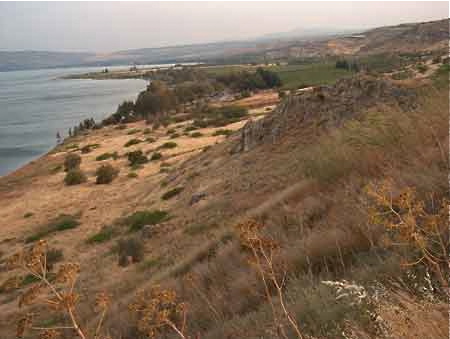
Steep slope near Kursi (David Q. Hall)


A headlong stampede by a herd of demon-possessed pigs into the Sea of Galilee is remembered at Kursi, a picturesque site beneath the Golan Heights on the eastern side of the lake.

Three Gospels tell the story: Jesus steps out of a boat after crossing the lake and is confronted by a man possessed by demons. When Jesus orders the demons to leave the man, they beg to be allowed to enter a herd of swine grazing nearby. Jesus agrees, and the swine — numbering about 2000 — rush down a bank into the water and are drowned. (Luke 8:26-39; Mark 5:1-20; Matthew 8:28-34)

Kursi

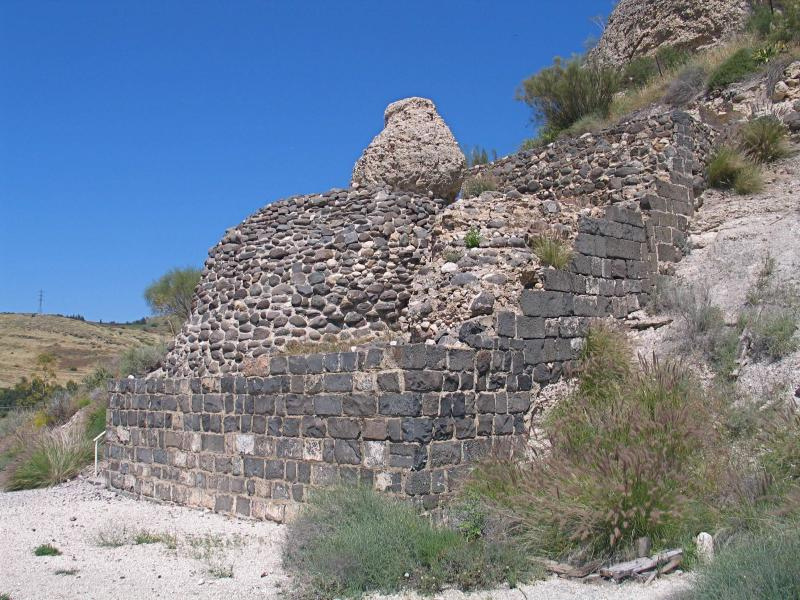
Boulder at Kursi miracle site (Bukvoed)

The dismayed swineherds run off to spread the news, and the local people ask Jesus to leave their neighbourhood. The healed man begs to go with Jesus — but Jesus tells him to go home and tell his friends what has happened.

“And he went away and began to proclaim in the Decapolis how much Jesus had done for him; and everyone was amazed” (Mark 5:20). So this gentile man becomes the first person commissioned by Jesus to spread the Good News to non-Jews.

Kursi was an important place of Christian pilgrimage from the 5th century, when the lakeside towns of Capernaum, Bethsaida and Chorazin — all three condemned by Jesus for their lack of faith — had fallen into decline.

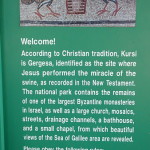
Kursi is the site of the largest known Byzantine monastery complex in Israel, whose impressive remains have been partly reconstructed.

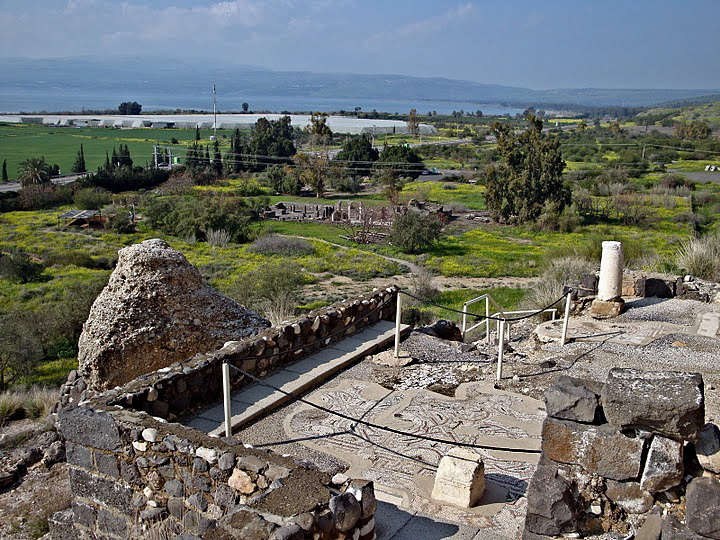
On the side of the hill behind the monastery are the remains of an earlier chapel, built into a cave. It overlooks a huge boulder enclosed in a retaining wall of stones — apparently identifying the site as the place of the miracle.


Location revealed by bulldozer

Kursi

Chapel overlooking boulder at site of miracle, with monastery in middle distance (Steve Peterson)

Kursi is 5 kilometres north of Ein Gev, near the junction where route 789 leaves the lakeside road (route 92) to mount the Golan Heights. Its name, meaning “chair” in Semitic languages, probably refers to the shape of the broad valley behind it.

Different Gospel manuscripts offer conflicting names for the area in which the miracle took place — the country of the Gadarenes, Gerasenes, or Gergesenes.

What is certain is that the location was in gentile territory. Because Jewish dietary laws forbid the eating of pork, no Jew would have been raising pigs.

The identification of Kursi with the place of the miracle was known to early Christian writers and pilgrims — among them St Sabas, founder of Mar Saba monastery, who prayed at the site in 491.

Kursi

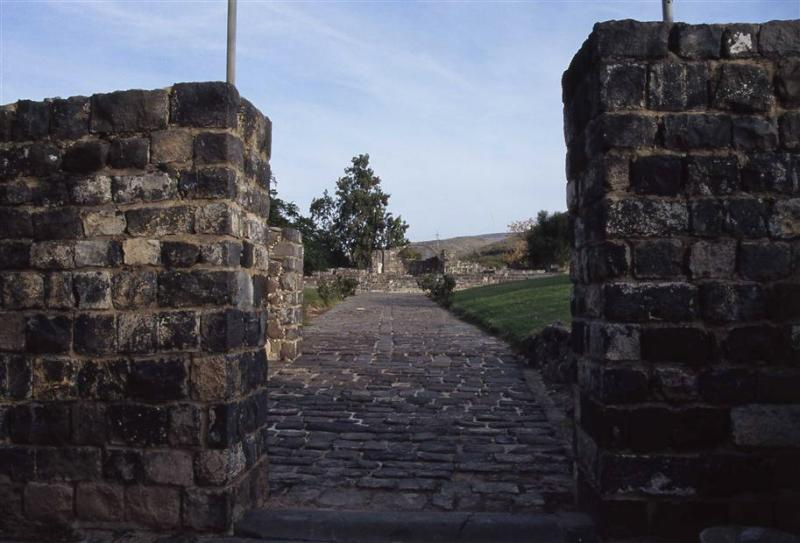
Entrance to Kursi (© Israel Ministry of Tourism)

Kursi lay unknown for many centuries until pieces of Byzantine pottery were noticed in the trail of a bulldozer constructing a new road to the Golan Heights in 1970.

As well as the monastery complex, excavators found an ancient fishing harbour — one of at least 16 around the Sea of Galilee — with a breakwater and a pool where live fish were kept to await sale.


Guesthouse for pilgrims uncovered

Kursi

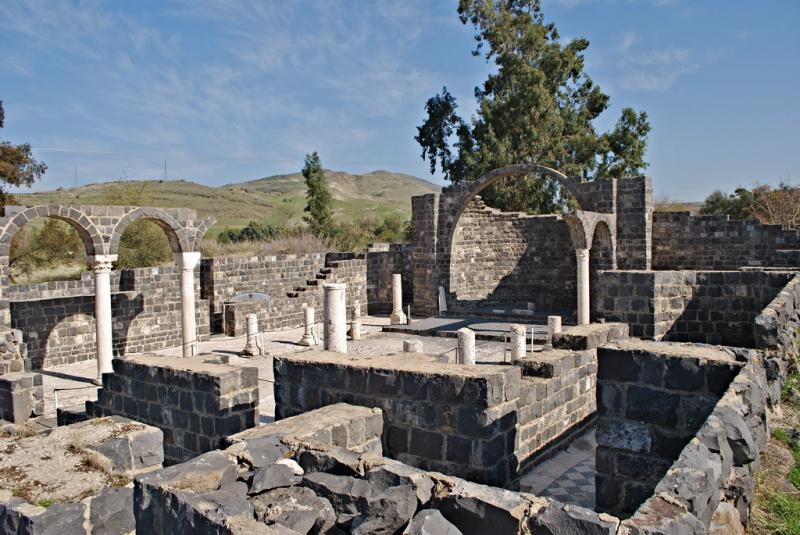
Inside monastery church at Kursi (Bill Rice)

Kursi’s extensive monastery, built in the 5th century, covered 1.8 hectares. Around it stood a defensive stone wall with a watchtower. At its heart was a large church, with a spacious courtyard in front of it.

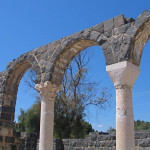
The church was divided by two rows of stone columns into a nave and two side aisles. Under a chapel in the right-hand aisle, skeletons of 30 monks were found buried in a crypt.

Kursi

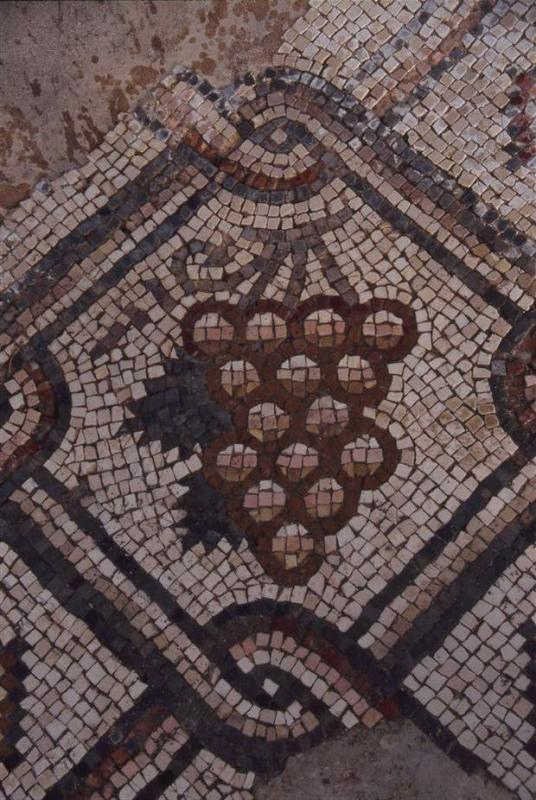
Mosaic of grapes at Kursi (© Israel Ministry of Tourism)

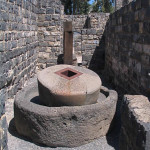
A large oil press was found in a side room in the left-hand aisle, suggesting that production of olive oil would have been a major source of income for the monastery.

As well as living quarters for the monks, a guesthouse and bath complex for pilgrims have been uncovered. A paved road led from the monastery to the harbour where pilgrims arrived.

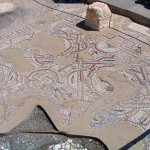
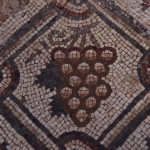
The floor of the church was paved with mosaics depicting animal and plant life: Roosters, geese, doves, cormorants, fish, grapes, figs, pomegranates, watermelon and bananas.

When the monastery was abandoned in the early 8th century — after being damaged by fire and earthquake, and invaded by Persians and Muslims — it was used by local Arabs to live in and house their animals.

At that time all of the animal mosaics were obliterated to comply with the Islamic prohibition against human or animal representations.


Bench overlooked site of miracle

The chapel on the hill behind the monastery was probably built before the monastery, since its mosaic floor includes crosses. From the year 427, crosses were prohibited on church floors, by order of Christian emperor Theodosius II.

Kursi

Hilltop site of Hippos (David Q. Hall)

A stone bench in the chapel provided a view of the boulder that apparently marks the site of the miracle — and, beyond it, the Sea of Galilee.

Five kilometres south, on the hill directly behind the kibbutz at Ein Gev, stood the ancient city of Hippos (in Greek) or Susita (in Aramaic), both names meaning “horse”.

It would have been to this city that the swineherds ran to tell of the fate of their pigs. And it would have been the residents of this city who begged Jesus to leave their neighbourhood (Matthew 8:34).

Hippos may also have been the hilltop city Jesus referred to when he said, “A city built on a hill cannot be hid” (Matthew 5:14).

The remains of a Byzantine cathedral and four other churches have been found at Hippos, and a bishop from Hippos is recorded as attending the Church councils of Nicea and Constantinople in the 4th century.


In Scripture:

Jesus heals the man possessed by demons: Luke 8:26-39; Mark 5:1-20; Matthew 8:28-34


Administered by: Israel Nature and Parks Authority

Tel.: 972-4-673-1983

Open: Apr–Sep 8am–5pm; Oct–Mar 8am–4pm; Fridays and eves of holidays, 8am-4pm. Last entry to site one hour before closing time.


References

Bourbon, Fabio, and Lavagno, Enrico: The Holy Land Archaeological Guide to Israel, Sinai and Jordan (White Star, 2009)
Dyer, Charles H., and Hatteberg, Gregory A.: The New Christian Traveler’s Guide to the Holy Land (Moody, 2006)
Gonen, Rivka: Biblical Holy Places: An illustrated guide (Collier Macmillan, 1987)
Murphy-O’Connor, Jerome: The Holy Land: An Oxford Archaeological Guide from Earliest Times to 1700 (Oxford University Press, 2005)
Pixner, Bargil: With Jesus Through Galilee According to the Fifth Gospel (Corazin Publishing, 1992)
Prag, Kay: Israel & the Palestinian Territories: Blue Guide (A. & C. Black, 2002)
Tzaferis, Vassilios: “A Pilgrimage to the Site of the Swine Miracle”, Biblical Archaeology Review, March/April 1989
Nun, Mendel: “Ports of Galilee”, Biblical Archaeology Review, July/August 1999
Walker, Peter: In the Steps of Jesus (Zondervan, 2006)
Wareham, Norman, and Gill, Jill: Every Pilgrim’s Guide to the Holy Land (Canterbury Press, 1996)


External links

Kursi (BibleWalks)
Kursi: Christian Monastery on the Shore of the Sea of Galilee (Israel Ministry of Foreign Affairs)
« Newer PostsOlder Posts »

Christ Church

Jerusalem


Compared with the ancient churches of Byzantine or Crusader origin in Jerusalem’s Old City, Christ Church is a relative newcomer.

Christ Church

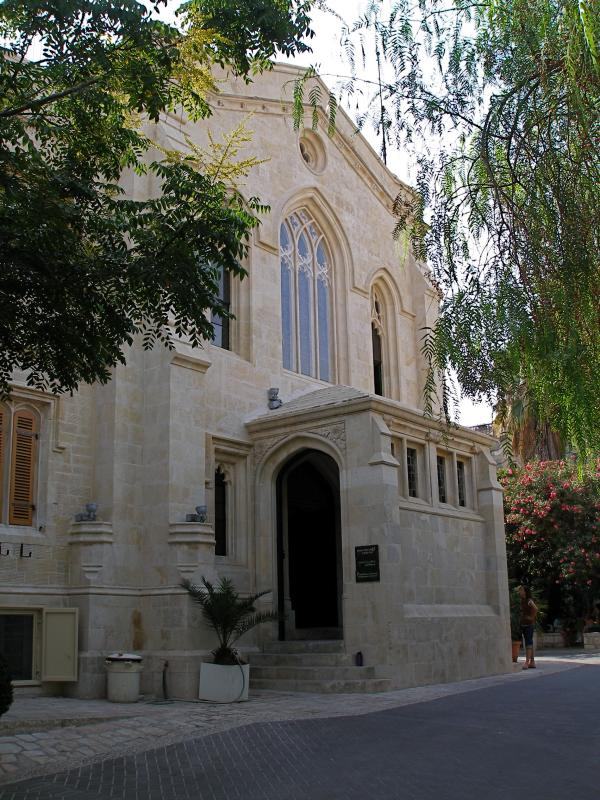
Entrance to Christ Church (Seetheholyland.net)

Yet this Anglican church, dating only from 1849, has its own historical claims: It was the first Protestant church in the Middle East, and the first Jerusalem church in modern times to use bells to call worshippers.

It may also be the only Christian church built to resemble a synagogue.

Christ Church, opposite the Citadel inside the Jaffa Gate, owes its existence to a 19th-century English initiative to bring Jews to Christianity. In its early years it became known as the “Jewish Protestant Church”.

Now its evangelical Anglican congregation — affiliated to the Episcopal diocese of Jerusalem — celebrates both Jewish and Christian feasts and incorporates some Hebrew into its liturgy. There is also a Messianic Hebrew congregation and an Arabic fellowship.

The church also runs a guest house for pilgrims.


Supported Jewish homeland

Christ Church

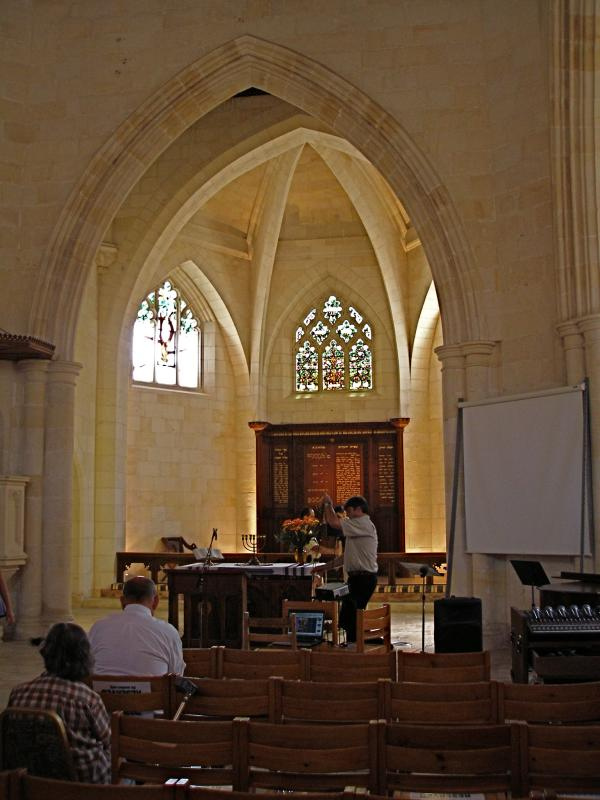
Interior of Christ Church (Seetheholyland.net)

Christ Church was established by an Anglican missionary society, founded in 1809, called the London Society for Promoting Christianity Amongst the Jews. It is now called CMJ (the Church’s Ministry among the Jews) and, in Israel, ITAC (the Israel Trust of the Anglican Church).

Its founders were prominent evangelicals including William Wilberforce, who led the campaign to end British slavery. They believed that the Jewish people had to be returned to Palestine (then under Ottoman Turkish rule), where many would acknowledge Jesus as the Messiah, before the Second Coming of Jesus could take place.

Their advocacy for a Jewish homeland in Palestine prompted the 1917 Balfour Declaration, in which Britain pledged its support for this objective.

In 1833 the society established itself in Jerusalem — then a city of 90,000 entirely enclosed by the Old City walls — and began its outreach to Jews by founding a trades school, clinics and the city’s first modern hospital.


Christ Church

Christ Church compound (© Rick Lobs)

First bishop was former rabbi

A joint English/Prussian bishopric was established in 1841, on the initiative of King Frederick William IV of Prussia. The first bishop was a former Jewish rabbi, Michael Solomon Alexander, who had come to believe in Jesus while teaching Hebrew in England.

Construction of Christ Church, the seat of the bishopric, was not completed when Bishop Alexander died in 1845, after only three years in office.

Theological disagreements, combined with rising antagonism between Britain and Prussia, led to the dissolution of the English/Prussian partnership in 1887.

The following year the bishop’s seat was moved to the newly completed St George’s Cathedral, on Nablus Road in East Jerusalem.


Passed off as consul’s chapel

When Christ Church was being planned, Ottoman Turkish law forbade the building of new churches. So the church was built under the guise of being the chapel of the British consul, whose consulate had recently become established on adjacent land.

Christ Church

Sanctuary area of Christ Church (© Rick Lobs)

No local tradesmen were capable of building a modern structure with such high ceilings and thin walls, so stone masons from Malta were brought in. By reviving the ancient art of stone cutting, these masons stimulated building expansion in Jerusalem.

Because the Muslims Turks did not allow Christians to use a bell to call worshippers, Christ Church was built without a bell tower. Only after the Crimean War (1853-56) did the Anglicans dare to add a modest belfry and ring their bells.


Cross was late addition

Christ Church

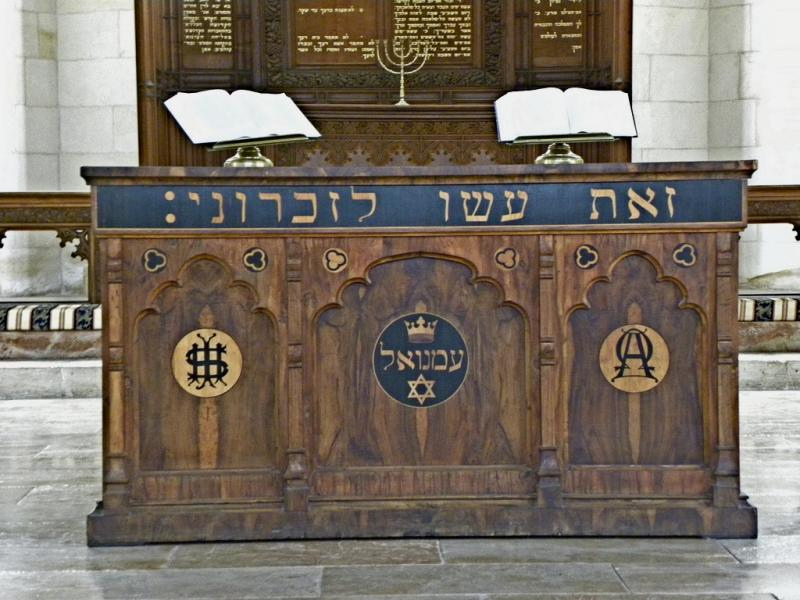
Altar with Christian and Jewish symbols in Christ Church (Ian W. Scott)

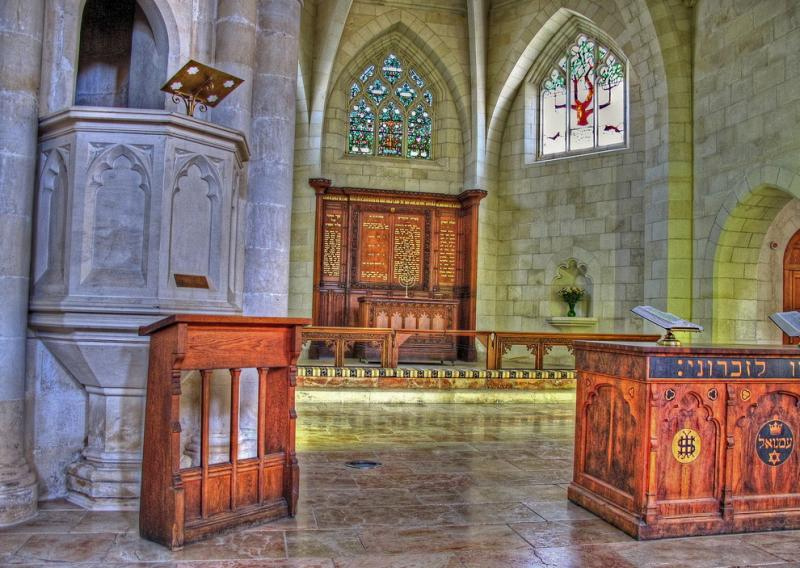
Behind its simple neo-Gothic exterior, Christ Church looks more like a synagogue than a Christian church. The intention was that Jews who entered it would be reminded of the Jewish origins of the Christian faith.

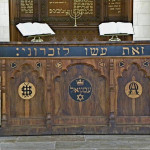
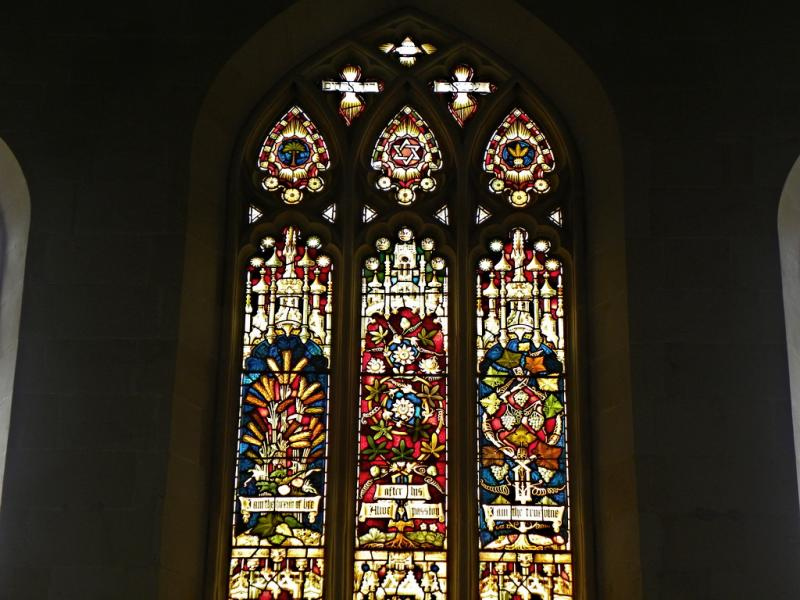
Like Jerusalem’s synagogues, the church faces the Temple Mount. The communion table and stained-glass windows contain Jewish symbols and Hebrew script

The wooden reredos screen behind the communion table is designed as a reminder of the holy ark in which synagogues keep the first five books of the Hebrew Bible, known as the Torah. Written on it in Hebrew are the Ten Commandments, the Lord’s Prayer and the Apostles’ Creed.

Christ Church

Stained-glass window with Star of David in Christ Church (Ian W. Scott)

The Jewish lineage of Jesus is signified by the Star of David on the communion table and in a stained-glass window at the back of the church.

For nearly a century Christ Church had no cross — until 1948, after the Arab-Israeli war put the Old City under Jordanian control. Then the rector hurried to the market to buy an olive-wood cross to place on the communion table, lest occupying Arab soldiers mistook the church for a synagogue.


Administered by: CMJ Israel

Tel.: 972-2-627-7727 or 627-7729

Open: 8am-8pm daily


References

Bar-Am, Aviva: Beyond the Walls: Churches of Jerusalem (Ahva Press, 1998)
Crombie, Kelvin: Welcome to Christ Church (Bet Nicolayson Heritage Centre leaflet)
Hilliard, Alison, and Bailey, Betty Jane: Living Stones Pilgrimage: With the Christians of the Holy Land (Cassell, 1999)
Macpherson, Duncan: A Third Millennium Guide to Pilgrimage to the Holy Land (Melisende, 2000)
Prag, Kay: Jerusalem: Blue Guide (A. & C. Black, 1989)


External links

CMJ Israel
« Newer PostsOlder Posts »

Inn of the Good Samaritan

West Bank


Though the Inn of the Good Samaritan existed only in a parable, a real-life site was proposed in the early Christian centuries to edify the faith of pilgrims.

Inn of the Good Samaritan

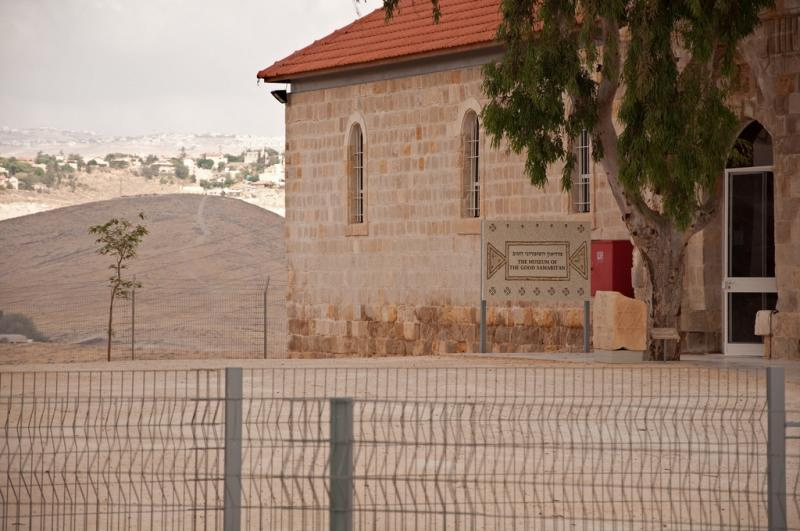
Entrance to Museum of the Good Samaritan (Josh Evnin)

The location, beside the road going down from Jerusalem to Jericho, fitted Jesus’ parable about the man who “fell into the hands of robbers, who stripped him, beat him, and went away, leaving him half dead” (Luke 10:25-37).

In the 6th century a Byzantine monastery with pilgrim accommodation was erected on the site of what was probably some sort of travellers’ hostel well before the time of Jesus. Later the Crusaders established a fortress on a nearby hill to protect pilgrims against robbers.

The remains of the monastery, about 18 kilometres from Jerusalem, became an Ottoman caravanserai and then served as a police post during the 20th century.

Inn of the Good Samaritan

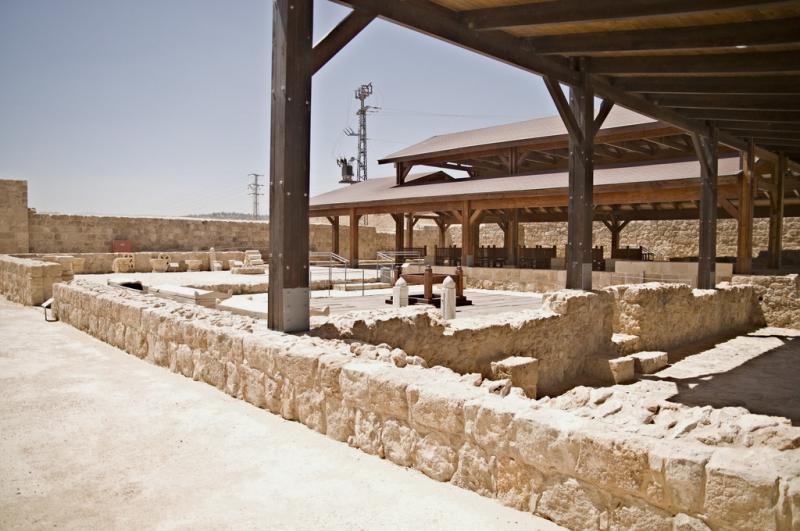
Archaeological site and (at rear) worship area (© Whitecapwendy)

In 2009 Israel built a mosaic museum on the site — a matter of controversy since the area is in the West Bank and under Israeli military and civil control.

The remains of the monastery church were reconstructed as a space for worship, with an altar but no cross or other visible Christian symbol.


Road was notorious for robbers

Inn of the Good Samaritan

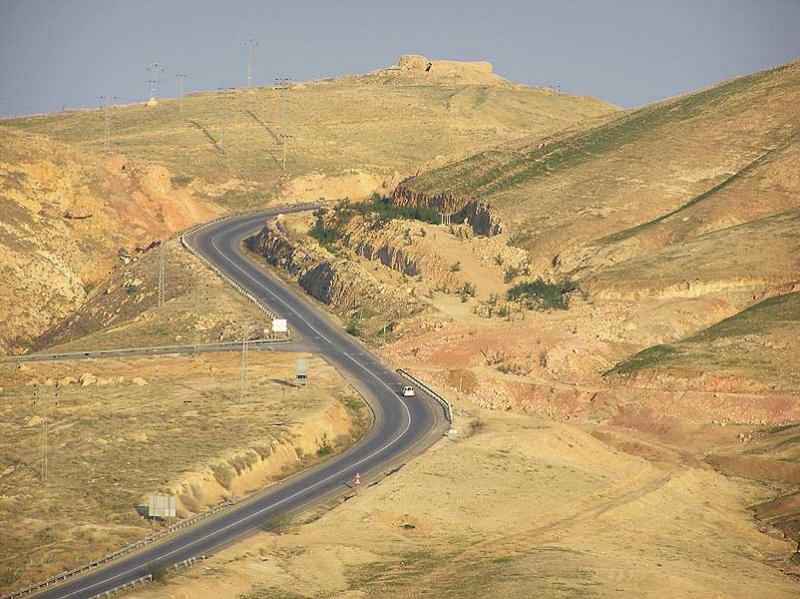
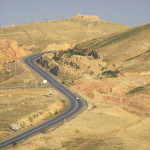
Modern road from Jerusalem down to Jericho in vicinity of Inn of the Good Samaritan (© Custodia Terrae Sanctae)

Jesus would have been familiar with the road. He would often have walked it on the final stretch of the way from Galilee to Jerusalem along the Jordan Valley.

It was here that the Mount of Olives and Mount Scopus gave travellers from Jericho their first glimpse of Jerusalem.

The rocky desert terrain around where the Inn of the Good Samaritan now stands was notorious for robbers. The local name for the area — Ma‘ale Adummim (“ascent of the red rocks”) — came from patches of limestone tinted red by iron oxide, but also suggested bloody raids by bandits.

Inn of the Good Samaritan

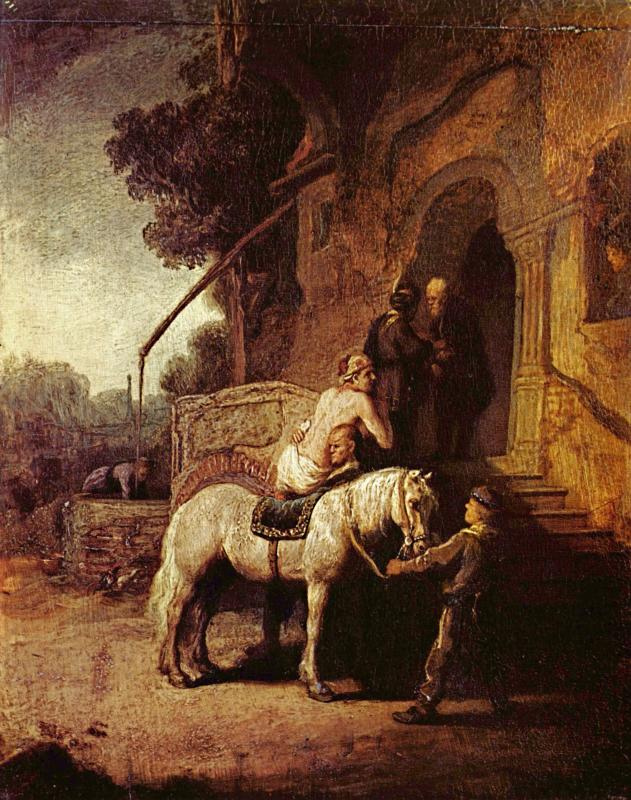
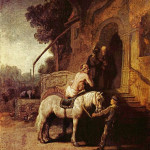
The Good Samaritan, depicted on arrival at the inn, by Rembrandt van Rijn, 1630 (Wallace Collection, London)

In the parable, a priest and a Levite saw the man who had been robbed but “passed by on the other side”. But a travelling Samaritan was “moved with pity”, tended the man’s wounds, took him to an inn and paid for his care.

The 12,000 Jericho-based priests and Levites used the road whenever they were rostered to serve in the Temple. But a traveller from Samaria would have been regarded as an alien in Judea.

So Jesus chose an unlikely hero — one whose people were at enmity with the Jews — to demonstrate that loving one’s neighbour requires expanding the definition of neighbour to include even an enemy.


Mosaics come from synagogues and churches

Inn of the Good Samaritan

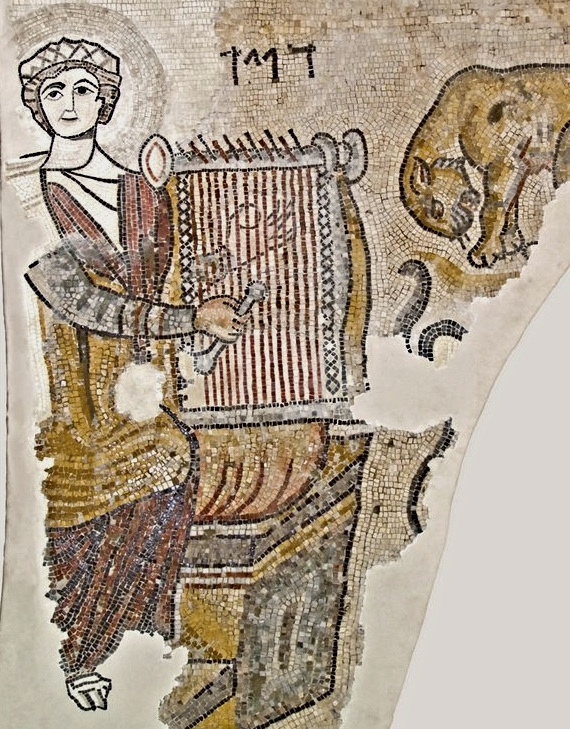
King David playing harp, mosaic at Museum of the Good Samaritan (© Israel Ministry of Tourism)

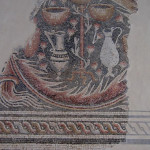
The museum is one of the largest in the world devoted to mosaics. Displays both indoors and outdoors include mosaics from Jewish and Samaritan synagogues, as well as from Christian churches, in Israel, the West Bank and Gaza.

Some of the mosaics date back to the 4th century AD. Many have been removed from archaeological sites, while others have been partly or wholly reconstructed.

The designs include rich geometric patterns, birds and flowers. Some have Greek, Hebrew or Samaritan inscriptions.

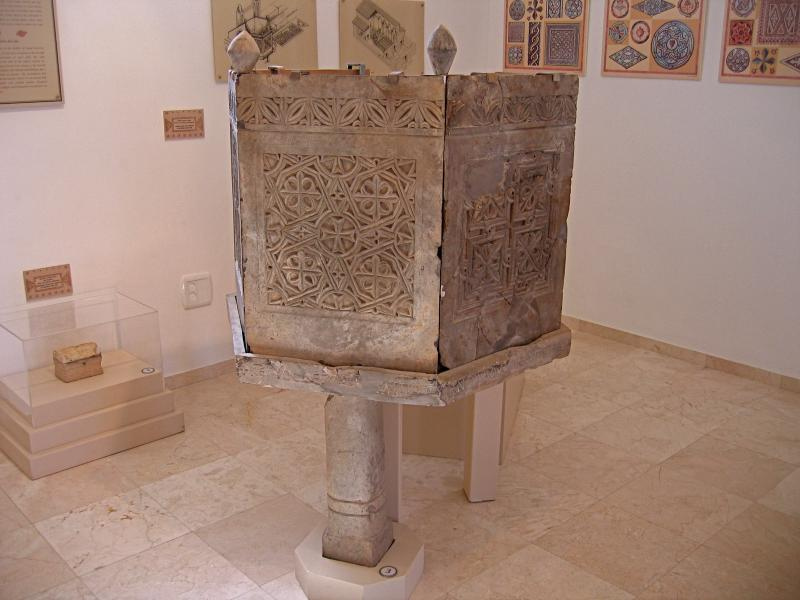
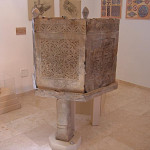
Displays also include findings from a nine-year archaeological excavation in the area. Among them are pottery, coins and stone coffins from the 1st century BC, and a carved pulpit, a case for holy relics and a dining table from the Byzantine era.


In Scripture:

Inn of the Good Samaritan

Byzantine church pulpit in Museum of the Good Samaritan (Yair Talmor)

Parable of the Good Samaritan: Luke 10:25-37

Administered by: Israel Nature and Parks Authority

Tel.: 972-2-6338230

Open: Sunday-Thursday and Saturday, 8am-4pm; Friday and holiday eves, 8am-3pm; eves of Rosh Hashanah, Yom Kippur and Passover, 8am-1pm.


References

Gonen, Rivka: Biblical Holy Places: An illustrated guide (Collier Macmillan, 1987)
Lefkovits, Etgar: “Mosaic museum opens in the W. Bank”, Jerusalem Post, June 7, 2009
Mackowski, Richard M.: Jerusalem: City of Jesus (William B. Eerdmans, 1980)
Prag, Kay: Jerusalem: Blue Guide (A. & C. Black, 1989)
Wareham, Norman, and Gill, Jill: Every Pilgrim’s Guide to the Holy Land (Canterbury Press, 1996)


External links

The Inn of the Good Samaritan (BibleWalks)
« Newer PostsOlder Posts »

Field of Boaz

West Bank


The romantic story of the Moabite woman Ruth, who is remembered for one of the most celebrated statements of devotion in the Old Testament, is linked to a field near Bethlehem.

Field of Boaz

Field of Boaz with buildings encroaching (© Lissa Caldwell)

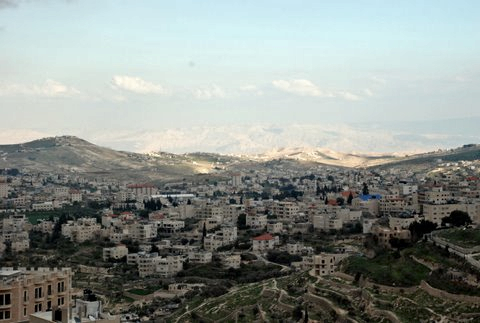
The Field of Boaz is east of the Palestinian town of Beit Sahour, in the fertile plain that descends to the Dead Sea. Now increasingly hemmed in by buildings, it lies in a shallow valley north of the Shepherds’ Field Greek Orthodox Church.

As the Book of Ruth recounts, Ruth was a daughter-in-law of Naomi, a Bethlehem woman who had gone with her husband and two sons to the land of Moab (east of the Dead Sea) to escape a famine.

Naomi’s husband died and her sons married Moabite women. Then, after about 10 years, both of the sons died.


Ruth’s devotion was rewarded

Field of Boaz

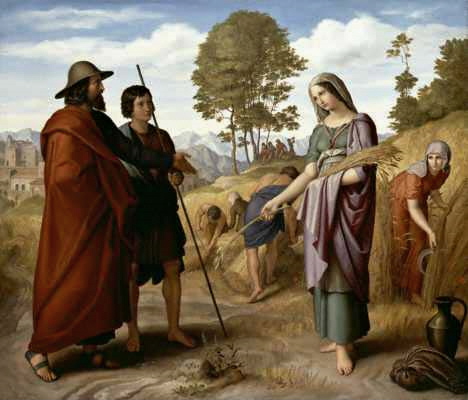
Ruth on the Field of Boaz, by Julius Schnorr von Carolsfeld, 1828 (National Gallery, London)

Naomi decided to return to Bethlehem, but she urged her daughters-in-law to stay in their homeland of Moab. One of them, Ruth, insisted on going with Naomi.

Ruth said: “Where you go, I will go; where you lodge, I will lodge; your people shall be my people, and your God my God. Where you die, I will die — there will I be buried . . . .” (Ruth 1:16-17)

Ruth’s devotion was to find its reward. The two women reached Bethlehem as the barley harvest was beginning. So they would have food to live on, Ruth went to the fields to pick up barley the reapers had left behind for the poor, a practice known as gleaning.

The field she went to was owned by a rich landowner named Boaz, who was kind to her because he had heard of her loyalty to Naomi.

Field of Boaz

Beit Sahour with Jordan in the background (© Lissa Caldwell)

Eventually Ruth and Boaz married and Ruth gave birth to Obed. He became the father of Jesse, who was the father of King David — forefather of Joseph, the foster-father of Jesus Christ. Thus the faithful Ruth was an ancestor of Jesus.

Today, Ruth’s memorable words of devotion to her mother-in-law, “Where you go, I will go . . . .” are used in some marriage services.


Other sites in the Bethlehem area:

Bethlehem

Church of the Nativity

Grotto of the Nativity

St Jerome’s Cave

Church of St Catherine of Alexandria

Milk Grotto

Shepherds’ Field

Tomb of Rachel

Herodium


In Scripture:

Ruth and Naomi: Ruth 1:1-22

Ruth meets Boaz: Ruth 2:1—4:17


References

Bowker, John: The Complete Bible Handbook (Dorling Kindersley, 1998)
Freeman-Grenville, G. S. P.: The Holy Land: A Pilgrim’s Guide to Israel, Jordan and the Sinai (Continuum Publishing, 1996)
Gonen, Rivka: Biblical Holy Places: An illustrated guide (Collier Macmillan, 1987)


« Newer PostsOlder Posts »

Petra

Jordan

Petra

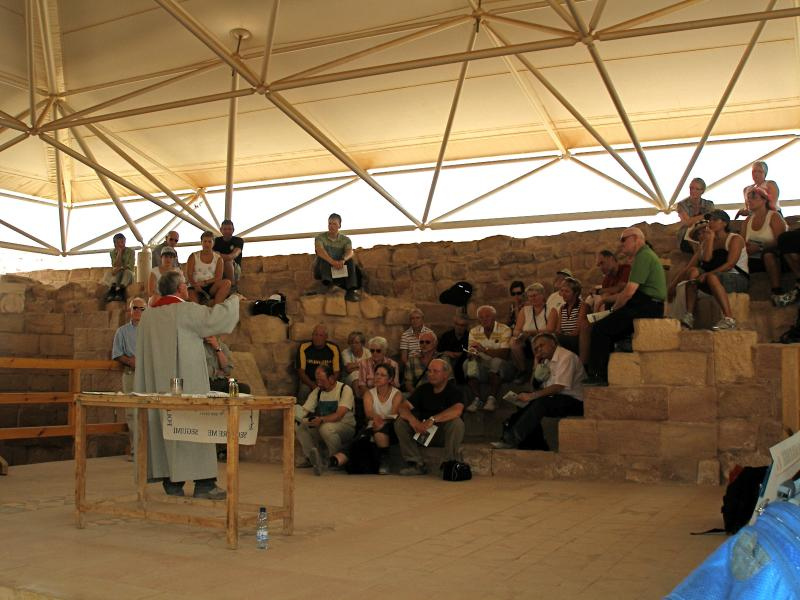
Pilgrims holding a service in Petra Church (Seetheholyland.net)


The “rose-red city” of Petra in southern Jordan, famous for its rock-cut monumental buildings, was once the setting for a thriving Christian community with several significant churches.

An early account tells of Christians in Petra being martyred during the persecution of emperor Diocletian at the beginning of the 4th century, for refusing to offer sacrifice to Roman gods.

Nevertheless, a Christian presence persisted. Bishops from Petra attended Church synods and councils from AD 343, indicating that the city had become a significant Christian centre.

Crosses chiselled into sandstone walls show which large tombs were converted into churches. Then a succession of new churches was built.

Petra

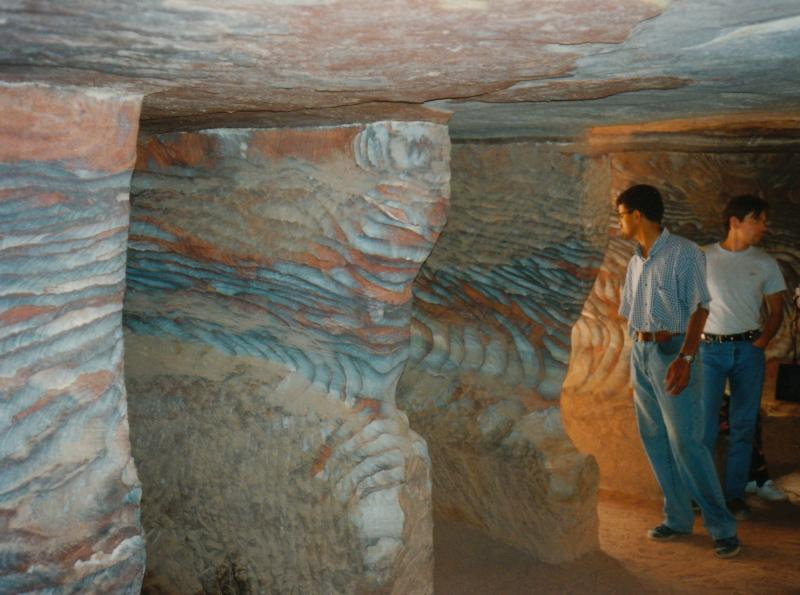
Multicoloured sandstone at Petra (Seetheholyland.net)

The Roman historian Epiphanius mentions that the conversion of Petra’s residents was a slow process throughout the late 4th and 5th centuries.

Then a monk called Mar Sauma arrived with 40 brother monks in AD 423. They found the gates locked against them, but a rainstorm struck with such intensity that part of the city wall was broken, allowing them in. Since the storm had broken a four-year drought, the water-dependent Nabateans saw the event as miraculous and even pagan priests converted to Christianity.


Exotic animals in mosaics

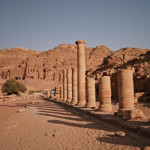
Three churches from the Byzantine era — called the Petra Church, the Blue Chapel and the Ridge Church — have been discovered. They are clustered on the ridge to the north-east of the Colonnaded Street that runs through Petra’s main city area, past the Temple of the Winged Lions.

Petra

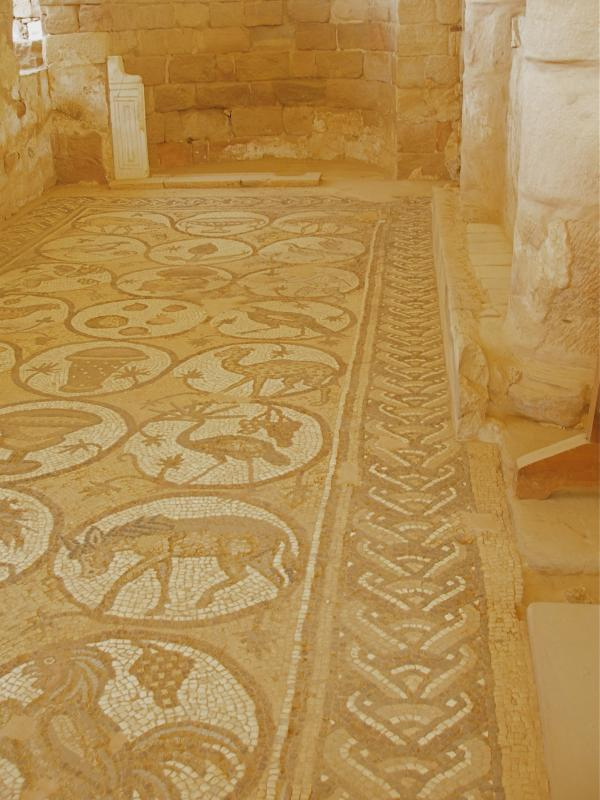
Aisle of mosaics in Petra Church (Seetheholyland.net)

The large triple-aisled Petra Church, a basilica dedicated to St Mary, was probably the ancient city’s cathedral.

Little of the interior remains except for well-preserved mosaics carpeting the 70-square-metre floors of each of the side aisles. These depict local, exotic and mythological animals, as well as personifications of the Seasons, Ocean, Earth and Wisdom.

The secular nature of these mosaics is probably explained by a reluctance to tread on sacred images.

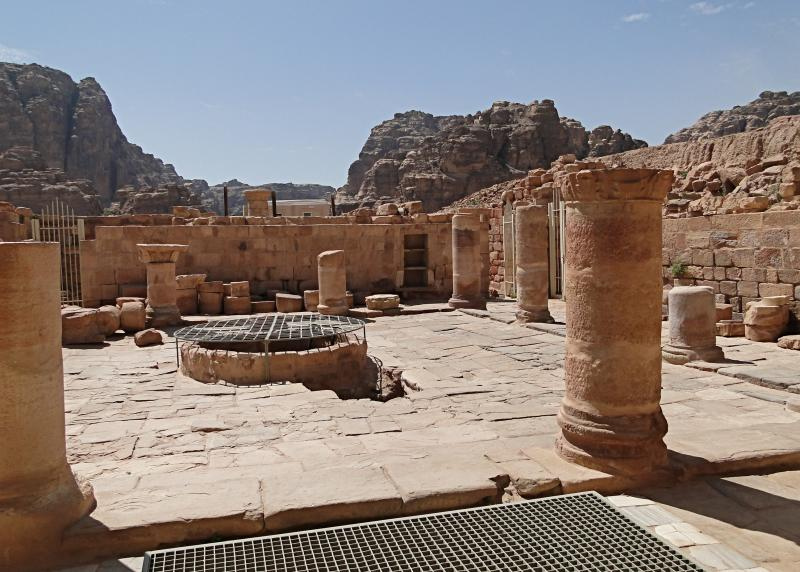
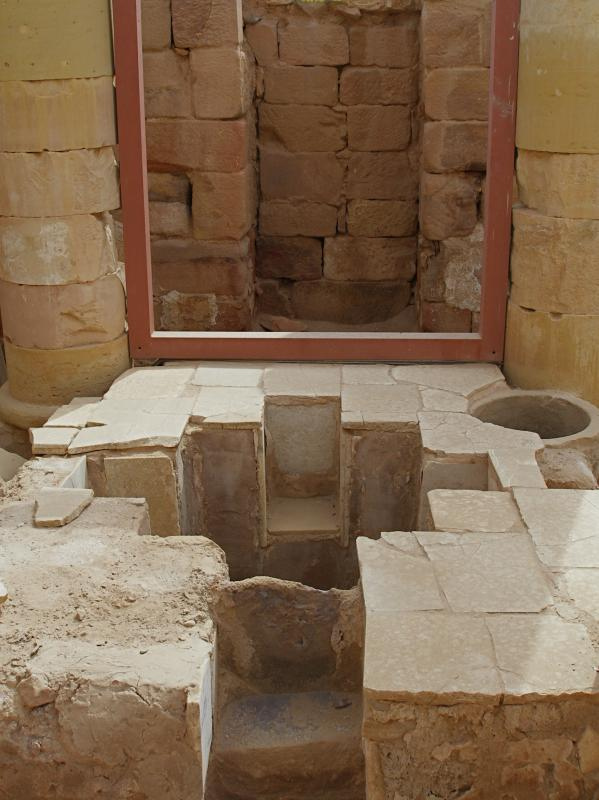
Just west of the church proper is a stone-paved atrium, with a cistern sunk into the centre to catch water. Further west is a baptistery, with a cross-shaped baptismal font.

The basilica was destroyed by a fire, probably in the early 7th century.


Scrolls revealed business deals

Petra

Petra Church atrium and water cistern (Bernard Gagnon)

The fire that destroyed the Petra Church also carbonised an invaluable hoard of papyrus scrolls cached in a church storeroom. The 152 scrolls — the largest collection of written material from antiquity found in Jordan — lay undiscovered until 1993.

Written mainly in cursive Greek, they have been painstakingly deciphered to reveal details of births, prenuptial arrangements, marriages, business deals, wills, properties disputes and tax responsibilities of about 350 members of the community.

One of the main figures identified in the scrolls is Theodorus, who married his cousin Stephanous in 537, when he was aged about 24. Later ordained a deacon in the Petra diocese, Theodorus was also a successful landowner with extensive business interests.

Petra

Baptistery of Petra Church (Seetheholyland.net)

A son of Theodorus is recorded as being responsible for paying local taxes on a vineyard — at the rate of 47.5 per cent! This affluent family apparently owned much property in the Petra region.


Church overlooked the city

The Ridge Church had a commanding position, with a 360-degree view of the central city, atop the northern slope of the valley in which Petra sits.

The oldest church in the city, dating from the 4th century, it had two side aisles separated from the nave by five columns on each side.

Behind it, city walls across the valley would have protected Petra against invasion from the north.

Petra

Granite columns at Blue Church (David Loong)

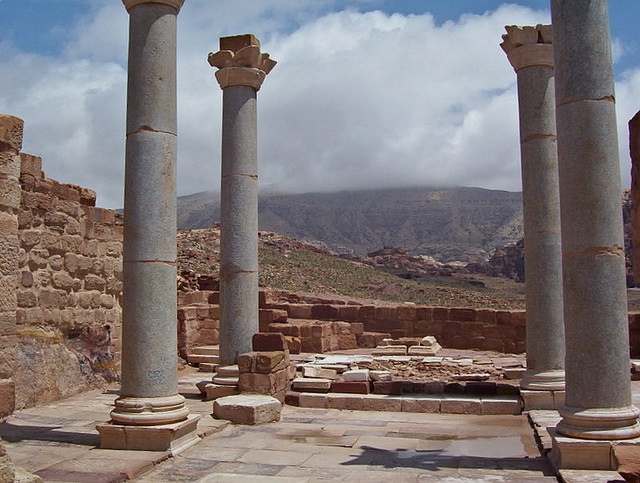
Between the Petra Church and the Ridge Church is the Blue Chapel, so named after its four blue Egyptian granite columns, topped with Nabataean horned capitals, that collapsed in an 8th-century earthquake but have been re-erected.

The chapel also had blue sandstone flooring and blue marble furnishings — including a blue marble pulpit.

This building is believed to have been converted into a residence and chapel for Petra’s bishop.


Tombs and temples were converted

Other buildings converted to Christian churches include the Urn Tomb and al-Deir (Arabic for “the Monastery”).

Petra

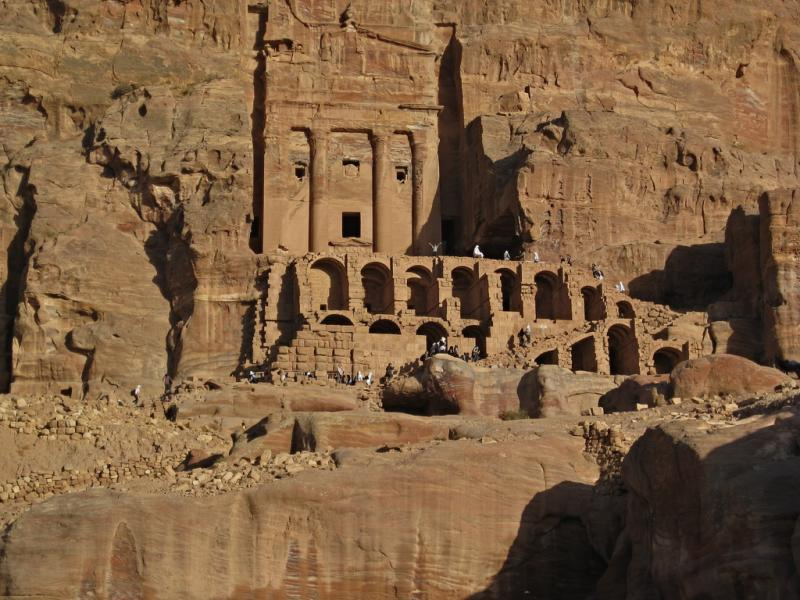
Urn Tomb at Petra (Chris Yunker)

The Urn Tomb, the first of the four Royal Tombs just north of the amphitheatre, still bears an inscription to “Christ the Saviour” on one of its inside walls.

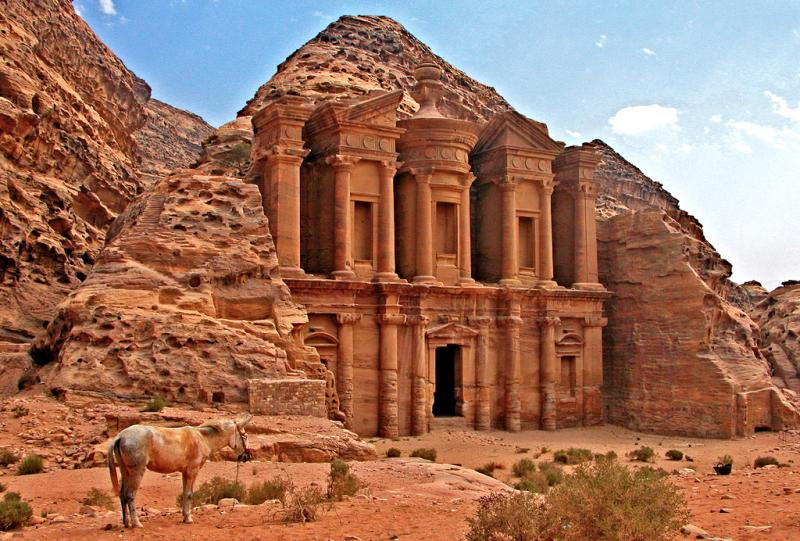
Al-Deir, the biggest and most grandiose monument in Petra, is in the hills overlooking the city from the north-west. A visit involves a walk of about an hour from the city centre, up 800 rock-cut steps.

At 50 metres wide and 45 metres high, it is much bigger than al-Khazneh (“the Treasury”) — the famous monument that appears to visitors arriving through the gorge called the Siq (and in which the climax of the 1989 film Indiana Jones and the Last Crusade was set).

Originally cut out of the rock to serve as a mortuary temple, al-Deir was apparently later adapted to Christian use. It seems to have acquired its name of the Monastery from the crosses painted and inscribed on its inner walls.

Two Greek monks were recorded as living in the building in 1217.


Petra was in biblical Edom

Petra

Al-Deir, Petra’s biggest monument (Dennis Jarvis)

In biblical times Petra was a city of the Edomites, whose ancestor Esau settled there after he was tricked out of his rightful inheritance by his twin brother Jacob.

By the middle of the second century BC, the Edomites had been displaced by the Nabataeans. These former nomad herdsmen made Petra their multicoloured sandstone capital city, transforming it into a desert oasis by using ingenious aqueducts and cisterns to conserve water from flash floods.

The Nabataeans also controlled trade routes from Arabia to Mesopotamia and Syria, exacting high tolls from caravans which passed their way.

Petra

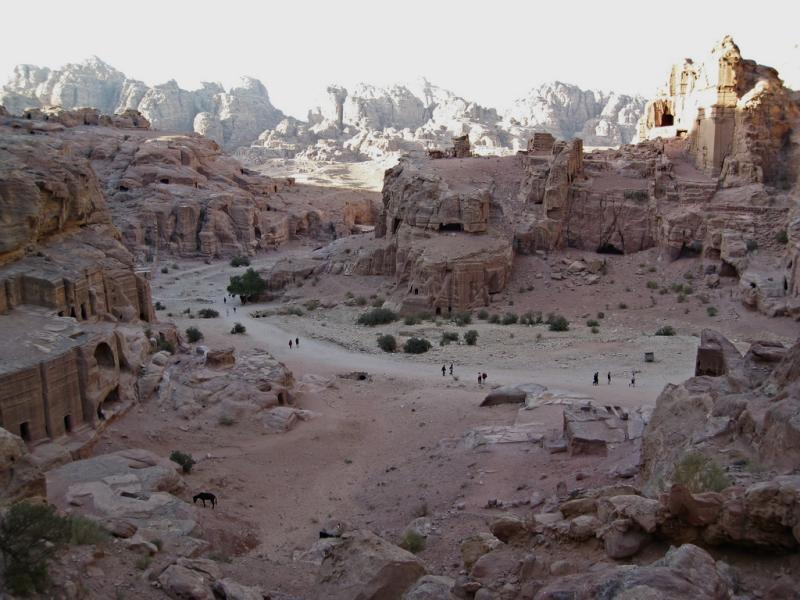
Overview of some of Petra’s monuments (Chris Yunker)

One tradition has the Three Wise Men buying their gold, myrrh and frankincense at Petra on their way to Bethlehem.

The greatest Nabataean king was Aretas IV (9 BC to AD 40), whose rule extended as far north as Damascus. His daughter Phasaelis was married to Herod Antipas, who divorced her to marry Herodias, his brother’s wife. Aretas IV then marched on Herod’s army, defeated it and captured territories along the West Bank of the Jordan River.

After his conversion, St Paul stays he spent time in “Arabia” (Galatians 1:17) — the name then given to the territory of the Nabateans — where he probably began his commission to preach the Gospel to pagans. It was Aretas IV who was pursuing him when Paul later escaped Damascus by being lowered in a basket from the city wall.

In AD 106 Petra was annexed by the Roman empire. Rome’s diversion of the caravan trade and some devastating earthquakes in subsequent centuries put the city into decline.


Poet recanted his rosy view

From the 13th century Petra was abandoned. It remained forgotten by the Western world until 1812 when a young Swiss explorer, Johann Ludwig Burckhardt, disguised as an Arab pilgrim, persuaded a local guide to take him there.

Petra

Pink sandstone cave at Petra (Seetheholyland.net)

Burckhardt’s published account inspired the English clergyman John William Burgon to write his prize-winning poem Petra, with its line “A rose-red city — half as old as Time!”

The poem, published in 1845, ran to 366 lines — much longer than the extract generally offered in anthologies.

Burgon, who later became dean of Chichester Cathedral, had never visited Petra when he composed his poem. He did so in 1862, describing it in a letter to his sister as “the most astonishing and interesting place I ever visited”. However, perhaps reflecting his ill health at the time, he added: “But there is nothing rosy in Petra by any means.”

Administered by: Petra Development and Tourism Regional Authority

Tel.: +962 (0)3 215-6020 (Visitors’ Centre)

Open: 6am-6pm (4pm in winter)

References

Basile, Joseph J.: “When People Lived at Petra”, Biblical Archaeology Review, July/August 2000
Bikai, Patricia Maynor: “The Churches of Byzantine Petra”, Near Eastern Archaeology, December 2002
Bourbon, Fabio, and Lavagno, Enrico: The Holy Land Archaeological Guide to Israel, Sinai and Jordan (White Star, 2009)
Burckhardt, Johann Ludwig: Travels in Syria and the Holy Land (John Murray, 1822)
Burgon, John William: Petra, a prize poem (Oxford, 1845)
Dyer, Charles H., and Hatteberg, Gregory A.: The New Christian Traveler’s Guide to the Holy Land (Moody, 2006)
Freeman-Grenville, G. S. P.: The Holy Land: A Pilgrim’s Guide to Israel, Jordan and the Sinai (Continuum Publishing, 1996)
Gochis, Djinna, and Michaels, Christine: “Mysterious Petra Rediscovered”, Catholic Near East Magazine, fall 1978
Goulburn, Edward Meyrick: John William Burgon, late Dean of Chichester : a biography, volume 1 (J. Murray, 1892)
Milne, Mary K.: “Rose-Red City, Half as Old as Time”, CNEWA World, September/October 2002
Murphy-O’Connor, Jerome: “What was Paul Doing in ‘Arabia’?”, Bible Review, October 1994


External links

Rose-Red City, Half as Old as Time (CNEWA)
Petra: The Churches (Nabataea.net)


« Newer PostsOlder Posts »

Church of St James

Jerusalem

Church of St James

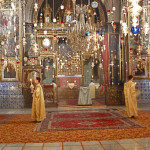
Vespers service in Church of St James (Seetheholyland.net)


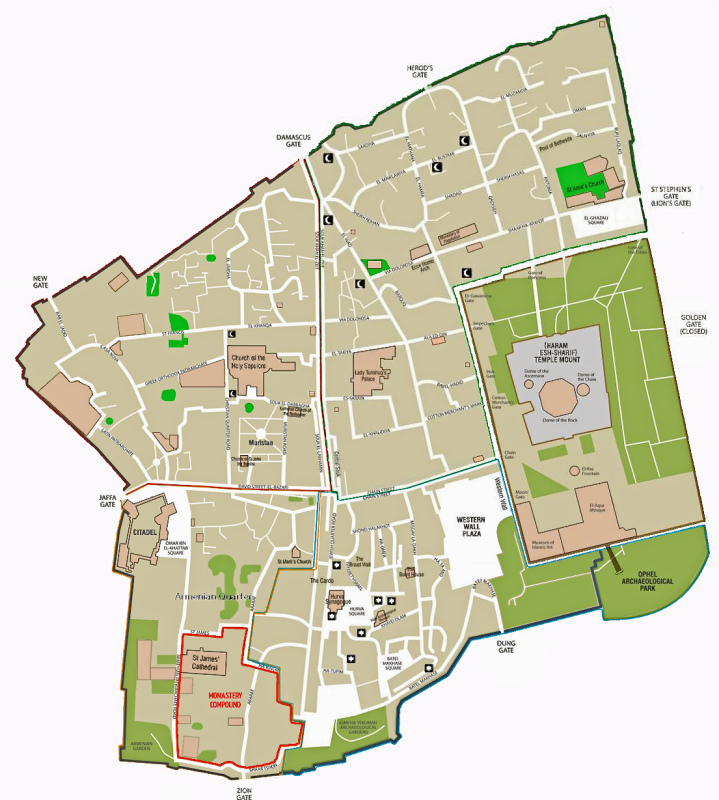
Nestled within a walled compound in the ancient Armenian Quarter of Jerusalem’s Old City, the Church of St James is one of the most ornately decorated places of worship in the Holy Land.

This ancient church, part of which dates to AD 420, is the cathedral of the Armenian Orthodox Patriarchate of Jerusalem.

Armenia — a land-locked country in south-west Asia — was the first nation to adopt Christianity as its state religion, in AD 301, and Armenian Christians established the first “quarter” in Jerusalem.

The Church of St James is dedicated to two martyred saints of that name — St James the Great, one of the first apostles to follow Jesus, and St James the Less, believed to be a close relative of Jesus, who became the first bishop of Jerusalem.

Church of St James

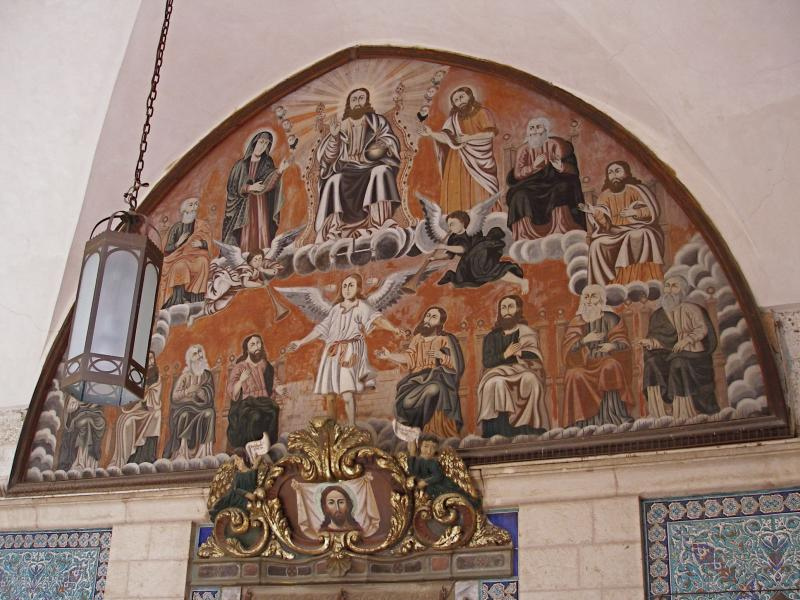
Artwork at entrance to Church of St James (Seetheholyland.net)

St James the Great was beheaded by Herod Agrippa I, grandson of Herod the Great, around AD 44 (Acts 12:1-2). St James the Less was martyred by Temple authorities about 20 years later by being thrown from the Temple platform, then stoned and clubbed to death.

According to Armenian tradition, within the church are buried the head of St James the Great (the rest of his body is believed to be in the Spanish pilgrimage shrine of Santiago de Compostela) and the body of St James the Less.

Most of the cathedral dates from the 12th century, though it incorporates the remains of two chapels built in the 5th century. This is one of the few remaining Crusader-era churches in the Holy Land to have survived intact.


Interior provides splendid spectacle

Church of St James

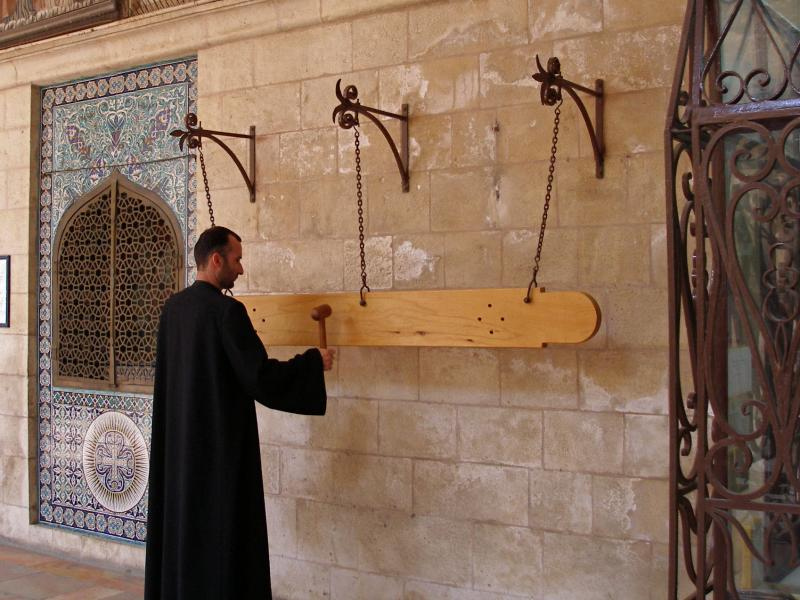
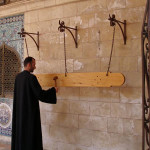
Monk sounding symandron outside Church of St James (Seetheholyland.net)

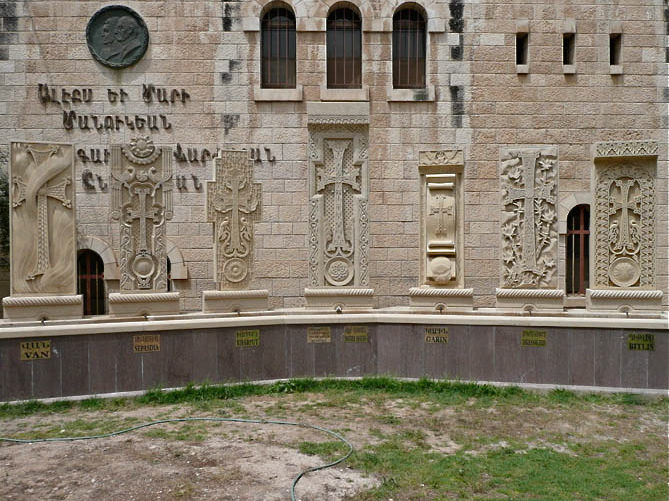
Entry from Armenian Orthodox Patriarchate Road is through a dog-legged porch leading to the church courtyard. Stone crosses (called khatchkars) carved in relief on the walls include early Armenian examples of the so-called Jerusalem cross.

The church is open to the public only during services. Lengths of wood and brass hanging outside the entrance are hammered with mallets to call the faithful to prayer. Called symandra, they were introduced when a 14th-century Muslim edict forbade churches to ring bells.

Church of St James

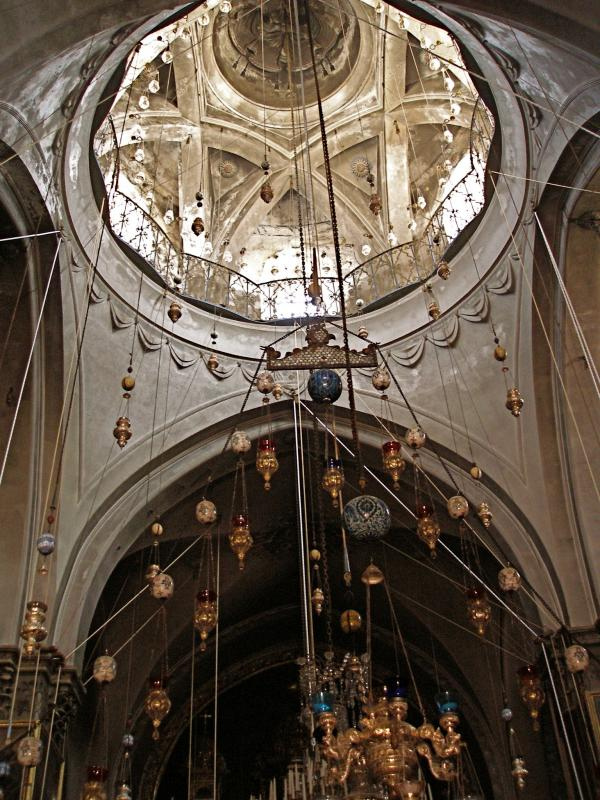
Dome of Church of St James (Seetheholyland.net)

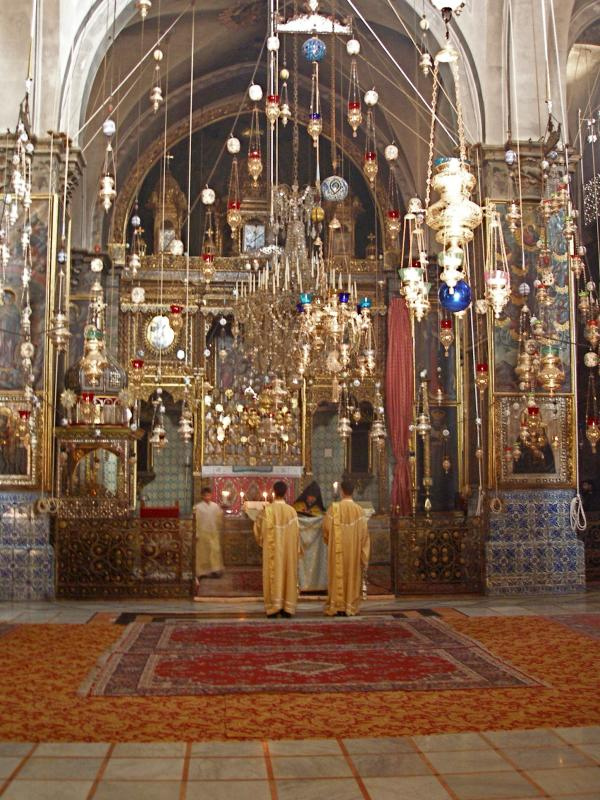
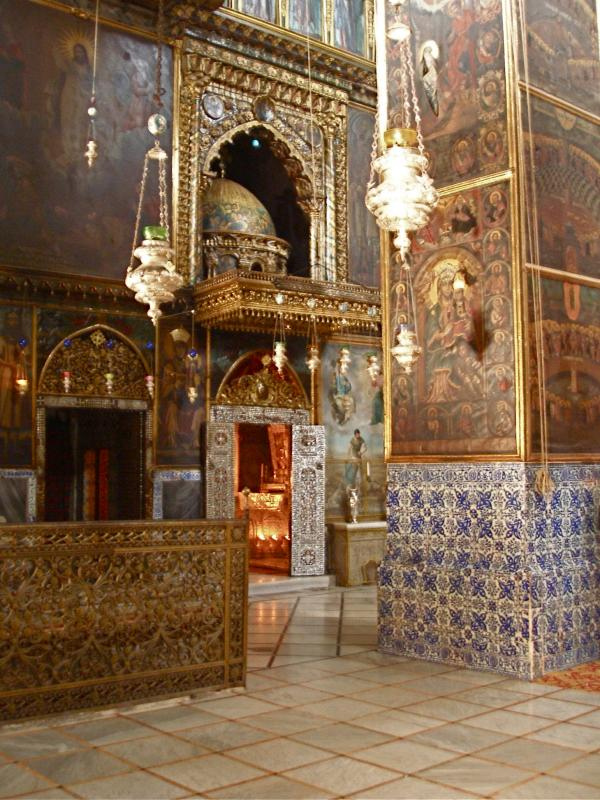
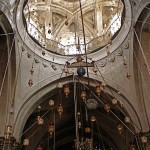
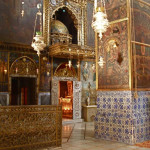
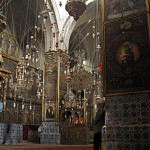
The interior, under a vaulted dome, offers a splendid spectacle of gilded altars, massive chandeliers, myriad lamps with ceramic eggs attached to them, paintings, carved wood, inlaid mother-of-pearl, bronze engravings, and blue and green wall tiles. The marble floor is usually covered with purple, green and red carpets.

Rich vestments, incense and chanting give the cathedral a mystical Eastern character during services.

High-set windows, oil lamps and candles are the only light sources, since there is no electricity. Sunlight produces dazzling reflections on the church’s treasures, but cloudy days cloak the interior in darkness. There are no pews.


Shrine on reputed site of beheading

Church of St James

Entrance to Chapel of St James the Great, in Church of St James (Seetheholyland.net)

On the left side of the church, opposite one of the four square piers supporting the vaulted ceiling, is its most important shrine, the small Chapel of St James the Great. A piece of red marble in front of the altar marks the place where his head is buried, on the reputed site of his beheading.

Also on the left side are doors leading to other chapels that are seldom open to visitors. The Chapel of St Menas, an Egyptian martyr (to the left of the Chapel of St James the Great), is the oldest part of the building. Further forward, the Church of St Stephen serves as the cathedral’s sacristy and baptistery.

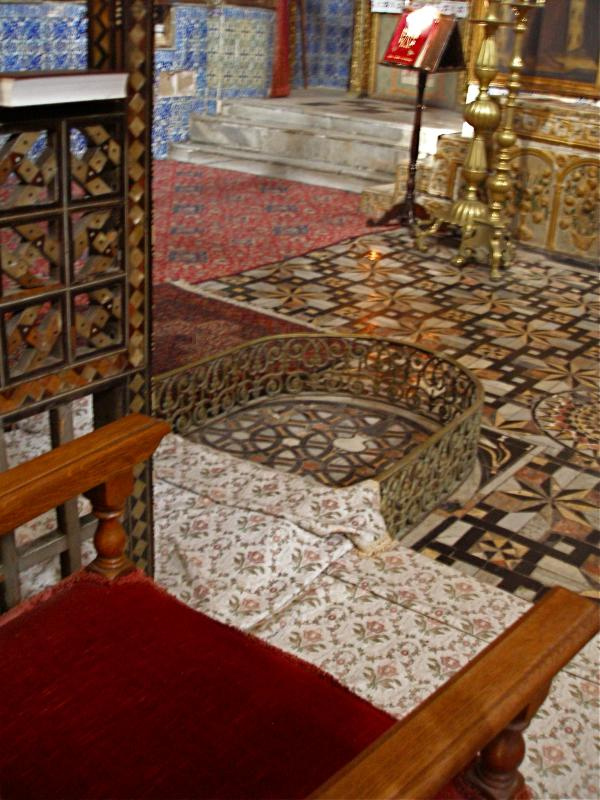
In the front of the cathedral are two thrones. The larger, intricately carved and topped by an onion-shaped baldachino, is dedicated to St James the Less. A low iron grille behind it encloses the saint’s reputed burial place. The smaller throne is the seat of the Armenian Orthodox patriarch.

Church of St James

Reputed burial place of St James the Less, in Church of St James (Seetheholyland.net)

A doorway near the centre of the right-hand wall, also generally closed to the public, was the original 12th-century entrance to the church. It leads to the Etchmiadzin Chapel, formed in the 17th century by blocking a long and narrow portico.

The Armenian city of Etchmiadzin (now known as Vagharshapat) is the seat of the Catholicos of All Armenians, head of the Armenian Orthodox Church.

Vividly coloured wall tiles in the chapel, illustrating scenes from the Bible and lives of the saints, were made in Turkey in the 18th century for repairs to the Church of the Holy Sepulchre but were not used.


Compound is like miniature city

Church of St James

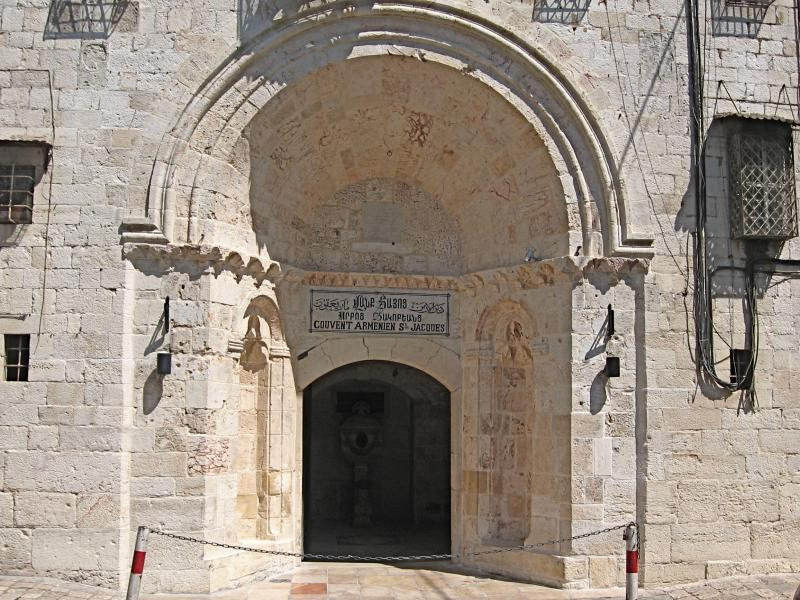
Entrance to Convent of St James (Shmuliko / Wikimedia)

The compound of St James Convent, which contains the Church of St James, is like a miniature city with residences for more than 1000 families. Behind its fortress-like walls are the patriarchate, a hospice, living quarters for nuns and priests, a school, social clubs and a printing press — the first in Jerusalem, established in 1833.

Across the street from the main gate is an Armenian Orthodox seminary. Some scholars believe this the site of Pilate’s praetorium, formerly the palace of Herod the Great. In that case, the judgement seat where Jesus was condemned (John 19:13) would have been on an open square where the Church of St James now stands.

Church of St JamesVisitors may normally enter the compound only with an Armenian guide, but two institutions are open to the public:

• The Mardigian Museum (open 9am-4pm Mon-Sat) contains mosaics, artworks and artifacts as well as exhibits on Armenian culture and history, with a section devoted to the tragic genocide of perhaps two million Armenians by Ottoman Turks in the early 20th century.

• The Gulbenkian Library (open 3.30-6pm Mon-Fri) has more than 100,000 volumes and extensive files of Armenian periodicals and newspapers.


Armenians have long presence in Jerusalem

An Armenian presence existed in Jerusalem in the first century before Christ. After Armenia became Christian in 301, pilgrims began coming in large numbers.

Church of St James

Old City’s Armenian Quarter and St James Monastery (David Bjorgen / Wikimedia)

By the 7th century there were 70 Armenian monasteries in Palestine. For several hundred years the Armenian patriarch was considered to be the most senior Christian dignitary in the Holy Land.

The Armenian Orthodox still have jurisdiction over part of the Church of the Nativity in Bethlehem and also over the Chapel of St Helena in the crypt of the Church of the Holy Sepulchre. The peaked hoods worn by their priests, shaped like the dome of a typical Armenian church, are intended to make the priest look like a walking church in the world.

The Armenian Quarter began taking shape in the south-west of Jerusalem before 1100. After expansion of the Jewish Quarter in 1968, it now occupies about one-sixth of the Old City.

The Armenian Quarter is the only one that largely looks like it did when it was founded, says author Mariam Shahin. “The ceramic and pottery shops, the delicatessens and the pubs, and the Armenians’ almost medieval sense of community make the quarter a unique and precious part of the mosaic that is old Jerusalem.”

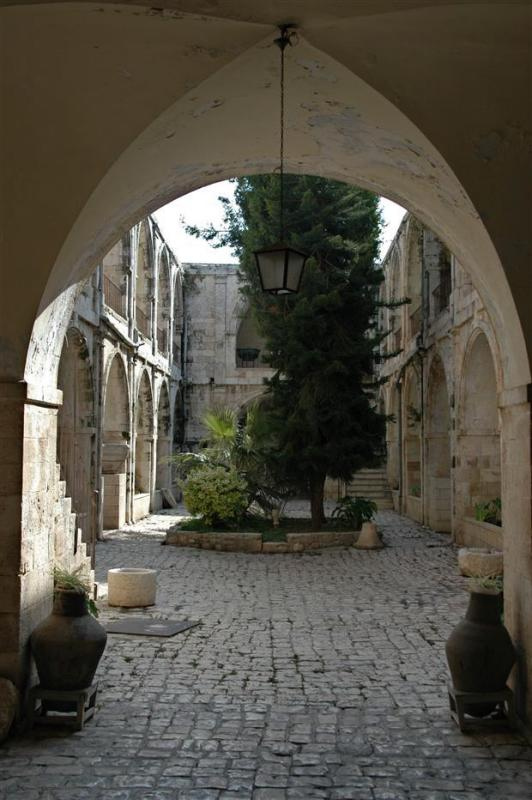
Church of St James

Armenian monastery cloister (© Israel Ministry of Tourism)

The Convent of St James takes up two-thirds of the quarter. The remaining third includes churches of four other denominations: Syriac Orthodox, Greek Orthodox, Maronite and Anglican.

Many of the residents of the convent compound are descendants of survivors of the Ottoman Turkish genocide who sought refuge in Jerusalem. A note on the menu at the nearby Armenian Tavern restaurant observes: “From the unkind cup of history they have drunk wisdom not bitterness.”


In Scripture:

St James [the Great] is beheaded: Acts 12:1-2

Jesus is condemned: John 19:13-16


Administered by: Armenian Patriarchate of St James

Tel.: 972-2-6282331

Open: 6.30-7.30am and 3.00-3.40pm Sun-Fri; 6.30-9.30am and 3.00-3.40pm Sat. Modest dress required.


References

Bar-Am, Aviva: Beyond the Walls: Churches of Jerusalem (Ahva Press, 1998)
Bourbon, Fabio, and Lavagno, Enrico: The Holy Land Archaeological Guide to Israel, Sinai and Jordan (White Star, 2009)
Freeman-Grenville, G. S. P.: The Holy Land: A Pilgrim’s Guide to Israel, Jordan and the Sinai (Continuum Publishing, 1996)
Hilliard, Alison, and Bailey, Betty Jane: Living Stones Pilgrimage: With the Christians of the Holy Land (Cassell, 1999)
Mackowski, Richard M.: Jerusalem: City of Jesus (William B. Eerdmans, 1980)
Murphy-O’Connor, Jerome: The Holy Land: An Oxford Archaeological Guide from Earliest Times to 1700 (Oxford University Press, 2005)
Prag, Kay: Jerusalem: Blue Guide (A. & C. Black, 1989)
Shahin, Mariam, and Azar, George: Palestine: A guide (Chastleton Travel, 2005)
Wareham, Norman, and Gill, Jill: Every Pilgrim’s Guide to the Holy Land (Canterbury Press, 1996)


External links

Armenian Patriarchate of St. James, Jerusalem
The Armenian Quarter (Jewish Virtual Library)
Mardigian Museum (The Times of Israel)
« Newer PostsOlder Posts »

Inside an Eastern church


Melkite Church of the Annunciation, Jerusalem

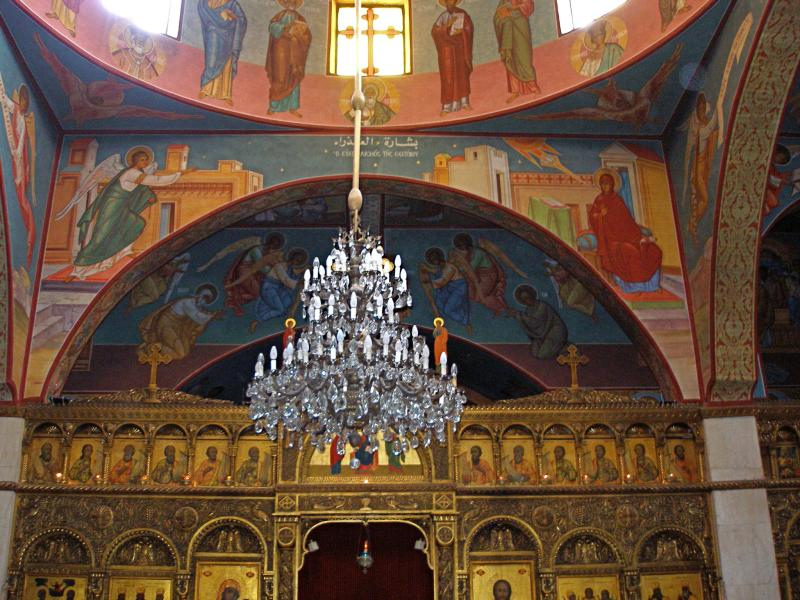
Bright frescoes and gilded iconostasis in Melkite Church of the Annunciation, Jerusalem (Seetheholyland.net)

For Western Christians unfamiliar with the rich church decoration and elaborate worship of the Eastern Church, a visit to the Melkite Church of the Annunciation in the Old City of Jerusalem offers a useful introduction.

This unobtrusive building — not to be confused with the towering Church of the Annunciation in Nazareth — is the patriarchate church of Jerusalem’s Greek Catholics.

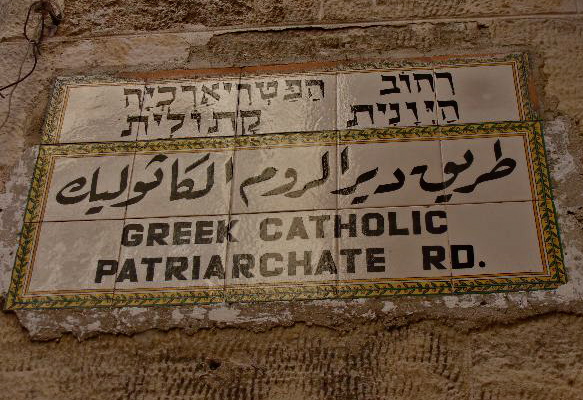
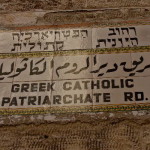
Usually overlooked by both mapmakers and pilgrims, it is tucked into the patriarchate property in the Christian Quarter. (Entering the Old City through the Jaffa Gate, take the third street on the left — Greek Catholic Patriarchate Road — and the patriarchate is about 50 metres on the right. Descend the stairs to the left of the reception desk and the church door is on your left.)

Melkite Church of the Annunciation, Jerusalem

Road sign near Melkite Church of the Annunciation, Jerusalem (© Joseph Koczera)

The separate existence of the Greek Catholic Church dates from 1724, when a split occurred in the ancient Greek Orthodox patriarchate of Antioch and a small group chose communion with Rome rather than Constantinople.

Now numbering 1.6 million worldwide, the Greek Catholics form the second largest Christian church in the Holy Land (after the Greek Orthodox). An Arab church, it has big numbers in the Galilee and a small community in Jerusalem.

Melkite Church of the Annunciation, Jerusalem

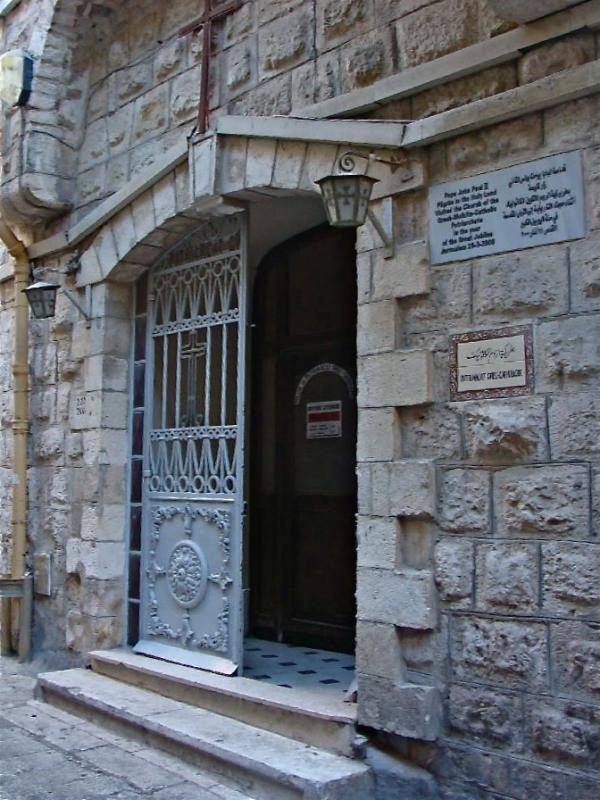
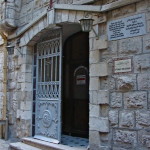
Door to Melkite patriarchate, Jerusalem (© Joseph Koczera)

Melkite, meaning “royalist”, was originally an uncomplimentary term applied to Eastern Christians who accepted the authority of the 451 Council of Chalcedon and the Byzantine Emperor. The term is no longer used by the Eastern Orthodox.


Frescoes in ‘symphony of colour’

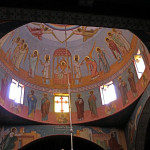
The Church of the Annunciation, built in 1848, is arguably the most representative Byzantine church in Jerusalem.

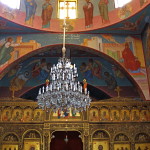
From the dome down to pew-height, its interior is richly adorned with frescoes in vibrant colours. As writer George Martin puts it, the church “seems alive with prayer even when silent. The vaults and walls . . . are covered in a symphony of colour.”

Melkite Church of the Annunciation, Jerusalem

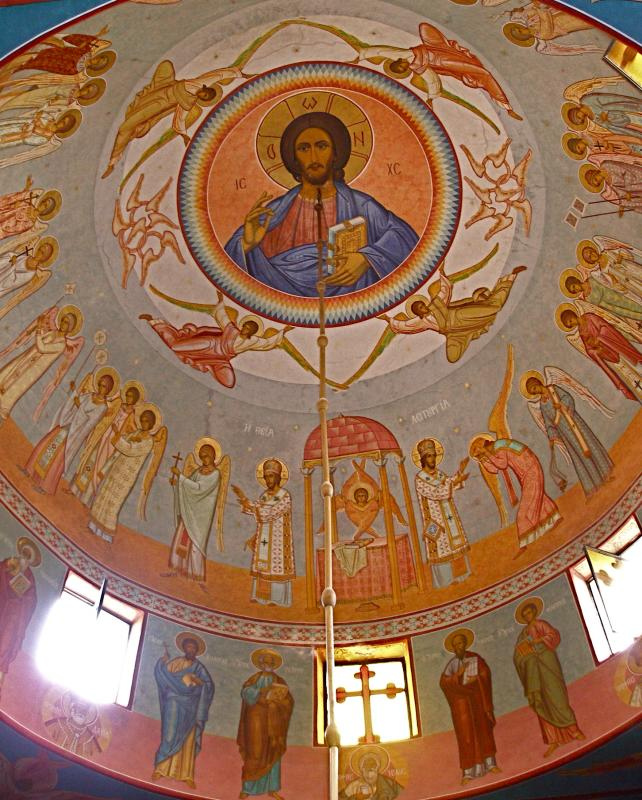
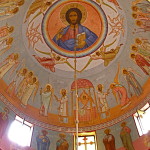
Christ the Pantokrator in dome of Melkite Church of the Annunciation, Jerusalem (Seetheholyland.net)

The frescoes, which simulate the stylised motifs of Byzantine icons, were added during renovations in 1974-75. The artists were two brothers from Romania, Michael and Gabriel Moroshan.

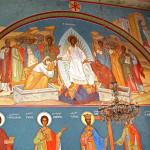
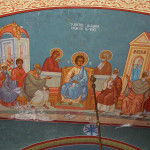
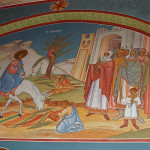
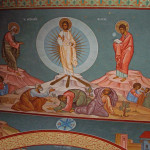
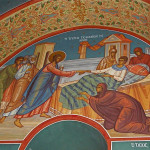
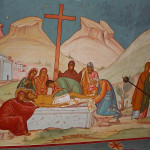
In Orthodox tradition, the frescoes follow a clear theological plan. At the top, in the dome, is Christ the Pantokrator, the Ruler of All. Depicted below him, around the dome, are the central act of worship, the Divine Liturgy; the Twelve Apostles; and major prophets and other figures of the Old Testament.

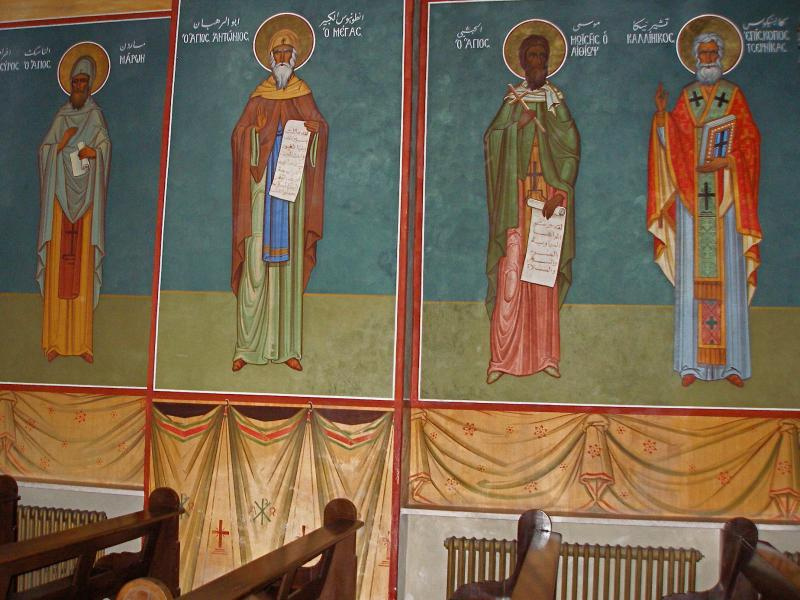
From there, clockwise around the church, the entire life of Christ — from the Annunciation to the Resurrection — is illustrated with profound symbolism. Below is a layer depicting saints, to remind worshippers that these holy people are present during worship.

Melkite Church of the Annunciation, Jerusalem

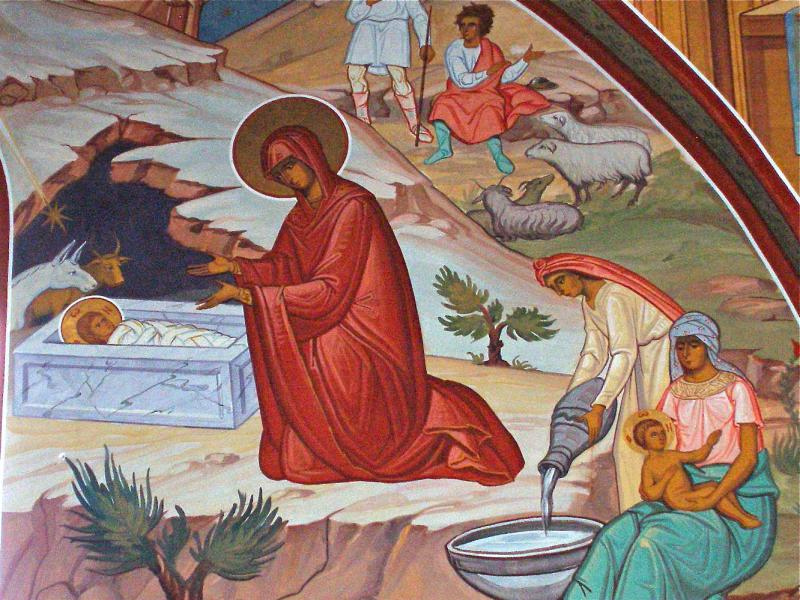
Birth of Jesus, in Melkite Church of the Annunciation, Jerusalem (Seetheholyland.net)

This description of the scenes from Christ’s life comes from Living Stones Pilgrimage: With the Christians of the Holy Land, co-authored by Alison Hilliard and Betty Jane Bailey:

“Each scene is interconnected: Take the scene of Christ’s birth, painted directly opposite the scene of the Resurrection. Both symbolise why Christ came to earth.

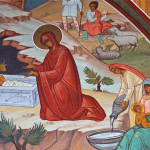
“In the first icon, Christ is born into a stone coffin, a sarcophagus, a symbol of death. His mother is kneeling next to him, dressed entirely in red.

“This is unusual: In the East, the Virgin Mary is normally painted in blue and red — the blue stands for heaven, the red for earth — symbolising the one who combines heaven and earth by giving birth to the God-man. In this scene, however, Mary’s dress is explained by looking across the church at the icon of the Resurrection.

Melkite Church of the Annunciation, Jerusalem

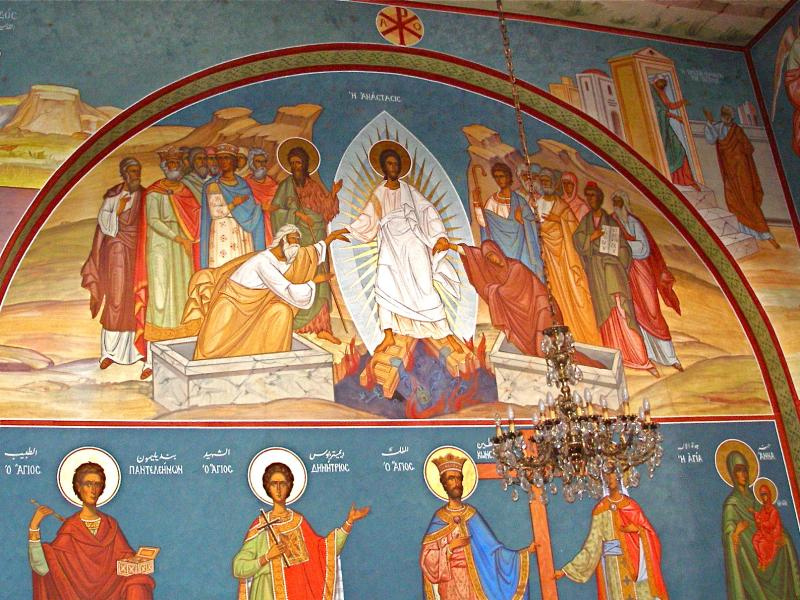
Resurrection of Jesus, in Melkite Church of the Annunciation, Jerusalem (Seetheholyland.net)

“Here Christ is shown standing on the shattered gates of hell in the form of a cross bridging the mouth of hell. He is resurrecting out of the sarcophagus Adam and Eve, symbolic of mankind. Eve is dressed in red, just as Mary was, showing that the first Eve, who sinned, is replaced by the second one who gave birth to Christ who overcomes sin and raises us to life.

“The second icon therefore completes the scene of the Nativity and explains it theologically. Make the connection from manger to coffin, from swaddling clothes to shroud, from cave to tomb and from birth to death and the new birth of Resurrection.”


Suggestion of final glory

Melkite Church of the Annunciation, Jerusalem

Below icons of saints, curtains are drawn over today’s holy people, in Melkite Church of the Annunciation, Jerusalem (Seetheholyland.net)

Powerful symbolism continues around the church. Below the icons of saints, down at pew level, the artists have painted drawn curtains. The suggestion is that, on the last day, the curtains will be pulled back and worshippers will see their own faces glorified.

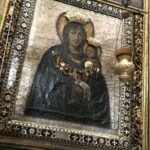
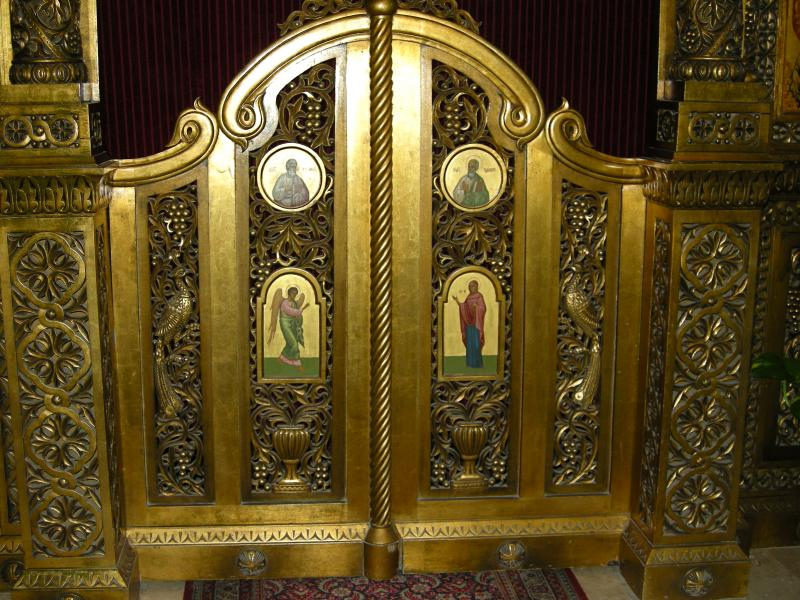
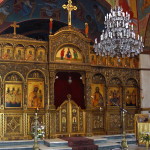
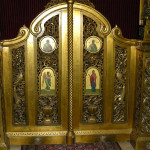
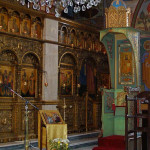
Across the front of the church, the iconostasis separates the nave from the sanctuary. This screen is richly embellished with gilded icons, Christ depicted on the right of the central doors and the Virgin Mary with the Christ child depicted on the left.

The central doors, known as the Royal Doors, open out to the congregation three times during the liturgy: When Christ comes in the form of the Gospel and a deacon stands in front of the doors to read the text; when the unconsecrated gifts of bread and wine are taken to the altar; and at Communion time when the priest brings out the Eucharist to distribute it to the congregation.

Melkite Church of the Annunciation, Jerusalem

Royal Doors in iconostasis of Melkite Church of the Annunciation, Jerusalem (Yoav Dothan)

To quote Hilliard and Bailey: “The opening of the Royal Doors is therefore seen to be symbolic of how God erupts into human history — through his Word and his Sacrament.”

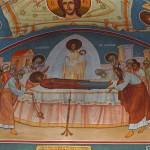
As worshippers leave the church, a fresco of the dormition of the Virgin Mary reminds them that they are going back into the world where, inevitably, they will die. Mary’s death is presented as a model for their own deaths as her soul, in the form of a small baby, is being taken to heaven by Christ.


Byzantine liturgy and Orthodox traditions retained

While the Melkites have adopted some Roman Catholic practices, they have essentially retained the Byzantine liturgy and many other Orthodox traditions. Arabic is the main language of worship.

Like the Orthodox clergy, Melkite priests may marry before their ordination.

Melkite Church of the Annunciation, Jerusalem

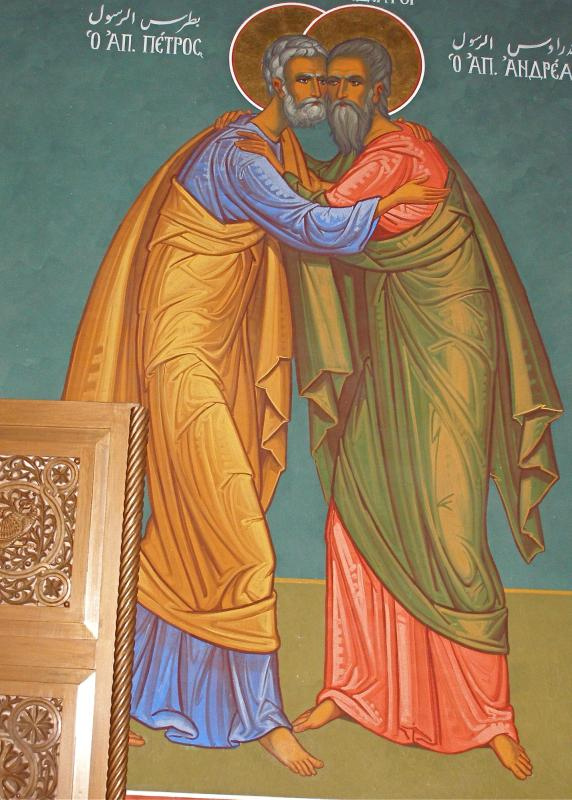
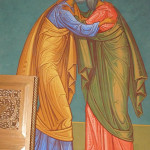
Sts Peter and Paul embracing, in Melkite Church of the Annunciation, Jerusalem (Seetheholyland.net)

Melkites make the Sign of the Cross in the same way as the Orthodox — forehead to chest, then from right to left, with the thumb, index and middle fingers joined in honour of the Trinity. The other two fingers are pressed to the palm, in honour of Christ’s two natures, divine and human, in one Person.

Veneration of icons is a common Byzantine practice, respect being paid not to the painting itself but to the person it represents. Some icons are believed to be the means of obtaining miracles, and people pray in front of them for healing or other assistance.

For a sense of the colourful mosaic of Eastern Christian traditions, a small museum in the hallway near the entrance to the church has exhibits of dress, vestments, liturgical items and photos from all of the Oriental churches present in Jerusalem.


Administered by: Melkite Greek Catholic Church in the Holy Land

Tel.: 972-2-6282023 or 972-2-6271968/9

Open: 8.30am-3pm (sometimes later); services Monday-Wednesday and Friday 7am, Thursday and Saturday 6pm, Sunday 9am. Museum open 9am-12 noon daily (except Sunday) and on request.


Related article:

Churches in the Holy Land


References

Anonymous: Griechisch-Katholisch-Melkitisches Patriarchat (Greek Catholic Patriarchate leaflet, undated)
Hilliard, Alison, and Bailey, Betty Jane: Living Stones Pilgrimage: With the Christians of the Holy Land (Cassell, 1999)
Macpherson, Duncan: A Third Millennium Guide to Pilgrimage to the Holy Land (Melisende, 2000)
Martin, George: “The Melkites of Jerusalem” (Catholic Near East, November-December 1995)


External links

Melkite Greek Catholic Church Information Center
Melkite Greek Catholic Patriarchate
Brief video of church interior (YouTube)


« Newer PostsOlder Posts »

Tombs of the Patriarchs

West Bank


Tombs of the Patriarchs

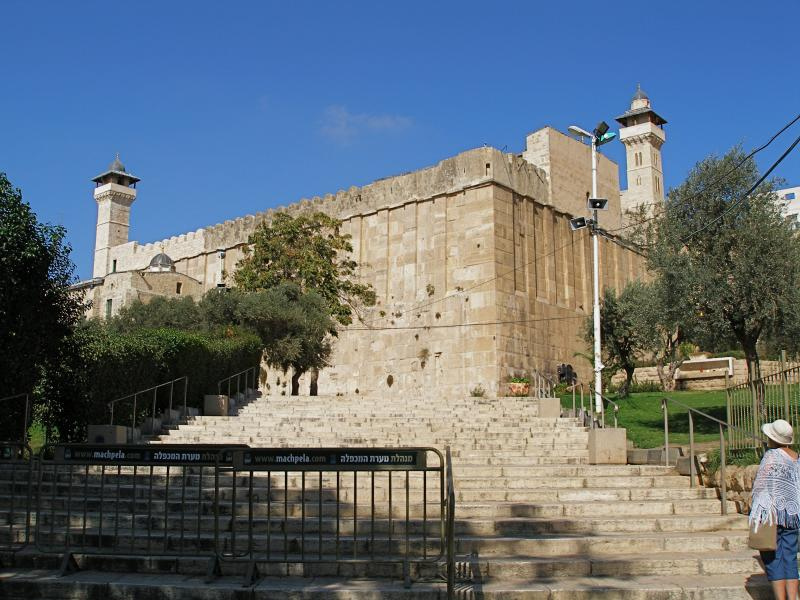
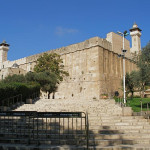
Tombs of the Patriarchs at Hebron (Seetheholyland.net)

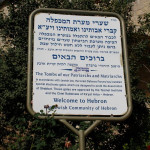
The Tombs of the Patriarchs in the West Bank city of Hebron is the burial place of three biblical couplesAbraham and Sarah, Isaac and Rebekah, and Jacob and Leah.

The second holiest site in Judaism (after the Western Wall in Jerusalem), it is also sacred to the other two Abrahamic faiths, Christianity and Islam.

It was the patriarch Abraham who bought the property when his wife Sarah died, around 2000 years before Christ was born. Genesis 23 tells how Abraham, then living nearby at Mamre, bought the land containing the Cave of Machpelah to use as a burial place. He paid Ephron the Hittite the full market price — 400 shekels of silver.

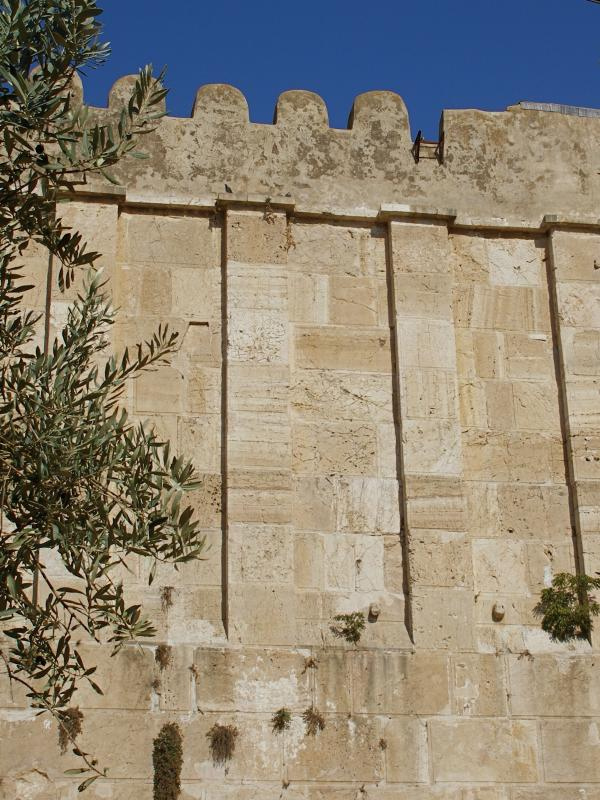
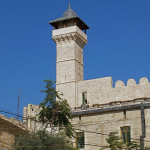
Today the site is the dominant feature of central Hebron, thanks to the fortress-like wall Herod the Great built around it in the same style of ashlar masonry that he used for the Temple Mount enclosure in Jerusalem.

Tombs of the Patriarchs

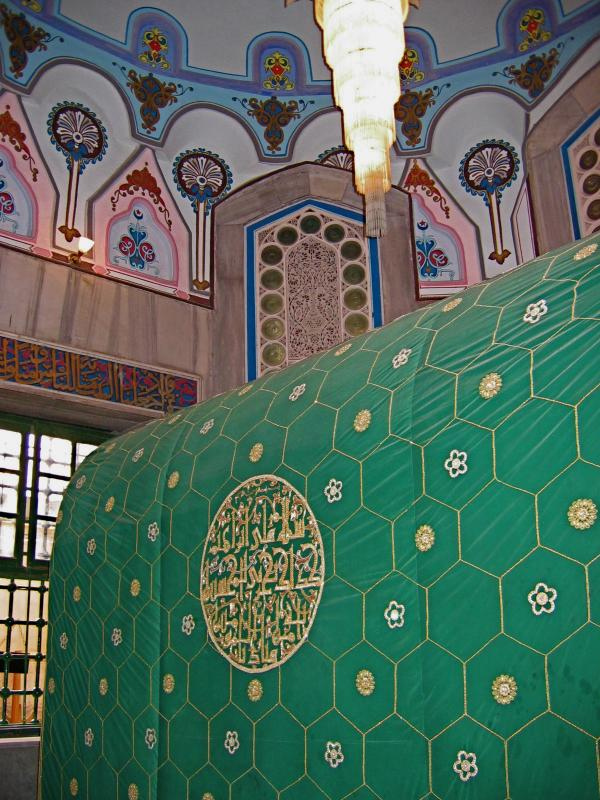
Cenotaph of Abraham in Tombs of the Patriarchs (Eric Stoltz)

Herod left the interior open to the sky. The ruins of a Byzantine church built inside the wall around 570 were converted by Muslims into a mosque in the 7th century, rebuilt as a church by the Crusaders in the 12th century, then reconverted into a mosque by the sultan Saladin later in the same century.

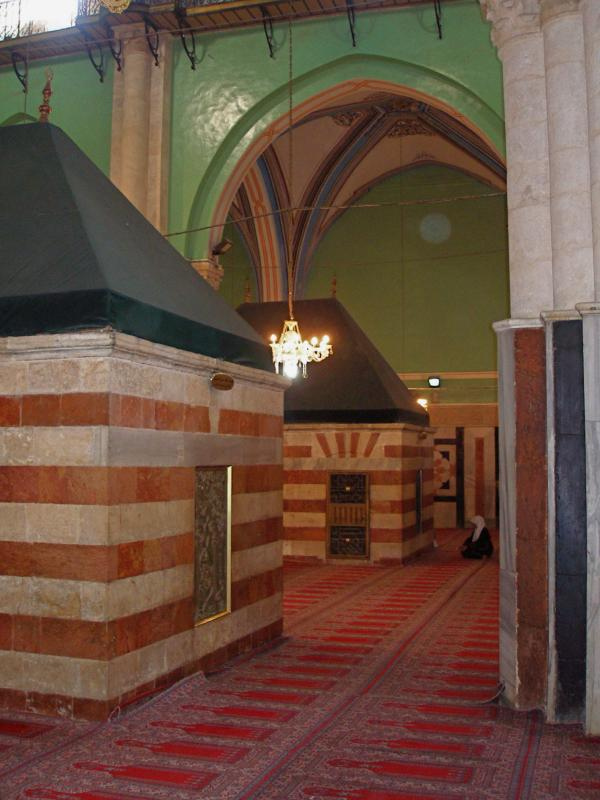
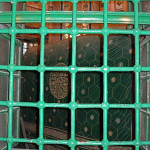
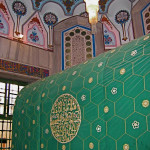
Most of the enclosure is now roofed. Inside, six cenotaphs covered with decorated tapestries represent the tombs of the patriarchs. The actual burial places of Abraham, Sarah, Isaac, Rebekah, Jacob and Leah are in the cave beneath, to which access is not permitted.


Scene of God’s covenant with Abraham

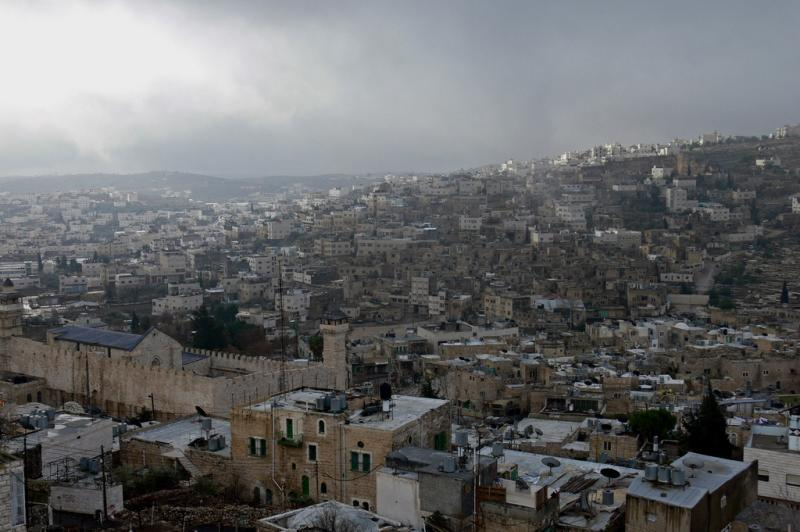
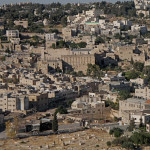
Set in the Judean Mountains about 30 kilometres south of Jerusalem, Hebron stands 930 metres above sea level, making it the highest city in Israel and Palestine. It is also the largest city in the West Bank, with a population in 2007 of around 165,000 Palestinians and several hundred Jewish settlers, and is known for its glassware and pottery.

Tombs of the Patriarchs

City of Hebron, with Tombs of the Patriarchs at left (Marcin Monko)

It was near Hebron that God made a covenant with Abraham, that he would be “the ancestor of a multitude of nations” (Genesis 17:4).

Abraham had pitched his tent “by the oaks of Mamre” (Genesis 13:18), 3 kilometres north of Hebron, at a site now in the possession of a small community of Russian Orthodox monks and nuns.

Here Abraham offered hospitality to three strangers, who told him his wife Sarah — then aged 90 — would have a son (Genesis 18:10-14).

When Moses led the Israelites out of Egypt, about 700 years after Abraham, the men he sent to spy out the land of Canaan returned from the Hebron area with a cluster of grapes so heavy that two men carried it on a pole between them — an image that is now the logo of the Israel Ministry of Tourism.

Later, King David ruled Judah from Hebron for seven and a half years before moving his capital to Jerusalem.

Emulating Abraham’s hospitality, early Muslim rulers of Hebron provided free bread and lentils each day to pilgrims and the poor.


Complex is in three sections

Tombs of the Patriarchs

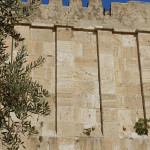
Herod’s stonework on Tombs of the Patriarchs (Seetheholyland.net)

Herod’s mighty wall around the Tombs of the Patriarchs avoids the appearance of heaviness by clever visual deceptions. Each course of stone blocks is set back about 1.5 centimetres on the one below it, and the upper margin is wider than the others.

The corners of the edifice — called Haram al-Khalil (Shrine of the Friend [of God]) in Arabic — are oriented to the four points of the compass.

Inside, amid a confusing mix of minarets, domes, arches, columns and corridors of various styles and periods, the complex is divided into three main sections, each with the cenotaphs of a patriarch and his wife.

The main entrance, to the Muslim area, is up a long flight of steps beside the northwest Herodian wall, then east through the Djaouliyeh mosque (added outside the wall in the 14th century) and right to enter the enclosure.

Straight ahead, in the centre of the complex, are octagonal rooms containing the cenotaph of Sarah and, further on, the cenotaph of Abraham. Each of these domed monuments has a richly embroidered cover, light green for Sarah and darker green for Abraham.

Tombs of the Patriarchs

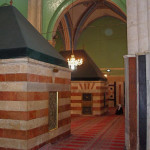
Cenotaphs of Rebekah and Isaac (Seetheholyland.net)

In a corner just past Abraham’s room, a shrine displays a stone said to bear a footprint left by Adam as he left the Garden of Eden.

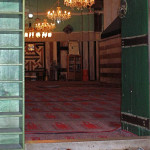
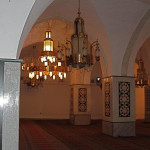
A wide door between these two cenotaphs leads to the Great Mosque, containing the cenotaphs of Isaac (on the right) and Rebekah. The vaulted ceiling, supporting pillars, capitals and upper stained-glass windows are from the Crusader church.

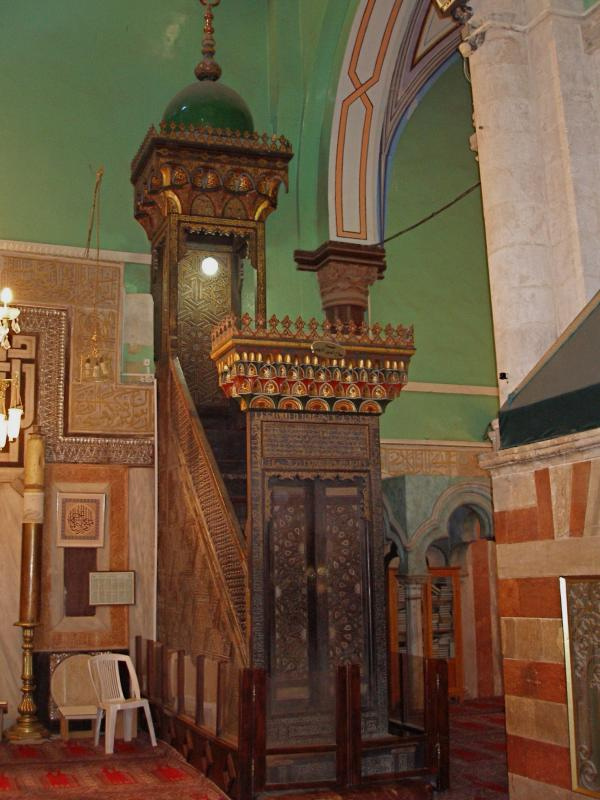
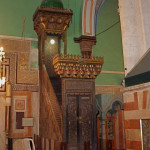
Ahead, on the southeastern wall, a marble-and-mosaic mihrab (prayer niche) faces Mecca. Beside it on the right is an exquisitely carved minbar (pulpit) of walnut wood. It was made (without nails) in 1091 for a mosque in Ashkelon and brought to Hebron a century later by Saladin after he burned that city.

Next to the pulpit, a stone canopy covers the sealed entrance to steps descending to the burial Cave of Machpelah.

Directly across the room, another canopy stands over a decorative grate covering a narrow shaft to the cave. Written prayers may be dropped down the shaft.

Tombs of the Patriarchs

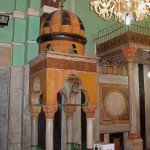
Minbar (pulpit) in Great Mosque in Tombs of the Patriarchs (Seetheholyland.net)

Entry to the Jewish area is via an external square building on the southwestern wall. This building houses a Muslim cenotaph of Joseph, one of Jacob’s sons (though Jews and Christians believe he was buried near Nablus).

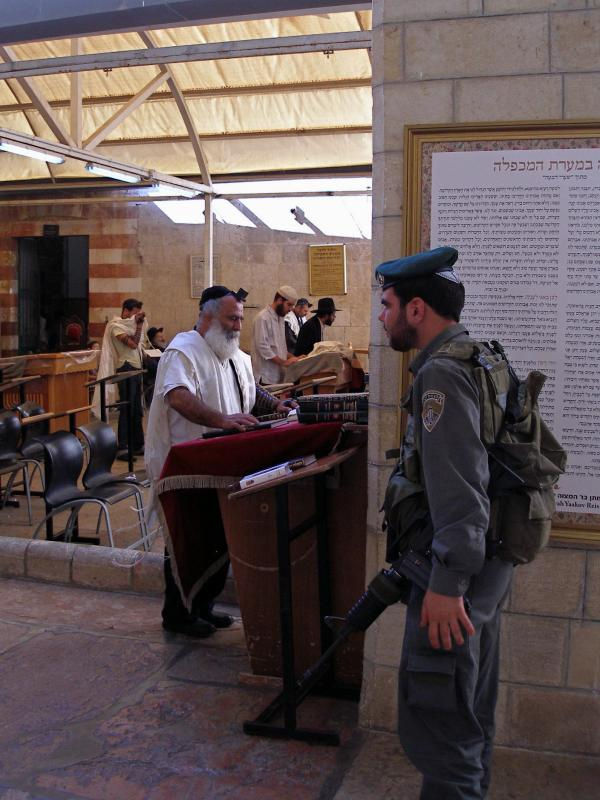
Inside are synagogues and the cenotaphs of Jacob and Leah, each in an octagonal room. (Jacob’s beloved second wife, Rachel, is remembered at the Tomb of Rachel, on the Jerusalem-Hebron road north of Bethlehem).


Site and city are divided

Friction between Jews and Muslims at Hebron dates back to a 1929 riot in which Arab Muslims sacked the Jewish quarter and massacred 67 of its community.

More recently, in 1994 a Jewish settler entered the Tombs of the Patriarchs during dawn prayers and shot 29 Muslim worshippers (the mihrab still bears bullet marks).

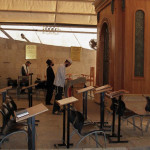
Since then, Jews and Muslims have been restricted to their own areas of this divided site, except that each faith has 10 special days a year on which its members may enter all parts of the building. Pilgrims and tourists may enter both areas.

Tombs of the Patriarchs

Israeli soldier guarding Jewish synagogue in Tombs of the Patriarchs (Seetheholyland.net)

The city of Hebron is also divided into two zones. The larger part is governed by the Palestinian Authority. The remainder, including the town centre and market area, is occupied by Jewish settlers and under Israeli military control.

In 2019 Unesco named the old town of Hebron as a Palestinian world heritage site.


In Scripture

Abram settles by the oaks of Mamre at Hebron: Genesis 13:18

God makes a covenant with Abram and changes his name: Genesis 17:3-5

Three strangers pay a visit to Abraham: Genesis 18:1-16

Abraham haggles with God over the future of Sodom: Genesis 18:17-33

Sarah dies and Abraham buys the Cave of Machpelah: Genesis 23:1-20

Abraham dies and is buried with Sarah: Genesis 25:7-10

Joshua attacks Hebron and kills its inhabitants: Joshua 10:36-37

David is anointed king over Judah at Hebron: 2 Samuel 2:1-4, 11


Administered by: Islamic Waqf Foundation

Tel.: 972-2-222 8213/51

Open: Usually 7.30-11.30am, 1-2.30pm, 3.30-5pm; Muslim area closed on Fridays, Jewish area closed on Saturdays. Passport checks apply and it is wise to check the security situation before visiting (the Christian Information Centre in Jerusalem suggests telephoning 02-2227992).


References

Beitzel, Barry J.: Biblica, The Bible Atlas: A Social and Historical Journey Through the Lands of the Bible (Global Book Publishing, 2007)
Brownrigg, Ronald: Come, See the Place: A Pilgrim Guide to the Holy Land (Hodder and Stoughton, 1985)
Chadwick, Jeffrey R.: “Discovering Hebron: the City of the Patriarchs Slowly Yields Its Secrets”, Biblical Archaeology Review, September/October 2005
Dyer, Charles H., and Hatteberg, Gregory A.: The New Christian Traveler’s Guide to the Holy Land (Moody, 2006)
Eber, Shirley, and O’Sullivan, Kevin: Israel and the Occupied Territories: The Rough Guide (Harrap-Columbus, 1989)
Freeman-Grenville, G. S. P.: The Holy Land: A Pilgrim’s Guide to Israel, Jordan and the Sinai (Continuum Publishing, 1996)
Gonen, Rivka: Biblical Holy Places: An illustrated guide (Collier Macmillan, 1987)
Inman, Nick, and McDonald, Ferdie (eds): Jerusalem & the Holy Land (Eyewitness Travel Guide, Dorling Kindersley, 2007)
Murphy-O’Connor, Jerome: The Holy Land: An Oxford Archaeological Guide from Earliest Times to 1700 (Oxford University Press, 2005)
Prag, Kay: Israel & the Palestinian Territories: Blue Guide (A. & C. Black, 2002)
Shahin, Mariam, and Azar, George: Palestine: A guide (Chastleton Travel, 2005)


External links

Hebron (BiblePlaces)
Tombs of the Patriarchs, Hebron (Sacred Destinations)
« Newer PostsOlder Posts »

Pilgrims’ experiences

Filed under: Extras — 12:45 pm

Pilgrims up till the Middle Ages

Pilgrims in modern times


The first recorded pilgrim to the Holy Land was a bishop named Mileto, from Sardis in Asia Minor, around AD 160. The 4th-century Church historian Eusebius relates that Bishop Mileto visited the holy places “where the Scriptures had been preached and fulfilled”.

What follows on this page are glimpses of the experiences of some of the men and women, both ancient and modern, who have followed Melito’s example. Their words may inspire you to visit the Holy Land — or enable you to make a virtual pilgrimage.


Pilgrims up till the Middle Ages

The anonymous Bordeaux Pilgrim of AD 333 (so-called because his itinerary began at Bordeaux in France), in the earliest surviving description of a Christian traveller in the Holy Land, visits the place of Christ’s crucifixion and Resurrection:

“On the left hand is the little hill of Golgotha where the Lord was crucified. About a stone’s throw from thence is a vault wherein his body was laid, and rose again on the third day. There, at present, by the command of the Emperor Constantine, has been built a basilica, that is to say, a church of wondrous beauty, having at the side reservoirs from which water is raised, and a bath behind in which infants are washed [baptised].” More >>

Various

Image of Egeria (Wikimedia)

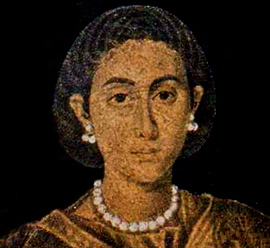
The ever-enthusiastic and energetic Egeria (around 384), possibly a consecrated virgin from Spain, was a woman of unbounded curiosity, whose guidebook was her Bible during a three-year pilgrimage. Here she climbs stone steps up Mount Sinai:

“They are hard to climb. You do not go round and round them, spiralling up gently, but straight at each one as if you were going up a wall, and then straight down to the foot, till you reach the foot of the central mountain, Sinai itself. Here then, impelled by Christ our God, and assisted by the prayers of the holy men who accompanied us, we made the great effort of the climb. It was quite impossible to ride up, but though I had to go on foot I was not conscious of the effort — in fact I hardly noticed it because, by God’s will, I was seeing my hopes coming true. So at ten o’clock we arrived on the summit of Sinai, the Mount of God where the Law was given, and the place where God’s glory came down on the day when the mountain was smoking. The church which is now there is not impressive for its size (there is too little room on the summit) but it has a grace all its own. And when with God’s help we had climbed right to the top and reached the door of this church, there was the presbyter, the one who is appointed to the church, coming to meet us from his cell. He was a healthy old man, a monk from his boyhood and an ‘ascetic’ as they call it here — in fact just the man for the place.” More >>

Various

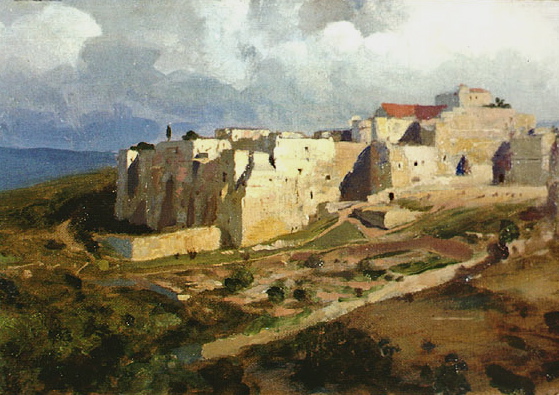
Historical image of Bethlehem (Vasily Polenov, 1882)

The aristocratic Roman widow Paula, who travelled to the Holy Land with her daughter Eustochium in the 4th century, contrasts the wealth of Rome with the poverty of Bethlehem:

“Where are spacious porticoes? Where are gilded ceilings? Where are houses decorated by the sufferings and labours of condemned wretches? Where are halls built by the wealth of private men on the scale of palaces, that the vile carcase of man may move among more costly surroundings, and view his own roof rather than the heavens, as if anything could be more beauteous than creation? . . . In the village of Christ . . . all is rusticity, and except for psalms, silence. Whithersoever you turn yourself, the ploughman, holding the plough handle, sings Alleluia; the perspiring reaper diverts himself with psalms, and the vine-dresser sings some of the ballads of this country, these are the love-songs, as they are commonly called; these are whistled by the shepherds, and are the implements of the husbandman. Indeed, we do not think of what we are doing or how we look, but see only that for which we are longing.” More >>

Various

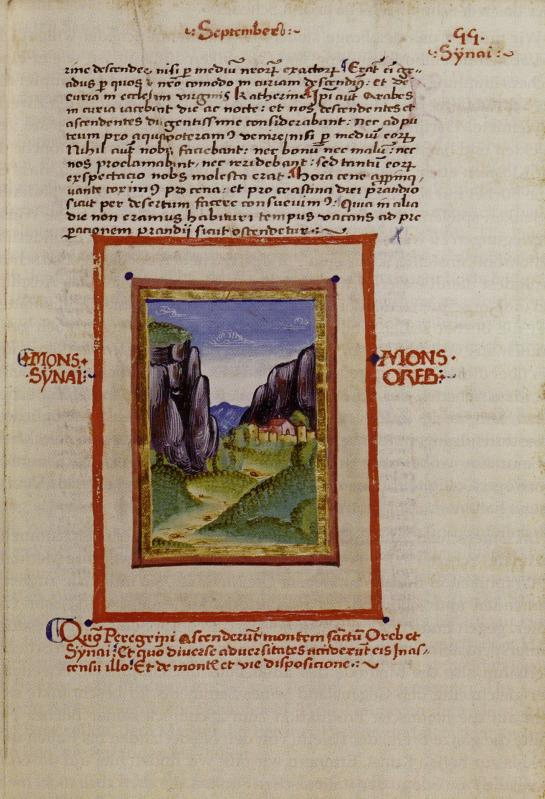
Sinai landscape in Felix Fabri’s pilgrimage journal (Wikimedia)

The German Dominican friar Felix Fabri, on the first of his two pilgrimages to the Holy Land in 1480, gets his first glimpse of Jerusalem:

“Casting our eyes to the right, lo! like a flash of lightning the oft-mentioned and oft-to-be-mentioned holy city of Jerusalem shone forth. The part of it which we saw was that which adjoins the Mount Sion, and we saw the holy Mount Sion itself, with all its buildings and ruins. Above all we saw the citadel of Sion, fortified with exceeding strong walls and towers, in such a clear light that the lofty walls and towers of the citadel seemed to enclose the whole city, and the pilgrim, or stranger who had never seen Jerusalem could not but think that the walls of the citadel of Sion were the walls of Jerusalem, which however is not so. When we beheld with our eyes the long-desired holy city, we straightaway dismounted from our asses and greeted the holy city, bowing our faces to the earth . . . .” More >>


Pilgrims in modern times

Various

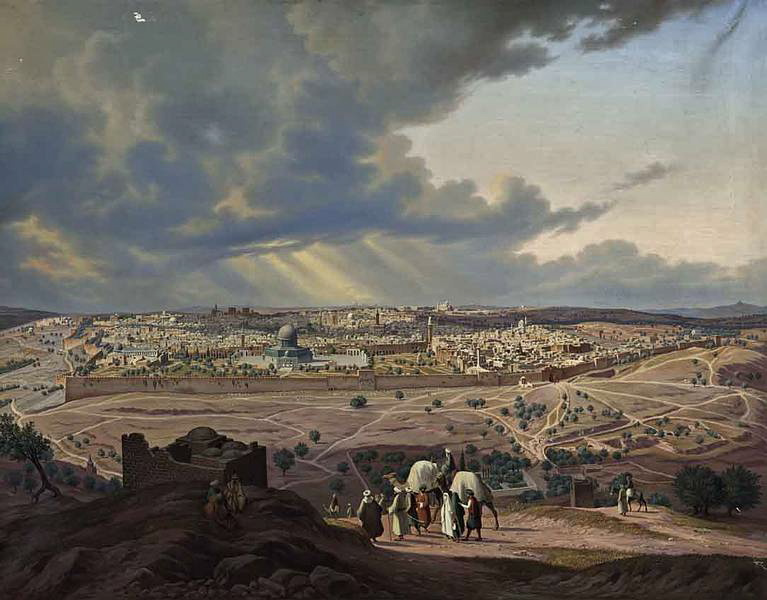
Historical image of Jerusalem (Hubert Sattler, 1869)

Patty Parma, a licensed professional counsellor from San Antonio, Texas, discovers in 2004 that there are Living Stones as well as ancient stones in the Holy Land:

“As I met the Palestinian Christians in places such as Jerusalem, Bethlehem, Mount of Beatitudes, and Birzeit, I met the Living Stones. Their faith is ancient and rock solid. In their eyes, I saw the wisdom of Christ; in their hearts, the love of Christ; in their spirits, the peace of Christ. I returned from the Holy Land with my bags filled with the weight of many ancient stones. I expected that. What I had not anticipated was returning home with a heart filled with Living Stones.  These Stones are not a weight, but a joy that lifts my spirit and brings a smile to my heart.” More >>


David Guthrie, moderator of Plymouth Church in downtown Seattle, Washington, is inspired by the Sea of Galilee during a 2005 pilgrimage:

Various

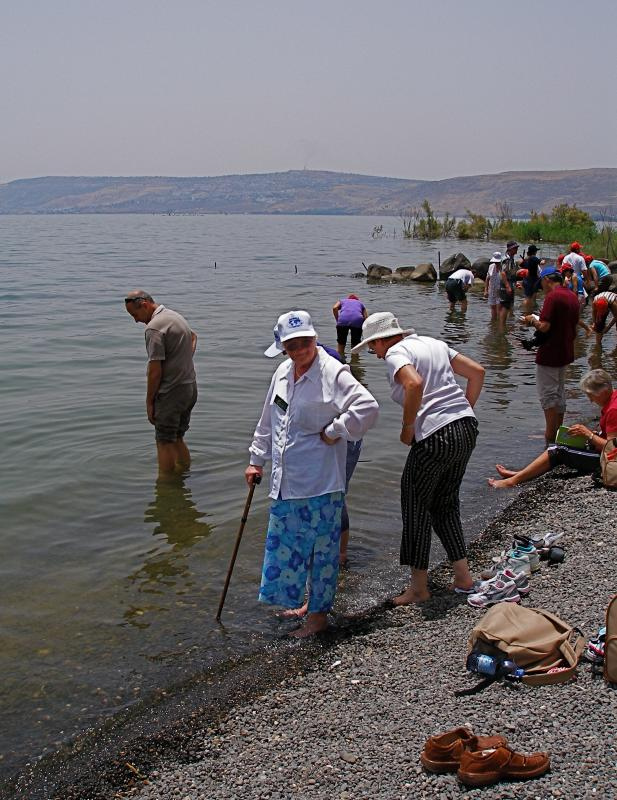
Pilgrims dipping their toes in the Sea of Galilee (Seetheholyland.net)

“I simply cannot put into words how inspired I was to see, feel, and wiggle my toes in the Sea of Galilee. Just to imagine this was once the stumping ground of Jesus and his disciples. This was where Jesus fed the thousands with the miracle of the loaves and fish. This was where Jesus walked on water, called Peter, James and John, told them to cast down net even after fishing nothing for all night, pronounced Peter as the head of the Church, and fed them breakfast after the resurrection.” More >>


Pilgrimage leader Günther Simmermacher, editor of The Southern Cross newspaper in Cape Town, South Africa, reflects on being a pilgrim during a 2006 visit to the Holy Land:

“At its core, a pilgrimage is a journey to God. But even as all pilgrims share a common itinerary, each one’s route takes unique twists and turns. Graces can be found at unexpected moments: through an accident, a bidding prayer, a sudden spiritual emotion, a moment of illumination, a poignant homily, the experience of receiving the Body of Christ in a special place, in sharing moments with fellow pilgrims who only days before were perfect strangers, even in the vexing snores of a roommate.” More >>

Various

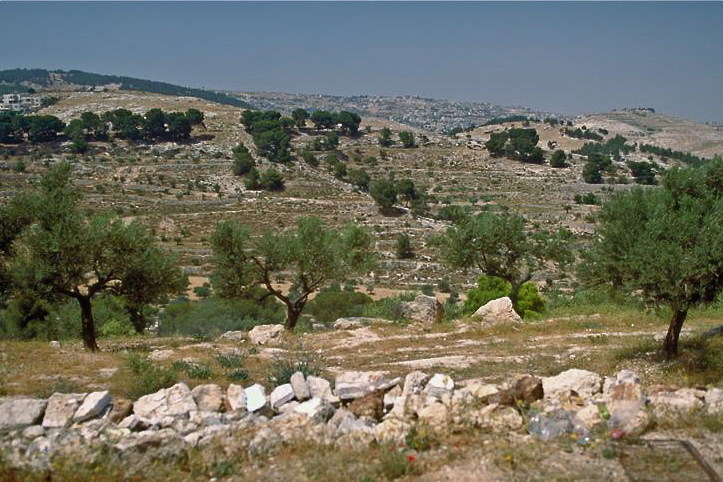
Olive trees on the Judean Hills (© Israel Ministry of Tourism)


New Zealand author Joy Cowley, during a pilgrimage in 2007, discovers a new dimension to the Holy Land:

“Christians in Israel call the Holy Land ‘the Fifth Gospel’. They say that Jesus speaks through the landscape, thus opening up the other four Gospels. We found this true in ways we’d not expected.” More >>


Heather Zempel, pastor of discipleship at National Community Church in Washington, DC, describes “The Lost Art of Pilgrimage” following a visit to the Holy Land in 2009:

“Two Presbyterians, an Episcopalian, a Lutheran, a Baptist, and a rapper named SaulPaul board a plane —sounds like the beginning of a bad joke, doesn’t it? And yet my travels with this eclectic band of sojourners may have forever changed the trajectory of my own faith journey . . . . Everywhere I travelled, I was drawn into the massive adventure that God is writing. I was overwhelmed by the magnitude of the Story, but I was also able to ponder my role in God’s epic, and I can pass my own tales of spiritual journey to the next generation.” More >>

Various

Pilgrims on the Via Dolorosa (Seetheholyland.net)


Thomas F. Jones, Jr, executive director of Stadia: New Church Strategies, a national church planting organisation in the United States, records his impressions on a 2010 pilgrimage:

“Like pilgrims since the time of Constantine, we travelled to the Holy Land to experience a renewed call to discipleship by walking in the footsteps of Jesus. We visited places like Capernaum, Mount of Beatitudes, Tabgha, Caesarea Philippi, Nazareth, Bethlehem, the Old City of Jerusalem, Stations of the Cross on the Via Dolorosa, Church of the Holy Sepulchre, Temple Mount, Jordan River, Mount of Olives, Gethsemane, Garden Tomb, and the Dead Sea. We visited these holy sites with our spiritual eyes and ears open, expecting that Jesus would meet us in fresh and new ways, and indeed he did.” More >>

« Newer PostsOlder Posts »
All content © 2022, See the Holy Land | Site by Ravlich Consulting & Mustard Seed
You are welcome to promote site content and images through your own
website or blog, but please refer to our Terms of Service | Login