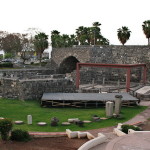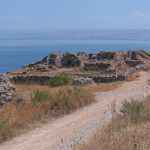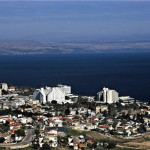
. . . your guide to visiting the holy places  
If you have found See the Holy Land helpful and would like to support our work, please make a secure donation.
The Sites

Israel and Palestine – In Jerusalem

Israel and Palestine – Outside Jerusalem

Jordan

Egypt

Extras

Beit She’an

Israel

Beit She'an

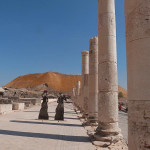
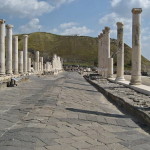
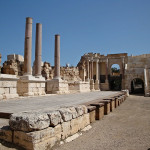
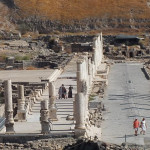
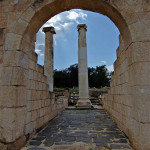
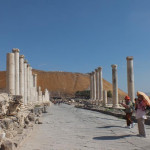
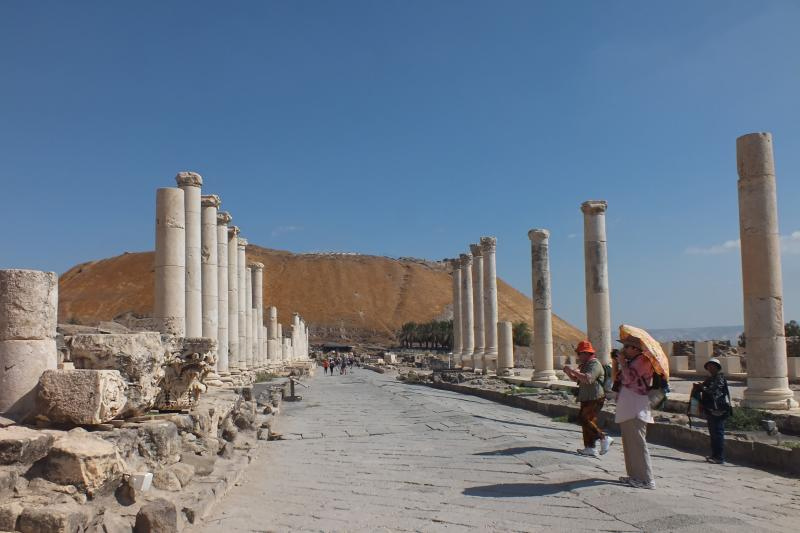
Colonnaded street leading to tell at Beit She’an (Seetheholyland.net)

Beit She’an offers the most extensive archaeological site in Israel, with some of the best-preserved ruins in the Middle East, but its memory will forever be linked to one of the most ghoulish events in the Bible.

On nearby Mount Gilboa in 1004 BC, the army of King Saul, Israel’s first king, was defeated by the Philistines and Saul’s three sons were killed. To avoid capture, the wounded Saul fell on his sword.

The triumphant Philistines took the bodies of Saul and his sons and fastened them to the wall of Beit She’an. They put Saul’s armour in their temple.

David, who was to succeed Saul as king, composed a memorable lament over the tragedy, with the recurring line “How the mighty have fallen . . . ” (2 Samuel 1:17 – 27).

Beit She’an is about 13 kilometres south of the Sea of Galilee. Its location at the strategic junction of the Jezreel and Jordan valleys made it a coveted prize for conquerors.
Beit She'an

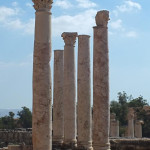
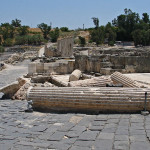
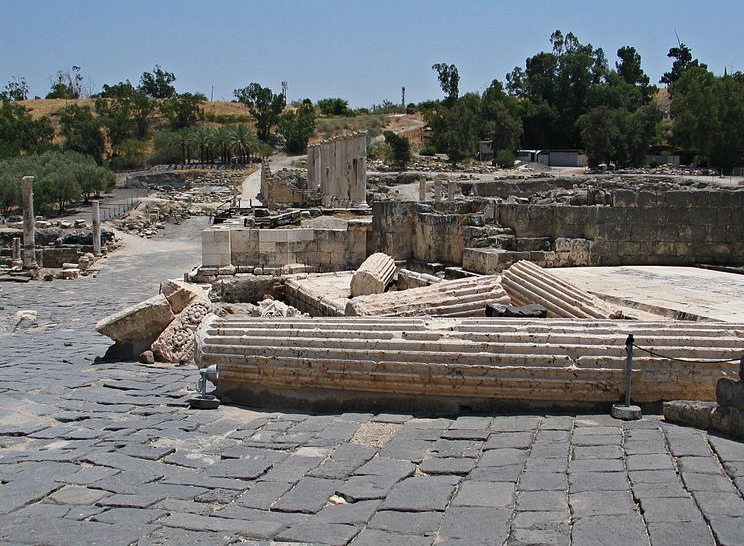
Columns toppled by the AD 749 earthquake at Beit She’an (Kasper Nowak)

Apart from the Philistines, its rulers included Egyptians, Israelites (though the Canaanite inhabitants initially rebuffed them), Greeks and Romans.

In the Roman period — under the name of Scythopolis — it was the leading city of the Decapolis and the only one of these 10 semi-autonomous cities west of the Jordan River.

From the 4th century until it was destroyed by an earthquake in 749, the formerly pagan city was a flourishing Christian centre, with a bishop and several churches.


City’s population grew to 40,000

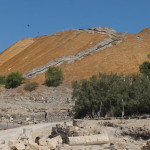
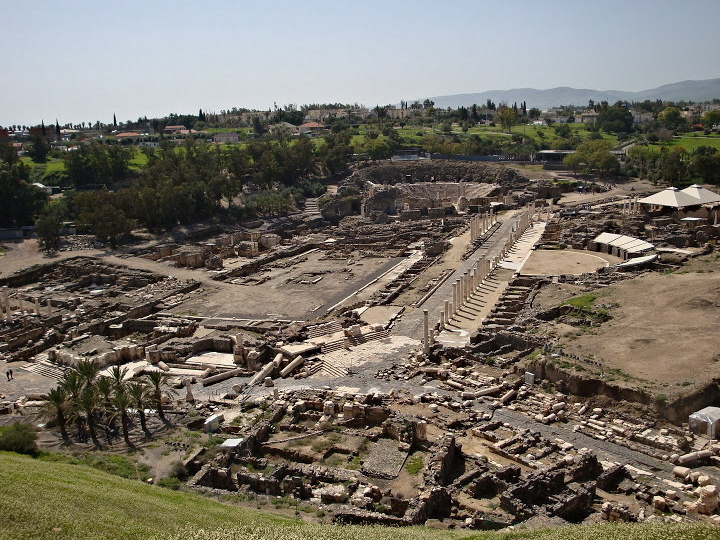
Beit She’an began on the flat-topped hill that stands behind the ruins of the Roman-Byzantine city. This ancient tell, 80 metres high, contains 18 levels of occupation down to the first settlers around 4000 BC.
Beit She'an

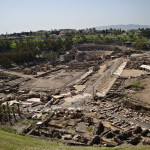
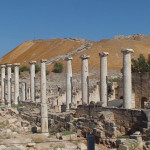
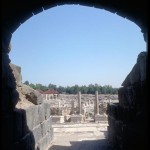
Ruins of Beit She’an from the tell, with modern town in background (Steve Peterson)

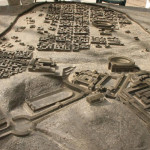
In Roman times the inhabitants moved to the flat area at the foot of the hill. Here the city expanded to around 150 hectares in area, with wide colonnaded streets leading to elegant shops with marble facades and mosaic floors.

The population of Scythopolis grew to 40,000 and the linen it produced made it one of the leading textile centres of the Roman empire. Centuries later it became a centre for processing cane sugar.

Excavations have revealed:

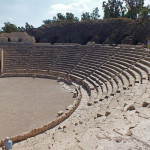
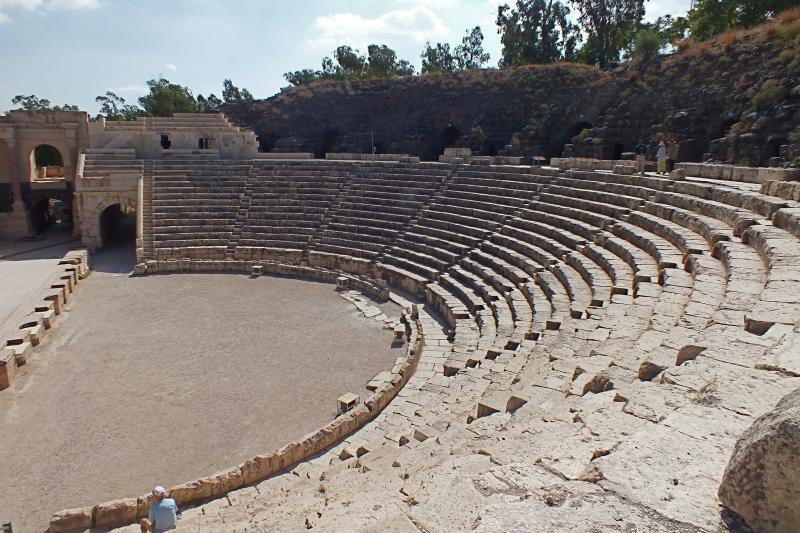
•  A three-tiered theatre for dramatic performances, seating 7000 people.

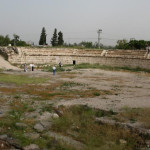
•  An amphitheatre holding 6000, where gladiatorial contests entertained soldiers of the Sixth Legion which was based here.

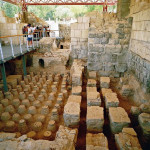
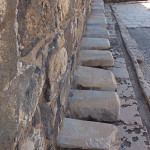
•  A huge bath and gym complex with swimming pools and halls heated by hot air from furnaces. Its public toilets had channels underneath with running water.
Beit She'an

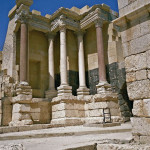
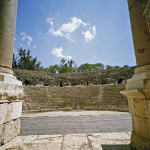
Remains of Roman theatre at Beit She’an, which seated 7000 people (Seetheholyland.net)

•  A Roman basilica that served as a courthouse and administrative centre.

•  A nymphaeum, an elaborate monumental building with a decorative fountain.

•  A mosaic of Tyche, the Roman goddess of good fortune, wearing the walled city of Scythopolis as a crown and holding the horn of plenty in her hand.


Circular church replaced temples

On the summit of the tell, a steep climb obtains a sweeping panorama of the ruins below, the Jordan and Harod valleys and Mount Gilboa.
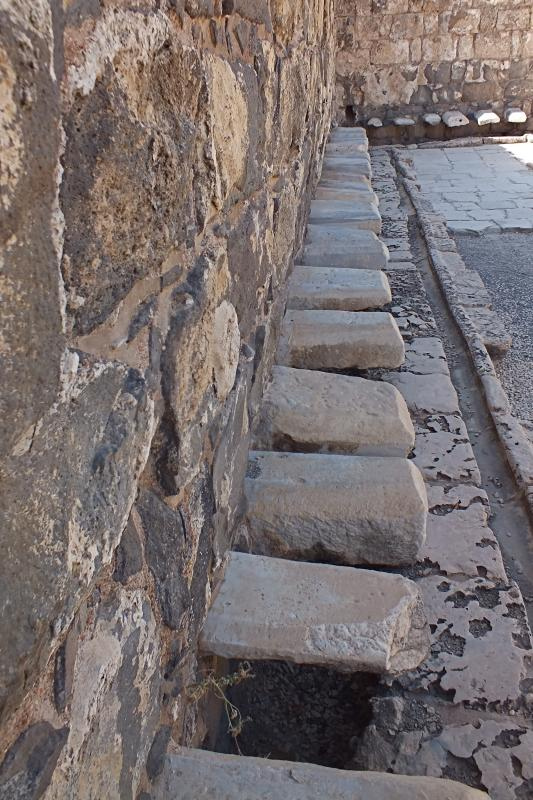
Beit She'an

Very public toilets at Beit She’an (Seetheholyland.net)

Here a great circular church, with a cloister around an open court, replaced the earlier Canaanite and Philistine temples during the Byzantine era.

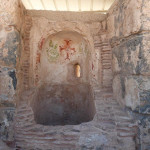
Among the other churches in the lower city, one was dedicated to Procopius, a local martyr. Its location is unknown, but remains of other church buildings have been found and a striking red cross can be seen on the plaster wall of a niche in a bathhouse, probably used as a baptistry.

The modern town of Beit She’an has encroached on some of the ancient ruins. One of these is the Monastery of the Lady Mary, founded in 567 and named after a donor, perhaps the wife of a Byzantine official.

This complex — not usually open to the public — contains a series of rooms with beautiful mosaic floors. The mosaic in the central hall of the chapel depicts animals such as lions, camels, boars and ostriches around a zodiac illustrating the months of the year.

Interestingly, the remains of Jewish and Samaritan synagogues have been found along with churches from the time when Scythopolis was a Christian city. And after a Muslim army conquered the city in 634 and renamed the city Baysan, Christians and Muslims lived together until the disastrous earthquake of 749.
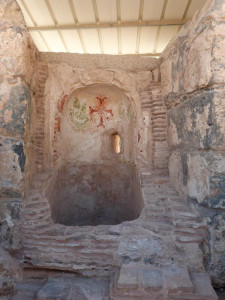
Beit She'an

Cross on wall identifies a probable baptistry at Beit She’an (Seetheholyland.net)

In Scripture

Canaanites of Beit She’an resist Manasseh: Judges 1:27

Philistines fasten Saul’s body to Beit She’an wall: 1 Samuel 31:10


Administered by: Israel National Parks Authority

Tel.: +972-4-658-7189

Open: Apr-Sept 8am-5pm (except Friday 8am-4pm); Oct-Mar 8am-4pm (except Saturday 8am-5pm). Last entry to site one hour before closing time.


References

Blaiklock, E. M.: Eight Days in Israel (Ark Publishing, 1980)
Bourbon, Fabio, and Lavagno, Enrico: The Holy Land Archaeological Guide to Israel, Sinai and Jordan (White Star, 2009)
Charlesworth, James H.: The Millennium Guide for Pilgrims to the Holy Land (BIBAL Press, 2000)
Kochav, Sarah: Israel: A Journey Through the Art and History of the Holy Land (Steimatzky, 2008)
Murphy-O’Connor, Jerome: The Holy Land: An Oxford Archaeological Guide from Earliest Times to 1700 (Oxford University Press, 2005)
Prag, Kay: Israel & the Palestinian Territories: Blue Guide (A. & C. Black, 2002)
Stiles, Wayne: “Sights and Insights: Where happy explorers go to dig”, Jerusalem Post, May 30, 2011
Vamosh, Miriam Feinberg: Beit She’an: Capital of the Decapolis (Israel Nature and National Parks Protection Authority, 1996)
 

External links

Beit She’an (Jewish Virtual Library)
Beit Shean, Archaeology in Israel (The Jewish Magazine)
« Newer PostsOlder Posts »

Kidron Valley

Jerusalem

The Kidron Valley, a place of olive groves, ancient tombs and misnamed funerary monuments, divides Jerusalem’s Temple Mount from the Mount of Olives.

Kidron Valley

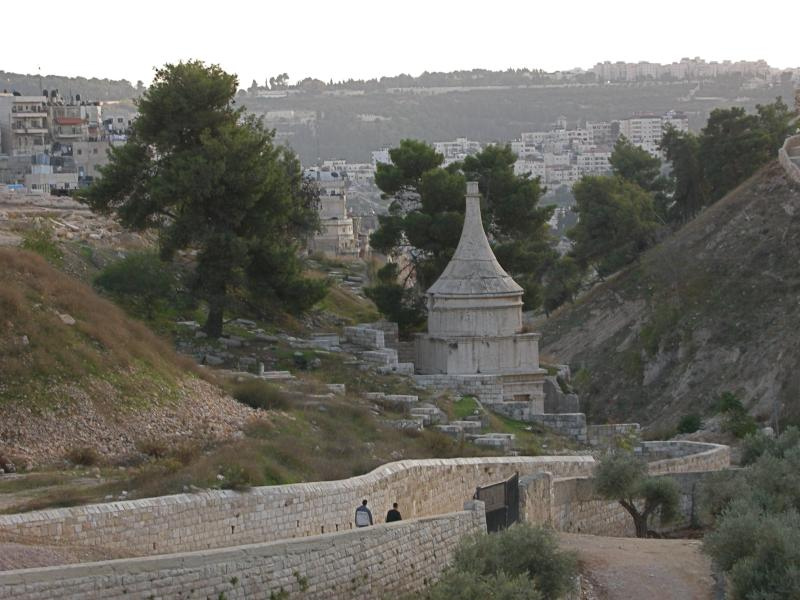
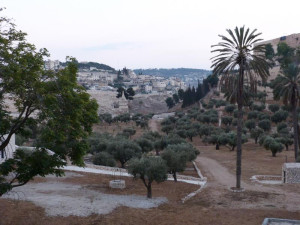
Olive trees in the Kidron Valley, with the Pillar of Absalom in the centre distance (Seetheholyland.net)

Once a deep ravine channelling a seasonal stream, it provided a defensive border to the original City of David — and a route to the wilderness for King David when he fled from his rebellious son Absalom (2 Samuel 15:23).

Jesus often traversed the Kidron on his way to the village of Bethany, his favourite place of rest and refuge.

After the Last Supper, he crossed the valley with his disciples to the garden of Gethsemane. Then, after he was betrayed, he was brought back the same way to the house of the high priest.

Kidron Valley

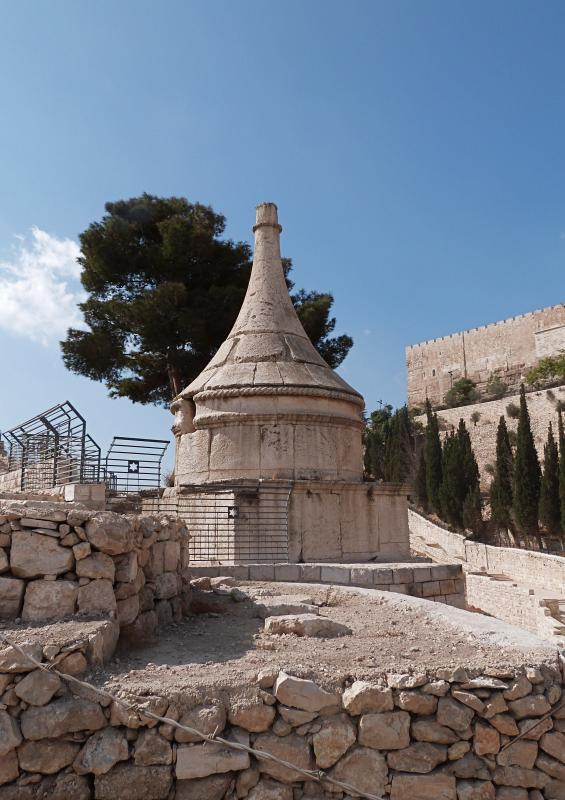
The Pillar of Absalom, with the wall of the Temple Mount on the right (Seetheholyland.net)

By the light of the Passover moon, the whitewashed tombs cut into the valley’s rock-face would have provided a stark reminder to Jesus that on the following day his own body would be laid in a tomb.

Since the 4th century, an identification of the Kidron with the Valley of Jehoshaphat (a name meaning “Yahweh shall judge”) mentioned in the book of Joel (3:2,12) has led to the belief that it will be the place of final judgement.


Valley descends to the Dead Sea

Across the street from the Church of All Nations at Gethsemane, a paved path leads southward to the floor of the Kidron Valley. On the right is the Greek Orthodox Church of St Stephen.

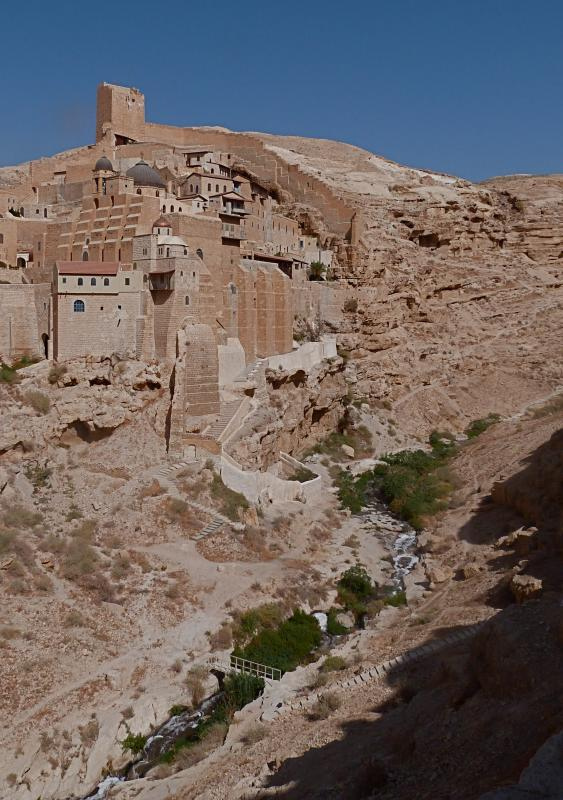
In the northerly direction, the valley continues for 35 kilometres, descending steeply through the Judaean wilderness past Mar Saba monastery to the Dead Sea.

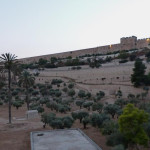
Olive trees give this part of the valley a pastoral character.

Kidron Valley

The path to the Kidron Valley, with the Pillar of Absalom in the centre (Yoav Dothan)

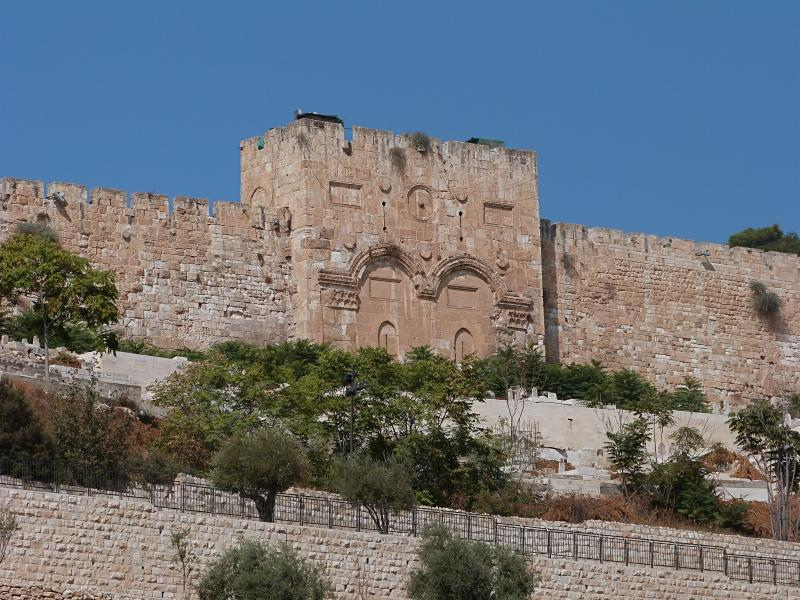
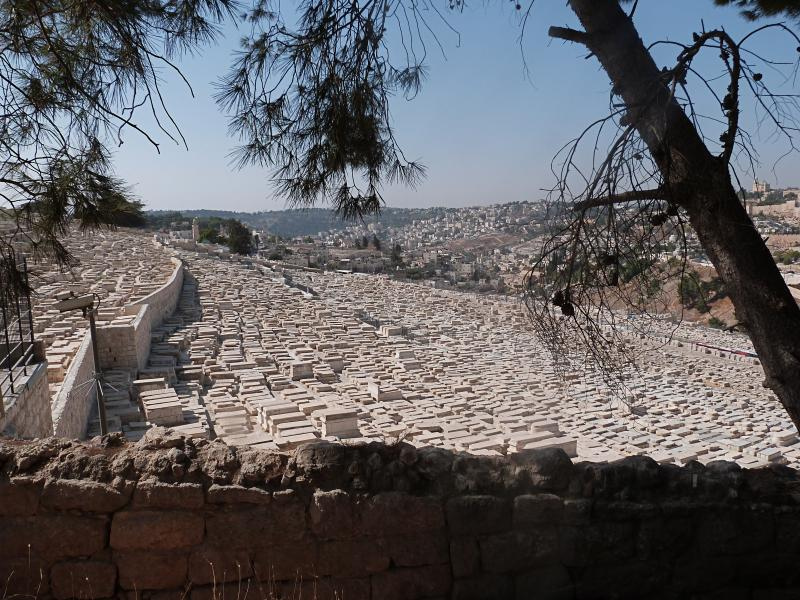
On the right looms the wall of the Temple Mount, with the sealed double portals of the Golden Gate standing out. On the left, the world’s largest Jewish cemetery stretches up the Mount of Olives. Further on, the Arab village of Silwan clings to the cliffside.

The cemetery’s location follows the Jewish belief that the long-awaited Messiah will pass through the Golden Gate to begin the resurrection of the dead.

In reaction to this belief, Muslims established a cemetery in front of the gate to block the Messiah’s path — and this may also be why the Ottoman ruler Suleiman the Magnificent sealed the gate in 1541.

Kidron Valley

The sealed portals of the Golden Gate in the wall of the Temple Mount (Seetheholyland.net)

During the Second Temple period a high, two-tiered bridge spanned the Kidron Valley from the Temple Mount to the Mount of Olives. Across this bridge on the Day of Atonement each year a goat symbolically bearing the sins of the people — the original scapegoat — was led into the wilderness.

The Golden Gate may have been where Jesus entered the city on Palm Sunday. It was probably also the Beautiful Gate of Acts 3:1-10, where the apostle Peter healed a lame beggar.


Monuments face the Temple Mount

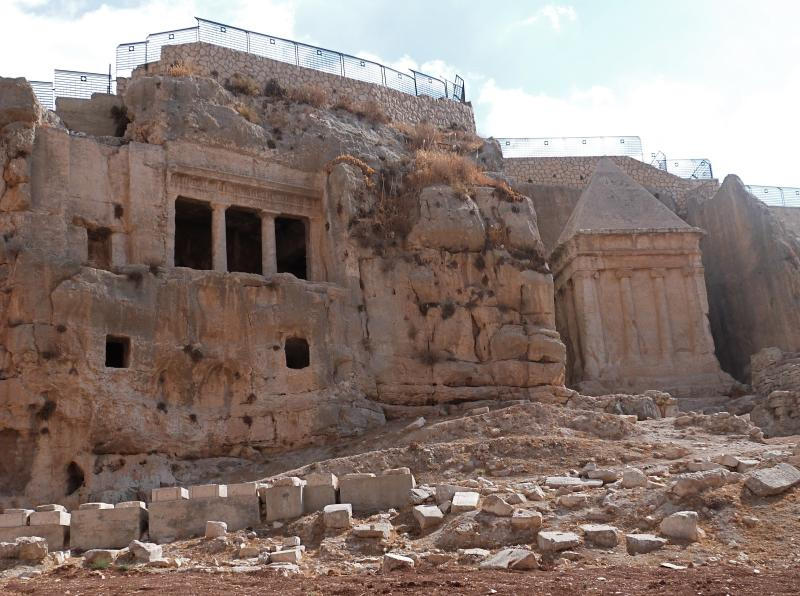
Proceeding along the Kidron Valley, three monuments stand out on the left, each facing towards the Temple Mount. All have been attributed to biblical figures, but they are really tombs of prominent citizens of Jerusalem in the Second Temple period.

Kidron Valley

The Jewish cemetery on the Mount of Olives (Seetheholyland.net)

In order, they are:

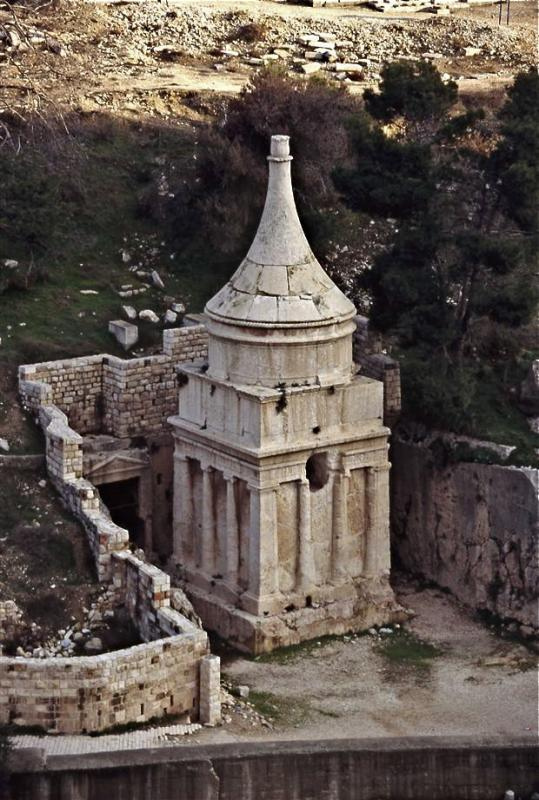
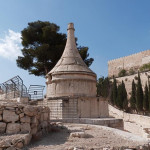
•  Pillar of Absalom. The tallest (22 metres) and most ornate of the Kidron Valley monuments, it is hewn out of the limestone rock face, with an elegant pinnacle shaped like a Moroccan tagine cooking pot.

The traditional association with Absalom — who died centuries before it was built — is because this rebellious son of King David erected for himself a memorial pillar in the King’s Valley (2 Samuel 18:18).

In 2003 a Byzantine Greek inscription was found on the south side, naming it the tomb of Zechariah the father of John the Baptist, but the authenticity of this identification is uncertain.

Behind the Pillar of Absalom is a 1st-century burial cave called the Tomb of Jehoshaphat, the fourth king of Judah (who died centuries before it existed). It is notable for the carved triangular pediment above its entrance.

Kidron Valley

The Pillar of Absalom in the Kidron Valley (© Israel Ministry of Tourism)

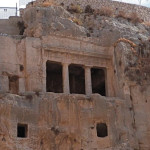
•  Tomb of the Sons of Hezir. About 50 metres south of the Pillar of Absalom, this has two Greek Doric columns supporting a frieze with an inscription identifying it as belonging to the priestly family of the Bene Hezir.

A mistaken tradition says it is the tomb of James the Just, the first bishop of Jerusalem, who was thrown off the highest corner of the Temple Mount, then stoned and clubbed to death. In earlier times a chapel in the area honoured this early martyr.

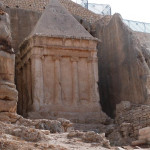
•  Tomb of Zechariah. A few metres further south, this freestanding cube carved out of bedrock is decorated on each side with Ionic columns and is topped by a sharply pointed pyramid. Again, the identification is unreliable.

In the time of Jesus, these monuments would have been whitewashed. Perhaps they inspired his outburst: “Woe to you, scribes and Pharisees, hypocrites! For you are like whitewashed tombs, which on the outside look beautiful, but inside they are full of the bones of the dead and of all kinds of filth.” (Matthew 23:27)

Kidron stream carries sewage

Kidron Valley

The Tomb of the Sons of Hezir (left) and the Tomb of Zechariah (Seetheholyland.net)

In modern times the Kidron has become one of the most polluted valleys in Israel. The Kidron stream still flows (except in summer), but it now carries most of Jerusalem’s sewage. Fortunately, the stretch near the city is piped underground.

Rubbish dumps also abound in the valley, continuing a practice referred to several times in the Bible. As long ago as seven centuries before Jesus, when King Hezekiah cleansed the Temple, his priests “brought out all the unclean things that they found in the temple of the Lord . . . and the Levites took them and carried them out to the Wadi Kidron” (2 Chronicles 29:16).


In Scripture

Kidron Valley

Polluted Kidron stream flowing past Mar Saba monastery in the Judaean desert (Seetheholyland.net)

King David flees from Absalom: 2 Samuel 15:23

Absalom builds his own monument: 2 Samuel 18:18

Judgement in the Valley of Jehoshaphat: Joel 3:2, 12

Jesus enters the city on Palm Sunday: Matthew 21:1-11

Jesus crosses the Kidron Valley: John 18: 1

Peter heals a lame man at the Beautiful Gate: Acts 3:1-10


References

Bourbon, Fabio, and Lavagno, Enrico: The Holy Land Archaeological Guide to Israel, Sinai and Jordan (White Star, 2009)
Bourbon, Fabio: Yesterday and Today: The Holy Land: Lithographs and Diaries by David Roberts, R.A. (Swan Hill, 1997)
Charlesworth, James H.: The Millennium Guide for Pilgrims to the Holy Land (BIBAL Press, 2000)
Gonen, Rivka: Biblical Holy Places: An illustrated guide (Collier Macmillan, 1987)
Mackowski, Richard M.: Jerusalem: City of Jesus (William B. Eerdmans, 1980)
Murphy-O’Connor, Jerome: Keys to Jerusalem (Oxford University Press, 2012)
Murphy-O’Connor, Jerome: The Holy Land: An Oxford Archaeological Guide from Earliest Times to 1700 (Oxford University Press, 2005)
Prag, Kay: Jerusalem: Blue Guide (A. & C. Black, 1989)
Walker, Peter: In the Steps of Jesus (Zondervan, 2006)
Wareham, Norman, and Gill, Jill: Every Pilgrim’s Guide to the Holy Land (Canterbury Press, 1996)
External links

Tomb of Avshalom (BibleWalks)
Zechariah Tomb (BibleWalks)
Bnei-Hezir tombs (BibleWalks)
« Newer PostsOlder Posts »

City of David

Jerusalem


The original inhabitants of Jerusalem lived not on the site of today’s Old City, but on a narrow ridge descending south from the present Temple Mount.

City of David

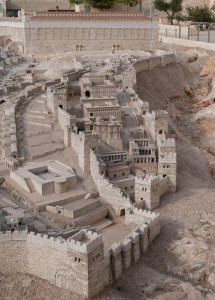
City of David in Model of Ancient Jerusalem at Israel Museum, with Pool of Siloam at left (Seetheholyland.net)

This is where King David captured the fortress of a Canaanite tribe, the Jebusites, 1000 years before Christ. On this slender spur — about 5 hectares (12 acres) in area — David established his capital and pitched a tent to house the Ark of the Covenant.

The site possessed the natural defences of the Hinnom valley to the south, the Kidron Valley to the east, and the Tyropoeon Valley (now largely filled in by the debris of centuries) to the west. And it had fresh water from the Gihon Spring gushing at its foot.

Besides David and his son Solomon, this would have been the stamping ground of kings Hezekiah and Josiah and the prophets Isaiah and Jeremiah.

Standing on the observation platform of the City of David archaeological park, it is easy to see how David could have looked down from the roof of his palace and spied the beautiful Bathsheba bathing (2 Samuel 11: 2).

Excavations are intense and controversial

Today the area is pitted with archaeological digs as intensive efforts continue to uncover evidence of David’s city. While there are claims that parts of David’s palace have been uncovered, archaeologists are generally unconvinced (and David’s tomb remains elusive).

City of David

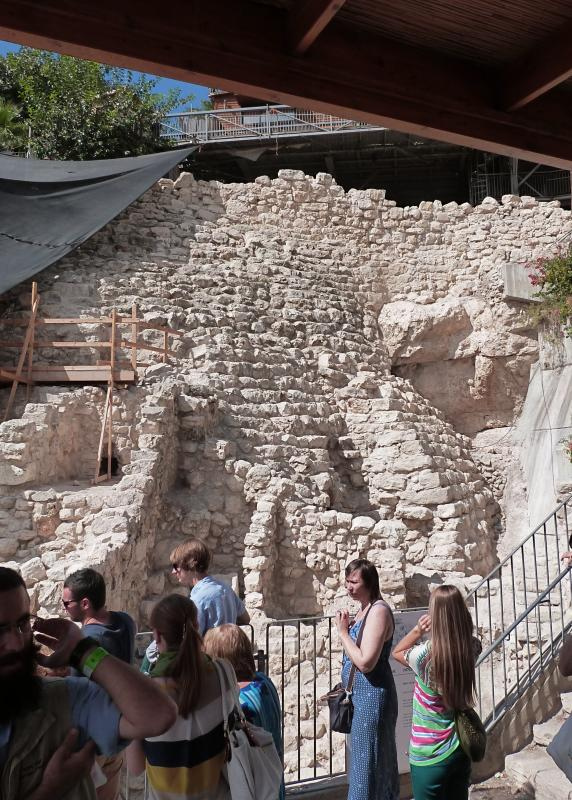
Stepped-stone structure in City of David (Seetheholyland.net)

The excavations have also attracted controversy. Though the City of David is a national park, it is run by a private Jewish settler organisation, the Elad Foundation, which also funds its archaeological work. Tensions have arisen as excavations and park facilities spread down the slope of the Kidron Valley and into properties of the predominantly Arab village of Silwan.

At the summit of the excavated area is a massive stepped-stone structure. Dating from before the 10th century BC, it is believed to have served as a retaining wall for David’s palace or the Canaanite fortress that preceded it.

Later, when Solomon had built the first Temple on Mount Moriah (now the Temple Mount), stately homes for Jerusalem’s elite and royal functionaries were built on the stepped-stone structure. Their opulent character is indicated by artifacts including cosmetics and remains of furniture made of wood imported from Syria.

City of David

Stone toilet in house at City of David (Seetheholyland.net)

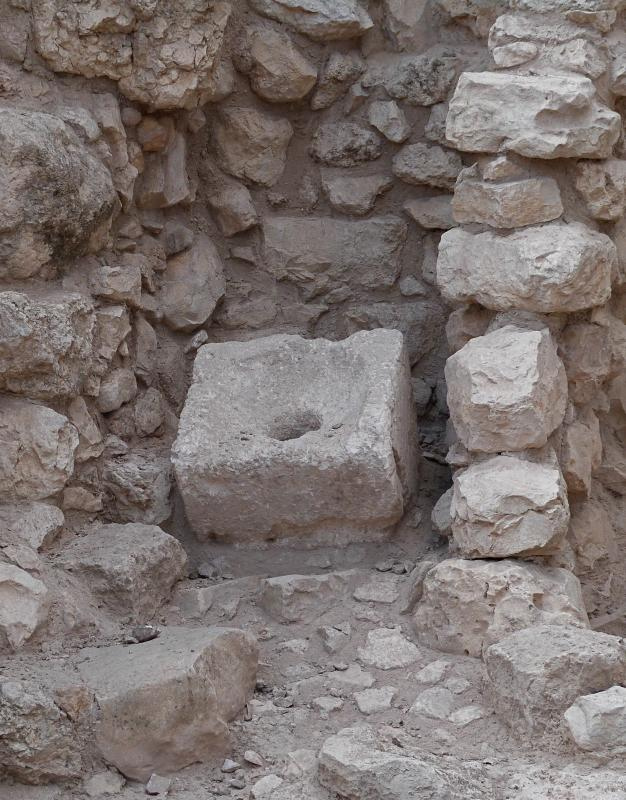
One four-room building immediately below the stepped-stone structure, called the House of Ahi’el (because the owner’s name was found on a pottery fragment), had an external stone staircase leading to a second storey. In one room a limestone toilet seat was embedded in the plaster floor, with a cesspit beneath it.


Clay seals bear names from the Bible

There was also an official archive in old Jerusalem. Its papyrus documents went up in flames with the rest of the royal quarter when the Babylonians destroyed the city in 586 BC, but dozens of clay seals survived.

Some of the seals bear names known from the Bible, such as Gemariah son of Shaphan, a high-ranking official in the court of King Jehoiakim (Jeremiah 36: 9-12), and Azariah son of Hilkiah, a priest who served in the Temple at the time of the exile to Babylon (1 Chronicles 9:10).

City of David

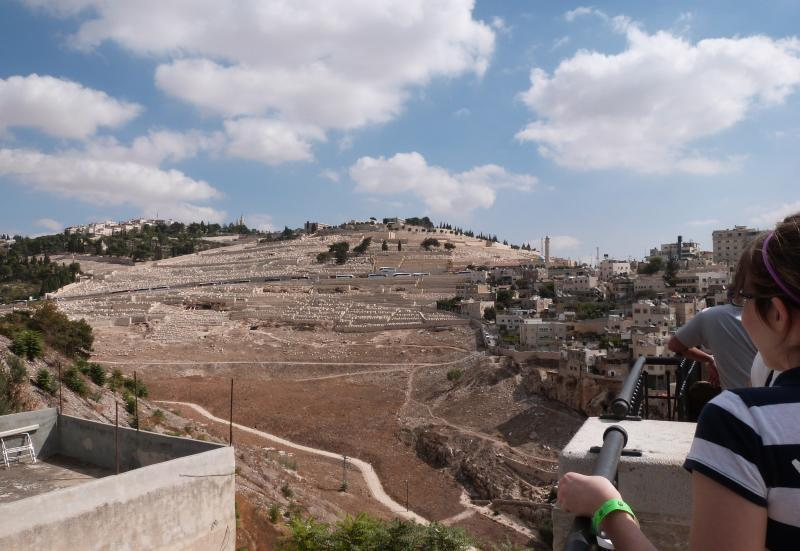
Looking down from the City of David observation platform, with the Mount of Olives Jewish cemetery across the Kidron Valley (Seetheholyland.net)

Another clay seal found in the City of David contains the name of Bethlehem — the first mention of this ancient city outside of the Bible.

At the base of the Temple Mount are the remains of a Byzantine monastery, with adjacent winery and hospice for pilgrims. This is probably the “monastery of virgins” described by the 6th-century pilgrim Theodosius.


Water source was fortified

The importance of water to Jerusalem’s early residents is evident from the elaborate tunnels and fortifications they established to access, manage and defend it.

City of David

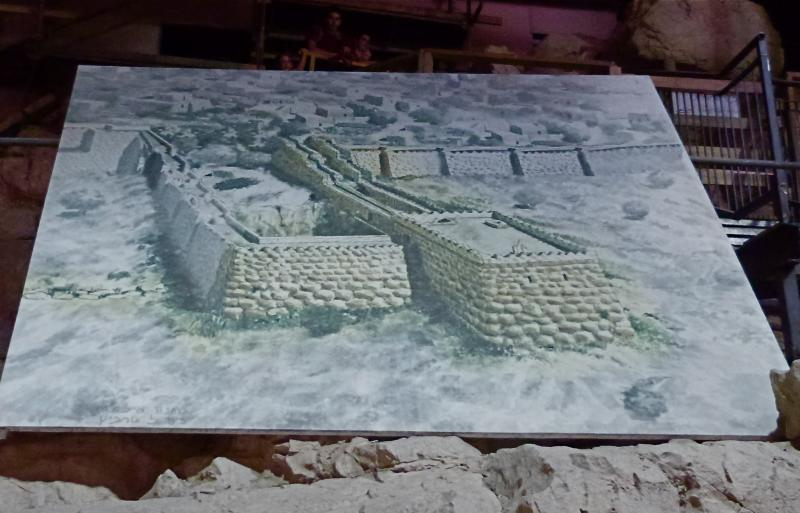
Artist’s impression of Jebusite fortifications around Gihon Spring (Seetheholyland.net)

Crucial to the city’s survival was the Gihon Spring — shown on some old maps as the Virgin’s Spring, a name that may owe its origin to an earlier Jewish name, the Well of Miriam (the sister of Moses). Since Miriam is Hebrew for Mary, this could explain an unlikely Christian legend that the Virgin Mary washed Jesus’ swaddling clothes here.

As far back as 1800 BC, the Jebusites fortified the Gihon with massive guard towers. They cut a system of tunnels from within their city walls to a rock-cut pool, also fortified, that received water through a feeder channel from the spring.

Visitors can now traverse some of this subterranean water system, known as Warren’s Shaft (after the British engineer who discovered it in 1867).

City of David

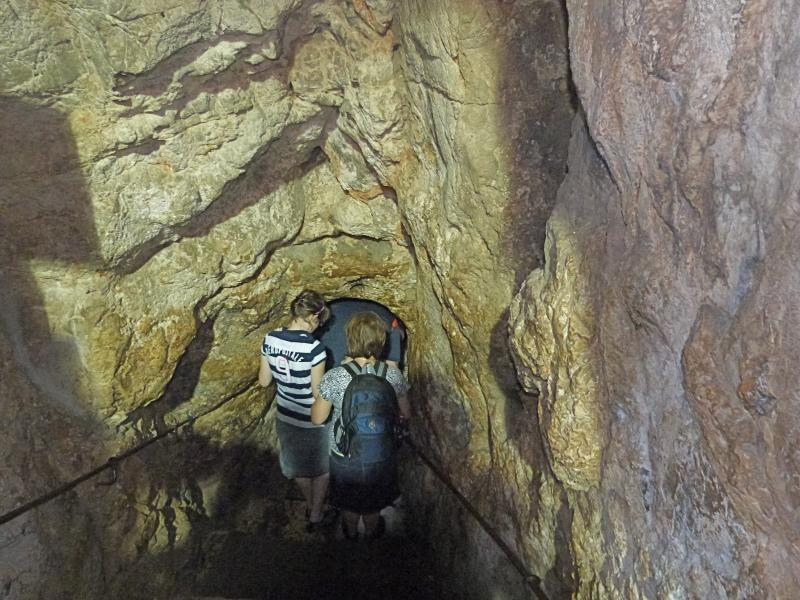
Descent into Hezekiah’s Tunnel (Seetheholyland.net)

They can also walk from the Gihon Spring through the 530-metre Hezekiah’s Tunnel. King Hezekiah’s workmen dug this in the 7th century BC to bring water to the Pool of Siloam inside his city, in preparation for an impending siege by the Assyrians.

If this dark and winding tunnel, with water thigh-high in places, is too daunting, an adjacent Canaanite tunnel provides a well-lit and dry-shod alternative.


Herodian street was used by Jewish pilgrims

From the Pool of Siloam, visitors can walk on a section of the Herodian street — now also below ground level — that hundreds of thousands of Jews used three times a year to ascend to the Temple during pilgrim feasts. Jesus almost certainly walked this way.

City of David

Excavated section of Herodian street that led from Pool of Siloam to Temple Mount (Seetheholyland.net)

Beneath the level of this street is another tunnel — the drain that took stormwater and sewage from the Old City to the Kidron Valley in Roman times.

Now cleaned out, this tunnel enables visitors to walk 700 metres uphill, along the edge of the Tyropoeon Valley and under the Old City wall, to an exit near the Western Wall.

Among the items discovered in this tunnel were a rare gold bell, perhaps once sewn to a high priest’s garment, and an ancient silver shekel, customarily used to pay the half-shekel head tax to the Temple.

A more sombre find was a Roman sword, with its leather sheath partly intact.

As the Romans overtook Jerusalem in AD 70 during the First Jewish-Roman War, with the Temple in flames, the last of the Jewish rebels hid in the sewers. “Those in the sewers were ferreted out, the ground was torn up, and all who were trapped were killed,” reported the historian Flavius Josephus.


City of David

Drainage channel that took stormwater and sewage from Old City (Seetheholyland.net)

In Scripture:

David captures Jerusalem: 2 Samuel 5:6-7

David sees Bathsheba bathing: 2 Samuel 11:2

Hezekiah brings water into the city: 2 Kings 20:20


Administered by: Elad Foundation

Open: Sun-Thur, winter 8am-5pm; summer 8am-7pm; Fri, winter 8am-2pm, summer 8am-4pm. Closed on Saturdays and holidays; early closing on holiday eves.


References

Bar-Am, Aviva: “City of David — Gone but not forgotten”, Jerusalem Post, January 25, 2010
Bourbon, Fabio, and Lavagno, Enrico: The Holy Land Archaeological Guide to Israel, Sinai and Jordan (White Star, 2009)
Charlesworth, James H.: The Millennium Guide for Pilgrims to the Holy Land (BIBAL Press, 2000)
Finkelstein, Israel: “In the Eye of Jerusalem’s Archaeological Storm”, Forward, May 6, 2011
Hasson, Nir: “Jerusalem’s time tunnels”, Haaretz, April 24, 2011
Hasson, Nir: “Digging completed on tunnel under Old City walls in East Jerusalem”, Haaretz, January 25, 2011
Kochav, Sarah: Israel: A Journey Through the Art and History of the Holy Land (Steimatzky, 2008)
Mazar, Eilat: “Temple Mount Excavations Unearth the Monastery of the Virgins”, Biblical Archaeology Review, May/June 2004
Stiles, Wayne: “Sights and Insights: The oldest part of J’lem”, Jerusalem Post, February 27, 2012
West, Jane Cahill: “Jerusalem’s Stepped-Stone Structure”, in Ten Top Archaeological Discoveries (Biblical Archaeology Society, 2011)
Yonah, Bob: “Archaeologists find first proof of ancient Bethlehem”, Jerusalem Post, May 23, 2012
Yudin, Joe: “Off the Beaten Track: City of David”, Jerusalem Post, March 29, 2012


External links
City of David (Ir David Foundation)
The City of David (The Jewish Magazine)
Jerusalem — the City of David (Jewish Virtual Library)
City of David (Israel Ministry of Foreign Affairs)
Walking through the Herodian sewer in Jerusalem (Leen Ritmeyer)
« Newer PostsOlder Posts »

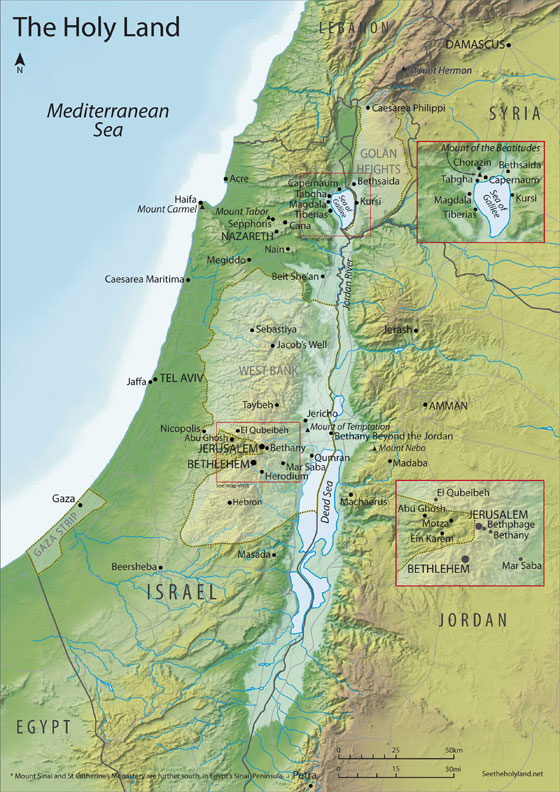
Map of the Holy Land

Filed under: Uncategorized — Tags: , , , , — 2:40 pm

Click here to load a full-resolution version of the map as a PDF, ready for A4 printing (1.2MB).

« Newer PostsOlder Posts »

Tiberias

Israel

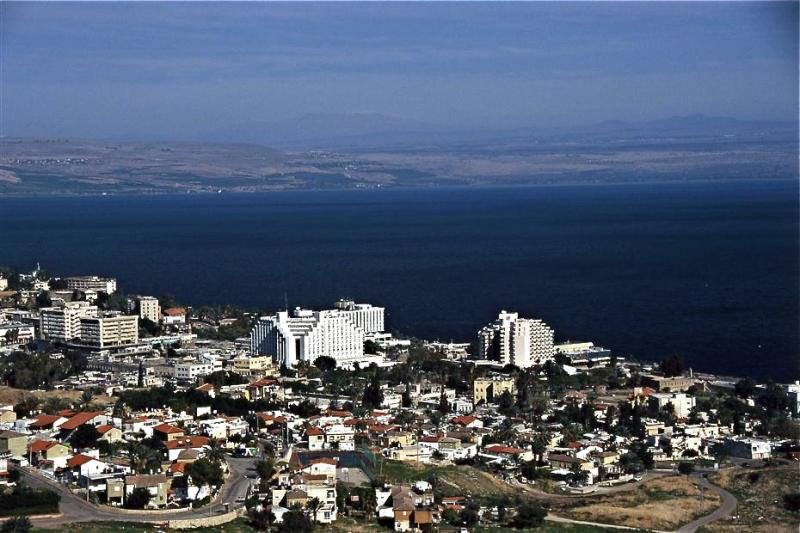
The thriving resort of Tiberias, with its balmy climate, lakeside hotels and fish restaurants, is a popular base for Christian pilgrims exploring the Galilee that Jesus knew.

Tiberias

Modern Tiberias (© Israel Ministry of Tourism)

Its location on the western shore of the Sea of Galilee (also called the Sea of Tiberias in John’s Gospel) is within easy reach of the Mount of Beatitudes, Capernaum, Tabgha, Bethsaida, Chorazin, Magdala, Kursi, Cana, Mount Tabor, Nain and Nazareth.

Tiberias was a new city when Jesus began his public ministry. Herod Antipas, a son of Herod the Great, founded it around AD 20 to replace Sepphoris as his capital.

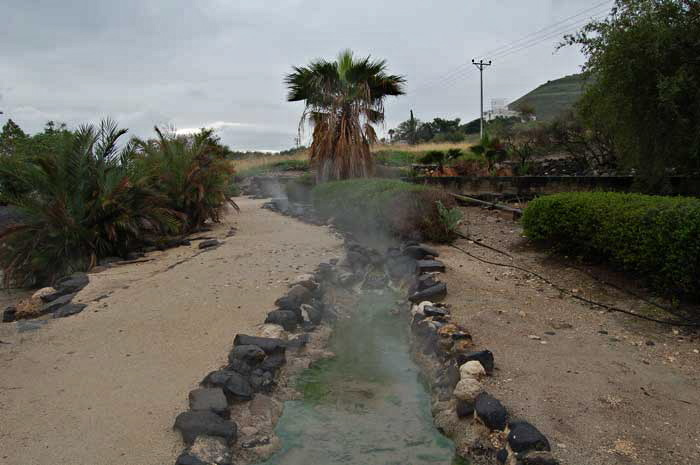
Antipas — who would later behead Jesus’ cousin John the Baptist — chose a site just south of the present resort, taking advantage of 17 hot springs renowned since ancient times for their healing qualities. He named his new city after his patron, the emperor Tiberius Caesar.

Tiberias

Hot springs at Tiberias (David Q. Hall)

Because the site lay over ancient burial grounds, observant Jews refused to incur ritual impurity by living there. Antipas had to resort to compulsion and financial inducements to populate his city.

Though Jesus spent much of his ministry on and around the Sea of Tiberias, its inappropriate siting may explain why there is no record that he ever visited Tiberias.


Powerhouse of Jewish scholarship

Ritual purification of the city was carried out in the middle of the second century AD. The timing was opportune. The Second Jewish Revolt had failed, and the Romans had responded by banning Jews from Jerusalem.

Jews flocked to Tiberias, which became the major centre of Jewish culture and learning, with 13 synagogues. Even the Sanhedrin (the supreme court) moved from Sepphoris. “Preachers, poets, scholars and rabbis abounded,” wrote historian G. S. P. Freeman-Grenville.

Over the following centuries, it was this powerhouse of Jewish scholarship that compiled almost all of the Jerusalem Talmud — one of the two central texts of Jewish religious teaching and commentary that had previously been transmitted orally — and the fixed Hebrew text of the Jewish Bible.

Tiberias

Tomb of Maimonides (Bukvoed)

A Christian community was established in the 4th century, when Tiberias became a major destination for pilgrims visiting the Christian sites of the Galilee region.

In 1033 an earthquake destroyed Tiberias. The Crusaders rebuilt it about two kilometres further north, where the present city stands.


Rabbi’s body was carried from Egypt

Tiberias

St Peter in his boat, at St Peter’s Church, Tiberias (© Custodia Terrae Sanctae)

Thanks to successive conquests, modern Tiberias has fewer monuments or ancient ruins than other localities in the Holy Land.

Historic sites include the graves of several distinguished rabbis. These include the celebrated philosopher Maimonides, leader of the Jewish community in Cairo in the 12th century. In accordance with his will, his body was carried overland on the route believed to have been taken by Moses and the Israelites to the Promised Land, for burial in Tiberias (his grave is on Ben Zakkai Street).

One of the few remaining Crusader buildings is the Church of St Peter, hidden down an alley from the lakeside promenade. Erected around 1100, this Catholic church was a mosque, a caravanserai and a stable for animals before being rebuilt in 1870 by the Franciscans.

Remains of an older church, from the 6th century, have been discovered in a commanding position on Mount Berenice, west of the city. It is called the Anchor Church, because a huge stone with a hole in its centre was found under the base of the altar.


Coins found with likeness of Jesus

South of the modern city, where steam from hot springs rises above the ground, are a national park and an archaeological park.

The highlight of the national park is a 4th-century synagogue with a spectacular mosaic floor. It was discovered in 1921 during the first major archaeological dig led by Zionist Jews in Israel.

Tiberias

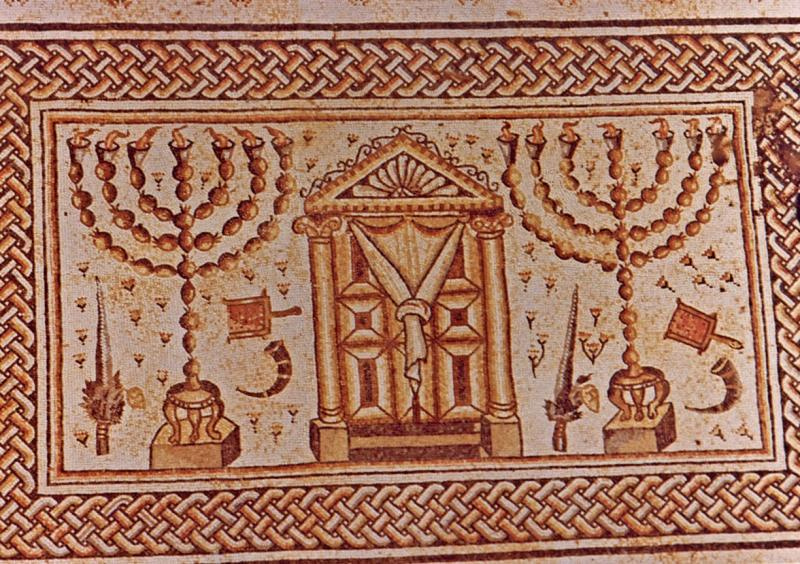
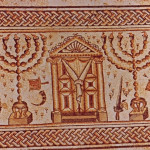
Ark of the Torah flanked by menorah, in synagogue mosaic at Tiberias (© Israel Ministry of Tourism)

In a curious mix of Jewish and pagan symbols, the Ark of the Torah is flanked by a pair of menorah, but immediately below is a Zodiac circle revolving around the figure of the pagan sun god Helios riding his celestial chariot.

The archaeological park contains the remains of the old city of Tiberias.

Excavations have uncovered part of the cardo (main street), a bathhouse, an unidentified colonnaded building, a reservoir, a tower and the south gate complex.

Tiberias

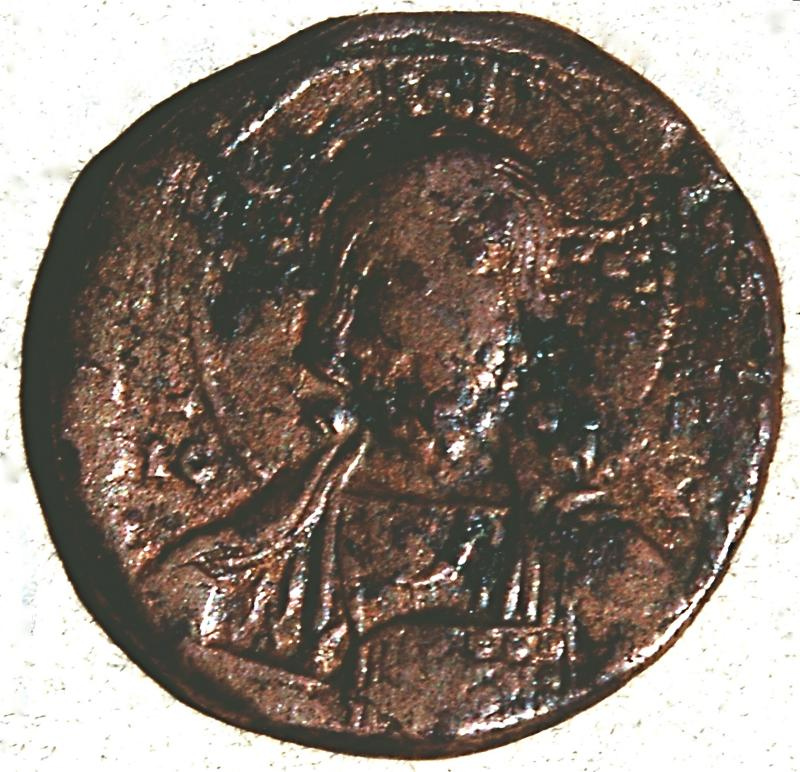
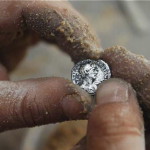
Bronze coin with likeness of Jesus discovered at Tiberias

A treasure trove of bronze coins was discovered in 1998, hidden in pottery jars under the floor of a building. They included 58 bearing the likeness of Jesus, with Greek inscriptions such as “Jesus the Messiah, the King of Kings”, minted in Constantinople in the 11th century.


Hammat Tiberias National Park

Tel.: 972-4-6725287

Open: Apr-Sep 8am-5pm; Oct-Mar 8am-4pm (last entry one hour before closing time)


St Peter’s Church

Tel.: 972-4-6721059

Open: 8am-12.30pm, 2.30-5.30pm


References

Bourbon, Fabio, and Lavagno, Enrico: The Holy Land Archaeological Guide to Israel, Sinai and Jordan (White Star, 2009)
Charlesworth, James H.: The Millennium Guide for Pilgrims to the Holy Land (BIBAL Press, 2000)
Dyer, Charles H., and Hatteberg, Gregory A.: The New Christian Traveler’s Guide to the Holy Land (Moody, 2006)
Rainey, Anson F., and Notley, R. Steven: The Sacred Bridge: Carta’s Atlas of the Biblical World (Carta, 2006)
Freeman-Grenville, G. S. P.: The Holy Land: A Pilgrim’s Guide to Israel, Jordan and the Sinai (Continuum Publishing, 1996)
Gonen, Rivka: Biblical Holy Places: An illustrated guide (Collier Macmillan, 1987)
Heinsch, James: “Tiberias Church of St Peter”, Holy Land, Autumn 1999.
Kochav, Sarah: Israel: A Journey Through the Art and History of the Holy Land (Steimatzky, 2008)
Murphy-O’Connor, Jerome: The Holy Land: An Oxford Archaeological Guide from Earliest Times to 1700 (Oxford University Press, 2005)
Prag, Kay: Israel & the Palestinian Territories: Blue Guide (A. & C. Black, 2002)
Shahin, Mariam, and Azar, George: Palestine: A guide (Chastleton Travel, 2005)


External links

Hammat Tiberias (BibleWalks)
Tiberias (Custodia Terrae Sanctae)
Tiberias — The Anchor Church (Israel Ministry of Foreign Affairs)
« Newer PostsOlder Posts »

Church of St Mark

Jerusalem


The Church of St Mark is home to one of Jerusalem’s smallest and oldest Christian communities, but it is the setting for a remarkable set of traditions — including the claim to be the site of the Upper Room of the Last Supper.

Church of St Mark

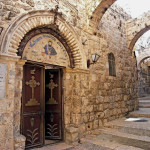
Entrance to St Mark’s Church (Kudumomo)

This hard-to-find Syriac Orthodox church is in the north-eastern corner of the Old City’s Armenian Quarter, on Ararat Street which branches off St Mark’s Street.

Its worship employs the oldest surviving liturgy in Christianity, based on the rite of the early Christian Church of Jerusalem. The language used is Syriac, a dialect of the Aramaic that Jesus spoke.

St Mark (also known as John Mark) came from Cyrene in Libya. He became a travelling companion and interpreter for St Peter, and used Peter’s sermons when he composed the earliest of the four Gospels.

Church of St Mark

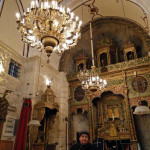
Interior of St Mark’s Church (© Fili Feldman)

Mark’s mother, Mary of Jerusalem, had a house where members of the early Church met. It was to this house that Peter went when an angel released him from prison (Acts 12:12-17).

The Syriac Orthodox believe the Church of St Mark is on the site of that house — a belief supported by a 6th-century inscription discovered there in 1940.


Variety of events claimed

By associating the Church of St Mark with the Upper Room, the Syriac Orthodox believe it was the location of these events:

  • The Last Supper (Mark 14:12-25)
  • The election of Matthias as an apostle to replace Judas Iscariot (Acts 1:21-26)
  • Post-Resurrection appearances of Jesus to the disciples, including the one in which he showed doubting Thomas the wounds in his hands and side (John 20:24-28).
  • The coming of the Holy Spirit at Pentecost (Acts 2:1-4)
Church of St Mark

Painting attributed to St Luke (© Fili Feldman)

While there is oral tradition to support these claims, scholars generally accept that the Upper Room was on the site of the Cenacle, near the summit of Mount Zion.

Another Syriac Orthodox tradition holds that the Church of St Mark is at the place where Mary, Jesus’ mother, was baptised. A baptismal font purportedly used can be seen inside the church.

The church also displays a painting on leather of Mary and Jesus. It is said to have been painted by St Luke, but experts date it to the early Byzantine period.


Inscription identifies ‘house of Mary’

Church of St Mark

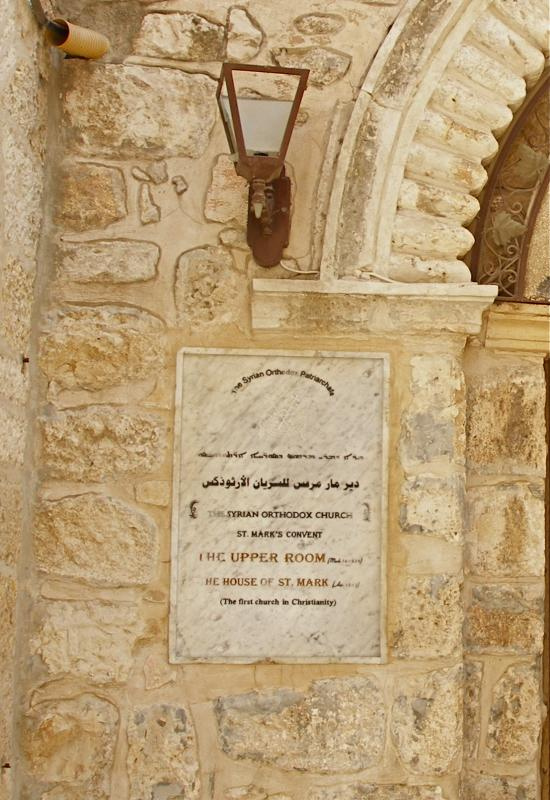
Claim to be “The first church in Christianity” (Seetheholyland.net)

A notice beside the door proclaims the Church of St Mark to be “The first church in Christianity”, in the belief that it is on the site of the original house-church of Jerusalem’s early Christians.

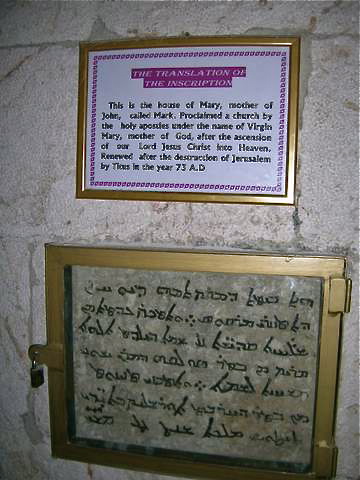
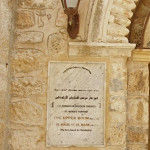
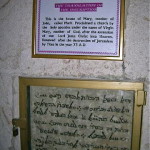
Just inside the entrance, set into a pillar, is an inscribed stone discovered during a restoration in 1940. Its inscription, believed to be from the 6th century, is in ancient Syriac. It says:

“This is the house of Mary, mother of John, called Mark. Proclaimed a church by the holy apostles under the name of Virgin Mary, mother of God, after the ascension of our Lord Jesus Christ into heaven. Renewed after the destruction of Jerusalem by Titus in the year AD 73.”

The interior of the church is dark, but the decoration is ornate. The sanctuary is richly embellished, though often partly hidden by a curtain representing the veil in the Temple.

The present church was built in the 12th century over the ruins of a 4th-century church. Steps lead down to a crypt, believed to have been the lower floor in the house of Mark’s mother.


First native people to adopt Christianity

Church of St Mark

Inscription from 6th century (© Israelseen.com)

The Syriac Orthodox Church claims St Peter as its first patriarch, in Antioch in AD 37. The word “Syriac” is not a geographic indicator, but refers to the use of the Syriac language in worship.

Syriac Christians see themselves as the first people to adopt Christianity as natives of the Holy Land. At the time of Christ, the Roman province of Syria included today’s Syria, Lebanon, most of Palestine, and parts of Jordan and Turkey.

Often called “Jacobites” (after an early bishop), the Syriac Orthodox form one of the Oriental Orthodox churches that became separated from the mainstream of Christianity in the 5th century over a disagreement about the nature of Christ. They are not in communion with either Constantinople or Rome.

Their community in Jerusalem, centred on the Church of St Mark, numbers only about 600.

The Syriac Orthodox also worship in the Chapel of St Joseph of Arimathea and St Nicodemus in the Church of the Holy Sepulchre.


In Scripture:

Church of St Mark

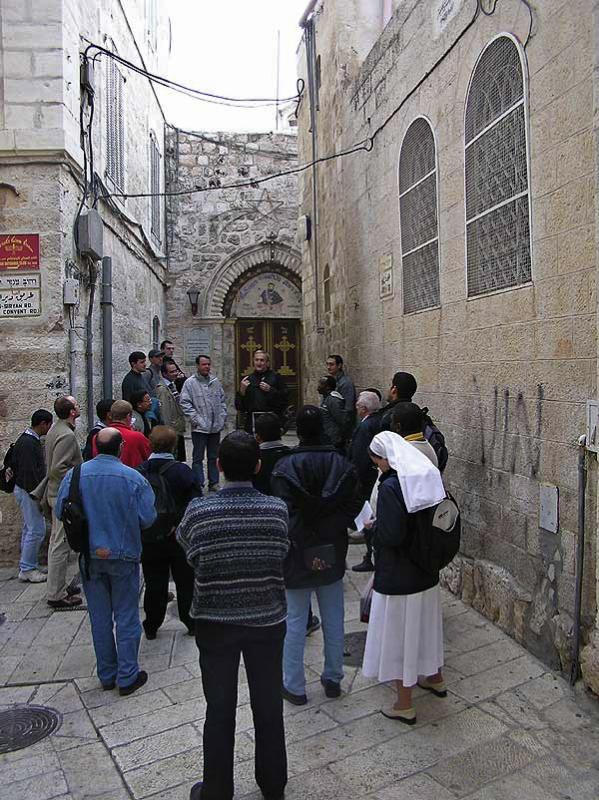
Pilgrims outside Church of St Mark (© Custodia Terrae Sanctae)

The Last Supper: Mark 14:12-25

Matthias is elected to replace Judas Iscariot (Acts 1:21-26)

Jesus shows Thomas the wounds in his hands and side (John 20:24-28).

The coming of the Holy Spirit at Pentecost (Acts 2:1-4)

Peter goes to the house of Mark’s mother: Acts 12:12-17


Administered by: Syriac Orthodox Patriarchal-Vicariate of Jerusalem and Jordan

Tel.:  02 628-3304 or 052 509-0478

Open: Apr-Sep 9am-5pm; Oct-Mar 7am-4pm; Sunday 11am-4pm


References

Bar-Am, Aviva: Beyond the Walls: Churches of Jerusalem (Ahva Press, 1998)
Brownrigg, Ronald: Come, See the Place: A Pilgrim Guide to the Holy Land (Hodder and Stoughton, 1985)
Freeman-Grenville, G. S. P.: The Holy Land: A Pilgrim’s Guide to Israel, Jordan and the Sinai (Continuum Publishing, 1996)
Gonen, Rivka: Biblical Holy Places: An illustrated guide (Collier Macmillan, 1987)
Hilliard, Alison, and Bailey, Betty Jane: Living Stones Pilgrimage: With the Christians of the Holy Land (Cassell, 1999)
Murphy-O’Connor, Jerome: The Holy Land: An Oxford Archaeological Guide from Earliest Times to 1700 (Oxford University Press, 2005)
Prag, Kay: Jerusalem: Blue Guide (A. & C. Black, 1989)
Shahin, Mariam, and Azar, George: Palestine: A guide (Chastleton Travel, 2005)
Wareham, Norman, and Gill, Jill: Every Pilgrim’s Guide to the Holy Land (Canterbury Press, 1996)
 

External links

St Mark’s Monastery (Syriac Orthodox Resources)
Syrian Orthodox Church in Jerusalem (YouTube)


« Newer PostsOlder Posts »

Machaerus

Jordan


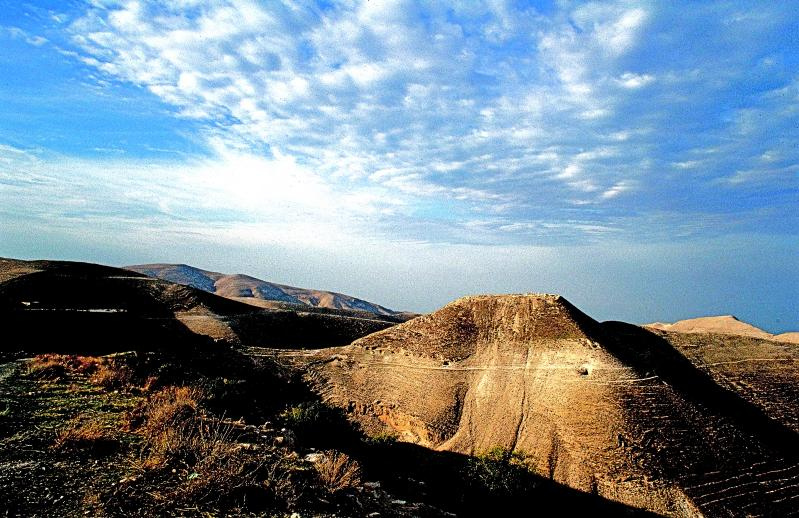
The hilltop fortress of Machaerus, on the eastern side of the Dead Sea and 53 kilometres southwest of Amman, is recorded as the place where John the Baptist was imprisoned and beheaded.

Machaerus

Herod’s stronghold of Machaerus (© Visitjordan)

John preached a baptism of repentance at the Jordan River and foretold the coming of Jesus the Messiah, who was his cousin.

He also criticised Herod Antipas, the governor of Galilee and Perea, for unlawfully marrying his half-brother’s wife, Herodias — thereby earning her enmity.

Herod Antipas imprisoned John, but Mark’s Gospel says he protected him, “knowing that he was a righteous and holy man”, and “liked to listen to him” (6:20).

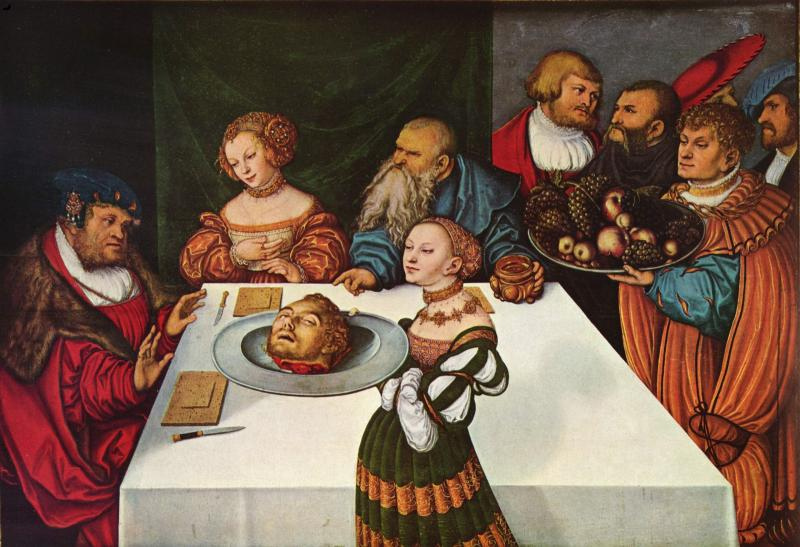
The governor’s birthday banquet for the leaders of Galilee gave Herodias her opportunity to get rid of John. Her daughter, Salome, danced for the gathering and so enthralled Herod that he offered her whatever she wanted — “even half of my kingdom” (6:23).

Machaerus

Salome with the Head of John the Baptist, by Lucas Cranach the Elder, 1531 (The Yorke Project)

Salome, who was probably no older than 14 (so her dance might not have been the erotic performance usually imagined), sought her mother’s advice and then asked for John the Baptist’s head.

Herod, “deeply grieved”, gave the order. John was executed and his head brought in “on a platter”. John’s disciples took away his body for burial. (6:26-29)

According to the historian Josephus, John’s execution took place at Machaerus. An early Christian tradition says his body was buried at Sebastiya in Samaria, which Orthodox Christians believe was also the venue for the banquet.


Herod built ‘breathtaking’ palace

Machaerus (the name means “black fortress”) was one of a series of hilltop strongholds established by Herod the Great — the father of Antipas — along the edge of the Jordan Valley and Dead Sea.

Machaerus

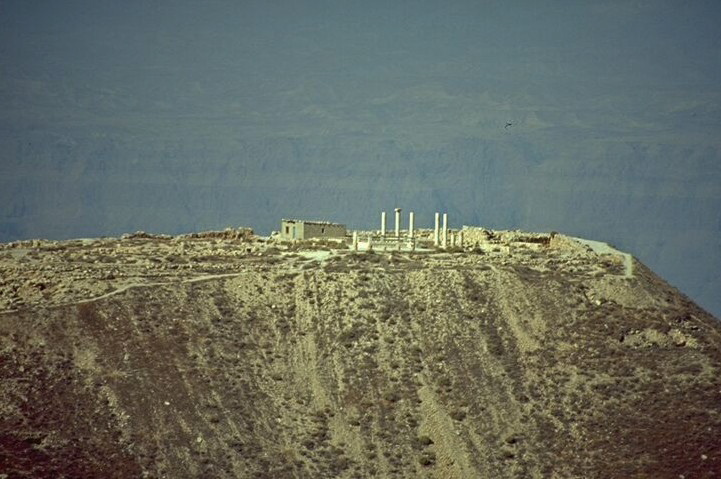
Ruins of Herod’s palace on Machaerus (© Dan Gibson)

Protected on three sides by deep ravines, it afforded seclusion and safety in times of political unrest. Fire signals linked Machaerus to Herod’s other fortresses and to Jerusalem.

On top of the mountain, more than 1100 metres above the Dead Sea, Herod erected a fortress wall with high corner towers. In the centre he built a palace that was “breathtaking in size and beauty”, according to Josephus. Numerous cisterns were dug to collect rainwater.

When Herod the Great died in 4 BC, Machaerus passed to his son Herod Antipas, who ruled Galilee and Perea (an area on the eastern side of the Jordan River) until AD 39.


Jesus appeared before Antipas

Herod Antipas had married Phasaelis, daughter of King Aretas of Nabatea, the kingdom whose capital was Petra. But while visiting Rome in AD 26 he stayed with his half-brother Herod Philip I and fell in love with Philip’s wife Herodias.

When Phasaelis learnt that Antipas intended to divorce her and marry Herodias, she obtained permission to visit Machaerus and from there fled to her father in Nabatea.

Machaerus

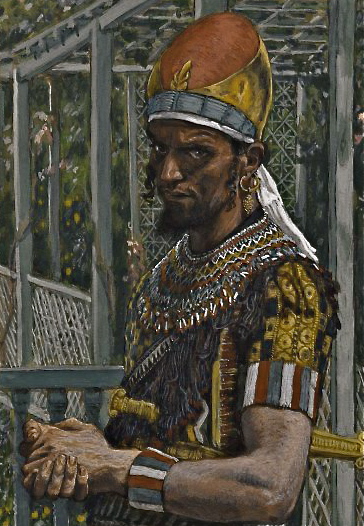
Herod Antipas, by James Tissot (Brooklyn Museum)

Antipas’s rejection of Phasaelis added a personal note to existing disputes with King Aretas over the boundary of Perea and Nabatea. In AD 36 Aretas attacked Antipas and completely destroyed his army.

According to Josephus, some of the Jews saw this devastating defeat as divine retribution for killing John the Baptist.

Some time before the war with Aretas, Jesus was arrested in Jerusalem and brought before Pontius Pilate. When Pilate learnt that Jesus came from Galilee, he sent him to Herod Antipas, who was also in Jerusalem at the time.

Luke’s Gospel says Antipas “had been wanting to see him for a long time” and “was hoping to see him perform some sign”. He questioned Jesus at length, but Jesus gave no answer. Antipas then mocked Jesus and sent him back to Pilate in an elegant robe. (23:8-11)

Romans captured fortress by deception

In AD 39 Herod Antipas was accused of conspiring against the Roman emperor Caligula, who exiled him to Gaul.

At the time of the First Jewish Revolt (AD 66-73), Machaerus was in the hands of Jewish rebels. Roman forces took the fortress only by deception — they captured a young Jewish defender and threatened to crucify him if the rebels did not surrender.

Machaerus

Columns from Herod’s palace on Machaerus (© Dan Gibson)

When the rebels agreed to abandon Machaerus, the Romans systematically dismantled the Herodian fortifications.

Excavations at the site have uncovered remains of Herod’s palace, including rooms designed around a central courtyard, an elaborate bath and floor mosaics.

Work on partially reconstructing the throne room where Salome is said to have danced was begun by archaeologists in 2020.

Below the hilltop ruins on the eastern side is the village of Mukawir, where excavations have found evidence of three Byzantine churches built in the 6th century.


In Scripture

Herod Antipas executes John the Baptist: Mark 6:14-29; Matthew 14:1-12; Luke 3:18-20

Jesus appears before Herod Antipas: Luke 23:8-11


References

Bohstrom, Philippe: “King Herod’s Throne Room Where ‘Salome Danced’ Found in Jordan”, Haaretz, December 14, 2020
Brisco, Thomas: Holman Bible Atlas (Broadman and Holman, 1998)
Cox, Ronald: The Gospel Story (CYM Publications, 1950)
Eber, Shirley, and O’Sullivan, Kevin: Israel and the Occupied Territories: The Rough Guide (Harrap-Columbus, 1989)
Kilgallen, John J.: A New Testament Guide to the Holy Land (Loyola Press, 1998)
Maier, Paul L. (trans.): Josephus: The Essential Writings (Kregel Publications, 1988)
Meyers, Carol L., Craven, Toni, and Kraemer, Ross S. (eds): Women in Scripture: A Dictionary of Named and Unnamed Women in the Hebrew Bible, the Apocryphal/Deuterocanonical Books and New Testament (Wm. B. Eerdmans Publishing, 2001)
Rainey, Anson F., and Notley, R. Steven: The Sacred Bridge: Carta’s Atlas of the Biblical World (Carta, 2006)


External links

Machaerus: Beyond the Beheading of John the Baptist (Biblical Archaeology Society)
Mukawir Fortress (Nabataea.net)
Where Saint John the Baptist was Beheaded (Hungarian Review)
Lost biblical fortress of Machaerus restored after 50 years of excavations (Jordan Times)
« Newer PostsOlder Posts »

Sebastiya

West Bank

In the Palestinian village of Sebastiya, Christians and Muslims alike honour a connection to John the Baptist at a location earlier known for the worship of Phoenician gods and a Roman emperor.

Sebastiya

Cathedral of St John the Baptist, with tomb crypt under dome in centre (© ATS Pro Terra Sancta)

Sebastiya (with various spellings including Sebaste and Sebastia) is about 12 kilometres northwest of Nablus, to the east of the road to Jenin.

An early Christian tradition, from the first half of the 4th century, says John the Baptist’s disciples buried his body here after he was beheaded by Herod Antipas during the infamous banquet at which Salome’s dance enthralled the governor (Mark 6:21-29).

An Orthodox Christian tradition holds that Sebastiya was also the venue for the governor’s birthday banquet, though the historian Josephus says it was in Herod’s fortress at Machaerus, in modern-day Jordan.

Sebastiya

Village of Sebastiya (Shuki / Wikipedia)

Overlooking the present village of Sebastiya are the hilltop ruins of the royal city of Samaria. The city is mentioned more than 100 times in the Bible. Excavations have uncovered evidence of six successive cultures: Canaanite, Israelite, Hellenistic, Herodian, Roman and Byzantine.

The surrounding hill-country, its slopes etched by ancient terracing, has changed little in thousands of years.

When the early Christian community dispersed during the persecution that followed the martyrdom of St Stephen, the deacon Philip preached the Gospel in Samaria and was joined there by the apostles Peter and John.


City renamed by Herod the Great

Omri, the sixth king of the northern kingdom of Israel, built his capital on the rocky hill of Samaria in the ninth and eighth centuries before Christ.

His son Ahab fortified the city and, influenced by his wife Jezebel, a Phoenician princess, built temples to the Phoenician gods Baal and Astarte. Ahab’s evil deeds incurred the wrath of the prophet Elijah, who prophesied bloody deaths for both Ahab and Jezebel.

Sebastiya

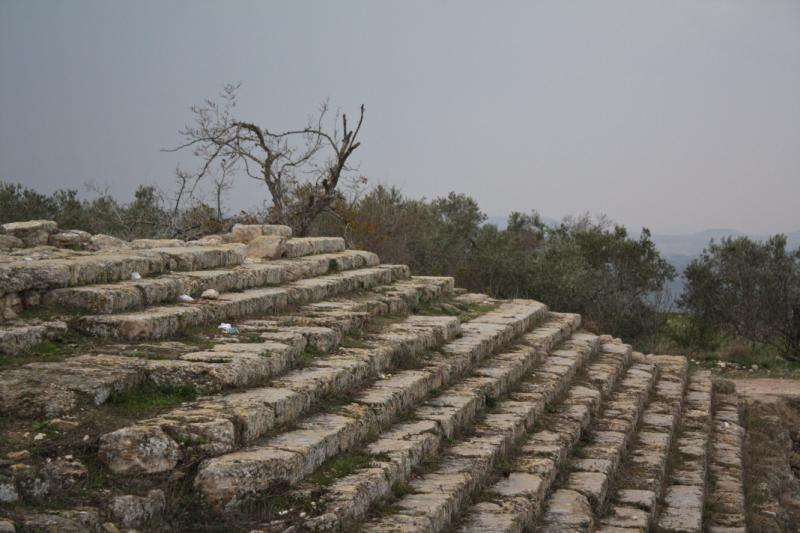
Steps to where the Temple of Augustus stood (© ATS Pro Terra Sancta)

During its eventful history, Samaria was destroyed by Assyrians in 722 BC (ending the northern kingdom of Israel), captured by Alexander the Great in 331 BC, destroyed by the Maccabean King John Hyrcanus in 108 BC, and rebuilt by the Roman general Pompey in 63 BC.

Herod the Great expanded the city around 25 BC, renaming it Sebaste in honour of his patron Caesar Augustus (Sebaste is Greek for Augustus). Herod even built a temple dedicated to his patron, celebrated one of his many marriages in the city, and had two of his sons strangled there.

The pattern of destruction and rebuilding continued during the early Christian era. Sebaste became the seat of a bishop in the 4th century, was destroyed by an earthquake in the 6th century, flourished briefly under the Crusaders in the 12th century, then declined to the status of a village.


Pagans desecrated John’s tomb

Christian sources dating back to the 4th century place John the Baptist’s burial at Sebastiya, along with the remains of the prophets Elisha and Obadiah.

Sebastiya

Crypt of the reputed tomb of John the Baptist (bottom centre) and other prophets (© ATS Pro Terra Sancta)

Around 390, while translating the Onomasticon (directory) of the holy places compiled by Eusebius, St Jerome describes Samaria/Sebaste as “where the remains of John the Baptist are guarded”.

By then, according to a contemporary account by the historian Rufinus of Aquileia around 362, pagans had desecrated the tomb during a persecution of Christians under emperor Julian the Apostate. The Baptist’s remains were burnt and the ashes dispersed, but passing monks saved some bones.

In the 6th century two urns covered in gold and silver were venerated by pilgrims. One was said to contain relics of John the Baptist, the other relics of Elisha.

Two churches were built during the Byzantine period. One was on the southern side of the Roman acropolis (on the site the Orthodox Church believes John was beheaded).

Sebastiya

Greek Orthodox church, with apse at right and entrance to underground cave in centre (© Sebastiya Municipality)

The other church, a cathedral built over the Baptist’s reputed tomb, was just east of the old city walls and within the present village. Rebuilt by the Crusaders, it became the second biggest church in the Holy Land (after the Church of the Holy Sepulchre in Jerusalem).

But after the Islamic conquest of 1187 the cathedral was transformed into a mosque dedicated to the prophet Yahya, the Muslim name for John the Baptist. The mosque, rebuilt in 1892 within the ruins of the cathedral, is still in use.

Tomb is under cathedral ruins

Sebastiya

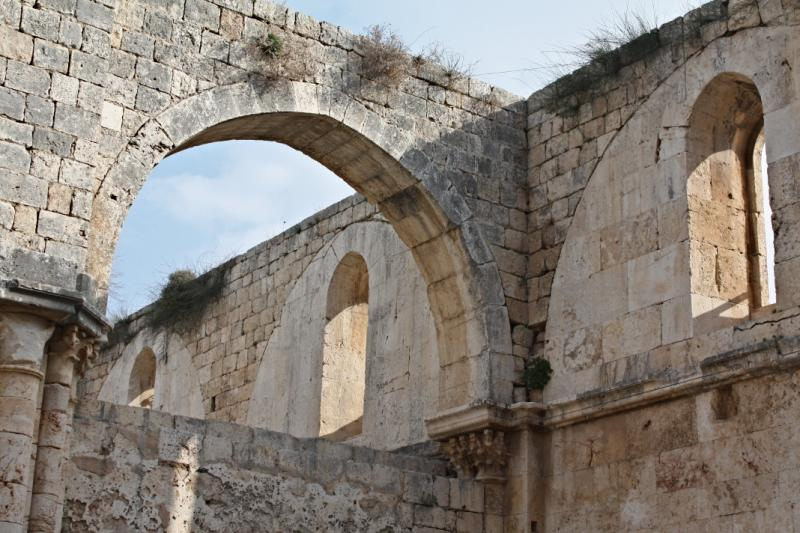
Walls of Cathedral of St John the Baptist (© ATS Pro Terra Sancta)

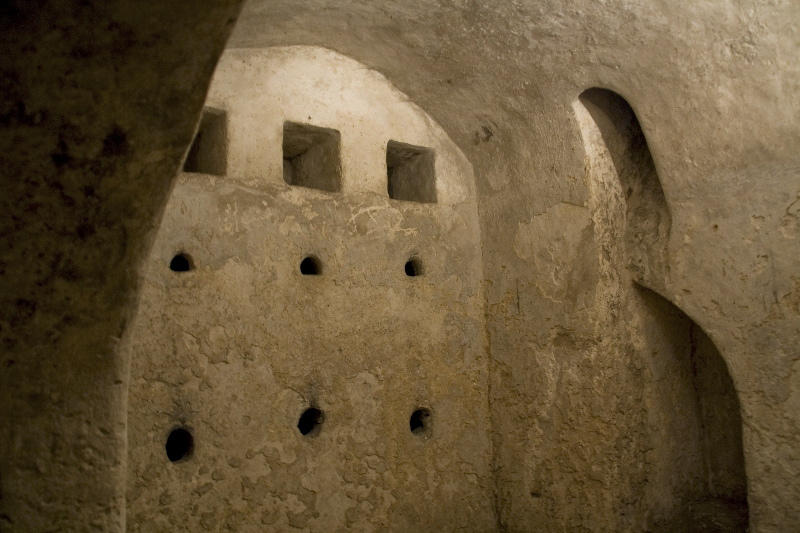
Pilgrims still visit the tomb associated with John the Baptist and other prophets. Under a small domed building in the cathedral ruins, a narrow flight of 21 steps leads down to a tomb chamber with six burial niches set in the wall. Tradition places John the Baptist’s relics in the lower row, between those of Elisha and Obadiah.

The remains of the cathedral’s huge buttressed walls dominate Sebastiya’s public square.

In the extensive archaeological park at the top of the hill are remnants of Ahab’s palace, identified by the discovery of carved ivory that was mentioned in the Bible (1 Kings 22:39). The ivory pieces are displayed in the Rockefeller Museum, Jerusalem.

Sebastiya

Visitors and residents during Sebastiya’s first Heritage Day in 2010 (© ATS Pro Terra Sancta)

Also to be seen are the stone steps leading to Herod the Great’s temple of Augustus, an 800-metre colonnaded street, a Roman theatre and forum, and a city gate flanked by two watchtowers.

Interest in Sebastiya’s heritage and community — now entirely Muslim except for one Christian family — has been revived in the early 21st century by a project involving the Franciscan non-profit organisation ATS Pro Terra Sancta, funded by Italian aid.


In Scripture

King Omri moves his capital to Samaria: 1 Kings 16:23-24

Ahab erects an altar for Baal: 1 Kings 16:32

Ahab’s ivory house: 1 Kings 22:39

John the Baptist is beheaded: Mark 6:21-29

Philip preaches in Samaria: Acts 8:5

Peter and John go to Samaria: Acts 8:14


References

Blaiklock, E. M.: Eight Days in Israel (Ark Publishing, 1980)
Brisco, Thomas: Holman Bible Atlas (Broadman and Holman, 1998)
Dyer, Charles H., and Hatteberg, Gregory A.: The New Christian Traveler’s Guide to the Holy Land (Moody, 2006)
Eber, Shirley, and O’Sullivan, Kevin: Israel and the Occupied Territories: The Rough Guide (Harrap-Columbus, 1989)
Gonen, Rivka: Biblical Holy Places: An illustrated guide (Collier Macmillan, 1987)
Murphy-O’Connor, Jerome: The Holy Land: An Oxford Archaeological Guide from Earliest Prag, Kay: Israel & the Palestinian Territories: Blue Guide (A. & C. Black, 2002)
Saltini, Tommaso (ed.): Sabastiya — The fruits of history and the memory of John the Baptist (ATS Pro Terra Sancta exhibition catalogue, 2011)
Walker, Peter: In the Steps of Jesus (Zondervan, 2006)


External links

Sebastia in the news (ATS Pro Terra Sancta)


« Newer PostsOlder Posts »

Magdala

Israel


Magdala was a major first-century port on the Sea of Galilee, a centre of trade and commerce, and an exporter of salted fish to markets as far away as Europe. Archaeological discoveries early in the 21st century have made it a burgeoning pilgrimage destination.

Magdala

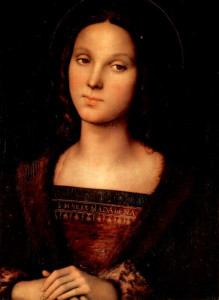
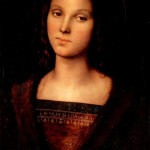
Mary Magdalene by Pietro Perugino (Palazzo Pitti, Florence)

Magdala’s fame down the centuries rested on one notable person, Mary Magdalene. This enigmatic woman — revered as a saint by the Orthodox, Catholic, Anglican and Lutheran churches — was one of the few persons named in the Gospels as being present at Christ’s crucifixion and the first recorded witness of his Resurrection.

Whether she lived in Magdala or was simply born there is unknown, but she was apparently a wealthy woman.

The city, on the western side of the Sea of Galilee between Tiberias and Capernaum, is mentioned only once in the New Testament. The Gospel of Matthew (15:39) says Jesus went there by boat — but even this reference is uncertain, since some early manuscripts give the name as Magadan.

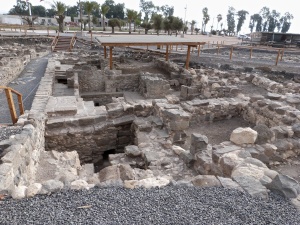
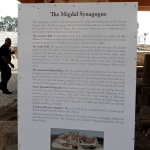
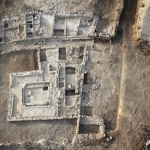
Synagogue uncovered at Magdala (Seetheholyland.net)

Synagogue uncovered at Magdala (Seetheholyland.net)

Both Matthew and Mark say Jesus preached in synagogues “throughout Galilee”, and Magdala was only 10 kilometres from Capernaum, where he based his ministry.

The Jewish historian Josephus says Magdala had a population of 40,000 people and a fleet of 230 boats about 30 years after Jesus died.


Mary was called ‘apostle of the apostles’

Magdala

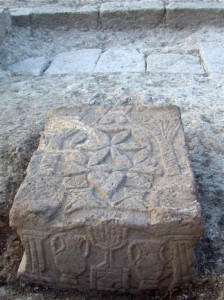
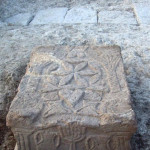
Carved stone decorated with menorah (© Moshe Hartal, Israel Antiquities Authority)

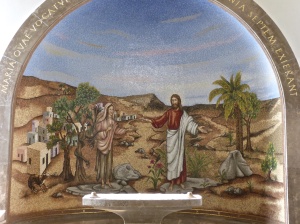
All four Gospels refer to a close follower of Jesus called Mary Magdalene. Luke says she had been cured of “seven demons” and he lists her first among the women who accompanied Jesus and supported his ministry from their own resources (8:2-3).

After Jesus died she was one of the women who took spices for anointing to the tomb. They found the tomb empty, but “two men in dazzling clothes” gave them the news that Jesus had risen. (Luke 24:1-12)

Later Jesus appeared to Mary. At first she thought he was the gardener, but she recognised him when he spoke her name. Then she announced to the disciples, “I have seen the Lord”. (John 20:1-18)

By the 3rd century, Mary Magdalene was described by the theologian Hippolytus of Rome as the “apostle of the apostles”.


Identity became confused

Jesus casting seven demons from Mary Magdalene, mosaic in Magdala church (Seetheholyland.net)

Jesus casting seven demons from Mary Magdalene, mosaic in Magdala church (Seetheholyland.net)

But Mary’s identity became confused in 591. In that year Pope Gregory the Great gave a sermon which expressed his belief that the Mary who had been cured of seven demons was the same person as the penitent prostitute who anointed Jesus’ feet with ointment (Luke 7:37-50) and Mary of Bethany, the sister of Martha and Lazarus, who anointed Jesus’ feet with perfume (John 12:3-8).

A revision of the Catholic calendar of saints in 1969 reverted to the Eastern tradition of distinguishing Mary Magdalene from the reformed prostitute. By then, however, this persona had endeared her to artists down the centuries.

More recently, Dan Brown’s The Da Vinci Code mined a rich lode of pseudo-Christian texts to present Mary Magdalene as the wife of Jesus and co-founder of an arcane dynasty at odds with the institutional Church and its beliefs.

And what really became of Mary? A Greek tradition has her dying in Ephesus, with her relics preserved in Constantinople. A French tradition says she converted Provence to Christianity and her relics ended up in Vézelay Abbey in Burgundy, where they are still venerated.


City fought Romans on the sea

Magdala

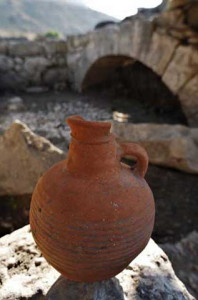
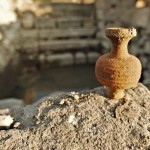
Single-handled jug found at Magdala, dating to the Roman period (© Custodia Terrae Sanctae)

The city that gave its name to Mary Magdalene became a fortified base for rebels during the First Jewish Revolt in AD 66-70, even engaging the Romans in a disastrous sea battle.

According to the historian Josephus — who commanded the Jewish forces in Galilee — the Sea of Galilee became red with blood and “full of dead bodies”. Of the survivors, emperor Vespasian sent 6000 to build a canal in Greece and ordered more than 30,000 to be sold as slaves.

Magdala continued as a much-reduced Jewish village during Roman and Byzantine times, and in more recent centuries as an Arab village until 1948. Mark Twain visited it in 1867, calling it “thoroughly ugly, and cramped, squalid, uncomfortable, and filthy”.

In the 4th century a church was built on the reputed site of Mary Magdalene’s house. Destroyed in the 7th century, it was rebuilt by Crusaders in the 12th century but was converted into a stable when the Crusaders were expelled from the Holy Land.


Port and city uncovered

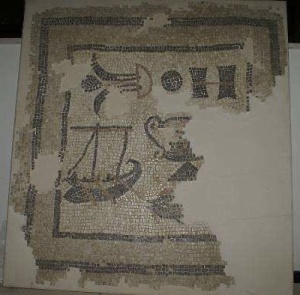
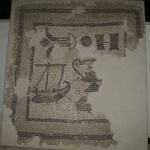
Mosaic including boat discovered at Magdala (© Magdala Project)

Mosaic including boat discovered at Magdala (© Magdala Project)

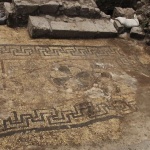
Beginning in the 1960s, Franciscan archaeologists discovered Magdala’s ancient port and a city grid, with paved streets, water canals, a marketplace, villas and mosaics — one depicting a sailing boat.

Buried in the mud covering a thermal bath complex were ceramic crockery, perfume jars, jewellery, hairbrushes and combs, and bronze applicators for make-up.

The discovery of the massive foundations of a tower may account for the city’s name. Both Magdala in Aramaic and Migdal in Hebrew mean “tower”.


First-century synagogue identified

More archaeological remains were uncovered in 2009 on an adjacent property newly acquired by the Legion of Christ to establish a hotel, institute for women and retreat centre. The Legion, a Catholic congregation, manages the Notre Dame Center in Jerusalem.

Ritual baths at Magdala (Seetheholyland.net)

Ritual baths at Magdala (Seetheholyland.net)

Three interconnected ritual baths were discovered, the first found in Israel using groundwater from springs — which for purification purposes was considered “living water” — rather than rainwater.

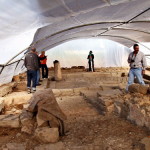
In the remains of one building, under a thin layer of soil, excavators found a stone block engraved with motifs including a seven-branched menorah, the type of lampstand used in the Temple. This significant find led to the identification of the building as a synagogue.

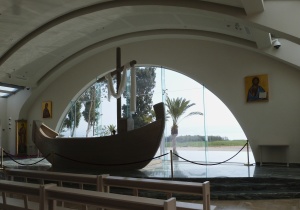
Boat-shaped altar in Duc in Altum church at Magdala (Seetheholyland.net)

Boat-shaped altar in Duc in Altum church at Magdala (Seetheholyland.net)

Unlike other first-century synagogues found in Galilee, the Magdala building had ornate mosaics and frescoes.

In 2021 a second synagogue dating from the Second Temple period was found at Magdala. 

It was smaller and not so ornate as the first one, with an earthen floor that had been plastered. Archaeologists believe both existed at the same time, from about 50 BC until AD 67.

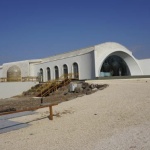
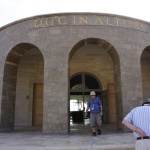
In 2014 the Legion opened a new church on the site, simple in design but also rich in mosaics and murals, focusing especially on women in the Bible. It is named Duc in Altum (Latin for “Put out into the deep”, from Christ’s words in Luke 5:4). The altar is in the shape of a first-century boat, standing in front of an infinity pool leading the eye to the lake beyond.

In the crypt is an ecumenical worship space, called the Encounter Chapel, paved with stones from Magdala’s first-century marketplace.


Jesus Boat found nearby

Magdala’s port, now submerged in the beach, had a stone breakwater that extended into the sea and curved around the harbour to protect boats from the sudden storms that buffet the Sea of Galilee.

In 1986 the hull of the so-called Jesus Boat, a fishing boat old enough to have been in use during the time of Christ, was found in the lakebed near the ancient port of Magdala.


In Scripture:

Jesus visits Magdala by boat: Matthew 15:39

Mary cured of seven demons: Luke 8:2

Mary supports Jesus’ ministry: Luke 8:3

Mary goes to Jesus’ tomb: Matthew 28:1-10; Mark 16:1-8; Luke 24:1-12; John 20:1-18

Mary announces the Resurrection to the disciples: John 20:18


Administered by: Legion of Christ

Tel.: +972 2 627-9111

Magdala Center: +972-057-226-1469 Tel/Fax: +972-04-620-9900

Open: 8am-6pm


References

Bagatti, Bellarmino: Ancient Christian Villages of Galilee (Studium Biblicum Franciscanum, 1999).
Caffulli, Giuseppe: “Precious Fragrances”, Holy Land Review (Spring 2009)
Charlesworth, James H.: The Millennium Guide for Pilgrims to the Holy Land (BIBAL Press, 2000)
Corbett, Joey: “New Synagogue Excavations In Israel and Beyond”, Biblical Archaeological Review (July/August 2011)
Freeman-Grenville, G. S. P.: The Holy Land: A Pilgrim’s Guide to Israel, Jordan and the Sinai (Continuum Publishing, 1996)
Gonen, Rivka: Biblical Holy Places: An illustrated guide (Collier Macmillan, 1987)
Lofenfeld Winkler, Lea, and Frenkel, Ramit: The Boat and the Sea of Galilee (Gefen Publishing House, 2010)
Merk, August: “Magdala”, The Catholic Encyclopedia (Robert Appleton Company, 1910)
Nun, Mendel: “Ports of Galilee”, Biblical Archaeology Review (July/August 1999)
Reich, Ronny, and Zapata Meza, Marcela: “A Preliminary Report on the Miqwa’ot of Migdal”, Israel Exploration Journal, vol. 64, no. 1, 2014
Schuster, Ruth: “In Hometown of Mary Magdalene, Israeli Archaeologists Find Second Synagogue”, Haaretz (December 12, 2021)
Shanks, Hershel: “Major New Excavation Planned for Mary Magdalene’s Hometown”, Biblical Archaeology Review (September/October 2007)
Twain, Mark: The Innocents Abroad (Wordsworth, 2010)


External links

Magdala Center (Legion of Christ)
Tabgha and Magdala (Custodia Terrae Sanctae)
Mary Magdalene (Wikipedia)
« Newer PostsOlder Posts »

Jaffa

Israel

Jaffa

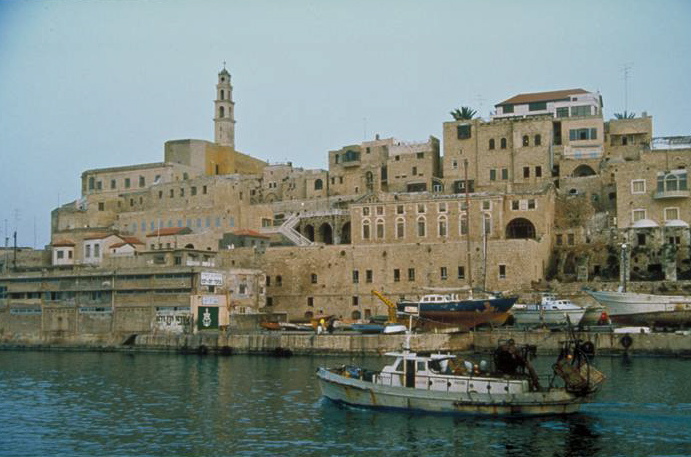
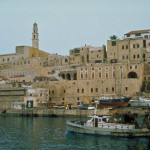
Restored town and port of Old Jaffa (© Israel Ministry of Tourism)


Picturesque Jaffa, on the Mediterranean Sea just south of Tel Aviv, is where the apostle Peter received a crucial vision that changed his mind about accepting gentiles into the early Christian Church.

Peter was staying in the seaside house of a tanner called Simon and went up on the roof to pray.

He fell into a trance and saw heaven opened and a sheet lowered, filled with all sorts of animals, which he was told to eat. When he protested that some of the animals were unclean, a voice told him, “What God has made clean, you must not call profane”.

Realising that “I should not call anyone profane or unclean”, Peter accepted an invitation to visit a centurion called Cornelius at Caesarea, about 48 kilometres up the coast, and accepted Cornelius as the first gentile to convert to Christianity (Acts 10).

Jaffa

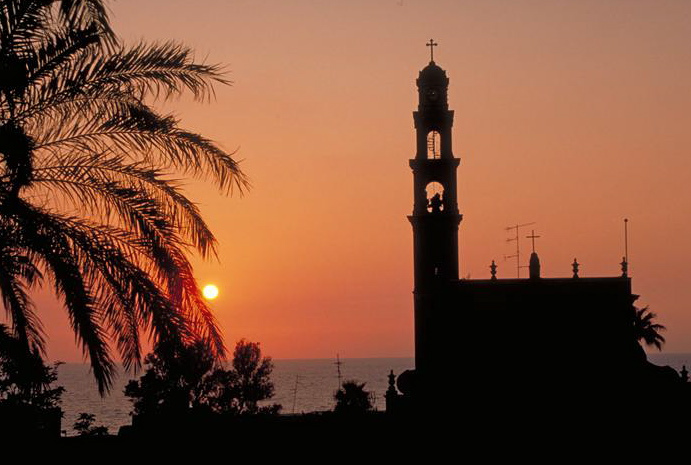
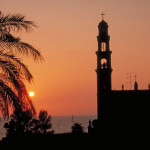
St Peter’s Church, Jaffa, at sunset (© Israel Ministry of Tourism)

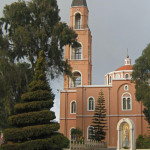
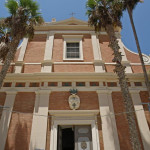
Jaffa offers no original sites to visit, but a disused private residence (formerly a mosque) behind Jaffa’s lighthouse is believed to stand on the site of Simon the tanner’s house. Peter’s vision is commemorated at St Peter’s Church, on a Catholic property that overlooks the waterfront just off Kedumim Square.

Another St Peter’s Church, this one Russian Orthodox, is 2.5 kilometres east on the hill of Abu Kabir at Giv’at Herzl. It is on the supposed site of the tomb of a seamstress called Tabitha, or Dorcas in Greek, who was raised from the dead by Peter (Acts 9:36-43).

Called Joppa in biblical times, Jaffa is one of the oldest port cities on earth.

Jaffa

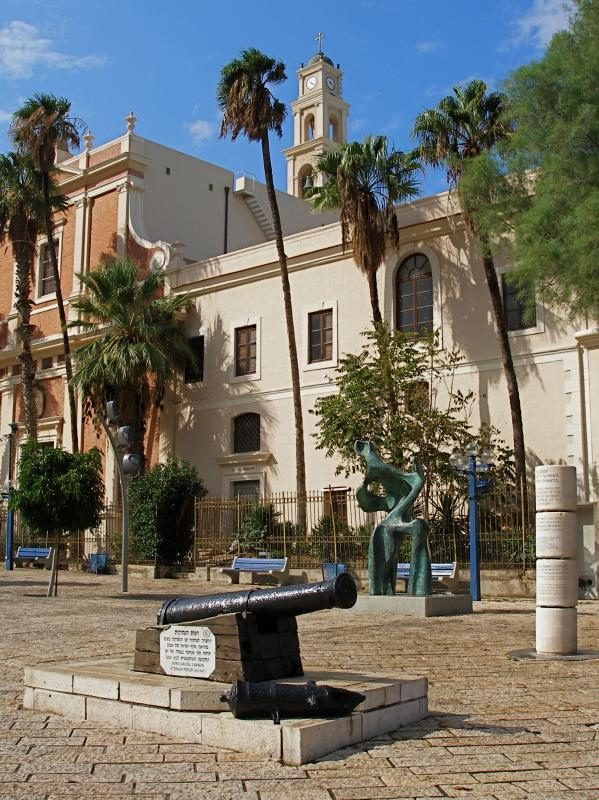
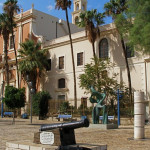
Ottoman cannon in Kedumim Square, Jaffa (Seetheholyland.net)

It was here that the prophet Jonah embarked for his fateful encounter with a whale (Jonah 1:3), and for centuries it was the arrival port for pilgrims visiting the Holy Land.


Conquered 22 times

A legend says Jaffa was named after Noah’s son Japheth. (Another suggestion is that its builders, the Canaanites, named it Yafi, meaning beautiful. Jaffa is called Yaafa in Arabic and Yafo in Hebrew.)

Timber from Lebanon was rafted down to the port of Jaffa for Solomon’s Temple (2 Chronicles 2:16) and to rebuild the Temple after it was destroyed by Nebuchadnezzar of Babylon (Ezra 3-7).
Jaffa

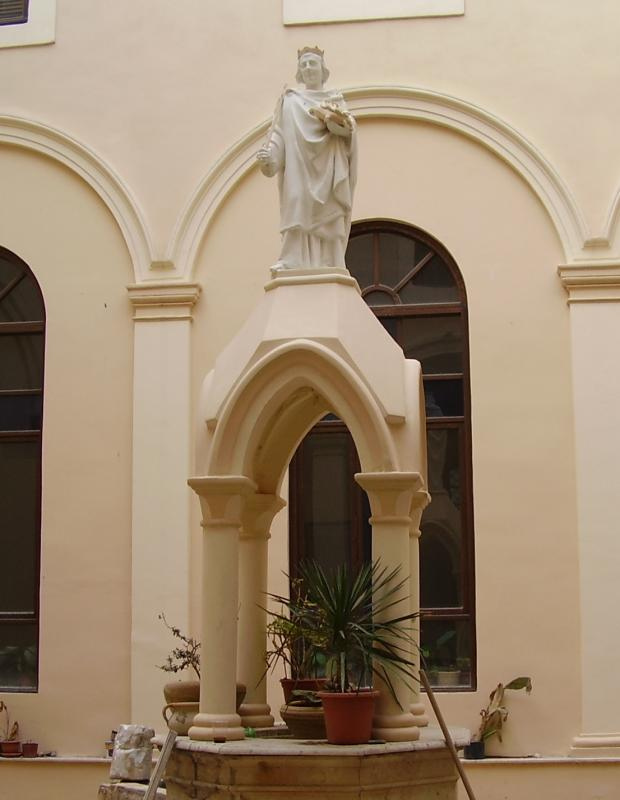
Statue of St Louis IX at St Peter’s Church (Avishai Teicher)
Down the centuries the city has been conquered no fewer than 22 times, notably by the Egyptians, Phoenicians, Babylonians, Philistines, Assyrians, Maccabeans, Seleucids, Persians, Greeks, Romans, Crusaders, Mongols, Mamluks, Ottomans, French, British and — just before the state of Israel was declared in 1948 — by Zionist militias.

Conquerors have included Alexander the Great, Richard the Lionheart, Muslim sultan Saladin, Louis IX of France, Napoleon, and General Edmund Allenby.

When Jewish forces took Jaffa in 1948, most of the predominantly Arab population was forced to flee. The old city’s Arab character has now been replaced by Israeli galleries, art and craft studios, restaurants and nightclubs.

Jaffa

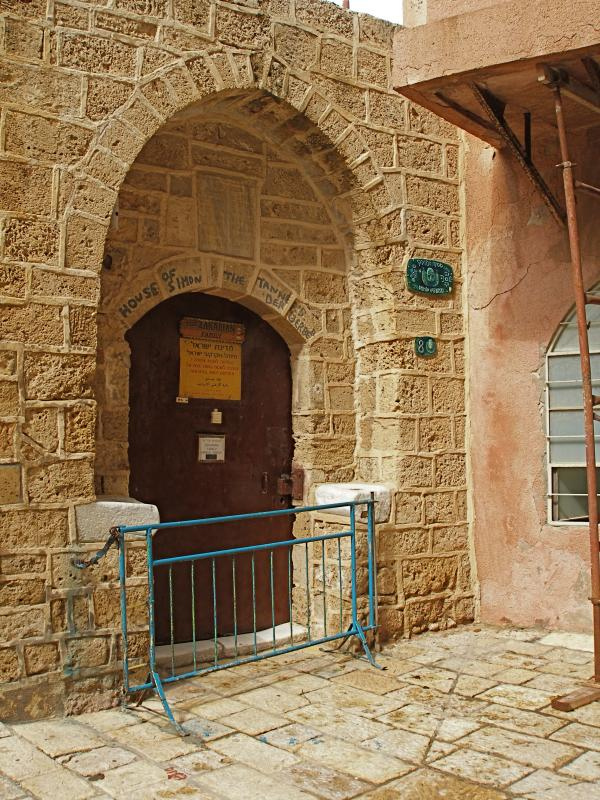
Reputed house of Simon the Tanner (Seetheholyland.net)

Jaffa was formally merged with Tel Aviv in 1950.


St Peter’s Church a landmark

The reputed site of the house of Simon the tanner is an inconspicuous 19th-century building at 8 Simon the Tanner Street, down towards the sea from Kedumim Square.

A towering belfry makes St Peter’s Church, just off the square to the north, the most distinctive landmark in Old Jaffa. The original church, twice destroyed and twice reconstructed, was built in 1654.

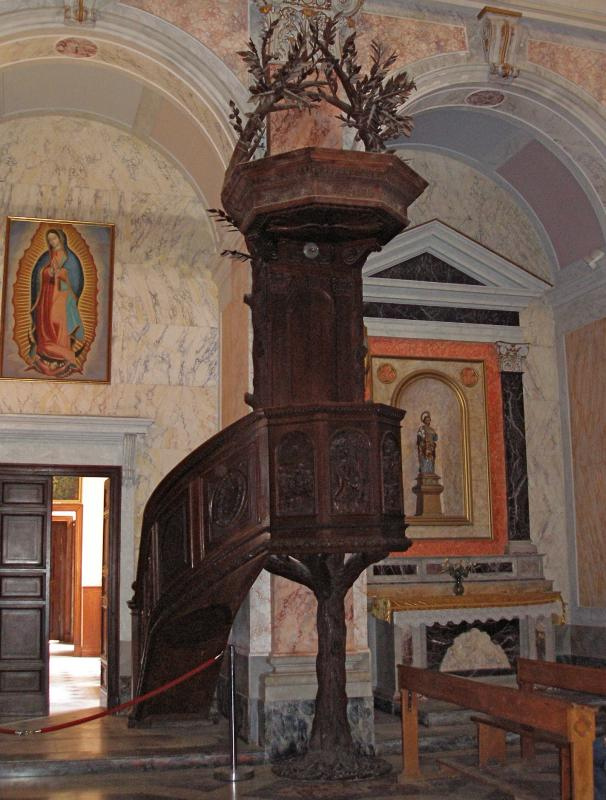
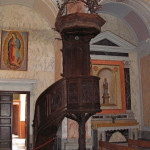
Stained-glass windows by the renowned Munich artist Franz Xaver Zettler depict events in the lives of Peter and other saints. An unusual wooden pulpit is carved in the form of a fruiting tree.

Jaffa

Carved pulpit in St Peter’s Church (Seetheholyland.net)

Outside and to the right of the sacristy are remnants of a citadel used by Louis IX of France when he led the Ninth Crusade in the 13th century. They include two circular rooms in which Napoleon is believed to have lived after he captured Jaffa in 1799.

The Russian Orthodox St Peter’s Church at Giv’at Herzl, between Jaffa and Tel Aviv, commemorates Peter’s raising the seamstress Tabitha from the dead. It is built over a chamber where a Russian priest is said to have discovered Tabitha’s tomb in 1835.


Coastline has changed little

Down stairs in the centre of Kedumim Square, an underground visitors’ centre displays exhibits from the history of Jaffa, especially the Hellenistic and Roman eras, including archaeological items found in digs around the area.

Jaffa

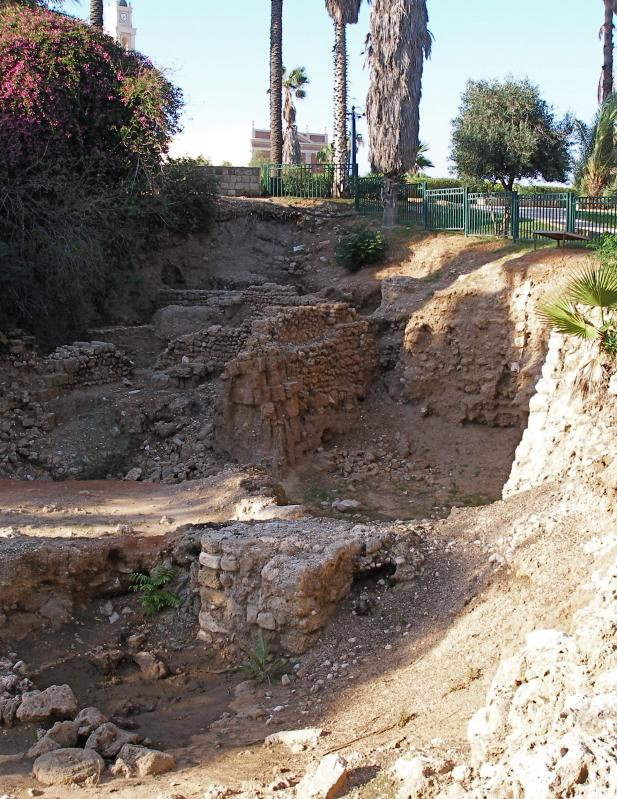
Remains of Egyptian brick wall from 1250 BC, in Summit Park, Jaffa (Seetheholyland.net)

In Summit Park, the highest point of the city, are the excavated remains of a brick wall from an Egyptian fortress built by Ramses II, about 1250 years before Christ.

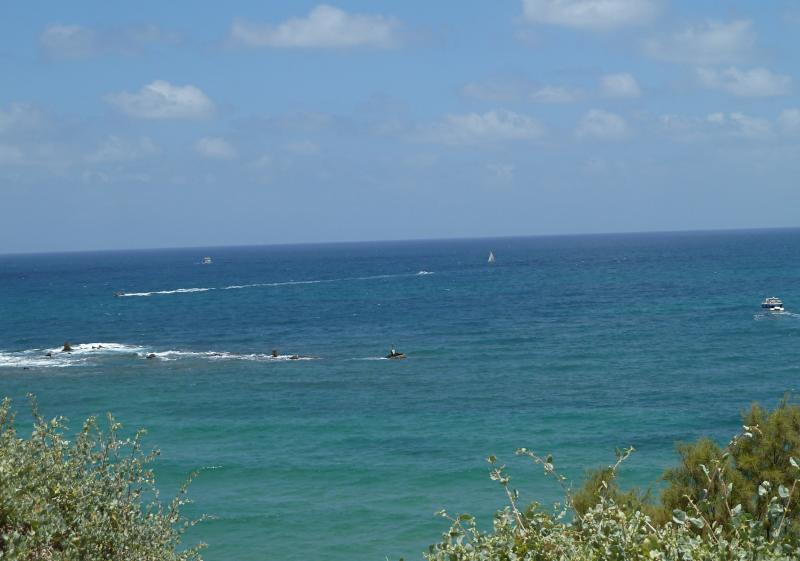
The pilgrim, however, may prefer to find a vantage point and survey the sea and coastline that have changed little in thousands of years — since the times when rafts of cedar logs from Lebanon arrived for the Temple, when Jonah boarded ship for Tarshish, or when Richard the Lionheart or Louis IX sailed into the harbour with their armies.

A chain of reefs protects the port, the northernmost called Andromeda’s Rock. Here, according to Greek mythology, the princess Andromeda was chained as a sacrifice to a sea monster, but was rescued by the monster-slayer Perseus, who then married her.


Jaffa

Andromeda’s Rock (centre) in reefs protecting Jaffa’s port (© Deror Avi)

In Scripture:

Timber from Lebanon to be sent to Joppa: 2 Chronicles 2:16; Ezra 3:7

Jonah sails from Joppa: Jonah 1:3

Peter raises Tabitha from the dead: Acts 9:36-43

Peter’s vision in Joppa: Acts 10:5-16


References

Blaiklock, E. M.: Eight Days in Israel (Ark Publishing, 1980)
Bowker, John: The Complete Bible Handbook (Dorling Kindersley, 1998)
Charlesworth, James H.: The Millennium Guide for Pilgrims to the Holy Land (BIBAL Press, 2000)
Dyer, Charles H., and Hatteberg, Gregory A.: The New Christian Traveler’s Guide to the Holy Land (Moody, 2006)
Eber, Shirley, and O’Sullivan, Kevin: Israel and the Occupied Territories: The Rough Guide (Harrap-Columbus, 1989)
Freeman-Grenville, G. S. P.: The Holy Land: A Pilgrim’s Guide to Israel, Jordan and the Sinai (Continuum Publishing, 1996)
Gonen, Rivka: Biblical Holy Places: An illustrated guide (Collier Macmillan, 1987)
Prag, Kay: Israel & the Palestinian Territories: Blue Guide (A. & C. Black, 2002)
Shahin, Mariam, and Azar, George: Palestine: A guide (Chastleton Travel, 2005)

External links

Jaffa (Custodia Terrae Sanctae)
Jaffa (BibleWalks.com)
Jaffa (Custodia Terrae Sanctae)
« Newer PostsOlder Posts »
All content © 2022, See the Holy Land | Site by Ravlich Consulting & Mustard Seed
You are welcome to promote site content and images through your own
website or blog, but please refer to our Terms of Service | Login