. . . your guide to visiting the holy places  
If you have found See the Holy Land helpful and would like to support our work, please make a secure donation.
The Sites

Israel and Palestine – In Jerusalem

Israel and Palestine – Outside Jerusalem

Jordan

Egypt

Extras

Mount of Temptation

West Bank


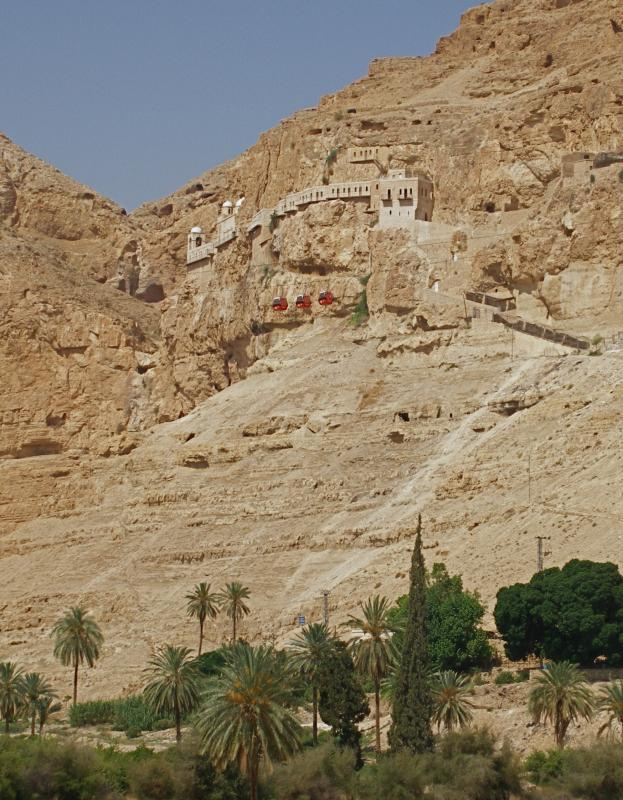
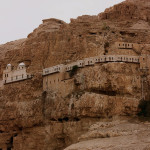
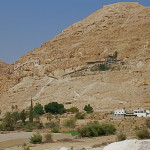
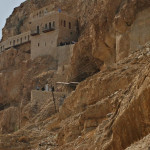
The Mount of Temptation, with a gravity-defying monastery clinging to its sheer face, is traditionally regarded as the mountain on which Christ was tempted by the devil during his 40-day fast.

Mount of Temptation

Monastery of the Temptation with cable cars immediately below it (Seetheholyland.net)

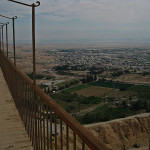
The summit of the mount, about 360 metres above sea level, offers a spectacular panoramic view of the Jordan Valley, the Dead Sea and the mountains of Moab and Gilead.

The Mount of Temptation is about 5km north-west of the West Bank city of Jericho. Access to the summit is by a 30-minute trek up a steep path — passing through the cliffhanging monastery on the way — or by a 5-minute cable car ride from Tel Jericho.

Unlike some Greek Orthodox monasteries, the Monastery of the Temptation allows women visitors as well as men.

The mountain is also known as Mount Quarantania and Jebel Quarantul. Both names arise from a mispronunciation of the Latin word Quarentena, meaning 40, the number of days in Christ’s fast. This period of fasting became the model for the practice of Lent in Christian churches.


Temptations on the mount

Mount of Temptation

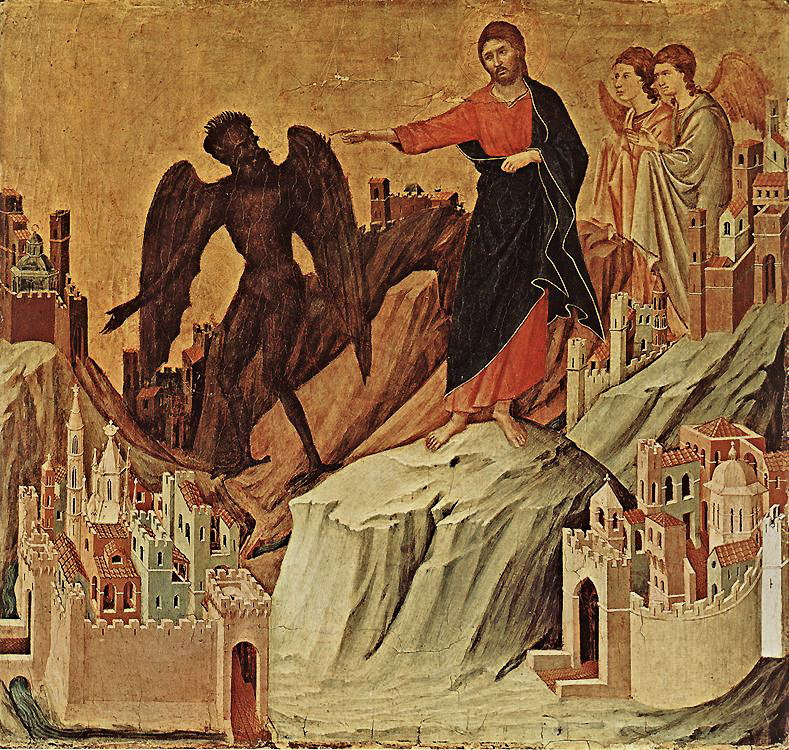
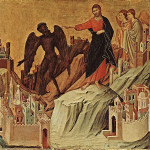
The Temptation on the Mount, by Duccio di Buoninsegna (Museo dell’Opera del Duomo, Siena)

As recorded in the Gospels of Matthew (4:1-11) and Luke (4:1-13) — and fleetingly in Mark (1:12-13) — the Holy Spirit led Jesus into the desert. While he fasted, the devil tempted him three times to prove his divinity by demonstrating his supernatural powers.

Each time, Jesus rebuffed the tempter with a quotation from the Book of Deuteronomy. Then the devil left and angels brought food to Jesus, who was famished.

Tradition dating from the 12th century places two of the devil’s temptings on the Mount of Temptation.

The temptation to turn a stone into bread is located in a grotto halfway up the mountain. The offer of all the kingdoms of the world in return for worshipping the devil is located on the summit.


Monks turned caves into cells

Mount of Temptation

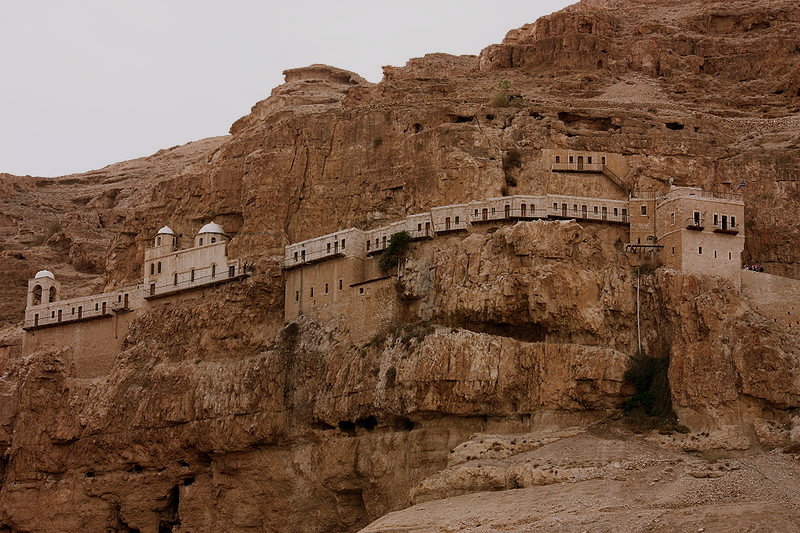
Monastery of the Temptation (Dmitrij Rodionov / Wikimedia)

Monks and hermits have inhabited the mountain since the early centuries of Christianity. They lived in natural caves, which they turned into cells, chapels and storage rooms. A sophisticated system of conduits brought rainwater from a large catchment area into five caves used as reservoirs.

A 4th-century Byzantine monastery was built on the ruins of a Hasmonean-Herodian fortress. The monks abandoned the site after the Persian invasion of 614.

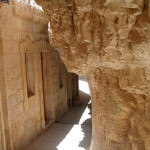
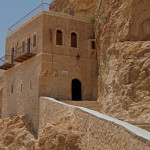
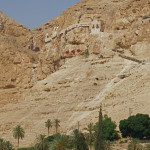
The present Monastery of the Temptation, reconstructed at the end of the 19th century, seems to grow out of the mountain. The northern half is cut into the almost sheer cliff, while the southern half is cantilevered into space.

Mount of Temptation

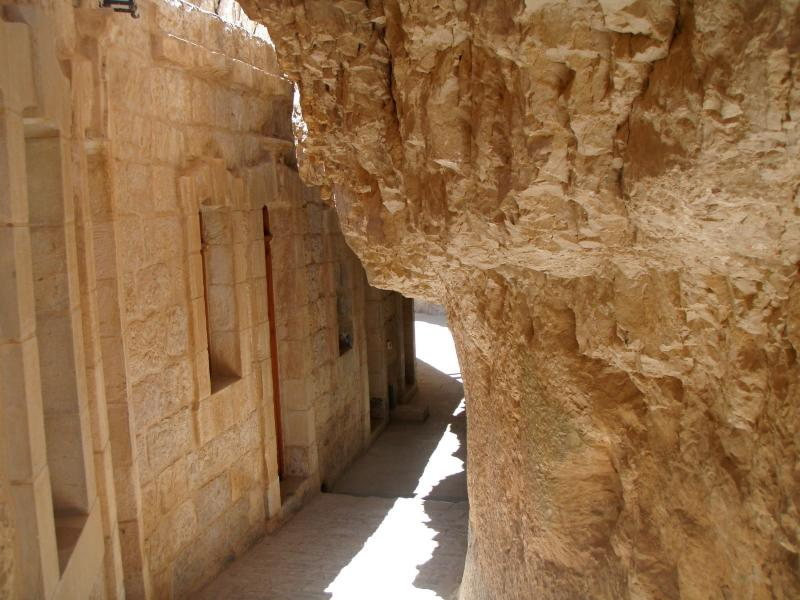
Cliff into which monastery is built (Kourosh)

A medieval cave-church, on two levels, is built of masonry in front of a cave. In the monastery is a stone on which, according to tradition, Jesus sat during one of his temptations.

In the valley of this mountain, Jewish priests and Levites travelled the winding road from Jericho to Jerusalem when it was their turn to minister in the Temple. In the time of Jesus, about 12,000 priests and Levites lived in Jericho.


In Scripture

Jesus is tempted by the devil: Matthew 4:1-11, Luke 4:1-13


Administered by: Greek Orthodox Church

Tel.: 972-2-2322827

Open: Monastery, Mon-Fri 9am-1pm, 3-4pm; Sat 9am-2pm; Sun closed


References

Gonen, Rivka: Biblical Holy Places: An illustrated guide (Collier Macmillan, 1987)
Inman, Nick, and McDonald, Ferdie (eds): Jerusalem & the Holy Land (Eyewitness Travel Guide, Dorling Kindersley, 2007)
Kochav, Sarah: Israel: A Journey Through the Art and History of the Holy Land (Steimatzky, 2008)
Murphy-O’Connor, Jerome: The Holy Land: An Oxford Archaeological Guide from Earliest Times to 1700 (Oxford University Press, 2005)

External links

Temptation of Christ (Wikipedia)
« Newer PostsOlder Posts »

Stella Maris Monastery

Israel


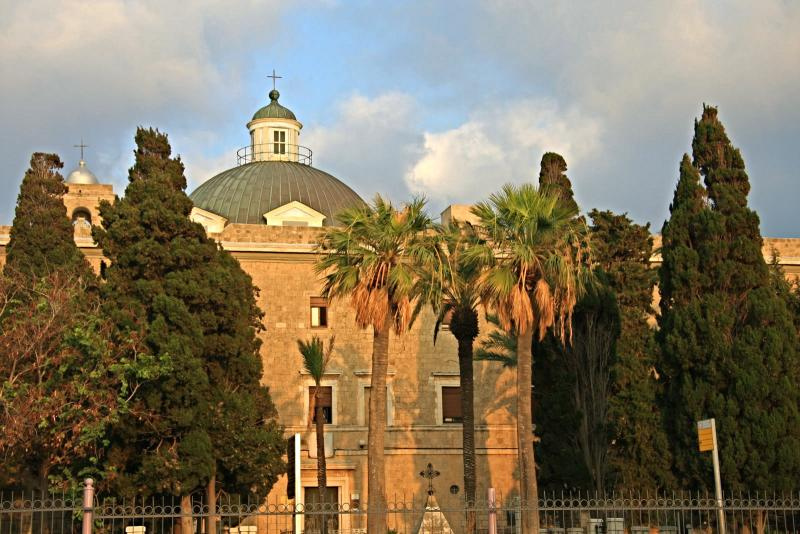
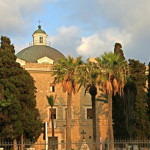
Perched at the western edge of Mount Carmel, high above the Mediteranean and the coastal city of Haifa, is Stella Maris Monastery and church.

Stella Maris Monastery

Stella Maris Church on Mount Carmel (Ilan)

The name of the 19th-century monastery — Latin for “Star of the Sea” — refers not to the magnificent view, but rather to an early title accorded Mary, the mother of Jesus.

The monastery is the world headquarters of a Catholic religious order of friars and nuns, the Carmelites.

The order had its origins at the end of the 12th century when St Berthold, a Frenchman who had gone to the Holy Land as a Crusader, had a vision of Christ denouncing the evil done by soldiers.


Hermits lived in caves

Berthold gathered a small community of hermits around him, living in caves on Mount Carmel, in imitation of the Old Testament prophet Elijah. Later the community became known as the Hermit Brothers of St Mary of Mount Carmel.

Stella Maris Monastery

Eastern facade of Stella Maris Monastery (© Deror Avi / Wikimedia)

In 1206 the community received a written rule from St Albert of Jerusalem. In the same century, some members moved to Europe and established similar groups from Sicily to Oxford. Those who remained in the Holy Land were massacred by the Saracens in 1291.

Carmelites returned to Mount Carmel in 1631 and finally completed the Stella Maris Monastery in the 18th century. Its stout walls and small openings reflect the need for defence against hostilities during its establishment.

Later a lighthouse was built, giving a further meaning to the title Stella Maris. Because of its commanding position, the lighthouse has been commandeered as a military establishment.


Elijah connected to two grottoes

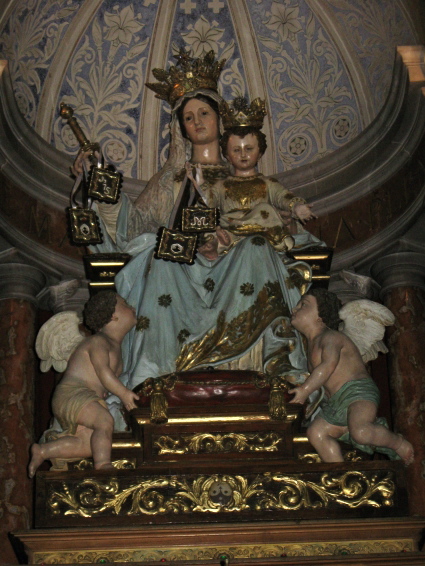
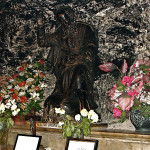
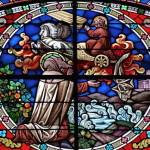
Inside the church, the décor features vividly coloured Italian marble and dramatic paintings in the dome, one depicting Elijah being swept up to heaven in a fiery chariot. A cedar and porcelain statue of Mary, Our Lady of Mount Carmel, is above the altar.

Stella Maris Monastery

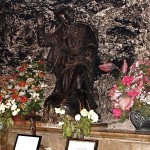
Statue of Our Lady of Mount Carmel in Stella Maris Church (© George David Byers)

Steps lead down to a grotto, with a small altar, where the Old Testament prophet Elijah is believed to have occasionally lived. People have lived in caves on Mount Carmel since prehistoric times.

Opposite the monastery, a steep footpath down toward the Mediterranean leads to a larger grotto, Elijah’s Cave, where the prophet is said to have meditated before his victory over the prophets of Baal, described in 1 Kings 18: 1-40.

The cave — which is venerated by Jews, Christians and Muslims — is also thought to be where Elijah established a “school of prophets”, where his successor Elisha, among others, studied.

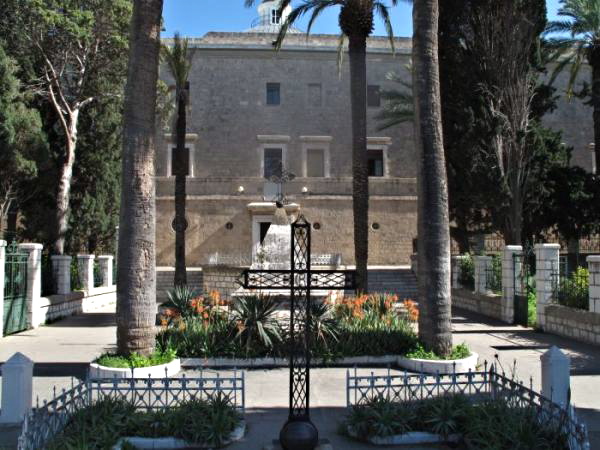
In the garden of Stella Maris Church, a monument is dedicated to wounded French soldiers who were killed by the Mamluk governor Ahmed Pasha el-Jazzar after Napoleon withdrew in 1799.


Other sites in the area:

Mount Carmel

Elijah’s Cave

Baha’i Shrine


In Scripture:

Elijah triumphs over the priests of Baal: 1 Kings 18:1-40

Elijah prays on Mount Carmel: 1 Kings 18:41-46

Administered by: Order of Carmelites

Tel.: 972-4-8337758

Open: 6am-12.30pm, 3-6pm


References

Blaiklock, E. M.: Eight Days in Israel (Ark Publishing, 1980)
Brownrigg, Ronald: Come, See the Place: A Pilgrim Guide to the Holy Land (Hodder and Stoughton, 1985)
Freeman-Grenville, G. S. P.: The Holy Land: A Pilgrim’s Guide to Israel, Jordan and the Sinai (Continuum Publishing, 1996)
Gonen, Rivka: Biblical Holy Places: An illustrated guide (Collier Macmillan, 1987)
Inman, Nick, and McDonald, Ferdie (eds): Jerusalem & the Holy Land (Eyewitness Travel Guide, Dorling Kindersley, 2007)


External links

Carmelite Monastery, Stella Maris (BibleWalks)
The Carmelites of the Holy Land
The Carmelite Order (Catholic Encyclopedia)
Order of Carmelites (Carmelite Order)


« Newer PostsOlder Posts »

Elijah’s Cave

Israel


The caves of Mount Carmel were well known to Elijah, the Old Testament prophet. Here he sometimes lived — and sometimes had to hide.

Elijah's Cave

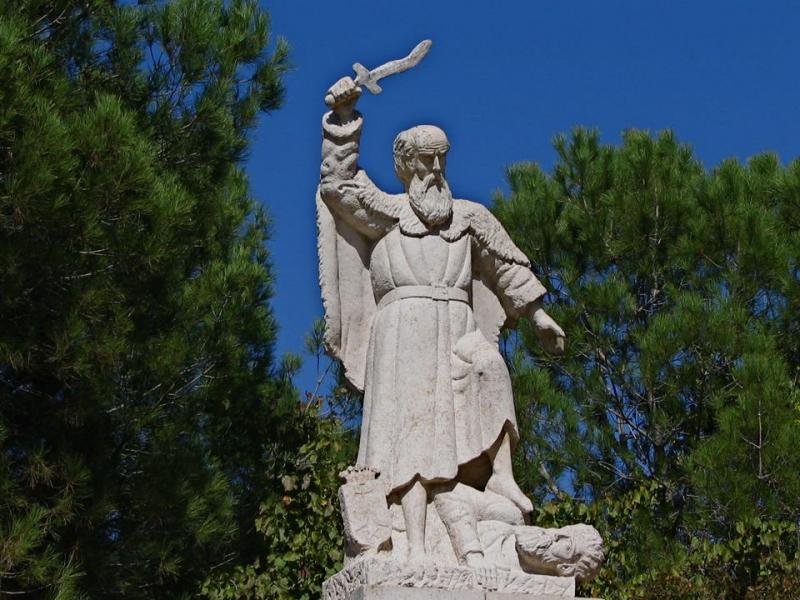
Statue of Elijah at Mukhraka (© Biblicalisraeltours.com)

On the northern slope of Mount Carmel, near the Haifa beach, is a cave where the prophet is believed to have meditated before his fateful encounter with the priests of Baal.

In this encounter, described in 1 Kings 18:1-40, Elijah issued a challenge to 450 pagan priests. Before an assembly on the summit of Mount Carmel, he called on the priests to seek fire from their god Baal to light a sacrifice.

When Baal failed to respond to their pleading, Elijah rebuilt the ruined altar of the Lord and offered his own sacrifice. Immediately fire from heaven consumed the offering, even though it had been soaked in water.


Venerated by four faiths

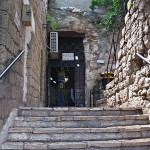
Elijah’s Cave can be approached by stairs from Allenby Road, near Haifa’s cable car. It is also accessible down a steep path from the Carmelite church on Stella Maris Road.

Elijah's Cave

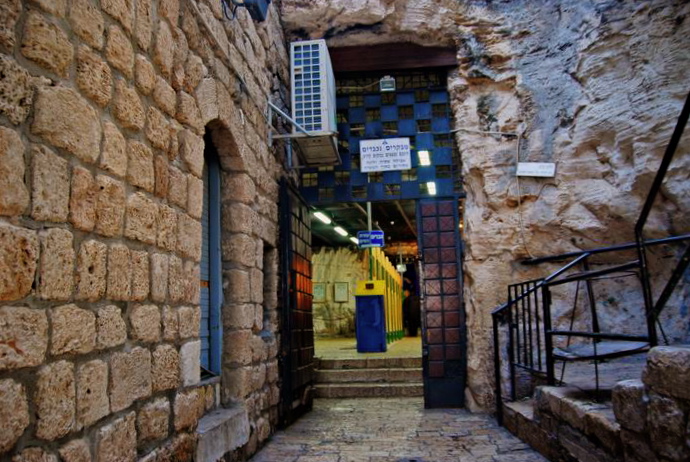
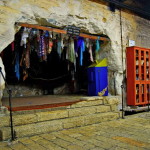
Entry to Elijah’s Cave, males to the right, females to the left (© BibleWalks.com)

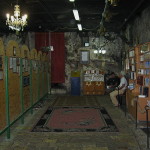
The cave, about 14 metres long, is situated in a residential dwelling. It is open to the public, with separate areas for males and females. Adjacent buildings served as a hostel from the late 19th century.

Elijah is venerated by Jews, Christians, Muslims and Druze, all of whom come as pilgrims. Writings left by pilgrims in past centuries can be seen on the cave walls.

Curative properties have been ascribed to the cave over the years, including the curing of mental illnesses.

Possible site of ‘school of prophets’

Among the traditions associated with the cave is that Elijah hid here from the wrath of Jezebel, who had introduced worship of her Phoenician god Baal to the land.

Elijah's Cave

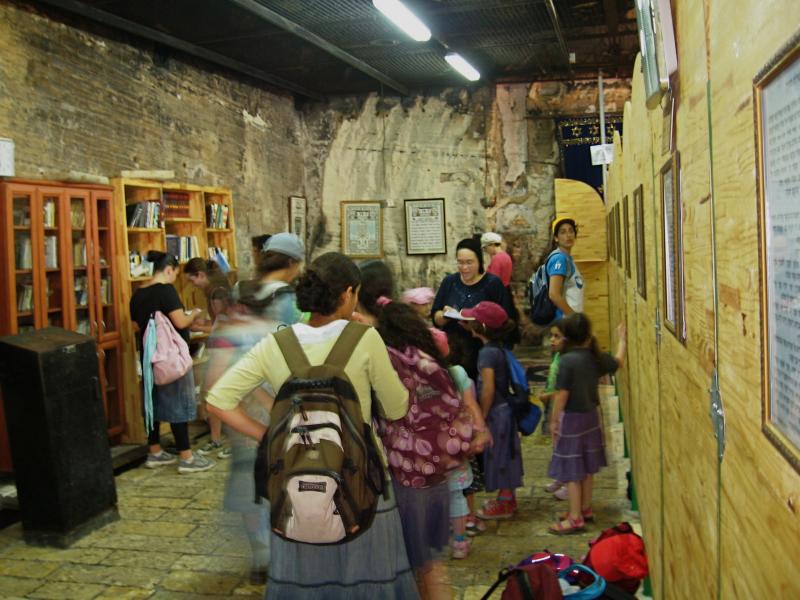
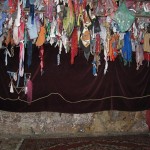
Women’s section of Elijah’s Cave (Daniel Ventura)

It is also thought that Elijah established a “school of prophets” here on his return from exile at Mount Sinai. If so, this would be where his successor Elisha, among others, studied.

No Old Testament prophet is referred to as frequently in the New Testament as Elijah. Both Jesus and John the Baptist were on occasions thought to be reincarnations of Elijah.

A small cave under Stella Maris Monastery, at the western edge of Mount Carmel, is held by a Christian tradition to be a place where Elijah also occasionally lived.

Other sites in the area:

Mount Carmel

Stella Maris Monastery

Baha’i Shrine


In Scripture:

Elijah triumphs over the priests of Baal: 1 Kings 18:1-40


Administered by: Israel Ministry of Religious Affairs

Open: Sun-Thur 8am-5pm, Fri 8am-1pm

References

Blaiklock, E. M.: Eight Days in Israel (Ark Publishing, 1980)
Brownrigg, Ronald: Come, See the Place: A Pilgrim Guide to the Holy Land (Hodder and Stoughton, 1985)
Freeman-Grenville, G. S. P.: The Holy Land: A Pilgrim’s Guide to Israel, Jordan and the Sinai (Continuum Publishing, 1996)
Gonen, Rivka: Biblical Holy Places: An illustrated guide (Collier Macmillan, 1987)
Inman, Nick, and McDonald, Ferdie (eds): Jerusalem & the Holy Land (Eyewitness Travel Guide, Dorling Kindersley, 2007)


External links

Elijah’s Cave, Carmel (BibleWalks)
Elijah’s Cave, Haifa (Sacred Destinations)


« Newer PostsOlder Posts »

Attributions

Filed under: Extras — 5:13 pm

Most of the images on this website have been created by Seetheholyland.net. Some others are in the public domain, while a number are shared under Creative Commons Licenses.

The following list (with full names in alphabetical order) provides links to the sources.


Adiel Io

Adriatikus

Alex Ostrovskiy

Alicia Bramlett

American Friends of the Episcopal Diocese of Jerusalem

Amit A.

Ana Paula Hirama

Ana Ulin

Anthony Majanlahti

A ntv

Arielhorowitz

Asaf T.

A. Tomer

ATS Pro Terra Sancta

Austinevan

Avishai Teicher

Baptismsite.com

Ben Adam

Ben Gray

Berthold Werner

Bethlehem University

B. Hartford J. Strong

BiblePlaces.com

BibleWalks.com

Biblicalisraeltours.com

Bill Rice

Birgitta Seegers

Blessedegypt

Bob McCaffrey

Boris Katsman

Bounty24

Brett Wagner

Brian Jeffery Beggerly

Brian McElaney

Britchi Mirela / Wikimedia

Bukvoed

Caleb Zahnd

Chad Emmett

Chad Rosenthal

Charles Meeks

Chris Yunker

Clare Jim

Clarabesque

Claudius Prösser

Community of the Beatitudes

CopperKettle

CTS

Custodia Terrae Sanctae

Dainis Matisons

Dale Gillard

Dan Gibson

Daniel Baránek

Daniel Ventura

Darko Tepert

David Bjorgen

David King

David Lisbona

David Loong

David Niblack

David Pishazaon

David Poe

David Q. Hall

Dennis Jarvis

Deror Avi

Diego Delso

DiggerDina

Disoculated

Djampa

DYKT Mohigan

Don Schwager

Dror Feitelson

EdoM

Effi Schweizer

Elab.lub

Eric Coulston

Eric Stoltz

Esme Vos

Ester Inbar

Fadi Shawkat Haddad

Ferrell Jenkins

Fili Feldman

Filip Nohe

Francesco Gasparetti

Frank Behnsen

Freeinfosociety.com

Freestockphotos.com

Fritzmb

Gabrielw.tour / Wikimedia

Geoff Robinson

George David Byers

Geraint Owen

Gérard Janot

Giora Lev

Glenn Johnson

Golf Bravo

Grauesel

Greek Orthodox Patriarchate of Jerusalem

Gregory Edwards

Gregory Jenks

Gugganij

Günther Simmermacher

Gustavo Jeronimo

Hanay

Holy Land Photos

Ian W. Scott

Ilan

Ilan Arad

Ilan Sharif

Isaac Shweky

Israel Antiquities Authority

Israel Ministry of Tourism

Israelseen.com

Israeltourism

Itai

James Emery

James McDonald

Jean Housen / Wikimedia

Jean Robert Thibault

Jenny Hitchcock

Jerzy Strzelecki

Jesper Särnesjö

Jim Joyner

J. M. Rosenfeld

Joe Freeman

John Price

John Sanidopoulos

John S. Y. Lee

Jongleur100

Jordan Tourism Board

Joseph Koczera

Josh Evnin

Judy Lash Balint

Kourosh

Kaasmail

Kasper Nowak

Kpjas

Kudomomo

Landious Travel

Lissa Caldwell

Little Savage

Local’s Guide to Egypt

LordAmeth

Luigi Guarino

Lyn Gateley

Magdala Center — Universidad Anáhuac México Sur

Magdala Project

Magister

Marcin Monko

Marie-Armelle Beaulieu

Matanya

Matyas Rehak

Miaow Miaow

Michael Gunther / Wikimedia

Michel Duijvestijn

Mohamed Yahya

Mrbrefast

NASA

Nazareth360.com

Nazareth Cultural and Tourist Information Association

Nazareth Village

Nina Jean

Nir Ohad

Oliver McCloud

Oregon State University Archives

Ori~

Orientalizing

Orthodox Wiki

Pacman

PalFest

Patrick Brennan

Phys.org

Picturesfree.org

Pikiwiki.org.il

Rachel Ricci

Religion Wiki

Rick Lobs

Ron Almog

Schmuliko

Sergey Serous

Shmuel Browns

Shuki

Silencedogood97

Sir Kiss

Stanislao Lee

State Information Service of Egypt

Stefano Guidi   

Steve Peterson

Steven Straiton

St-katherine.net

St Mary’s Church, Zeitoun

Susie Cagle

Svetlana Makarova

Tasher Bahoo

TPG Photos

Tiamat

Tom Powers

Torbenbrinker

Vassia Atanassova

Verity Cridland

Visitjordan.com

Visitpalestine.ps

VizAziz

Wayne McLean

Welcometohosanna.com

Whitecapwendy

Wikimedia

Yair Talmor

Yair Haklai

Yehudit Garinkol

Yoav Dothan

Yoninah

Zairon / Wikimedia

Zeev Barkan

Zehnfinger

Zorro2212

Zvonimir Atletic

« Newer PostsOlder Posts »

Historical timeline

Filed under: Extras — 1:13 pm

Pre-Biblical and early Biblical times

BC

c. 7000: Jericho is a walled settlement

c. 5000-4000: Land of Canaan is occupied by Canaanites, then Amorites and Jebusites.

c. 2000: Founding patriarch Abraham and his tribe settle in what becomes Judea.

c. 1500: Abraham’s descendants, led by Joseph, settle in Egypt.

c. 1260: Moses leads Israelites in Exodus from Egypt.

c. 1200: Israelites under Joshua enter Promised Land.

c. 1000: David captures Jebusite city of Jerusalem and makes it his capital.

c. 970: Solomon builds First Temple.

Two kingdoms

c. 930: Israel splits into northern kingdom of Israel and southern kingdom of Judah (including Jerusalem).

c. 720: Northern kingdom conquered by Assyria and its 10 tribes sent into exile.

c. 700: Southern kingdom’s King Hezekiah cuts tunnel from Gihon Spring to Pool of Siloam.

701: Assyrians conquer much of southern kingdom; Jerusalem is besieged but survives.

597: Nebuchadnezzar II of Babylon captures southern kingdom and Jerusalem.

587: Following rebellion, Nebuchadnezzar destroys Jerusalem and First Temple, deporting most of population to Babylon (in present-day Iraq).

Persian rule

539: Cyrus the Great of Persia conquers Babylon and allows Jews to return from captivity.

515: Second Temple is completed.

444: Nehemiah rebuilds city walls of Jerusalem.

Hellenistic rule

332: Alexander the Great conquers Persian Empire, including all of Palestine.

323: Alexander dies and his kingdom is divided into four parts; Palestine falls under Ptolemaic Dynasty of Egypt, then under Seleucid Empire of Syria.

175: King Antiochus IV of Syria bans traditional Jewish practices and desecrates Temple.

167: Judas Maccabeus leads successful revolt against Seleucid Empire, rededicates Temple and restores religious freedom.

Hasmonean rule

140: Simon Maccabeus, a brother of Judas, establishes Hasmonean Dynasty, which rules an independent Jewish kingdom for 103 years.

63: Rivalry between Simon Maccabeus’ great-grandsons, Hyrcanus II and Aristobulus II, brings civil war that ends with Roman general Pompey controlling the kingdom.

37: Rome proclaims Herod as King of Israel, now a Roman client state, ending the Hasmonean Dynasty.

Roman rule

20: Herod expands Temple Mount and rebuilds Temple.

c. 3: Jesus Christ is born in Bethlehem.

1: Herod dies and his kingdom is divided among his sons, Philip, Antipas and Archelaus.

__________________________________________________________________________

AD

26: Pontius Pilate becomes procurator of Roman province of Judea.

c. 27: Jesus is baptised by his cousin John the Baptist and begins his public ministry.

c. 30: Jesus is condemned to death and crucified.

c. 32: Stephen, first Christian martyr, is stoned to death.

c. 34: Paul is converted on the way to Damascus.

41-44: Jerusalem’s “Third Wall” is built by King Agrippa I.

c. 50: Council of Jerusalem, first recorded council of Christian leaders, is held.

c. 45-120: Books of the New Testament are written.

67: During First Jewish-Roman War, Christians in Palestine flee to Pella in Jordan.

70: Romans destroy Jerusalem and Second Temple.

73: Masada falls to Romans.

130: Emperor Hadrian rebuilds Jerusalem, renaming it Aelia Capitolina, and puts pagan temple over site of the Crucifixion and Resurrection.

135: Hadrian crushes Second Jewish Revolt and expels Jews from Palestine.

301: Armenia becomes first nation to make Christianity its state religion.

313: Emperor Constantine I legalises Christianity.

325: At Council of Nicaea, Bishop Macarius of Jerusalem asks Constantine to reclaim site of crucifixion and Resurrection and build a church there.

326-7: Constantine’s mother, Helena, visits Holy Land, finds True Cross and orders churches built on sacred sites; large-scale pilgrimages begin.

Byzantine rule

330: Constantine moves his capital from Nicomedia to Byzantium (renamed Constantinople, now Istanbul).

335: Church of the Holy Sepulchre is consecrated.

380: Emperor Theodosius I makes Christianity the religion of the Roman Empire.

386-420: Jerome produces Vulgate translation of Bible in his Bethlehem cave.

395: Roman Empire splits into East and West.

c. 500: Jerusalem Talmud completed by rabbinic schools in Galilee.

570: Birth of Muhammad.

614: Persians capture Jerusalem, destroying many churches and burning Church of the Holy Sepulchre.

622: Muhammad escapes assassination in Mecca and flees to Medina, his flight marking first year of Islamic calendar.

629: Emperor Heraclius I re-establishes Byzantine rule in Jerusalem and recovers True Cross stolen by Persians.

Islamic rule

638: Islamic forces conquer Jerusalem, beginning rule by succession of Arab dynasties.

661-1000: Palestine variously ruled by Arab caliphs in Damascus, Baghdad and Cairo.

692: Dome of the Rock completed on Temple Mount.

1009: Sultan al-Hakim destroys Church of the Holy Sepulchre.

1048: Church of the Holy Sepulchre restored by Emperor Constantine Monomachus.

1054: Great Schism splits Christian Church into Eastern (Greek) and Western (Latin) branches.

1071: Seljuk Turks capture Jerusalem, persecuting Christians, desecrating churches and barring pilgrims.

Crusader rule

1099: First Crusade captures Jerusalem and establishes Latin kingdom; Dome of the Rock becomes church called Templum Domini (Temple of the Lord).

1149: New Church of the Holy Sepulchre completed.

1187: Sultan Saladin defeats Crusaders at Horns of Hattin above Sea of Galilee, then takes Jerusalem.

Islamic rule again

1219: St Francis of Assisi visits Egypt and meets Sultan Melek al-Kamil.

1229: During Sixth Crusade, Holy Roman Emperor Frederick II negotiates return of Jerusalem and other Christian sites to Crusader kingdom.

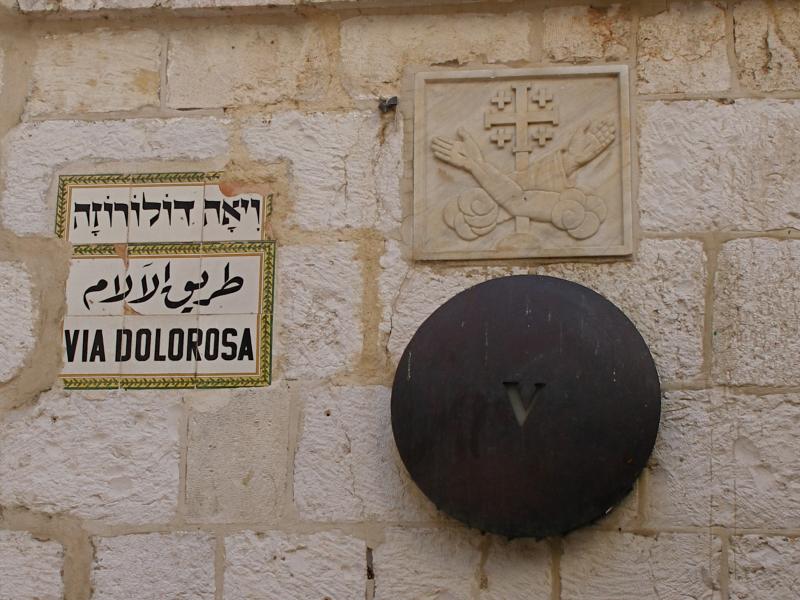
1229: Franciscans establish themselves in Jerusalem near Fifth Station of Via Dolorosa.

1244: Jerusalem is sacked by Khwarezmian Tartars; control quickly passes to Egyptian Ayyubids and then Mamluks, who rule until 1517.

1291: Crusaders’ last foothold, Acre, falls to Mamluks.

1342: Pope Clement VI formally establishes Franciscan Custody of the Holy Land.

Ottoman rule

1517: Ottoman Turks take control of Palestine from Mamluks.

1517: Martin Luther begins Protestant Reformation in Europe.

1538: Sultan Suleiman the Magnificent builds present walls of Old City of Jerusalem.

1757: Ottoman Turkish edicts give Greek Orthodox major possession of Church of the Holy Sepulchre and other holy places.

1808: Fire rages in Church of the Holy Sepulchre; Tomb of Christ is severely damaged when dome falls in.

1812: Swiss explorer Johann Ludwig Burckhardt rediscovers Nabatean city of Petra.

1839: British Jew Sir Moses Montefiore proposes idea of a modern Jewish state.

1842: First Anglican bishop of Jerusalem, Michael Solomon Alexander, a converted Jewish rabbi, arrives.

1849: Christ Church in Jerusalem, oldest Protestant church in Middle East, is built.

1852: Under pressure from Russia, Ottoman Sultan Abd-ul-Mejid directs that possession of holy places remains according to 1757 edict.

1853-56: Possession of holy places is one cause of Crimean War between Russia and major European powers.

1860: First Jewish immigrant neighbourhood outside Old City of Jerusalem is established, funded by Sir Moses Montefiore.

1878: “Status Quo” defining possession of holy places is incorporated into international law by Treaty of Berlin.

1883: General Charles Gordon proposes Skull Hill as Calvary and Garden Tomb as place where Christ was buried.

1884: Mosaic map of Holy Land discovered in floor of 6th-century church at Madaba, Jordan.

1909: Joseph Baratz and 11 others establish first kibbutz in Palestine, called Kvutzat Degania (“Wheat of God”), at southern end of Sea of Galilee.

1917: British government’s Balfour Declaration backs establishing Jewish homeland in Palestine, without prejudice to “civil and religious rights” of non-Jewish population.

British mandate

1917: British forces under General E. H. Allenby capture Palestine from Ottoman Turks.

1922: League of Nations approves British mandate of Palestine.

1946: Jordan gains independence from Britain.

1947: United Nations Partition Plan calls for a Jewish state and an Arab state in Palestine, with Greater Jerusalem (including Bethlehem) under international control; most Jewish groups accept plan but Arabs reject it.

1947: Dead Sea Scrolls are discovered at Qumran.

1948: Amid civil unrest and violence, Britain withdraws from mandate.

Israel and Palestinian Territories

1948: After Jewish provisional government declares Israel an independent state, Arab forces invade.

1949: Israel prevails in Arab-Israeli War, though Egypt holds Gaza, and Jordan the West Bank and East Jerusalem; more than 700,000 Palestinians become refugees.

1967: In Six-Day War against Egypt, Jordan and Syria, Israel occupies Sinai, Gaza, Golan Heights, West Bank and East Jerusalem.

1969: Church of the Annunciation in Nazareth, largest Christian church in Middle East, is completed.

1973: In Yom Kippur War against Egypt and Syria, Israel makes further territorial gains.

1979: Israel and Egypt sign peace treaty; Israel agrees to return Sinai to Egypt.

1986: Remains of fishing boat from time of Jesus found in Sea of Galilee.

1987-93: Palestinians carry out First Intifada (uprising) against Israeli occupation.

1993: Israel gives Palestinian National Authority limited autonomy in West Bank and Gaza.

1994: Jordan and Israel sign peace treaty.

1996: Excavations begin at likely site of Christ’s baptism, in former minefield at Bethany Beyond the Jordan.

1997: Interchurch co-operation completes 36-year restoration of Church of the Holy Sepulchre; reconstruction of Tomb of Christ edicule remains to be done.

2000-05: Second Intifada follows controversial visit by Israeli politician Ariel Sharon to Temple Mount.

2002: Israel Defence Forces besiege Palestinian militants in Church of the Nativity, Bethlehem, for 39 days.

2002: Israel begins building 700-km West Bank separation wall.

2005: Remains of early 3rd-century church found at Megiddo.

2005: Israel withdraws settlers and military from Gaza.

2007: Archaeologist Ehud Netzer discovers Herod the Great’s long-lost tomb at Herodium.

2008: Responding to rocket attacks, Israel launches 22-day war against Gaza.

2009: Archaeologists in Nazareth uncover residential building from time of Jesus.

2012: United Nations General Assembly accepts Palestine as a “non-member observer state”.

2013: City of David excavators find clay seal inscribed with name of Bethlehem, first reference to the city outside the Bible.

2014: Discovery of nine previously unknown Dead Sea Scrolls announced; the tiny texts were inside unopened tefillin (prayer cases) found at Qumran in 1952.

2014: Responding to rocket fire, Israel launches seven-week bombardment of Gaza.

2017: Restoration of Tomb of Christ in Church of the Holy Sepulchre is completed.

2020-21: Covid-19 pandemic causes many deaths and disrupts the economy of the Holy Land as lockdowns stop pilgrimages and tours.

2021: About 80 new fragments of biblical scrolls, bearing lines from the books of Zechariah and Nahum, are found in the Judaean desert.


« Newer PostsOlder Posts »

Glossary

Filed under: Extras — 1:06 pm

Abraham

Acts of the Apostles

Annunciation

Apocrypha

Apostle

Aramaic

Archaeology

Ark of the Covenant

Armageddon

Ascension

Baha’i

Barluzzi, Antonio

Basilica

BC and AD, or BCE and CE

Bedouin

Bible

Byzantine

Canaan

Choir

Cistern

Constantine

Crusades

Custody of the Holy Land

Decapolis

Essenes

Eusebius

Exile

Exodus

Franks

Gallicantu

Gate

Gentile

Gospel

Hebrew

Helena

Herod the Great

Hellenism

Icon

Iconostasis

Incarnation

Islam

Jerome

Josephus

Kibbutz

Kosher

Liturgy

Lord’s Prayer

Martyr

Messiah

Mikvah

Mishnah

Mosaic

Moses

Mosque

Muhammad

New Testament

Old Testament

Orthodox

Ossuary

Ottoman Empire

Palestine

Parable

Passover

Patriarch

Pentecost

Pharisee

Pontius Pilate

Prophet

Promised Land

Qur’an

Ramadan

Resurrection

Sabbath

Sadducees

Samaritans

Sarcophagus

Souk

Stations of the Cross

Status Quo

Stele

Stoa

Synagogue

Talmud

Tel/Tell

Temple

Torah

Transfiguration

Trinity

Vulgate

Wadi

West Bank

Yahweh

Yom Kippur

Zealot

Abraham

The founding patriarch of the Israelites, Ishmaelites, Midianites and Edomite peoples, he is considered father of the three monotheistic faiths tied to the Holy Land today — Judaism, Christianity and Islam.

Genesis 17:5 says God changed his name from Abram (probably meaning “the father is exalted”) to Abraham (meaning “father of many”), then sent him from his home in Mesopotamia (present-day Iraq) to Canaan.

Here Abraham entered into a covenant: He would recognise Yahweh as his God, and in return he would be blessed with numerous offspring and the land would belong to his descendants.


Acts of the Apostles

The fifth book of the New Testament, it is traditionally ascribed to Luke the evangelist and is a sequel to his Gospel. It described the growth of the Christian Church during the 30 years after Jesus’ Ascension and especially the work of the apostle Paul.


Annunciation

The announcement by the archangel Gabriel to the Virgin Mary that she would become the mother of the Son of God, who would be named Jesus.

Most Christians celebrate the Feast of the Annunciation on March 25, nine months before Christmas.


Apocrypha

Early religious books that are not accepted as belonging to the Bible (though, in spite of its usually negative connotation,  apocrypha actually means “hidden” or “concealed”).

In particular, the Apocrypha refers to the books from the Greek translation of the Old Testament that are included in the Roman Catholic and Eastern Orthodox Bibles, but not in the Jewish or Protestant Bibles (although they were originally included in the 1611 King James Version).

In general, the term apocryphal is applied to any scriptural text that is excluded from a Bible. Since different denominations differ on what their Bible contains, there are different versions of the Apocrypha.

The word is also applied to texts of uncertain authenticity, or that may be fictional or spurious. These include several “gospels” and lives of the apostles.
 

Glossary

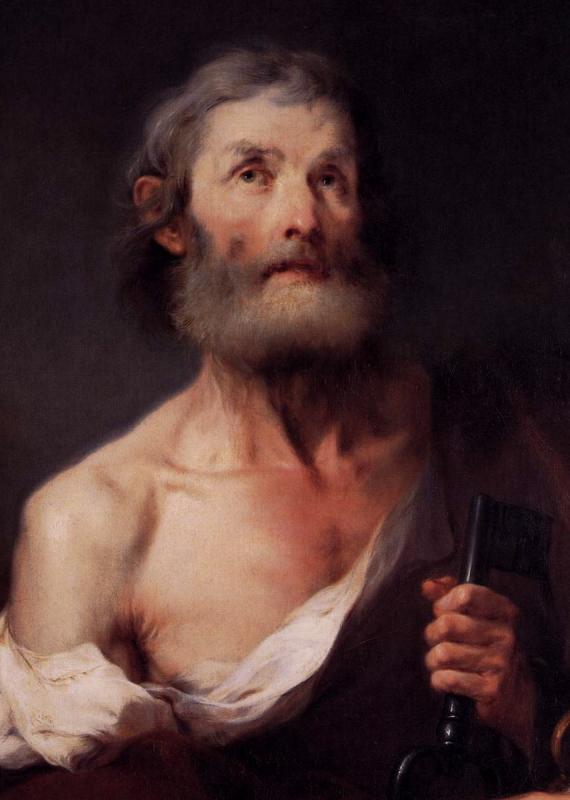
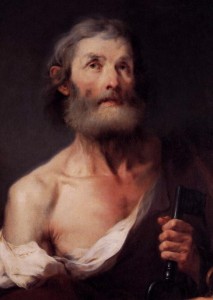
The apostle Peter, by Giuseppe Nogari, 1699-1766 (Wikimedia)

Apostle

One of the early missionaries of the Christian Church, especially one of “The Twelve”, the inner circle of disciples who had been chosen and trained by Jesus to spread his message. The word means “one who has been sent”.

Traditionally, The Twelve include Peter, Andrew, James the Greater, James the Lesser, John, Philip, Bartholomew, Matthew, Thomas, Thaddeus, Simon and Judas Iscariot (who was replaced by Matthias after Judas betrayed Jesus).


Aramaic

A language related to Hebrew and Arabic, and probably the mother tongue of Jesus. It was the language most people spoke in the villages and towns of Palestine and is the main language of the Jewish Talmud. Now it is the first language of scattered communities in several countries of the Middle East, and the language of worship in the Syriac Orthodox Church.


Archaeology

The scientific study of ancient civilisations, usually by excavating historical or sacred sites. It involves the discovery and interpretation of material remains left behind by those who lived there long ago. In the Holy Land it helps to re-create the environment and culture in which biblical events occurred. The first archaeological excavations in the Holy Land took place at Nineveh in 1842.


Ark of the Covenant

A wooden box, covered with gold, containing the stone tablets inscribed with the Ten Commandments. Carried by the Israelites on their Exodus journey through the desert, it represented the presence of God among his people and was the most sacred religious symbol of the Hebrew people. Eventually installed in the holiest chamber of Solomon’s Temple, it disappeared when Jerusalem was destroyed by the Babylonians in 587 BC.


Armageddon

A place name given in Revelation 16:16 as the location of the final battle in which good will triumph over evil.

The name comes from the Hebrew name Har-Megiddo, meaning “Mountain of Megiddo”. The mount of Megiddo is near the modern settlement of Megiddo, in northern Israel, situated at a strategic crossroads in the Jezreel valley and at the foot of the Carmel mountain range.

Invaders have fought battles here since ancient times.


Ascension

The departure of Jesus from earth to heaven, 40 days after his Resurrection. Tradition locates the event on the top of the Mount of Olives in Jerusalem, at a place now marked by the Dome of the Ascension.

Christians celebrate the Feast of the Ascension on the Thursday of the sixth week after Easter.


Baha’i

One of the youngest of the world’s major religions, this monotheistic faith was founded by Mizra Hussein Ali, who became known as Bahá’u’lláh, in Iran in 1863. Its world headquarters is on Mount Carmel in Haifa.

The teachings of Bahá’u’lláh revolve around the principle of the oneness of humankind. The Baha’i faith accepts all religions as having true and valid origins.
 

Glossary

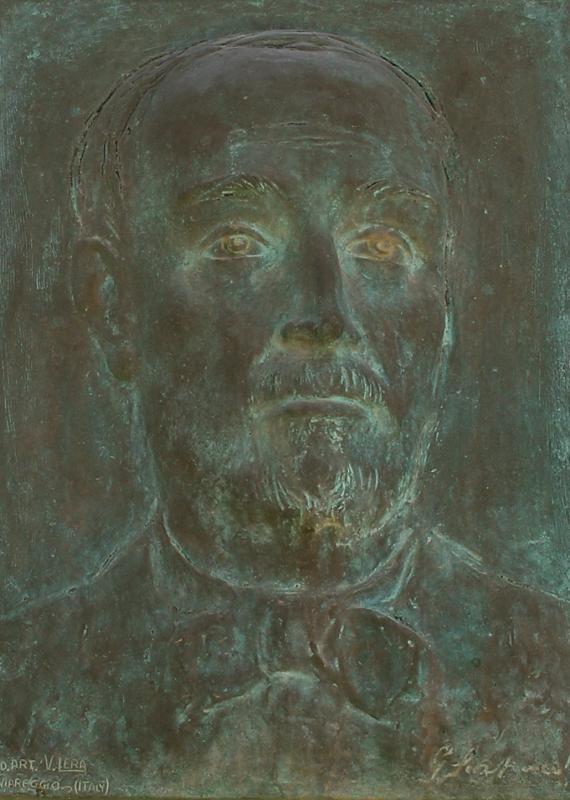
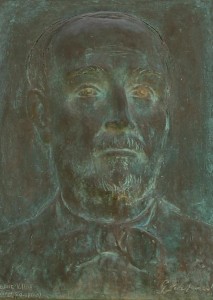
Antonio Barluzzi, relief displayed outside Church of the Transfiguration, Mount Tabor (Seetheholyland.net)Antonio

Barluzzi, Antonio

An Italian architect (1884-1960) who designed several of the most striking churches and sanctuaries in the Holy Land. These include the Church of All Nations at Gethsemane, Church of the Transfiguration on Mount Tabor, Chapel of the Angels at Shepherds’ Field, Church of the Visitation at Ein Karem, Church of Dominus Flevit on the Mount of Olives, and Church of the Beatitudes by the Sea of Galilee.

A prayerful man, he lived a humble life and meditated at length on the Gospels before undertaking any design. He always tried to make his buildings express the events they commemorated. Example are the teardrop-shaped Dominus Flevit church with tear phials on the four corners of its dome to recall Christ’s weeping over Jerusalem, and the Shepherds’ Field chapel shaped like a Bedouin tent.

Barluzzi’s lifetime dedication to building shrines in the Holy Land has led to the comment that in Israel there are three types of architecture: Graeco-Roman, Byzantine and Barluzzi. A bas-relief of the architect is set into a wall outside the Church of the Transfiguration on Mount Tabor.


Basilica

A rectangular building divided by a central nave and side aisles, usually formed by rows of columns. Such public buildings in Rome served as centres of justice or administration. Architects adapted this form for Christian churches from the fourth century AD.


BC and AD, or BCE and CE

BC (Before Christ) and AD (Anno Domini, meaning “in the Year of Our Lord”) indicate years in the Julian and Gregorian calendars. The reference year is the birth of Christ but there is no year 0, so 1 BC is immediately followed by AD 1.

This usage was developed in the 6th century AD by a scholarly monk called Dionysius Exiguus (Denis the Little). Dionysius established what he thought was the year of the birth of Jesus, but he was out by at least four years. Scholars now believe that Jesus was born between 4 and 7 BC.

BCE (meaning Before the Common [or Christian] Era) and CE (Common [or Christian] Era) are secular designations for the same numbering system.

Jews, who in any case have their own Hebrew calendar, do not normally use BC and AD.
 

Glossary

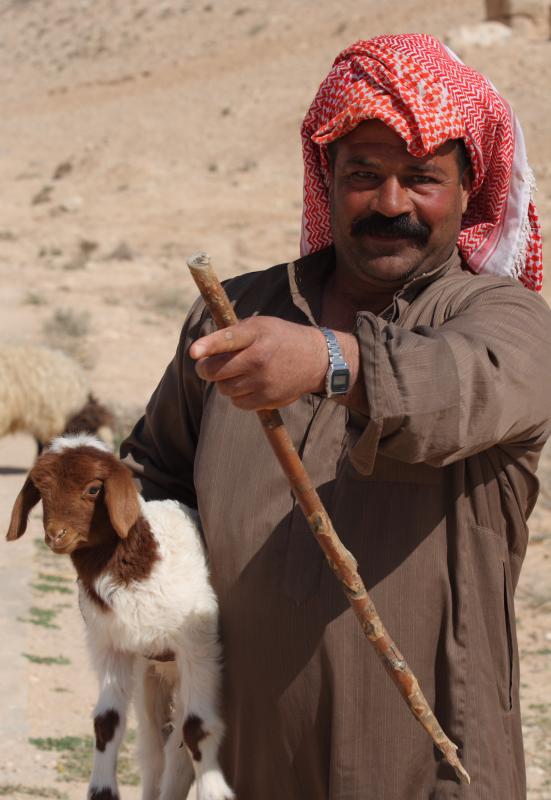
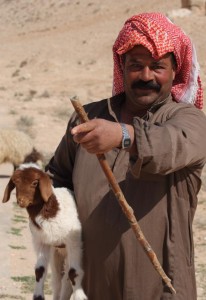
A modern Bedouin (Ed Bramley / Wikimedia)

Bedouin

Desert-dwelling and Arabic-speaking nomads who inhabit much of the Middle East and northern Africa. Bedouin have traditionally made their living by animal husbandry, those herding camels being best known.

Since many governments have nationalised their traditional range lands, many have now settled in Israel and other countries.


Bible

The accepted collection of sacred books of Judaism and Christianity, divided into Old and New Testaments. However, Protestants and Jews on the one hand, and Roman Catholics and Orthodox Christians on the other, differ on which books belong in the Old Testament.

Jewish rabbis finalised their collection of holy books (the Hebrew Bible) by the end of the first century AD. They included only books written in Hebrew or Aramaic and excluded those originally written in Greek (though original Hebrew versions of some have since been found).

The early Christian Church drew up its first listing of texts accepted as authentically inspired in the 4th century. It included several books that were part of the Greek Old Testament from pre-Christian times (including Judith, the Wisdom of Solomon and 1 and 2 Maccabees).

The word Bible is derived from the Greek “biblia” (the books). The traditional division of chapters was made in the 13th century, and the numbering of verses in the 16th century.

Following the Jewish tradition, the Protestant reformers of the 16th century rejected the Greek Old Testament books, ranking them among those texts of uncertain authenticity called the Apocrypha, a word actually meaning “hidden” or “concealed”.

The Bibles of the Eastern churches include some books not accepted in the Catholic and Protestant Bibles. Other “apocryphal” texts are not included in any Bible.


Byzantine

A style of architecture, art and cultural influence arising from the ancient city of Byzantium (later renamed Constantinople and now Istanbul). From about AD 330 until 1453, this city replaced Rome as the capital of the Roman Empire and major governing force of the Mediterranean world.


Canaan

The land God promised to the descendants of Abraham. Though various boundaries are given in the books of Genesis and Exodus, the Promised Land apparently encompassed present-day Israel, Palestine and Lebanon, plus parts of Jordan, Syria and Egypt.

In Leviticus 25:23 God tells Moses the land still belongs to him and the Israelites are “but aliens and tenants”. In Deuteronomy 30:18 Moses tells the Israelites that continued possession of the land depends on “holding fast” to God.


Choir

Apart from being a group of singers, the choir in church architecture is the area between the transept and the main apse. This is where stalls for the clergy or liturgical singers are placed.


Cistern

A receptacle for liquids, usually a hole dug in the ground to collect and store rainwater. Cisterns are frequently mentioned in the Bible, because of the Holy Land’s scarcity of springs and infrequent rain.
 

Glossary

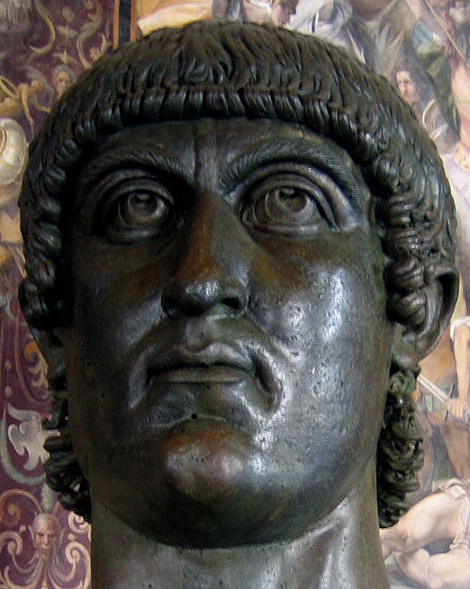
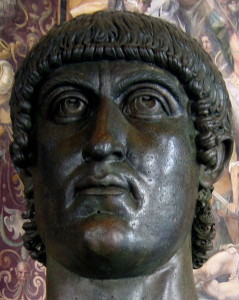
Emperor Constantine I, from a Roman statue (Anthony Majanlahti / Wikimedia)

Constantine

Emperor of Rome from AD 306 to 337, who is best known for being the first Roman emperor to become a Christian. He ceased persecutions of Christians and granted freedom of religion within his empire.

During a building campaign overseen by his mother, St Helena, he built many churches in the Holy Land, including the original Church of the Holy Sepulchre in Jerusalem and Church of the Nativity in Bethlehem.


Crusades

A series of military campaigns from Christian Europe in the Middle Ages to regain control of the Holy Land from Muslim rule and resume safe access for pilgrims. There were nine Crusades over a period of 200 years, beginning in 1095.

Crusaders captured Jerusalem in 1099. Their Kingdom of Jerusalem fell after a decisive defeat by the sultan Saladin in 1187 at the Horns of Hattin, overlooking the Sea of Galilee. The Crusaders’ last stronghold, Acre, survived until 1291.

The excesses of the Crusaders sowed seeds of mistrust between East and West that still remain. But historians also recognise the enormous contribution the Crusades made to exchanges in trade, culture, scholarship and technology between Europe and the Middle East.

For pilgrims and tourists, the Crusaders left a vast legacy of castles, churches and fortifications in the Holy Land.


Custody of the Holy Land

An agency of the Catholic Church that administers and maintains 50 sacred sites in Israel, Jordan and Syria. Part of the international Franciscan religious order, its brown-robed friars are a familiar site in the holy places.
Glossary

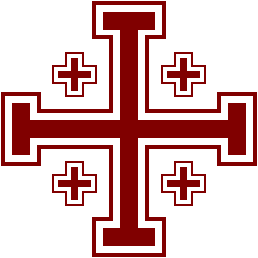
The Jerusalem Cross (Crusader Johnael / Wikipedia)

The custody (also known by its Latin name, Custodia Terrae Sanctae) has had a presence in the Holy Land since early in the 13th century. Its founder, St Francis of Assisi, travelled through Egypt, Syria and Palestine in 1219 and 1220.

Its role encompasses prayer and worship in the holy places, service to local Christians, and hospitality to pilgrims (including guesthouses and spiritual support). It also provides guides for pilgrimage groups and runs the Christian Information Centre just inside the Jaffa Gate in Jerusalem.

The symbol of the Franciscan custody is the Jerusalem Cross. It consists of an heraldic cross with crossbars, surrounded by four smaller crosses. The smaller crosses are variously said to symbolise either the four Gospels or the four directions in which the Christian message spread from /jerusalem/. The five crosses together are seen to symbolise the five wounds of Christ.


Decapolis

A grouping of 10 cities in Palestine and the Transjordan, founded by Alexander the Great and his successors around 323 BC.

They were Scythopolis/Beit She’an (the capital), Hippos, Philadelphia (modern Amman), Gerasa (Jerash), Gadara, Pella, Dion, Canatha, Raphana and Damascus.

The Decapolis was one of the few areas visited by Jesus in which Gentiles were in the majority.


Essenes

Members of a strict and highly organised Jewish sect that flourished at the time of Jesus. Apparently formed in reaction to what they saw as religious laxity in Jerusalem, they lived an austere lifestyle and encouraged celibacy.

The Dead Sea Scrolls found at Qumran are believed to have belonged to a community of Essenes. The sect ceased to exist during the 2nd century AD.
 

Various

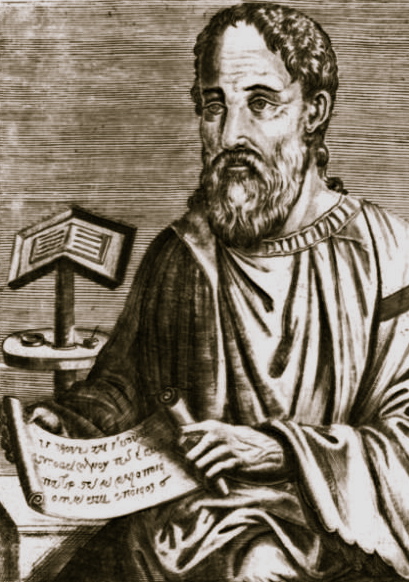
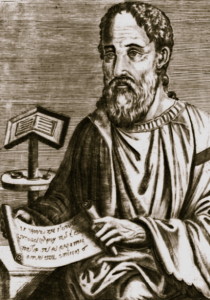
Pioneer historian Eusebius of Caesarea (© Community of the Beatitudes)

Eusebius

Bishop of Caesarea in the early 4th century and prolific author of histories, apologetic and theological works, and biblical commentaries.

Eusebius of Caesarea (c.260-339) is regarded as the father of Church history. His Church History is the principal primary source on the rise of Christianity during its first three centuries.

Another surviving work, the Onomasticon, is an alphabetical dictionary of biblical place names, often identifying locations with places existing in Eusebius’ own lifetime.


Exile

The deportation of many of the inhabitants of Jerusalem and Judaea to Babylonia (in present-day Iraq) during the 50 years from 587 BC.


Exodus

The escape of the Israelites from slavery in Egypt under the leadership of Moses. The central event of the Hebrew Bible, the Exodus is also a model for subsequent experiences of liberation in biblical, Jewish, Christian and Muslim traditions.

The Exodus entails not only the events in Egypt but also those encompassed within the period from Moses to Joshua, including the wilderness wanderings and the conquest of the land of Canaan.


Franks

A name originally given in the Middle East to Christians from western Europe, in particular the French who dominated the Crusader Kingdom of Jerusalem, and subsequently to the Franciscans who were seen as their successors.

A reminder of the name survives at the Church of the Holy Sepulchre. A small chapel at the top of the stairway to the right of the entrance is called the Chapel of the Franks, meaning Chapel of the Franciscans.


Gallicantu

A Latin word meaning “cock-crow”. The Church of St Peter in Gallicantu, on the eastern slope of Mount Zion in Jerusalem, commemorates Peter’s triple rejection of Jesus “. . . before the cock crows twice”.

The first shrine dedicated to Peter’s repentance was erected here in AD 457. A golden rooster stands on the roof of the present church, completed in 1932.


Gate

The entry point to a walled city. This key element in a city’s defences was also the hub of civic and commercial activity. It often incorporated watchtowers and chambers for official business, sometimes including a judge’s seat where lawsuits were heard.


Gentile

A term used in the Second Temple period (516 BC to 70 AD) to refer to non-Jewish people. In New Testament times it was applied both to non-Jews and non-Christians.

After some controversy, the early Christian leaders decided that gentiles too, not only Jews, could become Christians. St Paul is referred to as the apostle to the gentiles, both in the Acts of the Apostles and in his own letters.


Gospel

The message of Jesus Christ and the salvation he brought to humankind. The word comes from the Anglo-Saxon “godspell”, meaning good news.

This name is also given to each of the first four books of the New Testament, which deal with Jesus’ life, death and Resurrection. The Gospels of Matthew, Mark, Luke and John are believed to have been written between AD 65 and 100.

The oldest is probably the Gospel of Mark, which tradition says was written in Rome by John Mark, who recorded St Peter’s teachings. The Gospels of Matthew, Mark and Luke are called “synoptic” Gospels because they follow a common synopsis or outline and can be studied in parallel.


Hebrew

A Semitic language written from right to left with an alphabet of 22 letters. Originally only consonants were used, but vowels were later introduced.

Hebrew died out as a vernacular language in Palestine, probably in the late 2nd or 3rd century AD, but continued to be used by Jews for prayer and study.

Revived in the late 19th century, it is now (along with Arabic) an official language of Israel.
 

Glossary

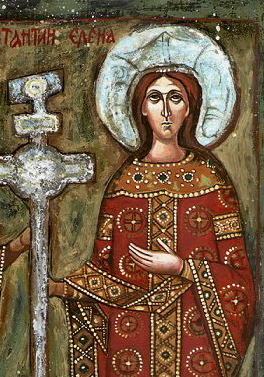
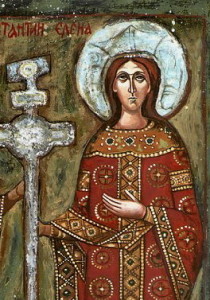
St Helena, detail from a Bulgarian icon (Wikimedia)

Helena

Mother of the emperor Constantine, she instigated several major churches in the Holy Land and is credited with finding the True Cross.

Helena (c.250-330) was a servant girl who became either the concubine or wife of the emperor Constantius, who later abandoned her for political reasons. Her son Constantine named her Augusta (majestic) when he became emperor in 306.

She became a Christian and, with Constantine’s encouragement and financial backing, made a pilgrimage to the Holy Land around 326. There she ordered churches built on several holy sites.

They included the Church of the Nativity in Bethlehem; the Church of the Holy Sepulchre on the site of Calvary and the Tomb of Christ; and the Eleona Church (destroyed by the Persians in 614) on the Mount of Olives.

Helena is considered a saint by the Eastern Orthodox, Oriental Orthodox and Roman Catholic churches. Her palace in Rome was converted into the basilica of Santa Croce in Gerusalemme (Holy Cross in Jerusalem).
 

Glossary

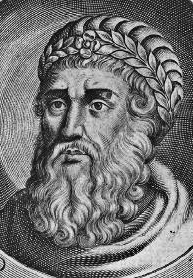
Herod the Great (Wikimedia)

Herod the Great

A Rome-appointed client-king of Israel. Known for his colossal building projects and his brutality, he is usually called Herod the Great to distinguish him from other members of the dynasty he established.

Herod (74-4 BC), an Idumaean by birth, identified himself as a Jew but maintained a decadent lifestyle. He was named “King of the Jews” by the Roman senate around 40 BC.

He rebuilt the Second Temple in Jerusalem, the Mediterranean seacoast city of Caesarea and the fortress of Herodium (where he was buried).

He ordered the killing of the Holy Innocents at Bethlehem and executed several members of his own family, including one of his several wives and two of his sons.

Three of his sons inherited his name and parts of his kingdom. The most notable was Herod Antipas, who had John the Baptist executed. It was to Herod Antipas that Pontius Pilate sent Jesus for questioning, and whose soldiers mocked Jesus.


Hellenism

The spread of Greek language, culture and religion through the Middle East, south-west Asia and north-east Africa during the dominant period of the Greek empire. Most Jews in Palestine resisted this influence on religious grounds.


Icon

A portrait or image, usually representing Christ or a saint, painted on a wooden surface. Icons are especially venerated by Eastern Christians.

In strict terminology, icons are “written”, not painted. The traditional technique uses egg-tempera on solid wood panels, with prayer and contemplation at each step of the process.


Iconostasis

A screen in Eastern churches that separates the area around the altar from the main body of the church. It is hung with icons and typically has three openings or doors.


Incarnation

The central Christian belief that the Son of God took flesh and became a man in the form of Jesus. The word refers both to the event by which Jesus was conceived in the womb of the Virgin Mary, and to the ongoing reality of Jesus being fully human and fully divine.


Islam

The religious faith of Muslims, founded by Muhammad and based on the teachings of the Qur’an, a book considered to have been divinely revealed to Muhammad by the archangel Gabriel.

Islam means “to submit” oneself to the will and grace of God, who is called Allah in Arabic. A monotheistic religion, it is the most populous faith in the world after Christianity.
 

Glossary

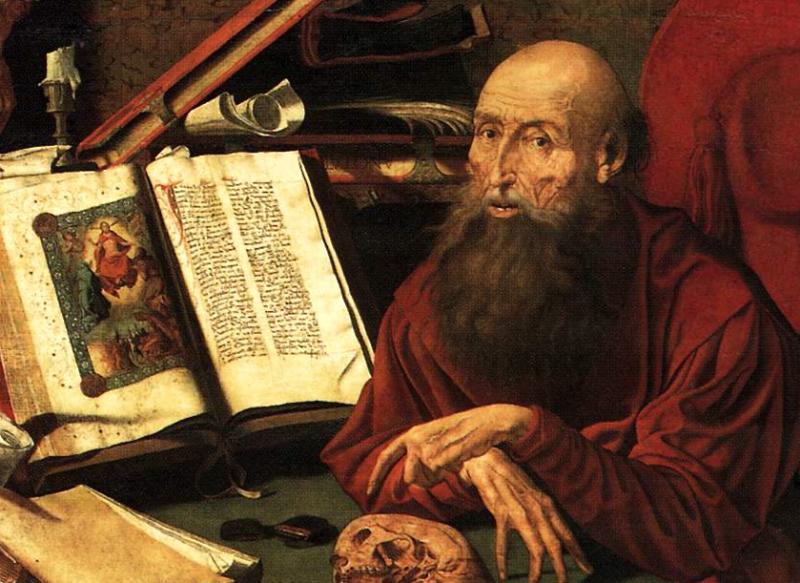
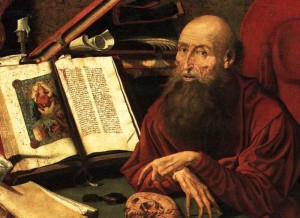
St Jerome, detail, by Marinus van Reymerswaele, c.1490-c.1546 (Wikimedia)

Jerome

A Dalmatian-born priest and scholar (c.347-420) who lived in the Holy Land for more than 36 years and is best known for his translation of the Bible from Hebrew and Greek into Latin.

Jerome was encouraged to undertake his translation project by Pope Damasus I, for whom he served as secretary. In 386 he moved from Rome to Bethlehem, where he lived and worked in a two-room cave. St Jerome’s Cave can still be visited under the Church of the Nativity.

The translation he completed, known as the Vulgate, remained the authoritative version of the Bible for Catholics until the 20th century. The Catholic and Eastern Orthodox churches recognise him as a saint.

Jerome (also known as Hieronymus, the Latin version of Jerome) was known for his ascetic lifestyle and his passionate involvement in doctrinal controversies.
 

Glossary

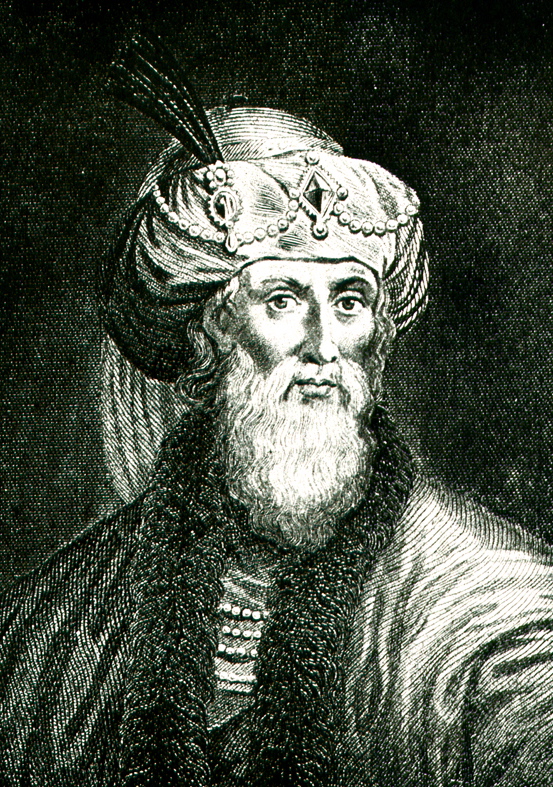
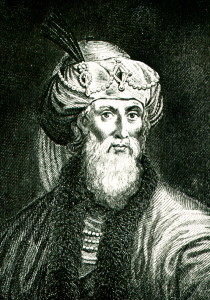
The historian Josephus (John C. Winston / Wikimedia)

Josephus

A Jewish historian (37-c.100) who became a Roman citizen and, while enjoying the patronage of the ruling Flavian dynasty in Rome, wrote the most important contemporary accounts of first-century Judaism and the background of early Christianity.

Born Joseph Ben Matityahu, he fought against the Romans in the Jewish revolt of 66-73 as commander of the Jewish forces in Galilee.

When Jotapata, in northern Galilee, fell to the Romans after a bloody battle in 67, Josephus and 40 companions were trapped in a cave. All made a pact to commit collective suicide by killing each other, one by one. One of the last two men standing — “should one say by fortune or by the providence of God?” — was the wily Josephus, who persuaded his companion to join him in surrendering.

Then, according to Josephus’ own account, he ingratiated himself with the Roman commander, Vespasian, by predicting that Vespasian would become emperor — as he did two years later.


Kibbutz

A collective community in Israel, originally based on agriculture but now encompassing other industries including hotels. A member of a kibbutz is called a kibbutznik.

There are about 250 kibbutzim (the plural form) in the country. Though they began as a blend of socialism and Zionism, most have now been privatised and no longer practise communal living.


Kosher

Food fit for consumption according to Jewish dietary laws, many of which are derived from the books of Leviticus and Deuteronomy.

These laws exclude mammals such as pigs that do not both chew their cud and have cloven hooves. Fish must have skins and scales (so shellfish are excluded).

Mammals and birds must be slaughtered in a specific way and by a trained individual, and as much blood as possible must be drained or broiled out of it (because consumption of blood is forbidden).

Meat must not be eaten with dairy products or cooked using the same utensils (observant Jews have separate sets of utensils for meat and milk).

Wine and other grape products must be made by Jews (a restriction that derives from laws against consuming products used in idolatry).


Liturgy

A prescribed form of public worship practised by a specific religious group, according to its traditions. The origin of the word is a Greek composite meaning a service to the state undertaken by a citizen as a public duty.

In Judaism this may centre on the reading from the Torah. In Eastern Christianity it is the Eucharist, but in Western Christianity it also encompasses other rites and ceremonies that are part of the public worship of God, as opposed to private devotions.

Worship services in the Middle East, where Christian liturgy first developed, tend to be more elaborate — with more bells, candles and incense, and longer prayers — than Western Christians are accustomed to.


Lord’s Prayer

Also known as the Our Father or (in Latin) Pater Noster, it is the simple and spontaneous prayer taught by Christ to his disciples as a model of how to pray. Two versions are given in the New Testament, one in Matthew 6:9-13 and the other in Luke 11:2-4.

Probably the best-known prayer in Christianity, it is also the principal prayer used by Christians in common worship.

According to a long tradition, the Church of Pater Noster on the Mount of Olives in Jerusalem stands over a cave in which Jesus taught this prayer. Around the church and its vaulted cloister, translations of the Lord’s Prayer in 140 languages are inscribed on colourful ceramic plaques.


Martyr

A person who voluntarily accepts being put to death rather than deny his or her religious beliefs. Originally the word signified a witness who testified to a fact of which he or she had knowledge from personal observation.


Messiah

Hebrew for “anointed one”, especially one commissioned for a special role. In Jewish tradition it denotes an expected or long-for saviour. In Christianity it means Jesus, to whom the name “Christos” (anointed in Greek) becomes part of his name.

Jewish tradition envisioned that God would send a saviour from the line of King David to deliver his people from suffering and injustice. The idea that this saviour would suffer appears in numerous psalms attributed to David.


Mikveh

A bath or pool, constructed as part of a building, used by Jews for immersion to cleanse from ritual impurity. Many ancient examples have been found in Israel.


Mishnah

The authoritative collection of rabbinical oral tradition on various topics of Jewish law, compiled early in the 3rd century AD at Sepphoris.
 

Mount Nebo

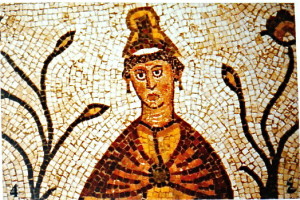
Detail of mosaic at Mount Nebo (© Custodia Terrae Sanctae)

Mosaic

An art form in which small cut pieces of stone, coloured glass or other materials are laid on a surface to create pictures, geometric patters or inscriptions.

Each cut piece, normally roughly cubic, is called a tessera (plural tesserae). Some mosaics contain hundreds of thousands of tesserae.

Wall, ceiling and floor mosaics, often elaborate, are found in churches throughout the Holy Land.

The word Mosaic is also used to indicate an association with Moses, such as the Mosaic Law found in the Torah.
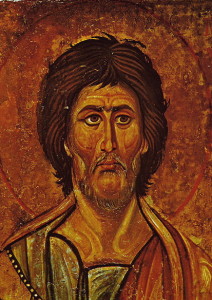
 

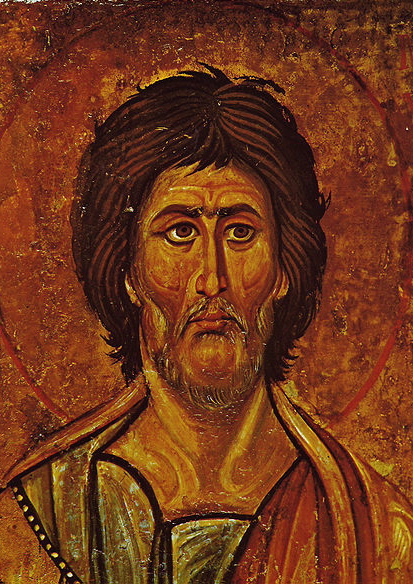
St Catherine's Monastery

Detail of portrait of Moses in St Catherine’s Monastery (Wikimedia)

Moses

The pre-eminent leader and lawgiver of the Jewish people, who led the Israelites in their Exodus from Egypt and their journeyings in the wilderness. During this time, the Bible says, he received the Ten Commandments from God.

But God did not allow Moses to enter the Promised Land. Instead, he viewed it from the top of Mount Nebo, then died at the age of 120. His burial place is unknown.

Jewish religious tradition regards Moses as the author of the Torah, the first five books of the Hebrew Bible. He is also revered as an important prophet by Christians, Muslims and members of the Baha’i and other faiths.


Mosque

A place of worship for followers of Islam, and usually also a meeting place and focal point for the local Muslim community.

Distinctive features often include grand entryways and tall slender towers, or minarets, from which an official called a muezzin (or a recording) summons the worshippers to prayer five times a day.

There are no chairs or seats. The floor is often covered with expensive carpet. Visitors must remove their footwear — not as a sign of respect, but to protect the carpet.

Statues or pictures are not permitted; the only decorations are usually Arabic calligraphy and verses from the Qur’an, the Muslims’ holy book.

In one wall is a mihrab, a niche indicating the direction of Mecca. Near it is the minbar, a seat at the top of steps, used by the preacher as a pulpit. A place for ablution is usually attached to the mosque.

Women may take part in prayers, but they occupy a separate area.
 

Glossary

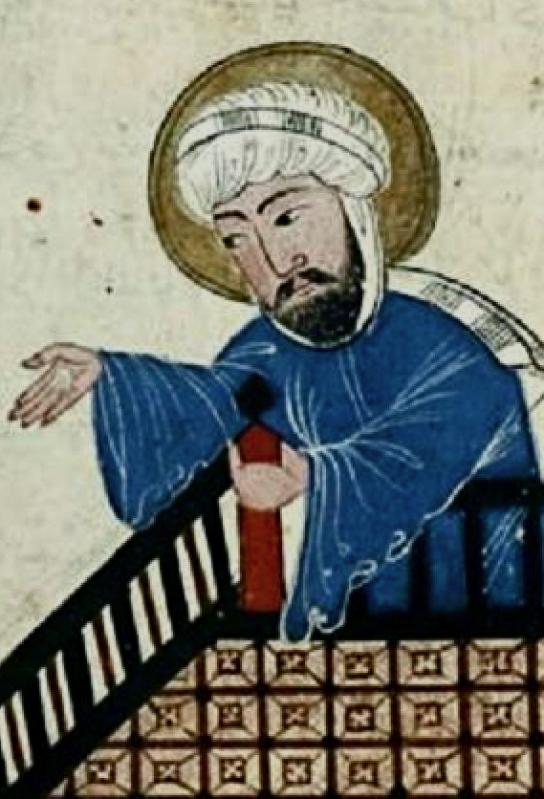
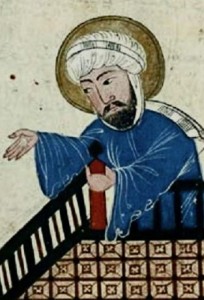
Muhammad, from an early 14th-century manuscript (Wikimedia)

Muhammad

The founder of the Islamic faith, regarded by Muslims as the last and greatest prophet of God. His name is sometimes spelt Mohammed or Mohamet.

Born in Mecca (now in Saudi Arabia) around 570, Muhammad became a successful merchant. When he was 40, according to Muslim tradition, he was visited by the archangel Gabriel, who informed him that he was a messenger of God. Subsequent revelations, recorded in the Qur’an, are the basis of Islam.

Muhammad’s public preaching on the duty to submit to one true God provoked enemies. In 622 he was forced to flee for his life to Medina. Mohammad’s followers finally conquered Mecca and all of Arabia in 630, two years before he died.

New Testament

The collection of 27 books that forms the second section of the Christian Bible. These books, telling the story of Jesus Christ and his apostles, and of the early Church, are the most important writings for Christians.

They consist of the Gospels of Matthew, Mark, Luke and John; the Acts of the Apostles, also attributed to Luke; the letters of Paul and several other writers; and the prophetic book of Revelation (or Apocalypse).


Old Testament

The collection of books that forms the first section of the Christian Bible. It is similar to the Hebrew Bible, but with some variations.

The Old Testament describes God’s dealings with the Jews as his chosen people. It includes books of history, laws, theology, wisdom, prophecy and poetry.

Christian churches differ on the number of books they accept as belonging to the Old Testament. The Orthodox churches generally accept 51 books, the Catholics 46, and the major Protestant denominations 39.


Orthodox

The churches of Eastern Europe and the Middle East that were divided from the Roman Catholic Church after the Great Schism of 1054.

The split along doctrinal, theological, linguistic, political and geographic lines divided medieval Christianity into Eastern (Greek) and Western (Latin) branches. The word Orthodox in Greek (orthos + doxa) means “correct belief”.

The Eastern Orthodox communion now consists of 14 or 15 self-governing churches and 5 others whose leader must be confirmed by a mother church. Those in the Holy Land include the Greek, Armenian, Russian, Coptic, Syriac and Ethiopian Orthodox.

Many have counterparts that have returned to union with Rome, but retain their own distinctive ritual, language and culture. These are called Eastern-Rite Catholic churches.

Also see Churches in the Holy Land


Ossuary

A stone box in which the bones of a dead person were placed after the flesh had decayed.

From the 1st century BC until about AD 70, because space in tombs was scarce, Jews customarily buried their dead in a tomb for a year, then collected the bones and placed them in an ossuary.

Among the ossuaries that have been discovered, particularly in the Jerusalem area, some are decorated with carvings and inscriptions identifying the deceased.


Ottoman Empire

A Muslim military administration, based around the Turkish sultan, that ruled much of the Middle East as well as parts of North Africa and the Balkans in Europe from 1299 until 1922. It was succeeded by the modern Republic of Turkey.

At the height of its power, in the 16th and 17th centuries, it encompassed most of southeastern Europe up to the gates of Vienna; Iraq, Syria, Palestine and Egypt; North Africa as far west as Algeria; and most of the Arabian Peninsula.


Palestine
Glossary

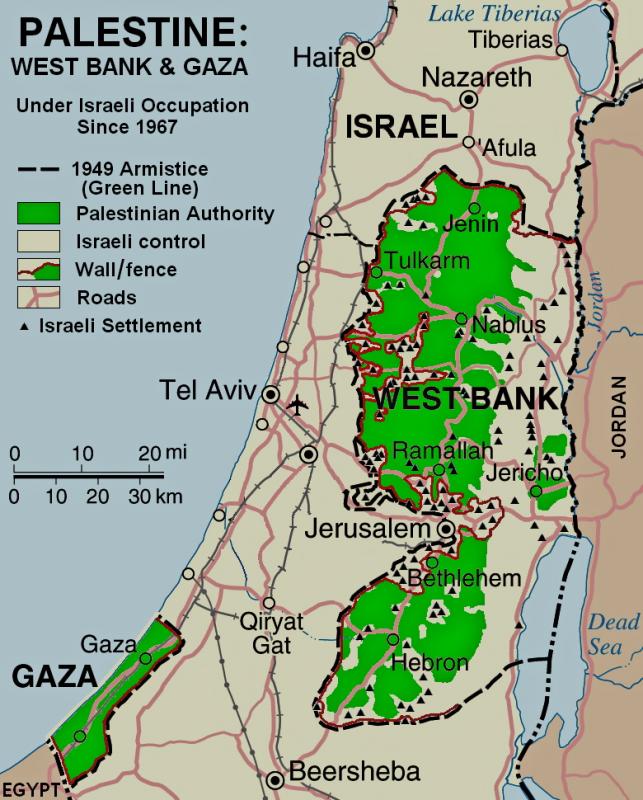
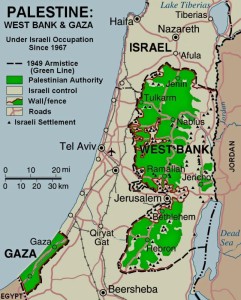
Map of Palestine (Howard Morland / Wikimedia)

Historically, this is the region that stretches from the Jordan River valley to the Mediterranean Sea. It is named after the Philistines, who settled on the coastal strip of Canaan.

To Jews it incorporates their Promised Land; to Christians it is the land of Jesus Christ and the birthplace of the Christian Church; to Muslims it contains the city of Jerusalem, which they call Al-Quds (“the Holy”).

In geographic terms, Palestine includes Israel and the Israeli-occupied Palestinian territories (the West Bank and Gaza), and parts of both Lebanon and Syria.

The name was used for this region as far back as the 5th century BC by the Greek historian Herodotus. Later references were by the Greek philosopher Aristotle and the Jewish scholar Philo of Alexandria — a contemporary of Jesus.

Since prehistoric times, the occupiers of Palestine have included Canaanites, Jebusites, Hebrews, Babylonians, Persians, Greeks, Romans, Byzantines, Arabs, Crusaders, Turks, Egyptians and British.

During the 1948 Arab-Israeli War, many inhabitants of Palestine fled to the West Bank (of the Jordan River), to Jordan, Lebanon and other Arab countries. Many more have emigrated since, often to Europe or the Americas.

In 2012 the United Nations General Assembly accepted Palestine as a “non-member observer state”.


Parable

An everyday story told to convey a moral or religious lesson. The word comes from the Greek “parabole”, which means the placing of two things side by side for the sake of comparison.

The Gospels report many parables of Jesus, in which he used settings and events from daily life in Palestine (such as the sowing of seeds) to convey lessons he wished to teach.


Passover

Originally probably a spring festival of nomadic tribes, it came to celebrate the Israelites’ Exodus from slavery in Egypt. The name comes from the action of the angel of death who “passed over” the homes of the Hebrews when he killed the firstborn of every Egyptian family.

The Passover meal, of lamb or goat with unleavened bread and bitter herbs, was eaten in haste, with the participants dressed as for imminent departure.

For modern Jews, the feast of Passover (known as Pesach) is the one most widely observed. It begins with the ritual meal (called the Seder) and lasts seven days in Israel and eight days outside Israel.

Because Jesus used a Passover meal for his Last Supper, at which he instituted the Eucharist, this Jewish feast was taken over into the Christian Easter celebration.


Patriarch

The male head of a tribe or family. In the Old Testament it refers particularly to Abraham, Isaac and Jacob, the patriarchs through whom God made his covenant with his people.

In Christian times patriarchs are usually considered the successor to an apostle in a church he established. The patriarch of the West is the Pope, as successor to St Peter. The patriarch of the East is the Orthodox Ecumenical Patriarch of Constantinople, as successor to St Andrew.

In Jerusalem the major Christian churches each have a patriarch. The roads that lead to their residences in the Christian Quarter are named Greek Orthodox Patriarchate Road, Latin Patriarchate Road, etc.


Pentecost

This feast, along with Passover and Sukkoth, was one of the three great pilgrimage feasts which brought Jews to the Temple.

Originally an agricultural festival marking the end of the spring barley harvest and the beginning of the summer wheat harvest, it celebrates the giving of the Torah by God to Moses.

In the New Testament, Pentecost brought the fulfilment of Jesus’ promise that he would send the power of the Holy Spirit upon his apostles.


Pharisee

A party or sect within Judaism, who zealously upheld strict compliance with religious laws, both written and oral. They also interpreted the law to meet changing conditions.

Jesus condemned them for hypocrisy and blindness, and for laying heavy burdens on others’ shoulders, “but they themselves are unwilling to lift a finger to move them” (Matthew 23:4).


Pontius Pilate

As governor of Judea he presided at the trial of Jesus and, despite saying he found no fault in him, handed him over for crucifixion.

Pilate was based at Caesarea Maritima, but came to Jerusalem with his troops to keep order during the Passover. Few biographical facts are known, but in 1961 a limestone block bearing his name was found in the Roman theatre at Caesarea.

In the end Pilate lost the support of the Jewish leaders and he was eventually removed by Rome because of his cruelty and oppression.


Prophet

A person who speaks or acts on behalf of God. The prophet’s task is not so much to predict the future as to pronounce God’s will.

In the Old Testament, a great diversity of men and women, often reluctantly, undertook this role. They spoke to individuals, groups and even the whole nation, often suffering humiliation and threats as a consequence.

In the New Testament, Jesus was seen as the prophet who would initiate God’s renewal of all things. There were also prophets in the early Christian communities, and since then many holy people have been regarded as exercising the gift of prophecy.


Promised Land

The land God promised to the descendants of Abraham. Though various boundaries are given in the books of Genesis and Exodus, the Promised Land (also known as Canaan) apparently encompassed present-day Israel, the Palestinian Territories and Lebanon, plus parts of Jordan, Syria and Egypt.

In Leviticus 25:23 God tells Moses the land still belongs to him and the Israelites are “but aliens and tenants”. In Deuteronomy 30:18 Moses tells the Israelites that continued possession of the land depends on “holding fast” to God.


Qur’an

Also spelt Koran, this is the most holy book in Islam. Muslims believe it was dictated by the archangel Gabriel to Muhammad.

The book is about two-thirds the length of the New Testament and contains 114 chapters (or surahs). Only the Arabic original is considered to be the authentic text.

Jesus is referred to as a messenger and prophet of God, but a human being and not God incarnate. His mother Mary is the only woman mentioned by name in the Qur’an. She receives a whole chapter, and the virgin birth of Jesus is acknowledged.


Ramadan

The Islamic month of fasting, in which Muslims may not eat or drink anything, including water, while the sun shines. Ramadan is also a time of increased worship and prayer.

The third “pillar” or religious obligation for Muslims, fasting is seen as a means of coming closer to God, as well as teaching self-control and patience. In the Muslim world, most restaurants are closed during daylight hours throughout Ramadan.

Ramadan is the ninth month of the Islamic calendar. Because Islamic months are based on sightings of the new moon, Ramadan occurs about 11 days earlier each year on the Western Gregorian calendar.

Muslims believe that the first verses of the Qur’an were revealed to Muhammad during the month of Ramadan.


Resurrection

The Resurrection of Jesus Christ after his death by crucifixion is the central doctrine of the Christian faith.

Christians believe that God the Father raised Jesus to new life as Lord with all authority in heaven and on earth, and that those who have entered into his death and Resurrection by baptism will be raised and glorified with him at the end of time.


Sabbath

Known as Shabbat to Jews, it is the seventh day of the week, set aside for rest and the worship of God as a reminder of the Creation and the Exodus from Egypt.

The Sabbath is observed from sundown Friday until three stars are visible in the sky on Saturday evening. Jewish law prohibits 39 categories of activity on the Sabbath, including the use of electricity or a motor vehicle, except when necessary to save human life.

The early Jewish Christians kept the Sabbath, but soon began to observe Sunday, the day of the Resurrection, as the Lord’s Day. By the 4th century, Sunday had become the Christian day of worship and rest from work.


Sadducees

A Jewish party, mainly from the great priestly families and aristocracy, that held power in Jerusalem and was concerned particularly to uphold the Temple and its rituals.

They insisted on strict adherence to the written Law of Moses and opposed any interpretation of it. They rejected belief in angels or in the resurrection of the body.

The New Testament depicts them as opponents of Jesus who tested him with questions.
 

Glossary

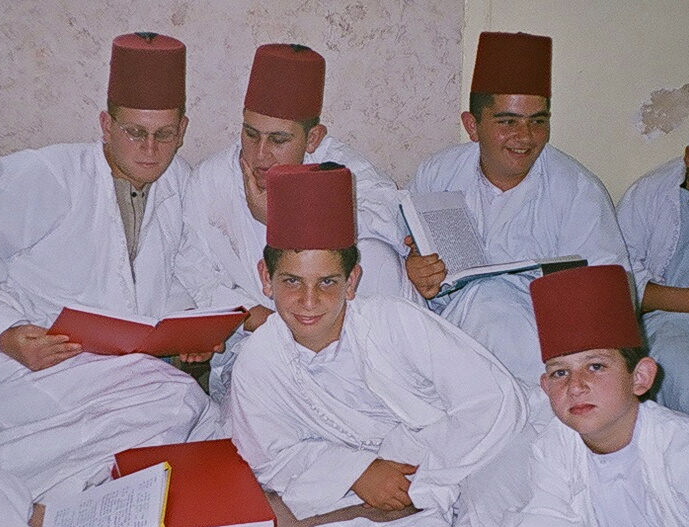
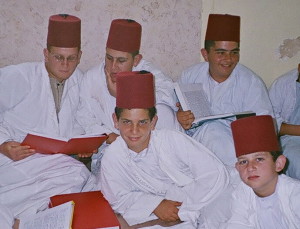
Modern young Samaritans (Freddie Mercury / Wikimedia)

Samaritans

An ethnic and religious group who believe they descend from the remnant of the northern Israelite tribes who avoided deportation by the Assyrians in 722 BC.

Several hundred Samaritans still survive, preserving their ancient rites on their holy site of Mount Gerizim, near the modern West Bank city of Nablus. They accept only the first five books of the Old Testament, containing the Mosaic Law.

In the New Testament, when Jesus’ disciples expressed typical Jewish animosity towards the Samaritans he rebuked them. Jesus also gave Samaritans positive roles in his parables, notably the parable of the Good Samaritan (Luke 10:30-37).


Sarcophagus

A stone coffin. Usually designed to be freestanding above ground, these were often ornately carved and decorated.


Souk

A market, either outdoor or covered, or a commercial quarter, in an Arab or Muslim city. Often a wide variety of goods, from food to livestock, are on sale.


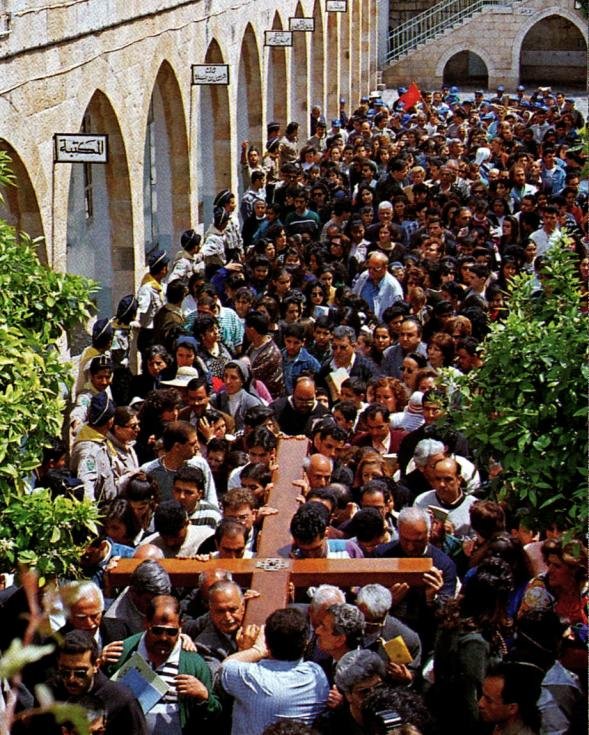
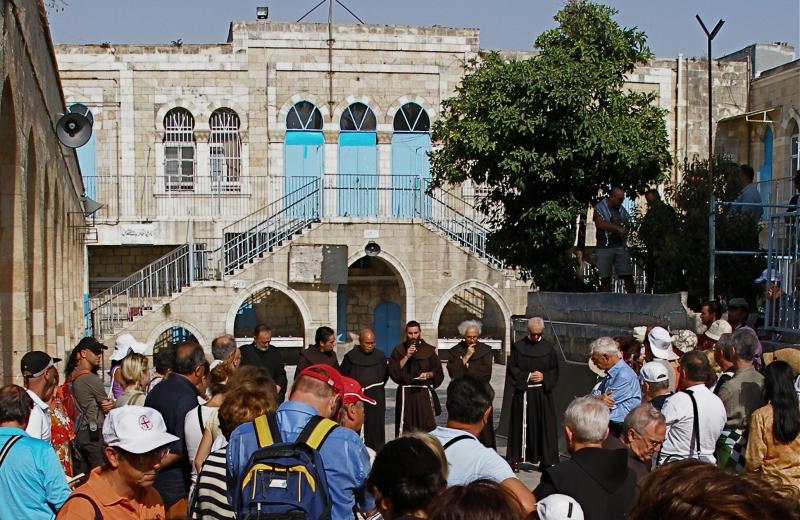
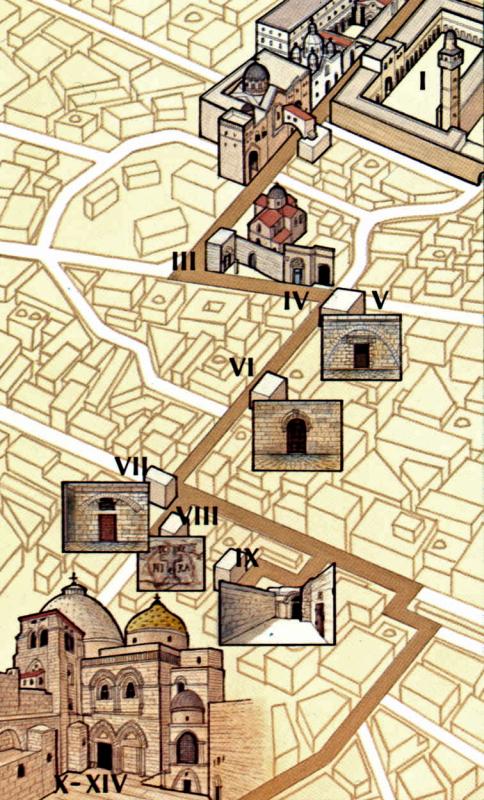
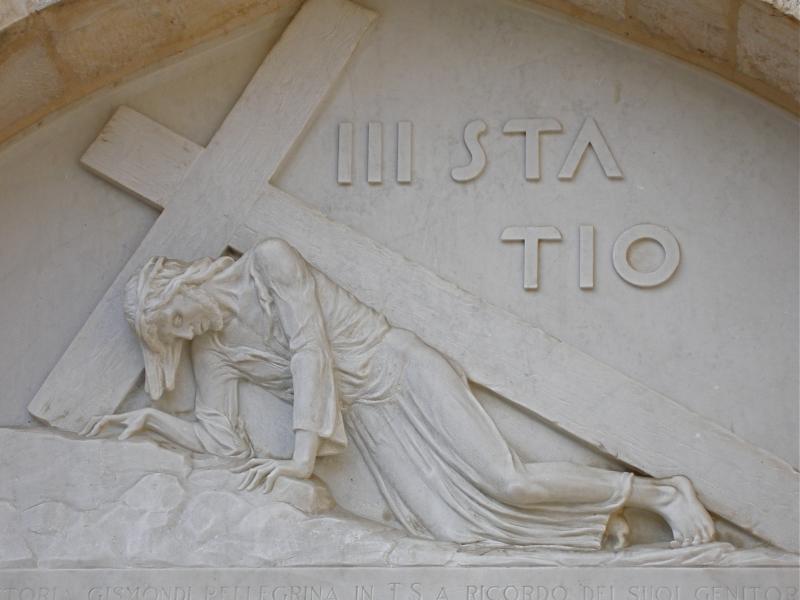
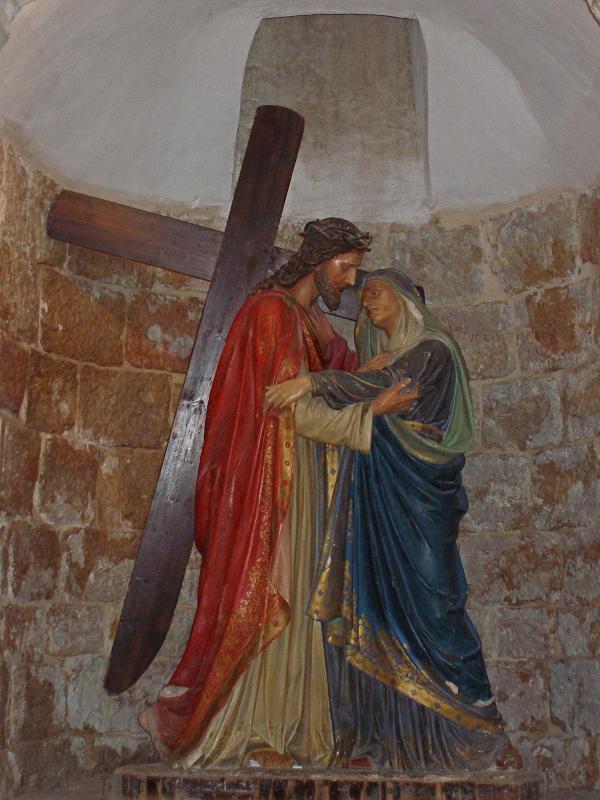
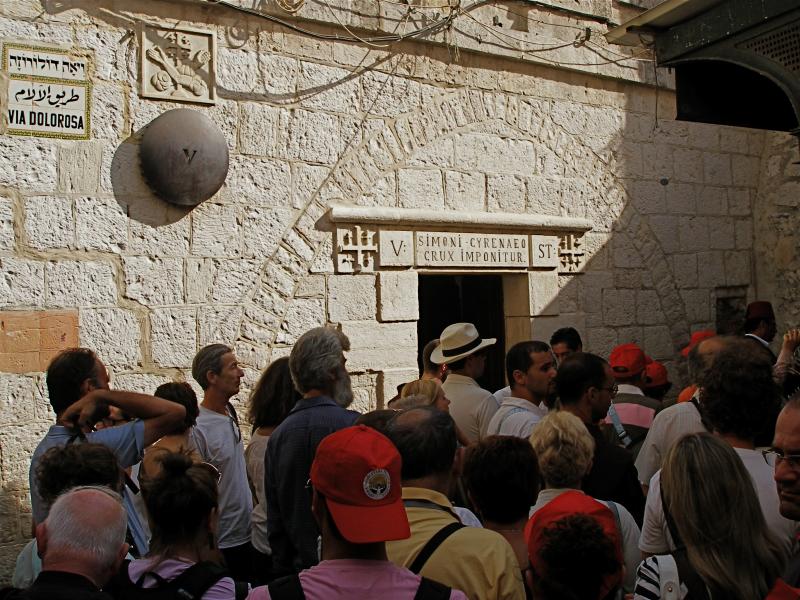
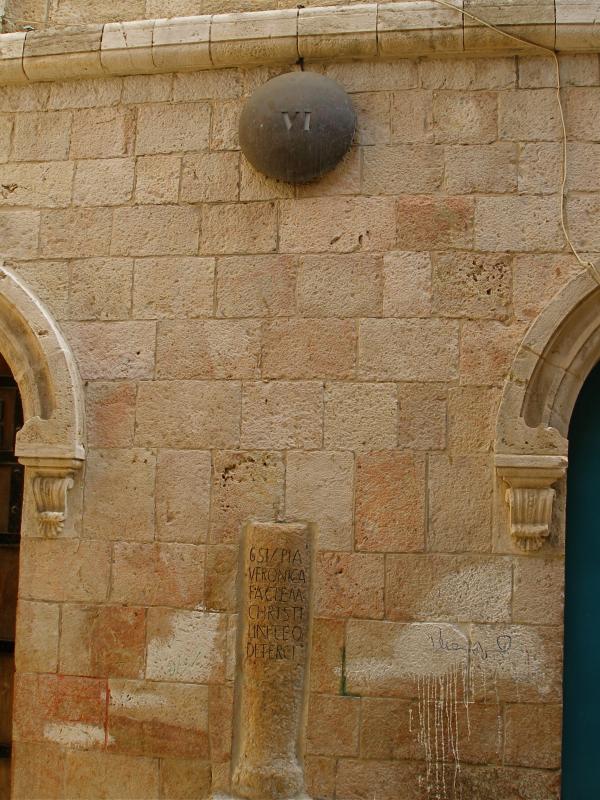
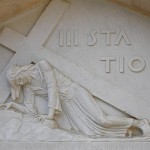
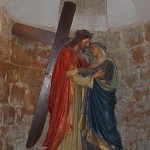
Stations of the Cross

A series of 14 events from Jesus’ journey to Calvary on Good Friday. These are often represented by art in churches, or by outdoor sculptures, to assist meditation on his Passion.

The Stations of the Cross originated with pilgrimages to Jerusalem. By the 5th century the practice of reproducing the “stations” of the Passion was popular in Europe.

The number of Stations and the events represented has varied from 7 to 18 or more. Of the present 14 Stations, 9 are based on Gospel accounts and 5 — Jesus’ meeting with his mother, Veronica wiping his face, and his three falls — on popular tradition.

In Jerusalem, pilgrims recall these events as they walk along the Via Dolorosa.


Status Quo

A set of detailed and binding arrangements covering possession, usage and ceremonies at major holy places, originally laid down by a Turkish sultan in 1757. It is not an agreement between the churches.

The Status Quo applies particularly to the rights of the Greek Orthodox, Roman Catholic and Armenian Orthodox churches in the Church of the Holy Sepulchre, Jerusalem, and the Church of the Nativity, Bethlehem. It also covers the Dome of the Ascension and Tomb of Mary in Jerusalem.

Control of the major holy places was in the hands of Catholic Franciscans for 300 years up till 1662. It was contested by Catholics and Greek Orthodox in courts and corridors of power up till 1757, when Greeks launched a surprise Palm Sunday takeover and Ottoman Turkish Sultan Abdul Hamid I confirmed their right of possession.

By the mid-19th century, Sultan Abd-ul-Mejid I faced international pressure over the holy places from France (for the Catholics) and Russia (for the Orthodox). Russia even threatened to invade Turkey.

To defuse the situation he issued a firman (decree) in 1852 declaring that “The actual status quo will be maintained and the Jerusalem shrines, whether owned in common or exclusively by the Greek, Latin, and Armenian communities, will all remain forever in their present state.”

In 1878, the Treaty of Berlin incorporated the Status Quo into international law.


Stele

An upright slab of stone or wood, engraved with an inscription or design. Steles (or stelae) were used to commemorate important events, such as military victories; to extol the accomplishments of rulers; or to mark territories.


Stoa

A covered walkway or portico, with a row of columns along its open front. Some were of two storeys.

Markets were often located in stoas (or stoae). The magnificent Royal Stoa along the southern wall of the Temple Mount in Jerusalem may have been the place where Jesus overturned the tables of the money-changers (Matthew 21:12).
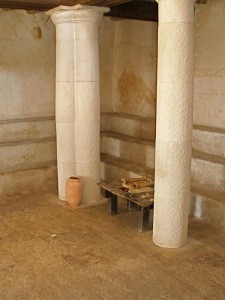
 

Nazareth Village

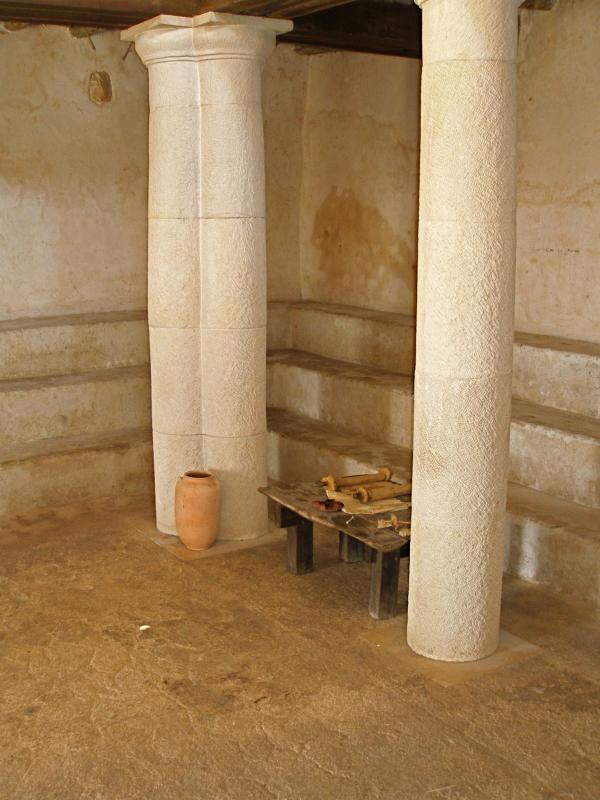
Recreated synagogue at Nazareth Village (Seetheholyland.net)

Synagogue

A Jewish place of Sabbath worship and for religious study, but not for sacrifices. After the destruction of the Second Temple in AD 70, synagogues became the focal point of Jewish community life.

A typical synagogue contains an ark in which the scrolls of the Mosaic Law are kept, an “eternal light” burning before the ark, a raised platform on which services are conducted, and sometimes a mikveh (ritual bath).


Talmud

The central text of Jewish law and teachings. It contains interpretation of, and commentary on, the Torah — the primary source of Jewish religious law.

There are actually two Talmuds, developed by different groups of Jewish scholars in Babylonia (c. AD 600) and in Israel (c. AD 400). The more extensive Babylonian Talmud is more highly regarded.


Tel/Tell

An archaeological term for a mound or hill containing the remains of successive layers of human settlement.

“Tel” is the modern Hebrew spelling and “tell” the modern Arabic spelling. Both are used in placenames, such as in the Israeli city of Tel Aviv and the archaeological site of Tell es-Sultan at Jericho.


Temple
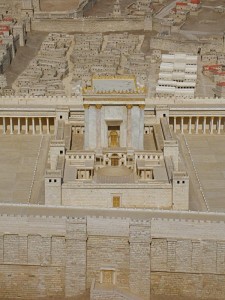
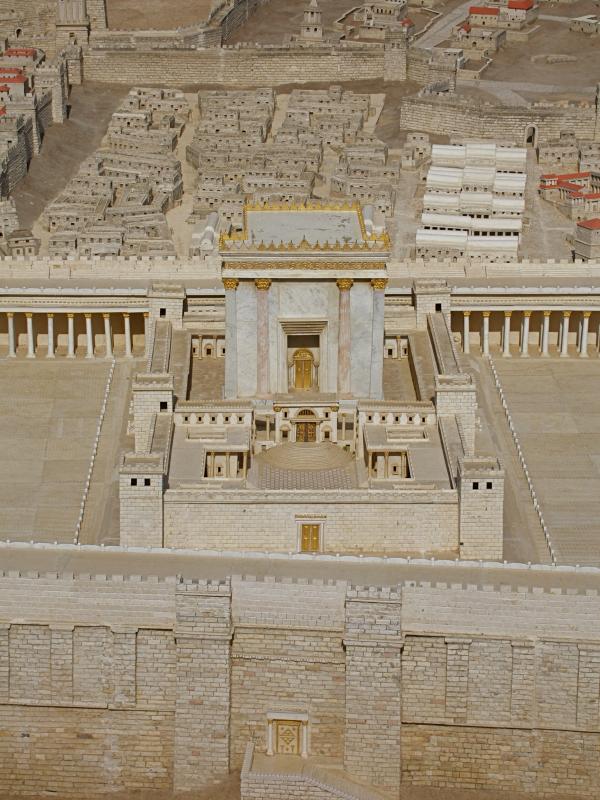
Model of Ancient Jerusalem

Second Temple of Jerusalem, destroyed in AD 70 (Seetheholyland.net)

The central place of Jewish worship and the only place where sacrifices could be made, the Temple in Jerusalem was seen as the dwelling-place of God in the midst of his people.

The First Temple was erected by Solomon (c.960 BC) and destroyed by the Babylonians in 587/586 BC. The Second Temple, built by Jews who returned from exile in Babylon, was completed in 515 BC.

The Second Temple was enlarged and refurbished by Herod the Great (c.20 BC) and it became known as Herod’s Temple. This rebuilt temple (sometimes referred to as the Third Temple) was the one Jesus knew. It was destroyed by the Romans in AD 70.

Both temples were on the Temple Mount, approximately on the present site of the Dome of the Rock.

The Western Wall, a section of the retaining wall that surrounded the Temple compound, is venerated by Jews as the only remnant of the Second Temple. The Jewish practice of mourning the destruction of the Temple led to its being called the Wailing Wall.


Torah

The first five books of the Hebrew Bible — Genesis, Exodus, Leviticus, Numbers and Deuteronomy — which are also called the Pentateuch. The word Torah can also refer to the entire body of Judaism’s founding teachings and traditions.

The five books of the Pentateuch are also accepted as the first five books of the Christian Old Testament.


Transfiguration

The revelation of the glory of Jesus Christ as the Son of God, which the Gospels say took place on a “high mountain” in the presence of the apostles Peter, James and John.

The event is described in the Gospels of Matthew (17:1-8), Mark (9:2-8) and Luke (9:28-36). Matthew says Jesus’ “face shone like the sun, and his clothes became dazzling white” and Moses and Elijah appeared talking with him.

The mountain is traditionally identified as Mount Tabor, though some scholars argue it was probably Mount Hermon.


Trinity

A fundamental doctrine of the Christian faith, signifying that in the unity of the Godhead there are three distinct Persons — Father, Son and Holy Spirit

The Qur’an of Islam misinterprets this doctrine by assuming that Christians worship the Father, Son and Virgin Mary as three gods.


Vulgate

The Latin version of the Bible translated by St Jerome from Hebrew and Greek at the end of the 4th century.

Jerome, a scholarly Dalmatian priest, spent 30 years on the project, working in a cave underneath the Church of the Nativity in Bethlehem.


Wadi

An Arabic word for a deep gully or valley that is normally dry but contains water during the winter rainy season.

Wadis are common in Middle Eastern deserts and often give rise to placenames, such as Wadi Musa (Valley of Moses) near Petra in southern Jordan.


West Bank

A landlocked Palestinian territory between Israel and Jordan on the West Bank of the Jordan River. To the west, north and south it borders the state of Israel. (Also see Palestine.)

Israel captured the disputed territory from Jordan in the 1967 Six Day War and refers to it by the biblical names of Judea and Samaria.

Most of the West Bank has been under Israeli military occupation since 1967, but since 1994 a limited degree of Palestinian Authority self-rule has existed in some areas.

The largest cities in the West Bank are Hebron, Nablus, Bethlehem and Jericho.


Yahweh

The personal name of the one true God, the God of Israel, as revealed to Moses. The meaning eludes scholars, though God described himself to Moses as “I am who I am” (Exodus 3:14).

Later Jews regarded the name as too sacred to be spoken, so only the consonants YHWH were written and the name was usually pronounced Adonai (“Lord”).

Early translators combined the consonants of Yahweh with vowels from Adonai to produce Jehovah, the name for God used in some early English Bibles.

In 2008 the Vatican directed that prayers and songs in Catholic liturgy should no longer use the word Yahweh, which was never pronounced by early Christians.


Yom Kippur

Also known as the Day of Atonement, this is the most solemn festival in the Jewish religious calendar. A day of fasting and repentance, it is considered a time of spiritual accounting and is observed even by many secular Jews.

Yom Kippur is a public holiday in Israel. Public transportation ceases, businesses close, and even private driving or eating in public are frowned upon.


Zealot

A Jewish faction which sought to incite rebellion against the occupying Roman forces and expel them from Palestine. Zealots were prominent during the First Jewish Revolt in AD 66-70, which resulted in the destruction of Jerusalem.

One of the Twelve Apostles was called Simon the Zealot. This does not necessarily mean he was a member of the Zealots, since he was also called Simon the Cananaean, another word meaning zealous or ardent.


References:

Beitzel, Barry J.: Biblica, The Bible Atlas: A Social and Historical Journey Through the Lands of the Bible (Global Book Publishing, 2007)
Bowker, John: The Complete Bible Handbook (Dorling Kindersley, 1998)
Brisco, Thomas: Holman Bible Atlas (Broadman and Holman, 1998)
Charlesworth, James H.: The Millennium Guide for Pilgrims to the Holy Land (BIBAL Press, 2000)
Cohen, Raymond: Saving the Holy Sepulchre: How Rival Christians Came Together to Rescue their Holiest Shrine (Oxford University Press, 2008)
Doyle, Stephen: The Pilgrim’s New Guide to the Holy Land (Liturgical Press, 1990)
Kilgallen, John J.: A New Testament Guide to the Holy Land (Loyola Press, 1998)
McCormick, James R.: Jerusalem and the Holy Land (Rhodes & Eaton, 1997)
Maier, Paul L. (trans.): Eusebius: The Church History (Kregel Publications, 2007)
Maier, Paul L. (trans.): Josephus: The Essential Writings (Kregel Publications, 1988)
Marchadour, Alain, and Neuhaus, David: The Land, the Bible and History: Toward the Land That I Will Show You (Fordham University Press, 2007)
Metzger, Bruce M., and Coogan, Michael D.: The Oxford Companion to the Bible (Oxford University Press, 1993)
Murphy-O’Connor, Jerome: The Holy Land: An Oxford Archaeological Guide from Earliest Times to 1700 (Oxford University Press, 2005)
Nicholson, Peter C.: The Churches of Antonio Barluzzi (The McCabe Educational Trust)
Prag, Kay: Jerusalem: Blue Guide (A. & C. Black, 1989)
The Catholic Encyclopedia (Robert Appleton Company, 1914)
The New Jerusalem Bible (Darton, Longman & Todd, 1990)
The New Revised Standard Version Bible (Thomas Nelson, 1993)

« Newer PostsOlder Posts »

Church of the Holy Sepulchre chapels

Jerusalem

Church of the Holy Sepulchre chapels

Pilgrims at the Stone of Anointing (Seetheholyland.net)

The Church of the Holy Sepulchre in the Old City of Jerusalem — venerated as the place where Jesus Christ died and rose again — contains a bewildering conglomeration of 30-plus chapels and worship spaces. There are no helpful signs.

This article describes the most significant areas that are not covered in the main Church of the Holy Sepulchre article.

The description begins at the main door (on the south side of the church) and circles the church in a roughly clockwise manner.

Immediately inside the main door is the Stone of Anointing, a slab of reddish stone flanked by candlesticks and overhung by a row of eight lamps. It commemorates the place where the body of Jesus was prepared for burial (though this stone dates only from 1810). It belongs
jointly to the Greek Orthodox, Catholics
and Armenian Orthodox.


On the wall behind the stone, a Greek mosaic depicts (from right to left) Christ being taken down from the cross, his body being prepared for burial, and his body being taken to the tomb.

To the left of the Stone of Anointing is a small circular slab with four pillars surmounted by a marble canopy. This shrine is the Armenian Station of the Holy Women. It commemorates Jesus’ mother and her companions who viewed the crucifixion.

On the wall behind the shrine, a large mosaic recalls the scene. The Armenians’ sacristy is on the left.


‘Little house’ encloses tomb

Church of the Holy Sepulchre chapels

Dome above edicule of the Tomb of Christ (Seetheholyland.net)

From this position the Tomb of Christ can be seen. A stone edicule (“little house”) encloses the sepulchre where it is believed Jesus lay buried for three days — and where he rose from the dead. (It is described in more detail in the Church of the Holy Sepulchre article.)

The lofty circular stone structure encompassing this whole area is known as the Rotunda. Above it is a huge dome decorated with a starburst of light.

Opposite the entrance to the Tomb, a triumphal arch built by the Crusaders leads to the basilica’s central worship space, the Katholikon. Originally the choir of the 12th-century Crusader church, it is now the Greek Orthodox cathedral.

A highly decorated screen called the iconostasis partially hides the altar from view. On the polished marble floor stands a goblet marking the “omphalos” (navel), the legendary centre of the earth. There are thrones for the patriarch of Jerusalem and the patriarch of Antioch.


Jewish tomb from 1st century

Behind the Tomb is a tiny Coptic chapel attached to the edicule.

Church of the Holy Sepulchre chapels

First-century Jewish tombs adjacent to Chapel of St Joseph of Arimathea and St Nicodemus (Seetheholyland.net)

Directly opposite this tiny chapel, walk between two of the pillars of the Rotunda into a dilapidated room, the Syriac Orthodox Chapel of St Joseph of Arimathea and St Nicodemus. On Sundays and feast days it is furnished for the celebration of Mass.

On the far side of the chapel is the low entrance to two complete 1st-century Jewish tombs. Since Jews always buried their dead outside the city, this proves that the Holy Sepulchre site was outside the city walls at the time of the crucifixion. There is a tradition that Joseph of Arimathea and Nicodemus were buried here.

Catholic Chapel of the Apparition

Church of the Holy Sepulchre chapels

Chapel of the Apparition of Jesus to his Mother (Seetheholyland.net)

Returning to the Rotunda, the area to the left (on the north side of the church) belongs to the Catholics. There is an altar dedicated to St Mary Magdalene, then double bronze doors (donated by the people of Australia in 1982) lead to the Franciscan Chapel of the Apparition. It commemorates the ancient tradition that Jesus appeared to his mother after his Resurrection, an event not found in the Gospels.

On the right inside the entrance of the chapel is a section of a column, said to be the one to which Jesus was tied when he was scourged. Along the far wall, scenes of the Way of the Cross are depicted in wrought iron.


Greek and Armenian chapels

Returning past the altar of St Mary Magdalene, turn left into a rather dark gallery, known as the Arches of the Virgin (commemorating a belief that Mary made visits to her son’s Tomb). It contains pillars and other remains from earlier constructions.

Church of the Holy Sepulchre chapels

Prison of Christ chapel in Church of the Holy Sepulchre (Seetheholyland.net)

At the far end, on the left, is a small Greek chapel called the Prison of Christ, apparently based on a belief that he was temporarily confined here before the crucifixion.

Further around the semi-circular aisle are two chapels on the left. The first is the Greek Chapel of St Longinus. It is dedicated to the Roman soldier who pierced Jesus’ side with his spear and then accepted him as the Son of God.

Further along is the Armenian Chapel of the Division of the Raiment, recalling that the Roman soldiers divided Christ’s clothes among them.

Next on the left is a stairwell, its walls inscribed with hundreds of crosses left by pilgrims in past centuries.


Two chapels are underground

The 29 steep steps descend to the underground Armenian Chapel of St Helena. This was the crypt of the emperor Constantine’s 4th-century basilica and is therefore the oldest complete part of the entire building.

The Armenians have re-named the chapel to honour their national patron, St Gregory the Illuminator. The left-hand altar is dedicated to St Dismas (the Good Thief).

In an ancient quarry behind a wrought iron gate (open only with permission from the Armenians) is the Chapel of St Vartan and the Armenian Martyrs.

On a stone in a second-century wall is a drawing of a sailing vessel with a Latin inscription usually rendered as DOMINE IVIMUS (“Lord, we will go”). One interpretation is that it is a pilgrim’s reference to Psalm 122 (“I was glad when they said to me, “Let us go to the house of the Lord’.”

Church of the Holy Sepulchre chapels

Statue of St Helena holding the Cross of Christ, in Chapel of the Finding of the Cross (Seetheholyland.net)

From the right of the chapel, another steep staircase of 22 steps leads to the Franciscan Chapel of the Finding of the Cross. This rough-walled area has been built within part of the ancient quarry, apparently later converted into a cistern for water storage.

Here, according to tradition, St Helena (Constantine’s mother) discovered the True Cross and other instruments of the Passion and crucifixion. A statue behind the altar shows her holding the Cross.

Remnants of 12th-century frescoes are displayed behind glass walls.

After ascending all the steps to the ground floor again, immediately on the left is the Greek Chapel of the Derision. It commemorates the mocking of Jesus by the Roman soldiers. Under the altar is a fragment of a column, said to be the one Jesus sat on when the crown of thorns was put on his head.


Rock of Calvary can be seen

Further along, on the left, a glass screen protrudes slightly into the aisle. Through it can be seen the natural rock of Calvary.

Church of the Holy Sepulchre chapels

Rock of Calvary on display in Church of the Holy Sepulchre (Seetheholyland.net)

Next to it is a small area called the Chapel of Adam. It is directly beneath the Chapel of Calvary upstairs, and an ancient tradition suggests that Adam was buried here and that the blood of Jesus tricked down to his skull.

Here the rock of Calvary can be seen again, with a fissure running through it. Some believe the fissure was caused by the earthquake at the time Christ died. Others suggest that the rock of Calvary was left standing by quarrymen because it was cracked.

From this chapel, a door leads to the Greek Treasury, holding relics including one of the True Cross. The treasury is usually closed.


Rights of possession are jealously guarded

Under a decree called the Status Quo imposed by the Ottoman Turks in 1757, ownership of the Church of the Holy Sepulchre is shared between the Greek Orthodox, Catholics (known in the Holy Land as Latins) and Armenian Orthodox. Three minor communities, Coptic, Syriac and Ethiopian Orthodox, have rights to use certain areas. All the churches jealously guard their rights.

One effect of the Status Quo can be seen by looking above the main entrance on leaving the church.

Church of the Holy Sepulchre chapels

Immovable ladder over entrance to Church of the Holy Sepulchre (Seetheholyland.net)

The wooden ladder leaning against a window ledge has been there since early in the 18th century. Nobody knows why it is there, but because it was in place when the Status Quo began in 1757, it must remain there.

As one faces the main entrance, to the right is a disused stairway that was the Crusaders’ entrance to Calvary. At the top of the stairs is the Chapel of the Franks. Beneath it is the Greek Orthodox Chapel of St Mary of Egypt — a prostitute who was converted in the church courtyard in the 4th century and spent the rest of her life as a hermit.

Related article:

Church of the Holy Sepulchre

In Scripture:

The crucifixion: Matthew 27:24-56; Mark 15:16-41; Luke 23:1-49; John 19:1-37

The burial of Jesus: Matthew 27:57-66; Mark 15:42-47; Luke 23:50-56; John 19:38-42

The Resurrection: Matthew 28:1-10; Mark 16:1-8; Luke 24:1-12; John 20:1-10

Administered by: Confraternity of the Holy Sepulchre (Greek Orthodox), Franciscan Custody of the Holy Land (Catholic), Brotherhood of St James (Armenian Orthodox)

Tel.: 972-2-6267000

Opens: Apr-Sep 4am, Oct-Mar 5am. Closes: Apr-Aug 8pm, Mar and Sep 7.30pm, Oct-Feb 7pm.  Sunday morning liturgies are usually: Coptic 4am, Catholic 5.30am, Greek Orthodox 7am, Syriac Orthodox 8am; Armenian Orthodox 8.45am on alternating Sundays with a weekly procession at 4.15pm.

References:

Bar-Am, Aviva: Beyond the Walls: Churches of Jerusalem (Ahva Press, 1998)
Benelli, Carla, and Saltini, Tommaso (eds): The Holy Sepulchre: The Pilgrim’s New Guide (Franciscan Printing Press, 2011)
Freeman-Grenville, G. S. P.: The Holy Land: A Pilgrim’s Guide to Israel, Jordan and the Sinai (Continuum Publishing, 1996)
Gonen, Rivka: Biblical Holy Places: An illustrated guide (Collier Macmillan, 1987)
Inman, Nick, and McDonald, Ferdie (eds): Jerusalem & the Holy Land (Eyewitness Travel Guide, Dorling Kindersley, 2007)
Murphy-O’Connor, Jerome: The Holy Land: An Oxford Archaeological Guide from Earliest Times to 1700 (Oxford University Press, 2005)
Wareham, Norman, and Gill, Jill: Every Pilgrim’s Guide to the Holy Land (Canterbury Press, 1996)
Wright, J. Robert: “Holy Sepulchre”, Holy Land, spring 1998)

External links:

Holy Sepulchre (Custodia Terrae Sanctae)
Church of the Holy Sepulchre (Wikipedia)
Church of the Holy Sepulcher (Jerusalem Virtual Tours)
« Newer PostsOlder Posts »

Church of the Holy Sepulchre

Jerusalem

Church of the Holy Sepulchre

Domes and cropped bell tower of Church of the Holy Sepulchre (Seetheholyland.net)

The Church of the Holy Sepulchre in the Old City of Jerusalem covers what Christians believe is the site of the most important event in human history: The place where Jesus Christ rose from the dead.

But the pilgrim who looks for the hill of Calvary and a tomb cut out of rock in a garden nearby will be disappointed.

• At first sight, the church may bring on a sense of anticlimax. Looking across a hemmed-in square, there is the shabby façade of a dun-coloured, Romanesque basilica with grey domes and a cut-off belfry.

• Inside, there is a bewildering conglomeration of 30-plus chapels and worship spaces. These are encrusted with the devotional ornamentation of several Christian rites.

This sprawling Church of the Holy Sepulchre displays a mish-mash of architectural styles. It bears the scars of fires and earthquakes, deliberate destruction and reconstruction down the centuries. It is often gloomy and usually thronging with noisy visitors.

The Church of the Holy Sepulchre from above, huddled in by surrounding buildings (Ilan Arad / Wikimedia)

The Church of the Holy Sepulchre from above, huddled in by surrounding buildings (Ilan Arad / Wikimedia)

Yet it remains a living place of worship. Its ancient stones are steeped in prayer, hymns and liturgies. It bustles daily with fervent rounds of incensing and processions.

This is the pre-eminent shrine for Christians, who consider it the holiest place on earth. And it attracts pilgrims by the thousand, all drawn to pay homage to their Saviour, Jesus Christ.


Church replaced pagan temple

Early Christians venerated the site. Then the emperor Hadrian covered it with a pagan temple.

Church of the Holy Sepulchre

Parvis (courtyard) of Church of the Holy Sepulchre (Seetheholyland.net)

Only in AD 326 was the first church begun by the emperor Constantine I. He tore down the pagan temple and had Christ’s tomb cut away from the original hillside. Tradition says his mother, St Helena, found the cross of Christ in a cistern not far from the hill of Calvary.

Constantine’s church was burned by Persians in 614, restored, destroyed by Muslims in 1009 and partially rebuilt. Crusaders completed the reconstruction in 1149. The result is essentially the church that stands today.

Making sense of the church

Of all the Christian holy places, the Church of the Holy Sepulchre is probably the most difficult for pilgrims to come to terms with.

To help make sense of it, this article deals with the church’s major elements and its authenticity. A further article, Church of the Holy Sepulchre chapels, deals with its other devotional areas.

1. The main access to the church, on its south side, is from the Souk el-Dabbagha, a street of shops selling religious souvenirs. Visitors enter the left-hand doorway (the right one was blocked up by Muslim conquerors in the 12th century).

Church of the Holy Sepulchre

Climbing steps to Calvary (Seetheholyland.net)

2. Instead of following tourists into the often-gloomy interior, immediately turn hard right and ascend a steep and curving flight of stairs. You are now ascending the “hill” of Calvary (from the Latin) or Golgotha (from the Aramaic), both words meaning “place of the skull”. The stairs open on to a floor that is level with the top of the rocky outcrop on which Christ was crucified. It is about 4.5 metres above the ground floor.

3. Immediately on the right is a window looking into a small worship space called the Chapel of the Franks. Here the Tenth Station of the Cross (Jesus is stripped of his garments) is located.

On the floor of Calvary are two chapels side by side, Greek Orthodox on the left, Catholic on the right. They illustrate the vast differences in liturgical decoration between Eastern and Western churches.

4. The Catholic Chapel of the Nailing to the Cross is the site of the Eleventh Station of the Cross (Jesus is nailed to the cross). On its ceiling is a 12th-century medallion of the Ascension of Jesus — the only surviving Crusader mosaic in the building.

Church of the Holy Sepulchre

Greek Orthodox Chapel of the Crucifixion (Seetheholyland.net)

5. The much more ornate Greek Chapel of the Crucifixion is the Twelfth Station (Jesus dies on the cross). Standing here, it is easy to understand a little girl’s remark, quoted by the novelist Evelyn Waugh in 1951: “I never knew Our Lord was crucified indoors.”

6. Between the two chapels, a Catholic altar of Our Lady of Sorrows commemorates the Thirteenth Station (Jesus is taken down from the cross).

7. A silver disc beneath the Greek altar marks the place where it is believed the cross stood. The limestone rock of Calvary may be touched through a round hole in the disc. On the right, under glass, can be seen a fissure in the rock. Some believe this was caused by the earthquake at the time Christ died. Others suggest that the rock of Calvary was left standing by quarrymen because it was cracked.

8. Another flight of steep stairs at the left rear of the Greek chapel leads back to the ground floor.

9. To the left is the Stone of Anointing, a slab of reddish stone flanked by candlesticks and overhung by a row of eight lamps.

Stone of Anointing from above (Seetheholyland.net)

Stone of Anointing from above (Seetheholyland.net)

Kneeling pilgrims kiss it with great reverence, although this is not the stone on which Christ’s body was anointed. This devotion is recorded only since the 12th century. The present stone dates from 1810.

10. On the wall behind the stone is a Greek mosaic depicting (from right to left) Christ being taken down from the cross, his body being prepared for burial, and his body being taken to the tomb.

11. Continuing away from Calvary, the Rotunda of the church opens up on the right, surrounded by massive pillars and surmounted by a huge dome. Its outer walls date back to the emperor Constantine’s original basilica built in the 4th century. The dome is decorated with a starburst of tongues of light, with 12 rays representing the apostles.

12. In the centre is a stone edicule (“little house”), its entrance flanked by rows of huge candles. This is the Tomb of Christ, the Fourteenth Station of the Cross.

This stone monument encloses the tomb (sepulchre) where it is believed Jesus Christ lay buried for three days — and where he rose from the dead. A high-tech photogrammetric survey late in the 20th century showed that the present edicule contains the remains of three previous structures, each encasing the previous one, like a set of Russian dolls.

The Edicule after restoration in 2017 (Ben Gray / ELCJHL)

The Edicule after restoration in 2017 (Ben Gray / ELCJHL)

13. At busy times, Greek Orthodox priests control admission to the edicule. Inside there are two chambers. In the outer one, known as the Chapel of the Angel, stands a pedestal containing what is believed to be a piece of the rolling stone used to close the tomb.

14. A very low doorway leads to the tomb chamber, lined with marble and hung with holy pictures. On the right, a marble slab covers the rock bench on which the body of Jesus lay. It is this slab which is venerated by pilgrims, who customarily place religious objects and souvenirs on it.

The slab was deliberately split by order of the Franciscan custos (guardian) of the Holy Land in 1555, lest Ottoman Turks should steal such a fine piece of marble.

An agreement between the major Christian communities at the church enabled work to begin in May 2016 to reinforce and restore the edicule. The work was undertaken by a team of scientists from the National Technical University of Athens.

Inside the restored tomb chamber, with the window exposing the rock wall of the burial cave at left (© Custodia Terrae Sanctae)

Inside the restored tomb chamber, with the window exposing the rock wall of the burial cave at left (© Custodia Terrae Sanctae)

In October 2016 the team removed the marble slab, exposing a layer of fill material covering another slab of marble with a small Crusader cross etched on it. Beneath it was the bench on which the body of Jesus lay.

When the team restored the marble cladding and resealed the burial bed, they also cut a small window into the southern interior wall of the shrine to expose one of the limestone walls of the burial cave.

The multi-million-dollar restoration was completed in March 2017. The reddish-cream marble of the edicule emerged cleaned of centuries of grime, dust and soot from candle smoke, and freed from a grid of iron girders that had held it together since 1947.

But scientists warned that even more work would be necessary to shore up the unstable foundations of the shrine and the surrounding rotunda to avoid the risk of collapse. This was undertaken during a two-year project to restore and conserve the pavement stones inside the church that began in March 2022.

Three denominations share ownership

Ownership of the Church of the Holy Sepulchre is shared between the Greek Orthodox, Catholics (known in the Holy Land as Latins) and Armenian Orthodox.

The Greeks (who call the basilica the Anastasis, or Church of the Resurrection) own its central worship space, known as the Katholikon or Greek choir. The Armenians own the underground Chapel of St Helena which they have renamed in honour of St Gregory the Illuminator.

Katholikon (or Greek choir), the central worship space in the Church of the Holy Sepulchre (Seetheholyland.net)

The Catholics own the Franciscan Chapel of the Apparition (which commemorates the tradition that the risen Christ first appeared to his Mother) and the deep underground Chapel of the Finding of the Cross.

Three minor Orthodox communities, Coptic, Syriac and Ethiopian, have rights to use certain areas. The Ethiopian monks live in a kind of African village on the roof, called Deir es-Sultan.

The rights of possession and use are spelt out by a decree, called the Status Quo, originally imposed by the Ottoman Turks in 1757. It even gives two Muslim families the sole right to hold the key and open and close the church — a tradition that dates back much further, to 1246.


Ladder symbolises Status Quo

Each religious community guards its rights jealously. The often-uneasy relationship laid down by the Status Quo is typified by a wooden ladder resting on a cornice above the main entrance and leaning against a window ledge.

Chapel of the Finding of the Cross (Seetheholyland.net)

Chapel of the Finding of the Cross (Seetheholyland.net)

The ladder has been there so long that nobody knows how it got there. Various suggestions have been offered: It was left behind by a careless mason or window-cleaner; it had been used to supply food to Armenian monks locked in the church by the Turks; it had served to let the Armenians use the cornice as a balcony to get fresh air and sunshine rather than leave the church and pay an Ottoman tax to re-enter it.

The ladder appears in an engraving of the church dated 1728, and it was mentioned in the 1757 edict by Sultan Abdul Hamid I that became the basis for the Status Quo.

Immovable ladder on ledge over entrance to Church of the Holy Sepulchre (Seetheholyland.net)

It would be too much to expect that the ladder seen today has resisted the elements since early in the 18th century. In fact the original has been replaced at least once.

In 1997 the ladder suddenly disappeared for some weeks, after a Protestant prankster hid it behind an altar. When it was discovered and returned, a steel grate was installed over the lower parts of both windows above the entrance. And in 2009 the ladder mysteriously appeared against the left window for a day.

The ladder, window and cornice are all in the possession of the Armenian Orthodox. And because the ladder was on the cornice when the Status Quo began in 1757, it must remain there.


Archaeology supports authenticity

Visitors may easily be disillusioned by the church’s contrasting architectural styles, its pious ornamentation and its competing liturgies.

If these man-made elements could be removed, as biblical scholar John J. Kilgallen has written, “we would stand between two places not more than 30 yards [90 feet] apart, with dirt and rock and grass under our feet and the open air all around us. Such was the original state of this area before Jesus died and was buried here.”

Church of the Holy Sepulchre

Inside the Tomb of Christ (© Adriatikus)

But is this the place where Christ died and was buried? “Very probably, Yes,” declares biblical scholar Jerome Murphy-O’Connor in his Oxford Archaeological Guide The Holy Land. Eusebius, the first Church historian (in the 4th century), says the site was venerated by the early Christian community.

And the Israeli scholar Dan Bahat, former city archaeologist of Jerusalem, says: “We may not be absolutely certain that the site of the Holy Sepulchre Church is the site of Jesus’ burial, but we have no other site that can lay a claim nearly as weighty, and we really have no reason to reject the authenticity of the site.”

One major objection raised is that the Church of the Holy Sepulchre is inside the city walls, while the Gospels say the crucifixion took place outside. Archaeologists have confirmed that the site of the church was outside the city until about 10 years after Christ’s death, when a new wall was built.

In 2025 archaeobotanical and pollen analysis on samples retrieved from excavations under the floor of the basilica revealed the presence of olive trees and grapevines from the pre-Christian era — mirroring the description of the area in the Gospel of John (19:41): “Now there was a garden in the place where he was crucified . . . .”

Some favour a competing site, the Garden Tomb. Though it offers a more serene environment, the tombs in its area predate the time of Christ by several centuries.

Further article:

Church of the Holy Sepulchre chapels, dealing with the other devotional areas.


In Scripture:

The crucifixion: Matthew 27:27-56; Mark 15:16-41; Luke 23:26-49; John 19:16-37

The burial of Jesus: Matthew 27:57-66; Mark 15:42-47; Luke 23:50-56; John 19:38-42

The Resurrection: Matthew 28:1-10; Mark 16:1-8; Luke 24:1-12; John 20:1-10

Administered by: Confraternity of the Holy Sepulchre (Greek Orthodox), Franciscan Custody of the Holy Land (Catholic), Brotherhood of St James (Armenian Orthodox)

Tel.: 972-2-6267000

Opens: Apr-Sep 4am, Oct-Mar 5am. Closes: Apr-Aug 8pm, Mar and Sep 7.30pm, Oct-Feb 7pm.  Sunday morning liturgies are usually: Coptic 4am, Catholic 5.30am, Greek Orthodox 7am, Syriac Orthodox 8am; Armenian Orthodox 8.45am on alternating Sundays with a weekly procession at 4.15pm.


References:
Bahat, Dan: “Does the Holy Sepulchre Church Mark the Burial of Jesus?” (Biblical Archaeology Review, May-June 1986)
Bar-Am, Aviva: Beyond the Walls: Churches of Jerusalem (Ahva Press, 1998)
Benelli, Carla, and Saltini, Tommaso (eds): The Holy Sepulchre: The Pilgrim’s New Guide (Franciscan Printing Press, 2011).
Charlesworth, James H.: The Millennium Guide for Pilgrims to the Holy Land (BIBAL Press, 2000)
Cohen, Raymond: Saving the Holy Sepulchre: How Rival Christians Came Together to Rescue their Holiest Shrine (Oxford University Press, 2008)
Freeman-Grenville, G. S. P.: The Holy Land: A Pilgrim’s Guide to Israel, Jordan and the Sinai (Continuum Publishing, 1996)
Gonen, Rivka: Biblical Holy Places: An illustrated guide (Collier Macmillan, 1987)
Hadid, Diaa: “Risk of Collapse at Jesus’ Tomb Unites Rival Christians” (New York Times, April 6, 2016)
Herman, Danny: “Who Moved the Ladder?” (Biblical Archaeology Review, January/February 2010).
Kilgallen, John J.: A New Testament Guide to the Holy Land (Loyola Press, 1998)
Mackowski, Richard M.: Jerusalem: City of Jesus (William B. Eerdmans, 1980)
Murphy-O’Connor, Jerome: The Holy Land: An Oxford Archaeological Guide from Earliest Times to 1700 (Oxford University Press, 2005)
Notley, R. Steven: Jerusalem: City of the Great King (Carta Jerusalem, 2015)
Powers, Tom: “The Church of the Holy Sepulchre: Some perspectives from history, geography, architecture, archaeology and the New Testament” (Artifax, Autumn 2004-Spring 2005)
Prag, Kay: Jerusalem: Blue Guide (A. & C. Black, 1989)
Simmermacher, Günther: The Holy Land Trek: A Pilgrim’s Guide (Southern Cross Books, 2012).
Wareham, Norman, and Gill, Jill: Every Pilgrim’s Guide to the Holy Land (Canterbury Press, 1996)
Waugh, Evelyn: “The Plight of the Holy Places” (Life, December 24, 1951.
Wright, J. Robert: “Holy Sepulchre” (Holy Land, spring 1998)

External links:

Holy Sepulchre (Custodia Terrae Sanctae)
Church of the Holy Sepulchre (Wikipedia)
The Church and the Ladder: Frozen in Time (James E. Lancaster)
Unsealing of Christ’s reputed tomb turns up new revelations (National Geographic)
Jesus’ tomb reopens in Jerusalem after multi-million dollar restoration (Haaretz)
Tomb of Christ at Risk of ‘Catastrophic’ Collapse (National Geographic)
Echoing Gospel account, traces of ancient garden found under Church of Holy Sepulchre (Times of Israel)
« Newer PostsOlder Posts »

Via Dolorosa

Jerusalem

Via Dolorosa

First Station: Pilgrims carry a cross through the courtyard of the Al-Omariyyeh College (© Custodia Terrae Sanctae)

Chapel of the Flagellation

Chapel of the Condemnation

Ecce Homo Arch


Every Friday afternoon hundreds of Christians join in a procession through the Old City of Jerusalem, stopping at 14 Stations of the Cross as they identify with the suffering of Jesus on his way to crucifixion.

Their route is called the Via Dolorosa (Way of Sorrows). This is also the name of the principal street they follow, a narrow marketplace abustle with traders and shoppers, most likely similar to the scene on the first Good Friday.

It is unlikely that Jesus followed this route on his way to Calvary. Today’s Via Dolorosa originated in pious tradition rather than in certain fact, but it is hallowed by the footsteps of the faithful over centuries.


Franciscans lead procession

Via Dolorosa

First Station: Franciscan friars begin the Friday observance in the courtyard of the Al-Omariyyeh College (Seetheholyland.net)

The Friday procession is led by Franciscan friars, custodians of most of the holy places since the 13th century.

It starts at 4pm — 3pm in winter, from late October till late March — at an Islamic college, Umariyya School, just inside St Stephen’s or Lions’ Gate. Pilgrims wind their way westward to the Church of the Holy Sepulchre, where the last five Stations are located.

Each procession is accompanied by escorts called kawas, in Ottoman uniforms of red fez, gold-embroidered waistcoat and baggy blue trousers, who signify their authority by banging silver-topped staves on the ground.

Many other pilgrims, individually or in groups with guides, follow the same 500-metre route during the week.

Via Dolorosa

Route of the Via Dolorosa (© Custodia Terrae Sanctae)

For those walking the Via Dolorosa on their own, the route is not easy to follow.

A simple map is available from the Christian Information Centre, Omar Ibn el-Khattab Square, Jaffa Gate (closed on Sundays, Christian holidays and Saturday afternoons). The PlanetWare travel guide also has a map.


Number of Stations has varied

While scholars disagree on the path Jesus took on Good Friday, processions in the 4th and 5th centuries from the Mount of Olives to Calvary followed more or less along the route taken by modern pilgrims (but there were no stops for Stations).

The practice of following the Stations of the Cross appears to have developed in Europe among Christians who could not travel to the Holy Land. The number of Stations varied from 7 to 18 or more.

Today’s Via Dolorosa route was established in the 18th century, with the present 14 Stations, but some of the Stations were given their present location only in the 19th century.

Via Dolorosa

Bronze discs mark Stations on the Via Dolorosa; the crossed arms are a Franciscan symbol (Seetheholyland.net)

Nine of the 14 stations are based on Gospel references. The other five — Jesus’ three falls, his meeting with his Mother, and Veronica wiping his face — are traditional.


Place of judgement unknown

The chief difficulty in determining Jesus’ path to Calvary is that nobody knows the site of Pontius Pilate’s Praetorium, where Jesus was condemned to death and given the crossbeam of his cross to carry through the streets.

There are three possible locations:

Herod the Great’s Palace or Citadel, which dominated the Upper City. The remains of the Citadel complex, with its Tower of David (erected long after King David’s time), are just inside the present Jaffa Gate. This is the most likely location.

Via Dolorosa

Second Station: Ecce Homo Arch over Via Dolorosa, with Sisters of Zion convent at right (Seetheholyland.net)

• The Antonia Fortress, a vast military garrison built by Herod the Great north of the Temple compound and with a commanding view of the Temple environs. The Umariyya School, now the location of the first Station of the Cross, is believed to stand on part of its site.

• The Palace of the Hasmoneans, built before Herod’s time to house the rulers of Judea. It was probably located midway between Herod’s Palace and the Temple, in what is today the Jewish Quarter.

In the immediate area of the Antonia Fortress is the Ecce Homo Arch, reaching across the Via Dolorosa. It is named after the famous phrase (“Behold the Man” in Latin) spoken by Pilate when he showed the scourged Jesus to the crowd (John 19:5). But the arch was built after Jesus stood before Pilate.

Adjacent to the arch is the Ecce Homo Convent of the Sisters of Our Lady of Zion (the entrance is near the corner of the Via Dolorosa and a narrow alley called Adabat el-Rahbat, or The Nuns Ascent).

Via Dolorosa

Second Station: Roman soldiers’ game in Lithostrotos pavement under Zion Sisters convent (© Custodia Terrae Sanctae)

Underneath the convent, pilgrims can visit stone pavings which were once claimed to be the Stone Pavement (Lithostrotos) where Pilate had his judgement seat (John 19:13).

Markings in the paving stones, indicating a dice game known as the King’s Game, suggested this was where Jesus was mocked by the soldiers (John 19:2-3). Yet this pavement is also from a later date.

Chapels worth visiting

Several of the chapels at the various Stations of the Cross are not often open to the public. Two at the beginning of the Via Dolorosa are open daily (8-12am, 2-5pm) and are worth visiting before starting the Way of the Cross.

Across the street from Umariyya School is a Franciscan compound containing the Chapel of the Flagellation and the Chapel of the Condemnation and Imposition of the Cross.

Via Dolorosa

Second Station: Jesus takes up his cross, in Chapel of the Condemnation (Tom Callinan/Seetheholyland.net)

The Chapel of the Flagellation is notable for its stained-glass windows behind the altar and on either side of the sanctuary. They show Pilate washing his hands; Jesus being scourged; and Barabbas expressing joy at his release. On the ceiling above the altar, a mosaic on a golden background depicts the crown of thorns pierced by stars.

The Flagellation Museum, displaying archaeological artifacts from several Holy Land sites, including Nazareth, Capernaum and the Mount of Olives, is open daily (except Sunday and Monday), 9am-1pm and 2-4pm.

The Chapel of the Condemnation and Imposition of the Cross is topped by five white domes. Artwork includes papier-mâché figures enacting some of the events of Jesus’ Passion.

Paving stones at the back of the chapel are part of the pavement that extends under the Ecce Homo Convent.

Via Dolorosa

Third Station: Relief depicting Jesus’ first fall (Seetheholyland.net)

Opposite the chapel entrance is a model of Jerusalem in the first century AD, showing how the sites of Calvary and the Holy Sepulchre were outside the city walls.


The 14 Stations

Numbering of the Stations of the Cross along the Via Dolorosa traditionally uses Roman numerals, and in 2019 bronze sculptures were added to depict what is commemorated at each station:

I: Jesus is condemned to death

Via Dolorosa

Fourth Station: Sculpture depicting Jesus meeting his Mother (Seetheholyland.net)

About 300 metres west of St Stephen’s or Lions’ Gate, steps lead up to the courtyard of Umariyya School (open Monday-Thursday and Saturday, 2.30-6pm, Friday 2.30-4pm; entry with caretaker’s permission).

Here the First Station is commemorated. The southern end of the courtyard offers a view overlooking the Temple Mount.

II: Jesus carries his cross

Across the street, near where an arch stretches over the Via Dolorosa, the Second Station is marked by the words “II Statio” on the wall of the Franciscan Friary.

III: Jesus falls the first time

Down the Via Dolorosa, under the Ecce Homo Arch and about 100 metres along, a sharp left turn into Al-Wad Road brings pilgrims to a small chapel on the left, belonging to the Armenian Catholic Patriarchate.

Via Dolorosa

Fifth Station: Pilgrims on the Way of the Cross (Seetheholyland.net)

Above the entrance, a stone relief of Jesus falling with his cross marks the Third Station. Inside, a similar image is watched by shocked angels.

IV: Jesus meets his Mother

The Fourth Station is now commemorated adjacent to the Third Station. Until 2008 this Station was commemorated a further 25 metres along Al-Wad Road.

The stone relief marking the Station is over the doorway to the courtyard of an Armenian Catholic church. In the crypt are a strikingly attractive adoration chapel and part of a mosaic floor from a 5th-century church. In the centre of the mosaic is depicted a pair of sandals, said to represent the spot where the suffering Mary was standing.

Via Dolorosa

Sixth Station: Column imbedded in wall recalls tradition that Veronica wiped Jesus’ face here (Seetheholyland.net)

V: Simon of Cyrene helps Jesus carry his cross

About 25 metres further along Al-Wad Road, the Via Dolorosa turns right. At the corner, the lintel over a doorway bears a Latin inscription marking the site where Simon, a visitor from present-day Libya, became involved in Jesus’ Passion.

The Franciscan chapel here, dedicated to Simon the Cyrenian, is on the site of the Franciscans’ first house in Jerusalem, in 1229.

VI: Veronica wipes the face of Jesus

The Via Dolorosa now becomes a narrow, stepped street as it wends its way uphill. About 100 metres on the left, a wooden door with studded metal bands indicates the Greek Catholic (Melkite) Church of St Veronica.

According to tradition, the face of Jesus was imprinted on the cloth she used to wipe it. A cloth described as Veronica’s veil is reported to have been kept in St Peter’s Basilica in Rome since the 8th century.

VII: Jesus falls the second time

Via Dolorosa

Seventh Station: Relief depicting Jesus’ second fall, in one of the chapels at the Station (Seetheholyland.net)

About 75 metres further uphill, at the junction of the Via Dolorosa with Souq Khan al-Zeit, two Franciscan chapels, one above the other, mark the Seventh Station.

Inside the lower chapel is a large stone column, part of the colonnaded Cardo Maximus, the main street of Byzantine Jerusalem, which ran from north to south.

The position of this Station marks the western boundary of Jerusalem in Jesus’ time. It is believed he left the city here, through the Garden Gate, on his way to Calvary.

VIII: Jesus consoles the women of Jerusalem

Across Souq Khan al-Zeit and about 20 metres up a narrower street, the Eighth Station is opposite the Station VIII Souvenir Bazaar.

On the wall of a Greek Orthodox monastery, beneath the number marker is a carved stone set at eye level. It is distinguished by a Latin cross flanked by the Greek letters IC XC NI KA (meaning “Jesus Christ conquers”).

Via Dolorosa

Eighth Station: Stone in wall, carved with Latin cross (Seetheholyland.net)

IX: Jesus falls the third time

Now it is necessary to retrace one’s steps back towards the Seventh Station, and turn right along Souq Khan al-Zeit.

Less than 100 metres on the right is a flight of 28 wide stone steps. At the top, a left turn along a winding lane for about 80 metres leads to the Coptic Orthodox Patriarchate, where the shaft of a Roman pillar to the left of the entrance marks Jesus’ third fall. Nearby is the Coptic Chapel of St Helen.

To the left of the pillar, three steps lead to a terrace that is the roof of the Chapel of St Helena in the Church of the Holy Sepulchre. Here, in a cluster of primitive cells, live a community of Ethiopian Orthodox monks.

X: Jesus is stripped of his garments

The last five Stations of the Cross are situated inside the Church of the Holy Sepulchre.

Via Dolorosa

Ninth Station: Roman pillar in far corner marks Jesus’ third fall (Seetheholyland.net)

If the door to the roof of the church is open, a short cut is possible.

On the terrace, the second small door on the right leads into the Ethiopians’ upper chapel. Steps at the back descend to their lower chapel, where a door gives access to the courtyard of the Holy Sepulchre basilica.

The Friday procession, however, returns along the winding lane and stone steps to Souq Khan al-Zeit, turning right after about 40 metres into Souq al-Dabbagha.

After about 80 metres, bearing to the right, a small archway with the words “Holy Sepulchre” leads into the church courtyard.

To the right inside the main door of the church, 19 steep and curving steps lead up to the chapels constructed above the rock of Calvary.

The five Stations inside the church are not specifically marked.

Via Dolorosa

Tenth Station: Interior of Chapel of the Franks, where the Tenth Station is located (Seetheholyland.net)

After ascending the steps inside the door, immediately on the right is a window looking into a small worship space called the Chapel of the Franks (a name traditionally given to the Franciscans). Here, in what was formerly an external entrance to Calvary, the Tenth Station is located.

XI: Jesus is nailed to the cross

The Catholic Chapel of the Nailing to the Cross, in the right nave on Calvary, is the site of the Eleventh Station.

On its ceiling is a 12th-century medallion of the Ascension of Jesus — the only surviving Crusader mosaic in the church.

Via Dolorosa

Eleventh Station: Catholic chapel on Calvary floor commemorates the nailing of Jesus to the cross (Seetheholyland.net)

XII: Jesus dies on the cross

The much more ornate Greek Orthodox Chapel of the Crucifixion, in the left nave of Calvary, is the Twelfth Station.

A silver disc beneath the altar marks the place where it is believed the cross of Christ stood. The limestone rock of Calvary may be touched through a round hole in the disc.

XIII: Jesus is taken down from the cross

Between the Catholic and Greek chapels, a Catholic altar of Our Lady of Sorrows, depicting Mary with a sword piercing her heart, commemorates the Thirteenth Station.

XIV: Jesus is laid in the tomb

Via Dolorosa

Twelfth Station: Close-up of figure of Christ in Chapel of the Crucifixion (Picturesfree.org)

Another flight of steep stairs at the left rear of the Greek chapel leads back to the ground floor.

Downstairs and to the left, under the centre of the vast dome of the church, is a stone monument called an edicule (“little house”), its entrance flanked by rows of huge candles.

This is the Tomb of Christ, the Fourteenth Station of the Cross.

This stone monument encloses the tomb (sepulchre) where it is believed Jesus lay buried for three days — and where he rose from the dead on Easter Sunday morning.


Related articles:

Church of the Holy Sepulchre

Church of the Holy Sepulchre Chapels


Via Dolorosa

Fourteenth Station: Edicule over the Tomb of Jesus (© Custodia Terrae Sanctae)

In Scripture:

The crucifixion: Matthew 27:24-61; Mark 15:15-47; Luke 23:24-56; John 18:13—19:42

Via Dolorosa

Resurrected Christ behind ornate lamps above the door of the edicule (© Custodia Terrae Sanctae)

The empty tomb: Matthew 28:1-10; Mark 16:1-8; Luke: 24:1-12; John 20:1-10

Administered by: Franciscan Custody of the Holy Land

Tel.: 972-2-6272692


References

Bar-Am, Aviva: Beyond the Walls: Churches of Jerusalem (Ahva Press, 1998)
Beitzel, Barry J.: Biblica, The Bible Atlas: A Social and Historical Journey Through the Lands of the Bible (Global Book Publishing, 2007)
Brownrigg, Ronald: Come, See the Place: A Pilgrim Guide to the Holy Land (Hodder and Stoughton, 1985)
Freeman-Grenville, G. S. P.: The Holy Land: A Pilgrim’s Guide to Israel, Jordan and the Sinai (Continuum Publishing, 1996)
Gonen, Rivka: Biblical Holy Places: An illustrated guide (Collier Macmillan, 1987)
Hibbs, Jon: “Jerusalem: Pilgrims and Playboys”, The Telegraph, April 3, 1999
Jacobs, Daniel: Jerusalem: The Mini Rough Guide (Rough Guides, 1999)
Mackowski, Richard M.: Jerusalem: City of Jesus (William B. Eerdmans, 1980)
Murphy-O’Connor, Jerome: Keys to Jerusalem (Oxford University Press, 2012)
Murphy-O’Connor, Jerome: The Holy Land: An Oxford Archaeological Guide from Earliest Times to 1700 (Oxford University Press, 2005)
Pixner, Bargil: With Jesus in Jerusalem – his First and Last Days in Judea (Corazin Publishing, 1996)
Walker, Peter: In the Steps of Jesus (Zondervan, 2006)
Zohar, Gil: “X Marks the Spot”, Associated Christian Press Bulletin, January-February 2009

External links

Way of the Cross (Catholic Encyclopedia)
Via Dolorosa: Way of the Cross (iOS app, World Evangelical Alliance)
Flagellation (Custodia Terrae Sanctae)


« Newer PostsOlder Posts »

Emmaus

Israel/West Bank

Nicopolis (Amwas, Imwas, Emmaus)           Map: 31°50’21.48”N, 34°59’22.05”E

Abu Ghosh                                                Map: 31°48’26.6”N, 35°6’28.9”E

El-Qubeibeh (El-Kubeibeh)                          Map: 31°50’23.76”N, 35°08’12.66”E

Colonia (Kulonieh, Moza, Motza, Ammaous)  Map: 31°47’38.11N, 35°10’6.45”E


The village of Emmaus was the setting for one of the most touching of Christ’s post-Resurrection appearances.

Unfortunately for pilgrims drawn by the account in Luke’s Gospel, the identity of Emmaus became lost early in the Christian era. Only in the 21st century could scholars reach a consensus favouring a location near Moza (or Motza), on the western edge of Jerusalem, where there is no commemorative site to visit.

Emmaus

“Supper at Emmaus”, by an anonymous 17th century Italian painter (Wikimedia)

The Emmaus story is well-known: Two disciples downcast by the death of Jesus, and confused by reports that his body is missing, are walking from Jerusalem to Emmaus. They encounter a stranger who listens to their concerns, then gives them a Scripture lesson that makes their “hearts burn within them”.

Finally, as they share the evening meal, he breaks bread and they recognise him. By then the risen Christ has disappeared from their sight, and they immediately hurry back to Jerusalem. (Luke 24:13-35)

Out of several locations for Emmaus proposed over the centuries, expert opinion is focusing on Colonia (or Kulonieh), near the modern Jewish neighbourhood of Moza. Excavations instigated by the New Testament scholar Carsten Peter Thiede at the location from 2001 to 2004 confirmed the existence of an upper-class, 1st-century Jewish village which was called Emmaus.

Disciples may have been father and son

Luke’s Gospel says one of the disciples was named Cleophas. An ancient Christian tradition says he was the brother of St Joseph, the spouse of the Virgin Mary, and that he was later stoned to death outside his own house for declaring that his nephew Jesus was the Messiah foretold by the prophets.

It is believed that the “Mary of Cleophas” who stood by the cross with Jesus’ mother was the wife of the Emmaus disciple.

The same tradition says the other unnamed disciple was the youngest son of Cleophas, called Simeon — who later served for 43 years as head of the Judaeo-Christian Church in Palestine and was martyred at the age of 120.

Several other candidates for the companion of Cleophas have been suggested, including his wife Mary.

Several possible sites suggested

Emmaus

Roads to four possible locations of Emmaus (© Custodia Terrae Sanctae)

Positively locating the village of Emmaus has been made more difficult by conflicting distances from Jerusalem given in different texts of Luke’s Gospel.

Most texts (including the earliest) give the distance as 60 stadia, but some give it as 160 stadia. A Roman stadion (the plural is stadia) equals 185 metres.

Sixty stadia would be about 11 kilometres (just under 7 miles) and 160 stadia would be 29.5 kilometres (just over 18 miles).

Several possible sites have been proposed over the centuries. The four most seriously considered are:

Nicopolis (also known as Emmaus, Amwas and Imwas), near Latrun, at the end of the Ayalon Valley, around 160 stadia (30km) from Jerusalem.

Emmaus

Emmaus/Nicopolis: Cloister of Community of Beatitudes monastery (© Community of the Beatitudes)

Christians in the 4th century considered this the site of Luke’s Emmaus. St Jerome in one of his letters even implied it had a church built in the house of Cleophas. The tradition was so strong that it may have resulted in scribes “correcting” the Gospel text to read 160 rather than 60 stadia. Nevertheless, some of the most ancient manuscripts, such as the Codex Sinaiticus, have 160 stadia.

Around 220, following a delegation led by the prefect of Emmaus, Sextus Iulius Africanus (a prominent Christian), emperor Elagabalus gave Emmaus the status of a city and changed its name to Nicopolis.

The town was wiped out by plague in 639 but, re-established, became the last station of the Crusaders on their way to Jerusalem in 1099. By then the identification with Luke’s Gospel had largely been lost.

In modern times Amwas/Nicopolis was again accepted as Emmaus by 19th-century biblical scholar Edward Robinson. The identification was augmented by revelations received by Blessed Mariam of Jesus Crucified, a nun of the Carmelite monastery of Bethlehem. Advocates of Nicopolis raise the possibility that the disciples arrived back at Jerusalem the day after encountering Christ.

Emmaus

Emmaus/Nicopolis: Ruins of Byzantine church restored by Crusaders (© Israel Ministry of Tourism)

The Arab village of Amwas was levelled by Israel following the Six-Day War in 1967. Its ruins are in Ayalon (or Canada) Park, 2km north of Latrun Junction. North of the Cistercian monastery at Latrun are ruins of a large Byzantine church with mosaic floors, within which was built a smaller Crusader church.

Factors against Nicopolis: 1) The distance is much greater than the 60 stadia in most of the earliest Gospel texts. 2) It would have been very difficult for the disciples to walk here from Jerusalem and make the uphill return the same evening before the city gates were shut. 3) The existence of this Emmaus was well-known, so Luke would not have needed to identify it by distance.

Administration: Community of the Beatitudes

Tel.: 972-8-925-69-40

Emmaus

Emmaus/Abu Ghosh: Benedictine church built by Crusaders (Berthold Werner)

Open: Mon-Sat 8.30-noon, 2.30-5.30pm (5pm Oct-Mar)

Abu Ghosh, near Kiryat Yearim (or Kiryat el-Enab), just over 60 stadia (11km) west of Jerusalem on the main road to Joppa.

With the Amwas tradition lost, the Crusaders settled on Kiryat el-Enab as Emmaus. They built a church there in 1140 and called the place Castellum Emmaus.

After the Crusaders were defeated 47 years later, Muslims used the church as stables.

This town was previously known as the resting place of the Ark of the Covenant for 20 years between being retrieved from the Philistines and being taken to Jerusalem by King David around 1000 BC.

Early in the 19th century it was renamed Abu Ghosh after a family of brigands who controlled it and exacted tribute from travellers.

The Crusader church, now restored as the Church of the Resurrection, remains one of the finest examples of Crusader architecture. Its tranquil setting adjoins a Benedictine monastery. In the crypt is a spring used by the Roman Tenth Legion when it camped here after capturing Jerusalem in AD 70.

Emmaus

Emmaus/Abu Ghosh: Faded frescoes in Crusader church (© Israel Ministry of Tourism)

On the hill west of the village towers a huge statue of the Madonna and Child surmounting the Church of Our Lady of the Ark of the Covenant. The hill affords an impressive view of the Judean mountains to the east and the coastal plain to the west.

Factors against Abu Ghosh: 1) Kiryat Yearim was not called Emmaus in the 1st century. 2) It was not identified with Luke’s Emmaus until the 12th century.

Administration:

Church of the Resurrection: Benedictines

Tel.: 972-2-5342798

Open: 8.30-11.30am, 2.30-5.30pm (closed on Sundays and Christian feast days, and from Good Friday to Easter Sunday)

Church of Our Lady of the Ark of the Covenant: Sisters of St Joseph of the Apparition

Tel.: 972-2-5342818

Open: 8.30-11.30am, 2.30-5pm (on Sundays phone before visiting).

El-Qubeibeh (or El-Kubeibeh), on the Roman road to Lydda, just over 60 (11km) stadia northwest of Jerusalem.

Emmaus

Emmaus/El-Qubeibeh: Church of St Cleophas (© Custodia Terrae Sanctae)

With the Crusaders expelled from the Holy Land, Christians in the following centuries were forbidden to use the main highway from the coastal plain to Jerusalem, denying them access to Abu Ghosh.

El-Qubeibeh, which had been part of the agricultural domain of the Church of the Holy Sepulchre, was first suggested as St Luke’s Emmaus in 1280. The village was on a Roman road and in 1099 the Crusaders discovered a Roman fortress there, which became known as Castellum Emmaus.

The site was adopted in 1335 by the Franciscans, who began an annual pilgrimage there. Excavation in the 20th century found evidence of occupation in Roman times.

The Franciscans built a church there in 1902, following the lines of the Crusader church. During the Second World War the British used their monastery to inter German and Italian residents of Palestine (including Franciscans).

Emmaus

Roman road at El-Qubeibeh (© vizAviz)

On the façade of the church is a ceramic depiction of Christ and the two disciples. Inside, under glass, are the remains of what is suggested to be the foundations of the house of Cleophas. Near the church a section of Roman road has been excavated.

El-Qubeibeh is the only Emmaus candidate in Palestine, and checkpoints make access more difficult. The elevated site offers a fine outlook over the hill country towards the Mediterranean Sea.

Factors against El-Qubeibeh: 1) The village was not called Emmaus in the 1st century. 2) No Jewish objects have been found there. 3) The village was not identified with Luke’s Gospel until late in the 13th century.

Administration: Franciscan Custody of the Holy Land

Emmaus

Emmaus/El-Qubeibeh: Celebrating feast day of St Cleophas (© Custodia Terrae Sanctae)

Tel.: 050-5200417

Open: 8am-noon, 2-6pm (5pm Oct-Mar)

Colonia (also called Kulonieh, Emmaus or Ammaous), just over 30 stadia (6km) west of Jerusalem, on the road to Jaffa.

The site now favoured by modern scholars as the most likely Emmaus is just off the highway from Jerusalem to Tel Aviv and adjacent to the modern suburb of Moza.

Ancient Moza (or Mozah) was mentioned as a village of the tribe of Benjamin (Joshua 18:26). In the days of the Temple, according to the Talmud, Moza was the place where Jews collected willow branches for the Feast of Tabernacles.

Emmaus

Emmaus/Colonia: Section of Roman road from Jerusalem to Moza (© BiblePlaces.com)

After the Romans destroyed Jerusalem in AD 70, the emperor Vespasian established a colony of 800 army veterans there. This is recorded by the historian Josephus in The Jewish War. He calls the place “Ammaous”, and overestimates its location as “distant from Jerusalem threescore stadia”. The town subsequently became known as Colonia, after the veterans’ colony.

In modern times, a Palestinian village named Qalunya was destroyed by Jewish forces in 1948. Ruins and a few isolated houses remain. Excavations have revealed evidence of an upper-class, first-century Jewish village.

This Emmaus has no firm Christian tradition linking it to Luke’s Gospel, but it was within easy walking distance of Jerusalem and was known to pilgrims in the 11th and 13th centuries. There is no commemorative site.

Emmaus

Excavations at Moza (Z. Greenhut & A. De Groot excavation, © Israel Antiquities Authority)

Its supporters suggest that Luke’s 60 stadia could refer to the return distance. But there is another possibility. Josephus published The Jewish War in AD 77 or 78. Many scholars believe Luke wrote his Gospel between AD 80 and 85. Could Luke have mistakenly copied the “threescore stadia” from Josephus?

Factors against Colonia: 1) There is no certain link between the Ammaous of Josephus and the Emmaus of Luke. 2) There is no firm Christian tradition. 3) A question mark remains over the distance.

A lesson from elusive Emmaus?

The inability to identify the site of Emmaus with certainty, despite Luke’s richly detailed narrative, may leave devotees as downcast as the two disciples on the road.

They may be consoled by two compensating factors:

Emmaus

“The Walk to Emmaus”, by Gemälde von Robert Zünd (Wikimedia)

• The commemorative “Emmaus” sites at Nicopolis/Amwas, Abu Ghosh and El-Qubeibeh, even if not authentic, are all attractive places to reflect on the message of the Gospel story.

• Perhaps the elusive nature of Emmaus offers its own lesson — that what happened on that day is more important than where it happened, and that encounters with the risen Christ are not confined to one time or place.


In Scripture: The road to Emmaus (Luke 24:13-35)


References

Brownrigg, Ronald: Come, See the Place: A Pilgrim Guide to the Holy Land (Hodder and Stoughton, 1985)
Charlesworth, James H.: The Millennium Guide for Pilgrims to the Holy Land (BIBAL Press, 2000)
De Sandoli, Sabino: Emmaus-el Qubeibe (Franciscan Printing Press, 1980)
Freeman-Grenville, G. S. P.: The Holy Land: A Pilgrim’s Guide to Israel, Jordan and the Sinai (Continuum Publishing, 1996)
Gonen, Rivka: Biblical Holy Places: An illustrated guide (Collier Macmillan, 1987)
Josephus, Flavius: The Jewish War, trans. William Whiston (Kregel, Baker, 1960)
Laney, J. Carl: “The Identification of Emmaus”, from Selective Geographical Problems in the Life of Christ, doctoral dissertation (Dallas Theological Seminary, 1977)
Metzger, Bruce M., and Coogan, Michael D.: The Oxford Companion to the Bible (Oxford University Press, 1993)
Murphy-O’Connor, Jerome: The Holy Land: An Oxford Archaeological Guide from Earliest Times to 1700 (Oxford University Press, 2005)
Pierri, Rosario: “The Emmaus Enigma” (Holy Land Review, spring 2010)
Thiede, Carsten Peter: The Emmaus Mystery: Discovering Evidence for the Risen Christ (Continuum International, 2006)
Walker, Peter: In the Steps of Jesus (Zondervan, 2006)
Wareham, Norman, and Gill, Jill: Every Pilgrim’s Guide to the Holy Land (Canterbury Press, 1996)


External links

Emmaus (BibleAtlas)
The Identification of Emmaus (J. Carl Laney)
Emmaus (Catholic Encyclopedia)
Emmaus (Nicopolis) (BibleWalks)
Emmaus Nicopolis (Community of the Beatitudes)
Emmaus – El Qubeibeh (Custodia Terrae Sanctae)
« Newer PostsOlder Posts »
All content © 2022, See the Holy Land | Site by Ravlich Consulting & Mustard Seed
You are welcome to promote site content and images through your own
website or blog, but please refer to our Terms of Service | Login